
EPISODE · May 30, 2025 · 9 MIN
The Merchant of Clarity: On Ben Shapiro and the Theater of Spectacle
from Language Matters Podcast · host Elias Winter
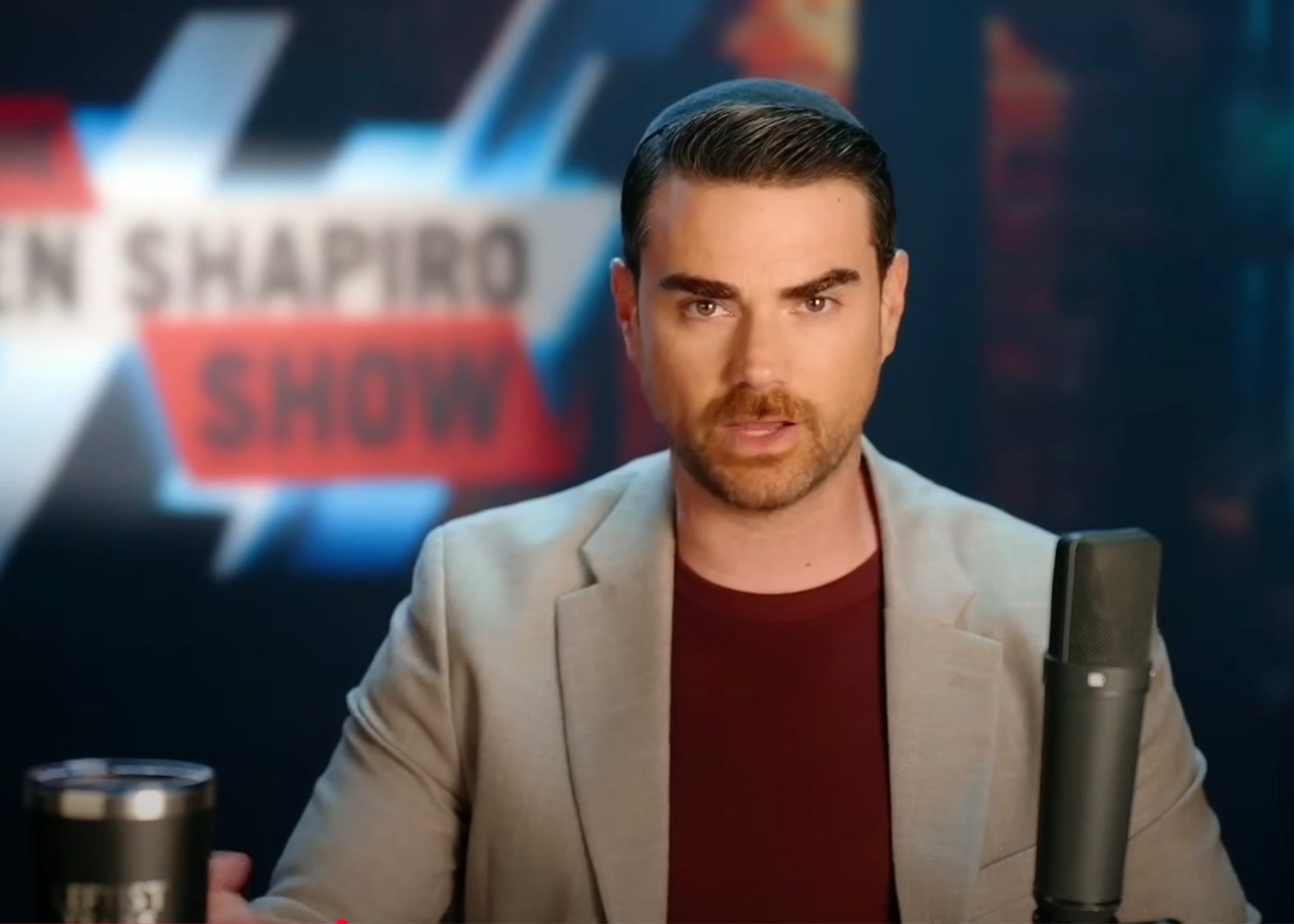
There is a sickness at the heart of this age—not just in what we believe, but in how we speak. And nowhere is that sickness more vividly staged than in the figure of Ben Shapiro: the fast-talking merchant of clarity, the architect of performative debate, the trusted voice of a million young men who mistake victory for wisdom.But this is not an essay about Shapiro the man. It is about the structure that made him inevitable—and the damage that now spreads in his wake.The Algorithm Does Not Reward WisdomIn a decaying public square, the quickest path to influence is not depth. It is velocity. The machine—whether YouTube or Twitter or Facebook—feeds on the spectacle of dominance. Not persuasion. Not synthesis. But the illusion of defeat: one side destroyed, the other victorious, the audience enthralled.Shapiro understood this instinctively. Perhaps not at first. Perhaps not as a teenage columnist or a law student in the orbit of Orthodox conservatism. But he learned. He adapted. And in so doing, he helped define a genre: the DESTROYS video, the viral debate clip, the campus takedown.It was not an accident. It was the logic of the platform.The Style of a WoundMany have tried to explain Shapiro’s style as ideological. But ideology alone does not explain the velocity of the man: the clipped, aggressive cadence, the certainty that brooks no interruption, the compulsive need to win—even when winning serves no truth.That is not ideology. That is the style of a wound.A child of Orthodox Judaism raised in the cultural sea of Hollywood liberalism, Shapiro grew up as an outsider inside the system. His early conservatism was not born from taxes—it was born from difference. And difference, when unaccompanied by trust, curdles into defensiveness.The result is the man we see now: a high-verbal, low-embodied intellect, addicted to control, incapable of pause. His speed is his shield. His clarity, a mask.And the mask sells.From Critique to MarketHere, the structural analysis begins. For what made Shapiro’s rise inevitable was not personal charisma alone—it was the collapse of the American center.In an age of moral vacuum and institutional decay, a vast market emerged for pseudo-clarity: a style of speech that could give the appearance of moral certainty in a world that had lost it.Shapiro offered this in abundance:* A moral universe where Western civilization was good and “wokeism” was evil.* A hierarchy where tradition trumped complexity.* A rhetoric where debate was war and nuance was weakness.And he delivered it in the perfect medium: short, viral, algorithmic. Each clip a miniature morality play. Each “debate” an exorcism of the anxious liberal other.It was not truth. It was product.And the product moved millions.The DamageBut the cost—like all deferred costs in this declining republic—has come due.Shapiro’s brand of debate did not elevate discourse. It degraded it. Across the platform economy, an entire generation learned to speak in his shadow:* Strawman framing became the norm.* Debate became a performance of cruelty.* Intellectual life became a zero-sum spectacle.And beneath the style, the substance corroded. For Shapiro’s rhetoric targets not the powerful, but the vulnerable:* He punches down on trans youth.* He legitimizes the language of exclusion.* He normalizes a vision of public life where empathy is framed as weakness.This is not the mark of a moral teacher. It is the mark of a skilled propagandist whose audience craves validation, not truth.And that damage—cultural, political, spiritual—is no less real for being profitable.The TrapThere are those who ask: can he change?But here we must speak plainly: the trap is structural.Shapiro is no longer merely a man with opinions. He is an ecosystem:* A multi-million dollar media empire.* A vast audience trained to expect dominance, not reflection.* A brand whose value depends on the very dynamics that corrode civic life.To slow down, to evolve, to step off the treadmill of outrage—would be to lose the machine he built.And so he cannot change. Not without dismantling the very engine that sustains him.And he knows it.What a Friend Would SayBut suppose—impossibly—that he could still hear a friend. What might that friend say?Ben: You are not this persona. You are not this mask. You are a man who once sought clarity, who once believed in truth. But now the machine is using you. It rewards your worst instincts and silences your better ones.Every clip that trends is a nail in the coffin of your conscience. Every applause line at the expense of the vulnerable is a mark against your soul.You tell yourself it is necessary. You tell yourself you are defending civilization. But look at the fruits: cruelty normalized, complexity abandoned, a generation taught that to win is to humiliate.You do not have to become a progressive. You do not have to betray your faith. But you can stop feeding this machine. You can choose a path of humility, of depth, of true courage.It will cost you. But it may yet save what is human in you.The Larger MachineryYet even this is not the deepest truth.For to fixate on Shapiro alone is to miss the deeper architecture. He is not an aberration. He is a symptom.The real engine is the platform economy itself:* An algorithm that rewards outrage.* A media landscape that monetizes division.* A public square that no longer values wisdom, only engagement.In such an ecosystem, the rise of figures like Shapiro was not a deviation. It was the expected outcome.And unless we confront the machinery itself—unless we build structures that reward thought over spectacle, dialogue over domination—more such figures will rise. Louder. Crueler. More hollow.The Final ReckoningSo let us speak clearly:Yes, Ben Shapiro has caused real harm.Yes, he has degraded civic discourse.Yes, he has helped normalize cruelty.But he is not the root. He is the harvest of a poisoned soil.And if we would resist that harvest, it is not enough to mock him. It is not enough to “debate” him in turn. We must build a different language, a different platform, a different ethic.One that prizes humility over performance.One that protects the vulnerable over the dominant.One that remembers that speech is not a weapon, but a trust.If we cannot do this, the decline will continue—and men like Shapiro will remain its merchants.But if we can—if we dare—then perhaps the next generation need not learn debate as cruelty.And perhaps the last word will not belong to the spectacle.Elias WinterFor the ones who still believe that words can heal, not only wound. This is a public episode. If you would like to discuss this with other subscribers or get access to bonus episodes, visit eliaswinter.substack.com
Embed this episode
Ready to play
The Merchant of Clarity: On Ben Shapiro and the Theater of Spectacle
No transcript for this episode yet
Similar Episodes
No similar episodes found.
Similar Podcasts
No similar podcasts found.