
EPISODE · Jun 26, 2026 · 21 MIN
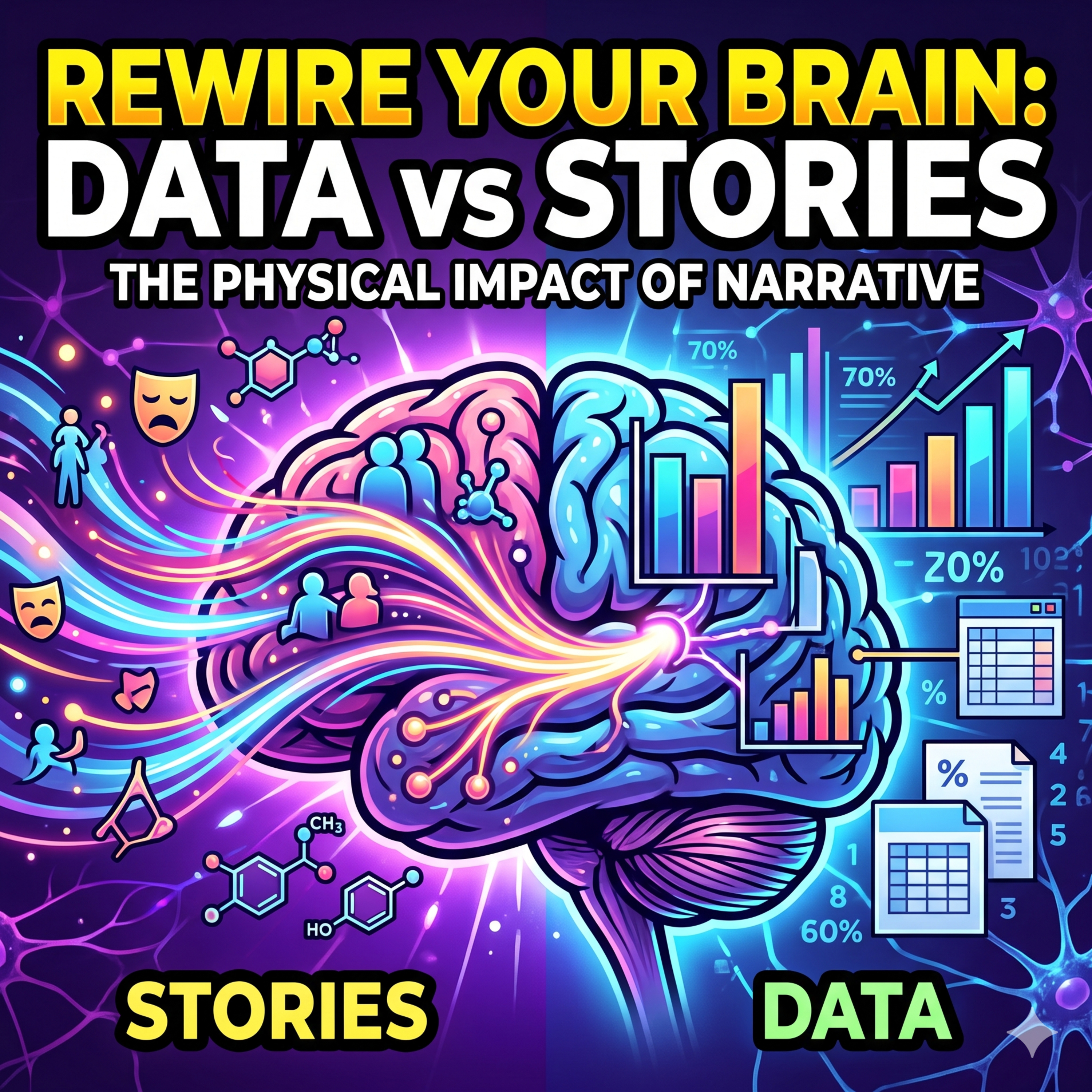
The Neuroscience of Storytelling: Why Stories Beat Data Every Time
from The Self Sensei - SelfSensei.com · host Vib Kapila
Ever wonder why a room full of executives zones out during a flawless data presentation, but will happily go home and binge a three-hour true crime documentary?In this deep dive, we break down the fascinating neuroscience and behavioral psychology behind why a fabricated story will physically rewire a brain faster than a perfectly accurate spreadsheet. We unpack the hidden mechanisms of human persuasion and look under the hood of how our brains process cold facts versus narrative arcs.What You'll Learn:The Neurochemical Cocktail: How stories trigger the release of cortisol (focus), oxytocin (empathy), and dopamine (reward) to increase information retention by 22 times over isolated facts.Brain-to-Brain Coupling: The groundbreaking fMRI research from Princeton showing how a compelling narrative literally synchronizes the brainwaves of the speaker and the listener in real time.Bypassing the Logical Bouncer: How stories use cognitive ease to cruise past Daniel Kahneman's "System 2" critical thinking defenses and tap directly into "System 1" automatic intuition.The Sleeper Effect: The psychological glitch that causes your brain to remember a compelling narrative long after it forgets that the source was completely unreliable.Practical Frameworks for Leaders:To apply this narrative architecture to your daily professional communication, use these three tactical constraints from behavioral research:The 15-Second Rule: You have exactly 15 seconds to grab the brain's attention before it tunes out. Skip the agenda overview or department history—start directly with the conflict.The Human Scale: Stop leading with abstract percentages. Frame your data around a single, character-driven anecdote that puts a human face on the struggle and the resolution.Value Threading: Don't just list your core values on a slide. Show them through the text of your stories by highlighting the difficult sacrifices and choices your characters make under pressure."Facts and data are essential for informing, but stories are the only mechanism capable of restructuring belief systems."If you want to stop talking to a brick wall and start building real alignment in your boardrooms, pitches, or daily team updates, it’s time to stop pitching data and start framing experiences.Check out the Self Sensei's new article 'Why Your Brain is Being Re-Coded: 5 Surprising Insights from the Frontiers of Behavioral Science'Don't forget to like, subscribe, and hit the notification bell for more deep dives into psychology, leadership, and human behavior!#Neuroscience #Storytelling #BusinessCommunication #BehavioralPsychology #Leadership
Embed this episode
NOW PLAYING
The Neuroscience of Storytelling: Why Stories Beat Data Every Time
No transcript for this episode yet
Similar Episodes
No similar episodes found.
Similar Podcasts
No similar podcasts found.