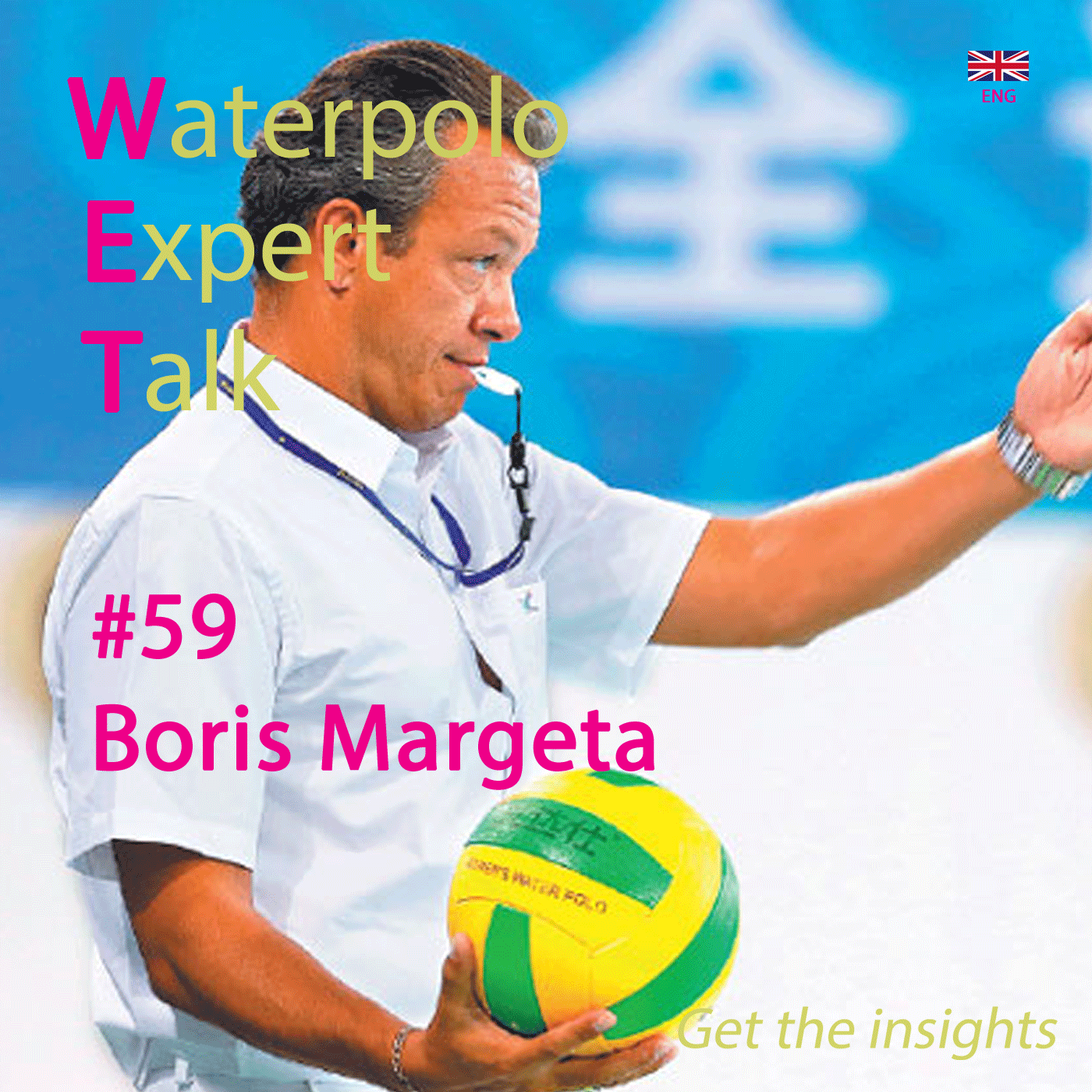
“The new rules are good – But they are only the base” – Boris Margeta on rule changes & refereeing culture episode artwork

EPISODE · Jun 25, 2022 · 26 MIN

“The new rules are good – But they are only the base” – Boris Margeta on rule changes & refereeing culture

from Waterpolo Expert Talk · host Andreas Schulze-Kopp

In the second part of his appearance on the Waterpolo Expert Talk, international referee Boris Margeta dives deeper into the recent rule changes in water polo, their impact on the game, and why they should be seen as a starting point rather than a finished solution. Boris begins by sharing some of his most emotional memories as a referee, including his first Olympic Games in Sydney 2000, which coincided with his birthday. The experience, the atmosphere and the support from fellow referees shaped his decision to fully commit to refereeing at the highest level. Another unforgettable moment was the dramatic final in Rome between Serbia and Spain, a marathon match decided after extra time and penalties in front of a packed crowd – a perfect example of water polo as a spectacular, global sport. The conversation then shifts to pre-game preparation and rituals. Despite decades of experience, Boris explains that fear, adrenaline and nervousness never disappear – and shouldn’t. To stay focused, he isolates himself on match day, limits communication, listens to calming music, prays, speaks with his wife and prepares mentally to enter the pool fully concentrated. For him, every final is treated like the first final. A major topic of the episode is refereeing culture across countries. Boris strongly rejects the idea that different nations interpret the rules differently. There is only one rulebook, one referee association and one philosophy. Cultural differences may affect communication styles, but not the application of the rules. Referees must never be perceived as enemies. Clear communication, warnings, understanding advantage and feeling the rhythm of the game are far more important than rigid punishment. One of the most quoted statements of the episode captures his philosophy perfectly: “First learn the rulebook. Then throw it in the garbage and referee with the flow of the game.” Knowing the rules deeply allows referees to apply advantage correctly, protect attacking play and reward movement instead of static wrestling. When discussing the new water polo rules, Boris is clear: the direction is right. The sport had become too static, too physical and difficult to understand for spectators. The new rules protect movement, reduce holding and increase speed. Statistics prove that the game is now faster and more dynamic. However, he believes this process is not finished. He argues for even stricter punishment of two-handed holding and clearer interpretation of penalties, emphasizing that water itself already creates resistance and danger. Boris also places water polo in a broader context, noting that all major sports are changing rules – football, handball and basketball included – to become faster, clearer and more attractive for fans and broadcasters. A particularly critical part of the conversation focuses on the status of referees. Unlike football or handball, water polo referees remain largely amateur. Boris openly criticizes the reality that referees may officiate a Champions League final for minimal compensation or spend weeks at major tournaments without financial support from their federations. Without structural change, professional officiating at the highest level is impossible. Reflecting on recent events like the Champions League Final Eight in Belgrade, Boris explains that the pressure of a final is no different from any other important match. Whether it is a local league final or a European final, referees must approach every game with the same professionalism, respect and emotional control. The episode concludes with a look ahead to the World Championships, Boris’s excitement to reunite with colleagues after the pandemic, and his belief that young German players will benefit enormously from competing against the world’s best teams – regardless of short-term results. This episode offers a rare, honest and authoritative perspective on refereeing, rule evolution and the future of water polo from one of the sport’s

In the second part of his appearance on the Waterpolo Expert Talk, international referee Boris Margeta dives deeper into the recent rule changes in water polo, their impact on the game, and why they should be seen as a starting point rather than a finished solution. Boris begins by sharing some of his most emotional memories as a referee, including his first Olympic Games in Sydney 2000, which coincided with his birthday. The experience, the atmosphere and the support from fellow referees shaped his decision to fully commit to refereeing at the highest level. Another unforgettable moment was the dramatic final in Rome between Serbia and Spain, a marathon match decided after extra time and penalties in front of a packed crowd – a perfect example of water polo as a spectacular, global sport. The conversation then shifts to pre-game preparation and rituals. Despite decades of experience, Boris explains that fear, adrenaline and nervousness never disappear – and shouldn’t. To stay focused, he isolates himself on match day, limits communication, listens to calming music, prays, speaks with his wife and prepares mentally to enter the pool fully concentrated. For him, every final is treated like the first final. A major topic of the episode is refereeing culture across countries. Boris strongly rejects the idea that different nations interpret the rules differently. There is only one rulebook, one referee association and one philosophy. Cultural differences may affect communication styles, but not the application of the rules. Referees must never be perceived as enemies. Clear communication, warnings, understanding advantage and feeling the rhythm of the game are far more important than rigid punishment. One of the most quoted statements of the episode captures his philosophy perfectly: “First learn the rulebook. Then throw it in the garbage and referee with the flow of the game.” Knowing the rules deeply allows referees to apply advantage correctly, protect attacking play and reward movement instead of static wrestling. When discussing the new water polo rules, Boris is clear: the direction is right. The sport had become too static, too physical and difficult to understand for spectators. The new rules protect movement, reduce holding and increase speed. Statistics prove that the game is now faster and more dynamic. However, he believes this process is not finished. He argues for even stricter punishment of two-handed holding and clearer interpretation of penalties, emphasizing that water itself already creates resistance and danger. Boris also places water polo in a broader context, noting that all major sports are changing rules – football, handball and basketball included – to become faster, clearer and more attractive for fans and broadcasters. A particularly critical part of the conversation focuses on the status of referees. Unlike football or handball, water polo referees remain largely amateur. Boris openly criticizes the reality that referees may officiate a Champions League final for minimal compensation or spend weeks at major tournaments without financial support from their federations. Without structural change, professional officiating at the highest level is impossible. Reflecting on recent events like the Champions League Final Eight in Belgrade, Boris explains that the pressure of a final is no different from any other important match. Whether it is a local league final or a European final, referees must approach every game with the same professionalism, respect and emotional control. The episode concludes with a look ahead to the World Championships, Boris’s excitement to reunite with colleagues after the pandemic, and his belief that young German players will benefit enormously from competing against the world’s best teams – regardless of short-term results. This episode offers a rare, honest and authoritative perspective on refereeing, rule evolution and the future of water polo from one of the sport’s

NOW PLAYING

“The new rules are good – But they are only the base” – Boris Margeta on rule changes & refereeing culture

0:00 26:01

No transcript for this episode yet

We transcribe on demand. Request one and we'll notify you when it's ready — usually under 10 minutes.

Flottengeflüster ALD Automotive Österreich | LeasePlan Beim Flottengeflüster powered by ALD Automotive | LeasePlan präsentieren Jörg Janik und Peter Gutenbrunner alle zwei Wochen spannende Informationen rund um das Thema nachhaltige Mobilität. Beide beschäftigen sich schon lange mit der Thematik und bringen umfangreiches Fachwissen mit. Sollten sie aber doch einmal nicht weiter wissen, werden unsere Expert*innen hinzugezogen, die ihnen gerne mit Rat und Tat zur Seite stehen. Humanizing Change Tremendousness Join us each episode as we talk with innovators in their respective fields about their unique journeys and how they humanize change in their own work, right here, on Humanizing Change. AI Erik's Podcast Audio Erik Conn The AI News Podcast where we talk AI. NEWMORROW SESSIONS - A PodCast Series on the Future of Hospitality Mario C. Bauer, Florian Schneider, Axel Weber & Dr. Tillman Bardt The Newmorrow PodCast is more than a podcast — it's a platform for open dialog on the future of our business, a platform for those building what doesn’t exist yet. Here, we share and embrace our passion for the hospitality industry, but we won’t romanticize the journey. We ask the tough questions, confront uncomfortable truths, and prepare for a future that resists easy answers. We believe that the tougher and wilder times become, the more openly, honestly and humanely people need to talk to each other and act together. We believe, openness, togetherness, and truthfulness should also be cornerstones of a professional community to develop our utopian idea of „open source“. This is a space where visionaries don’t just imagine the future — they wrestle with the paradoxes that shape it: success vs. happiness, data vs. instinct, stability vs. reinvention. Join leaders, entrepreneurs, and thinkers as they share not what made them — but what’s actively shaping them, now and next. So tune in

Frequently Asked Questions

How long is this episode of Waterpolo Expert Talk?

This episode is 26 minutes long.

When was this Waterpolo Expert Talk episode published?

This episode was published on June 25, 2022.

What is this episode about?

In the second part of his appearance on the Waterpolo Expert Talk, international referee Boris Margeta dives deeper into the recent rule changes in water polo, their impact on the game, and why they should be seen as a starting point rather than a...

Can I download this Waterpolo Expert Talk episode?

Yes, you can download this episode by clicking the download button on the episode player, or subscribe to the podcast in your preferred podcast app for automatic downloads.
URL copied to clipboard!