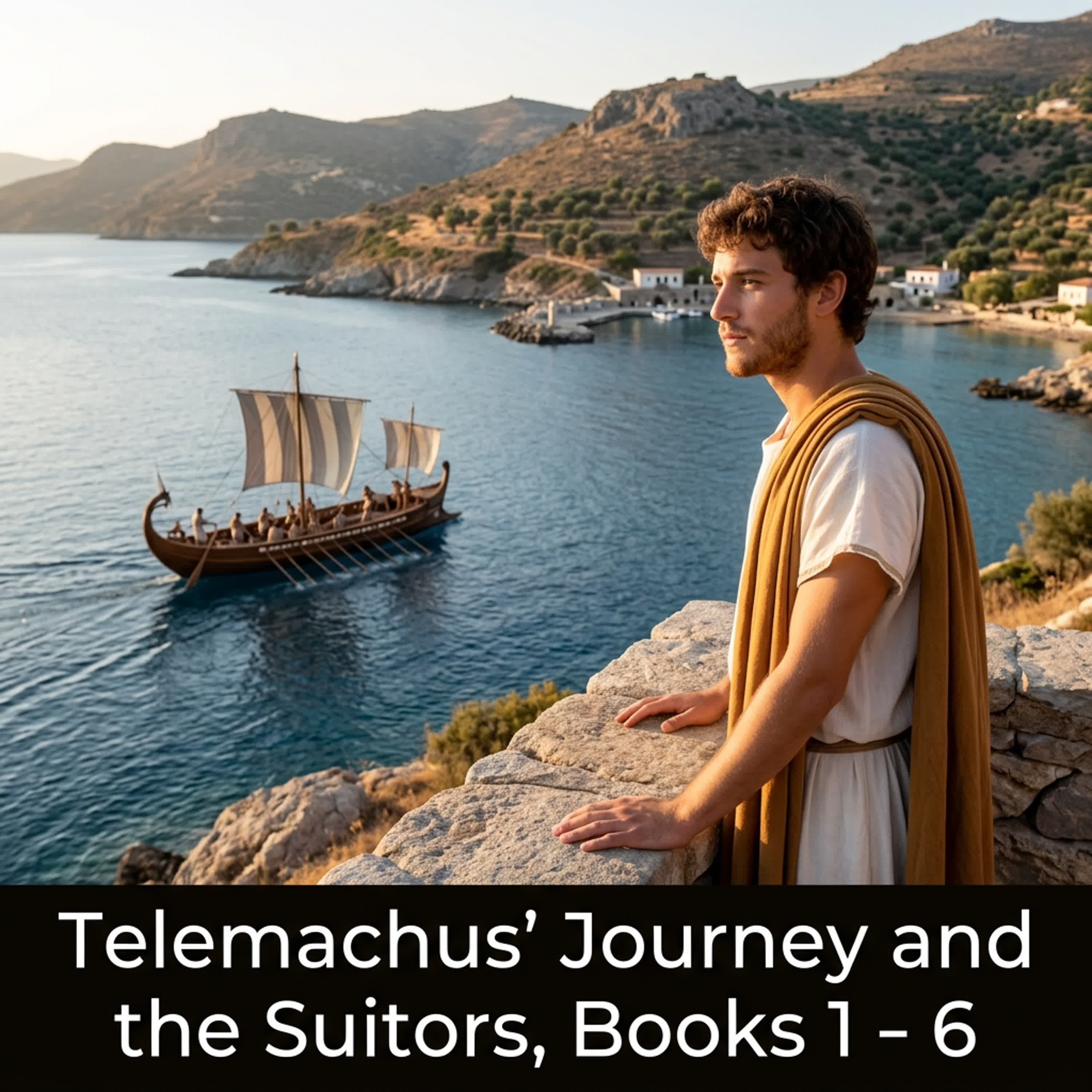
The Odyssey - 1 - Chapters 1-6
from Wisdom for the Present: Western Wisdom Literature Hosted by Kanu Emeruwa
What would you do if you were offered literal immortality—a life completely free of pain, aging, and death on a pristine, perfectly climate-controlled paradise island? This is the profound psychological choice at the heart of the first six books of Homer’s epic, The Odyssey. Far from a dusty academic text, the parallel journeys of the lost hero Ulysses and his paralyzed son Telemachus serve as striking mirrors for our modern struggles. At its core, this ancient narrative speaks directly to the experience of feeling profoundly stuck in comfort or inertia, exploring the immense psychological effort required to get moving again. The epic opens not with heroic action, but with a surprisingly modern debate about personal responsibility as Jove (Zeus) laments that mortals constantly blame the gods for self-inflicted wounds born of their own folly. In the mortal realm, we find Telemachus frozen in a state of deep passivity—acting like a helpless hostage in his own home while a mob of rowdy suitors consumes his inheritance. Trapped in the shadow of his father's legendary reputation, he suffers from a massive case of imposter syndrome. Meanwhile, Ulysses sits weeping on the shores of Calypso's idyllic island, trapped by "golden handcuffs" in an artificial paradise that demands no growth but leaves his soul hollow. As we look closer at these struggles, we uncover sophisticated strategies of manipulation, distraction, and ego preservation. Penelope, facing the overt threat of the suitors, masterfully exercises "covert agency" through her famous shroud trick—unweaving her work by night to manipulate time and protect her autonomy under severe constraints. In contrast, the glittering court of Sparta reveals a more insidious form of control: Helen of Troy drugging the wine with an Egyptian herb to artificially erase the emotional toll of trauma. This "emotional anesthetic" represents our modern equivalents of numbing—whether through algorithmic doom scrolling, substance use, or toxic positivity—which temporarily masks our discomfort but completely freezes the essential process of healing and growth. When we attempt to break free from these numbing patterns, we inevitably confront the chaotic, shape-shifting nature of reality, symbolized by the sea god Proteus. To capture Proteus and discover his path home, Menelaus must endure the god's terrifying transformations into a lion, a dragon, water, and a tree—a perfect metaphor for how truth and our own ego defenses resist confrontation. This struggle mirrors the modern experience of wading through complex data, navigating toxic relationship dynamics, or confronting the sunk cost fallacy. Like Ulysses clinging desperately to his disintegrating wooden raft, we often hold onto broken models or failing strategies simply because we fear the vulnerability of swimming in open water. Reclaiming our agency ultimately requires us to "relinquish the raft" and embrace the active, discomforting work of transition. It demands what we call the "Telemachus step"—taking a single definitive physical action to shatter the cognitive loop of passivity—and the "Ulysses tact," which uses radical empathy and high emotional intelligence to navigate re-entry when we are at our lowest, most vulnerable point. Ultimately, the goddess of wisdom, Minerva, does not solve these problems with a magic wand; instead, she amplifies the internal resilience and courage already present within the human spirit. This ancient epic challenges us to stop waiting for external saviors and instead awaken the divine spark of resilience within ourselves. In This Episode * The Comfort of Victimhood: Why blaming fate or external circumstances for our self-inflicted wounds prevents us from making the hard, necessary choices to change our lives. * The Telemachus Step: How taking a single, imperfect physical action can shatter cognitive loops, break inertia, and act as the true catalyst for building confidence. * Covert Agency under Constraints: How Penelope's shroud trick shows us how to use intellect, patience, and subversion to preserve autonomy when overt power is unavailable. * Modern Numbing and Helen’s Drug: Identifying the "emotional anesthetics" we consume—from endless feeds to toxic positivity—to escape pain while paralyzing our potential to heal. * Wrestling Proteus for the Truth: Understanding how the shape-shifting sea god represents the ego's defense mechanisms and the friction we must endure to find real clarity. * The Golden Handcuffs of Paradise: Why Ulysses's rejection of immortality reveals that shared vulnerability and mortality are what give human connection and achievement actual meaning. * Relinquishing the Raft: How to recognize when a strategy or identity you painstakingly built has become a liability, and finding the courage to let go and swim. Practical Reflection What is the "Helen's drug" in your own life—the habits, substances, or digital distractions you use to avoid sitting quietly with uncomfortable realities about your career or relationships? Are you currently holding onto a "disintegrating raft"—a business model, a relationship, or an old identity—simply because you are terrified of the vulnerability of starting over? How can you apply the "Telemachus step" today by taking one small, concrete physical action to break a loop of passivity or decision paralysis? Suggested Substack Excerpt Immortality, perfect comfort, and zero risk—why would anyone turn it down? In this episode, we unpack Books 1-6 of The Odyssey to discover why reclaiming your life's narrative requires stepping off the paradise island, relinquishing your disintegrating raft, and embracing the raw, vulnerable power of active human agency. AI Disclosure This episode was created using Google NotebookLM Audio Overview, based on human-curated source material, structured guidance, and editorial review. AI is used as a tool for clarity and delivery, not as a replacement for thoughtful study or engagement with the original texts. Copyright © 2026 Wisdom for the Present / Kamashcu Production Studios. All rights reserved. This is a public episode. If you would like to discuss this with other subscribers or get access to bonus episodes, visit wisdomforthepresent.substack.com
Embed this episode
No transcript yet.