Quick question. When was the last time a display ad changed your mind? Now think about the last time a friend told you about something they loved. Different feeling right?
That's how podcast advertising works. A host who's built a real trust with their audience talks about your brand and their own words and their own voice. It doesn't interrupt the experience. It's part of it.
With Acast, you can access the world's largest podcast marketplace. Choose the right shows, the right audiences, the right format. Then watch the data tell you it worked. You're not buying impressions.
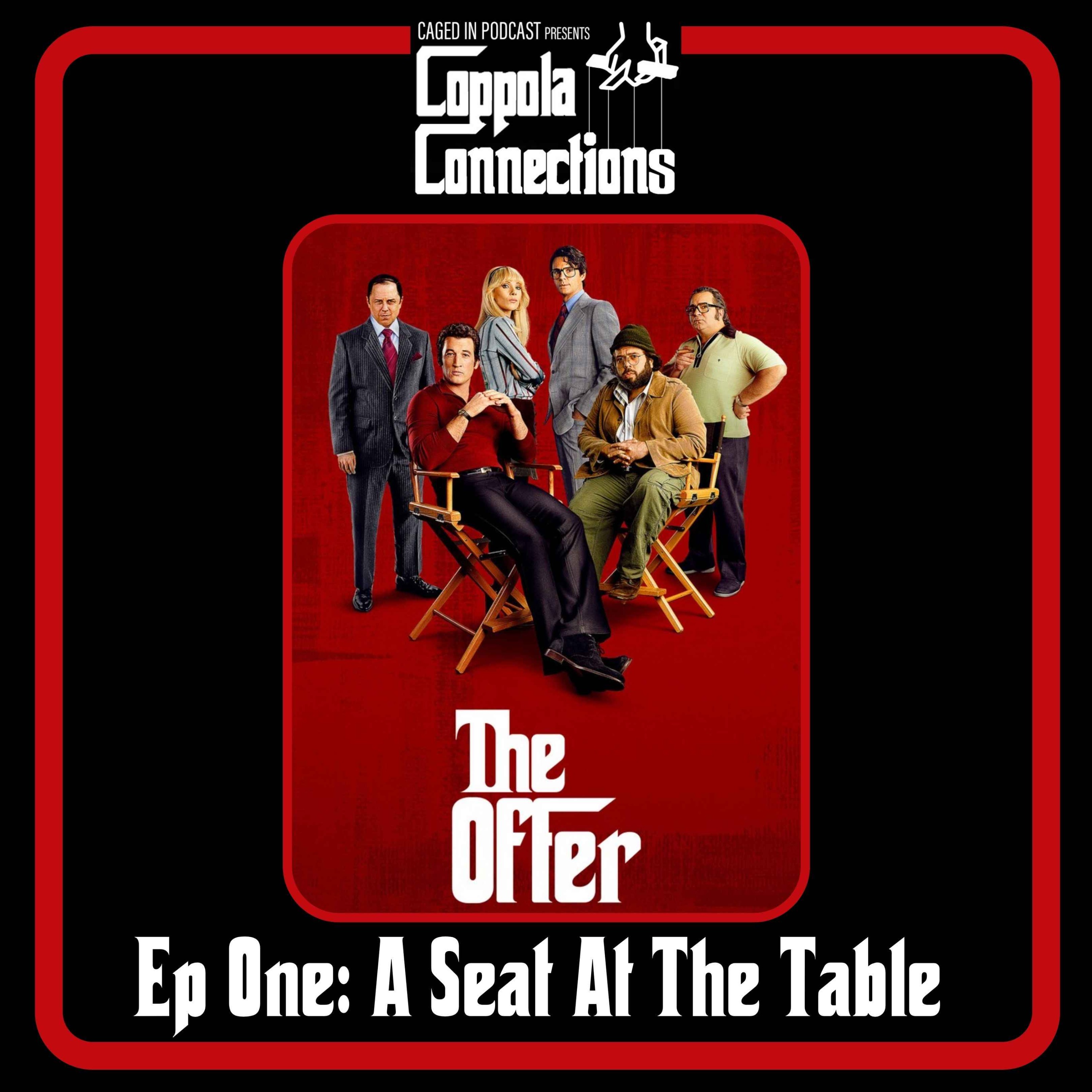
You're buying influence. Learn more by visiting acast.com slash advertise. Welcome to Cagedin Presents Code for Connections brought to you as ever by the breadcrumbs collective hosted by me, Petros Petzilos. With the release of Paramount Plus's new 10-part mini series that offer past presented with an offer I couldn't refuse.
And that was to cover it on this here podcast. So over the next 10 weeks I'll be joined by my very own Mario Puzo for my Francis Ford Coppola. We'll chitch as we deep dive to each episode of 10-part series. We'll drink wine, eat pasta and decide is it best to leave the gun and take the offer or is this show just a horse's head in Jack Walts' bed?
So Will, how are you? I'm going to be back. No worries. You're here for the long haul, maybe.
You're here for 10 weeks. I've got my wine. So what we're going to be doing each week, we're going to be drinking a different red wine. Maybe I don't show maybe we'll mix out maybe have a white wine week if we've been in fruit tea.
But we'll be drinking a different wine and getting progressively more pissed as the recording goes on. But let's start this episode off before we get into what you know about the making of the godfather and your relationship to the godfather itself. Let's talk about our wine. So Will, what wine have you got there this week?
Tell us about what it is, what vintage of week we got this week? Vintage, it's a vintage 2021 and it's a Merlot, South East Australia. Yeah, it's my Gwiggans private bin. I think it costs £7.
All right, so listeners, you need to guess right now, is the next bottle of wine going to be higher or lower in price. I have gone for a Veyarosia Temporilino Shiraz 2020. And it says at the bottom here, Bodega della Familia, which feels very, feels very godfather. That feels like a godfather.
I don't know what that means. Like a part of the family maybe. Like it feels very godfather. It feels threatening as well.
But it's a I should have gone for an Italian. This is a wine of Spain. So I've got Australia. So we both dropped the ball maybe over the weeks.
We'll nail it. But this bottle of wine cost me a lovely £3.95. What kind of note? So you're getting with this wine?
What notes you're getting with yours? I'm not a little sick. Yes, definitely. It's definitely red.
Definitely red. Yeah. I'm just checking apparently this goes really well with beef burgers. So that's something nice.
It's nice. It's a medium bodied, medium bodied wine. Yeah, I'm joining. It's very, very co-offable.
Yeah. So the tasting notes on this one says, it's plum and blueberry flavours. I'm getting a little bit of that. Hit a spice.
I'm not sure how I normally feel with a hint of spice in my wine. But there's something, there is a kind of a tang to this. And it says it would be ideal for a Sunday roast. What I'm thinking with a Sunday roast is when you make it a nice red wine gravy.
This would be perfect to plop in there. Oh, it's a pizza. It'd be great with a pizza. So that feels very fit.
Perfect. Mine goes well with braised lentils. So as I said in that intro, we will be talking about each episode of the offer. And episode one is a seat at the table.
The show is created by Michael Tolkien. This episode is written also by Michael Tolkien and directed next lecture. So before we get into it, we'll show you a kind of relationship to the godfather as a film. When would you first turn it?
Is it kind of like mainstay of a film for you? Yeah, I saw it a long, long time ago when it was the film to see when you were getting into films. I think I said to you before, it's probably my first copler film, no-windly copler film. So yeah, I've seen it a few times.
I haven't seen it for a long time, I must admit. So I did plan to watch it again before watching this, but I didn't. But obviously I've seen it. I've seen it enough to, yeah, I love it.
I guess what I do is this is amazing. So yeah, it was my first real copler film. Yeah, so maybe what we'll do as we go through this series is we'll plan in a kind of a little stop gap where we both watch it, like kind of in conjunction with, or maybe we'll end this series by kind of yeah, watching it and kind of we would have seen or maybe before they get to the actual production of the film because to not give anything away, this first episode doesn't really get into the kind of filming of the godfather. It kind of is very much the early stages of the film getting made.
So yeah, another thing I wanted to know as well is how much do you know about the making of the godfather? I'll see those of you listening, that I've really deep-dived into it. It's one of the not so long ago on the podcast, I kind of marked, Ciel wrote this amazing book called Leave the Gun, Take the Canole. I've really like immersed myself in it and kind of read everything I could about the making of this.
So yeah, what about yourself? Do you know much about it? Not clearly not as much as yourself, but I know I know I know I know a bit of it from reading about from film, obviously the godfather is such a mainstay of like best films ever made by a box I've read lots about it and the making of it as such, but less than I thought when you actually have to watch this. The book you just mentioned, I've just downloaded it, so by the time I've got the audiobook, I'm leaving the gun to the book, so I'll just, we'll be listening to that this week.
Some of us listen to that, but yeah, yeah, you less than I thought I knew I guess. So before long, next week's episode will be in Will Gaine. Well, it says in the book that this happened, whereas the show says that this happened. I will certainly become a rung scholar on the godfather.
Well, I can very much say off the bat here, the kind of timeline, and I do think the timeline in this episode feels quite muddied in a way, because you kind of you don't really know how much of a passage of time that is a lot of, but do you have any like, I don't know, I couldn't sense like is it a bit a week, because it's been a month, like I don't know, it's like, yeah, it seems to like, I don't read I'm not aware of how the timeline how what the time of watch, but you can have this a lot happens very quickly, like real quickly, this, yeah, like you said, this doesn't seem to be not given any time scale or it just happens, which is a pose I understand, because they want to get to the stuff. Yeah, they want to get to the good stuff. Yeah, exactly. Yeah.
I think like, yeah, from knowing the true story, like, there's a good few years, like between certain things, do you know, I mean, like kind of Mario Puzo probably having that in like, we get that moment early on in the episode, where Mario Puzo has a book signing and there's like, no one there to him deciding to write the godfather to it being a book. We're talking like 1969 that the book was released, so you've got to think there's maybe like, I don't know, like, at least a year, do you know what I mean? There's at least a couple of years between that gestation, I'm going to write this to getting optioned by Paramount to him, finishing the book to then the ball getting rolling and Francis Ford couple are getting involved, you know, I mean, it's got to be at least, I don't know, like 1970 when he's involved, maybe even early 71, because the film then comes out in 72. Yeah, yeah, not that scene there where he decides to write the godfather is definitely one of the week of the episode because it's an exposition dump.
So I just assume, I need to write enough of a book and he goes, okay, but what am I going to write about? You need to write about what you know, all right, this is a bit like, all right, okay, so that whole thing happens real quickly. So what, yeah, do you mind giving us a little synopsis of what this episode kind of tackled will? Yeah, so we've got two threads in the first episode, we've got three of sorts of Mario Puzo is that that one is like, right, as we start, that was a great, he's written a book, there's no one going to sign in, he needs a hit because he's got nothing intended, he's got a, basically, he's got debts with people that he has to pay, so he needs a hit on his hands, he doesn't want to be a hack, but he's going to write something, something he knows, that's the one thread we've got going on.
We've also got Miles Taylor, who's playing Albert Ruddy, who is working in IT, he's a, he goes to the, he meets someone and then we're going to, he decides to write in the right hogan's heroes, we've got that going on, that thread, and then we've got some mafia people, so that's basically what we've got in this episode, so yeah, it's the setup. You mentioned Miles Taylor, so it's first of a perfect time to mention the cast of this, so we have, yeah, Miles Taylor as Albert Ruddy, we have Matthew Good as Robert Evans, the kind of movie mogul producer who kind of ran Paramount throughout the kind of 17s and early 80s at least, Dan Fogler, Hopping Up as Francis Port Copeland, we have Bern Gorman as Charlie Bluedon, Colin Hanks as Barry Lapidus, Giovanni Robisi as Joe Colombo as you mentioned, kind of the mob connection in this Juno Temple as Betty McCart, and that feels about relevant, but for this episode there's a few other people who pop up, it's Franz Woz, who's played by in a second, let's get the name, who needs to open this up in Hugo, he's going to be buried at the bottom isn't she, Nora Aaron Zadida, yeah I think that's wrong but we'll go with it. So yeah, let's, should we talk about the casting of this, what do you, what do you, what do you, what do you, I guess Miles Taylor and Matthew Goode kind of one thread that we get throughout, it's the kind of studio aspect of it, what do you think of their portrayal, I guess, I don't know, Bob Evans is probably more, people know what he's like whereas Albert Ruddy could have been, yeah, he seems like someone behind the scene, at least. Yeah, so Robert Evans is definitely the person I was more aware of, and for me Matthew Goode is the MVP in this episode, he is so good, like it, and it's, I mean he gets to play big, it's a big character, so he's clearly having a lot of fun and it's pretty well big, yeah, so he's clearly having a lot of Miles Taylor's good, I don't really know much about it already, just for my opinion of where he's playing Robert, yeah he's good, but Matthew Goode is for right.
Well yeah, Miles Taylor is kind of, I guess, supposed to be our audience conduit throughout this, he's like, he's our lead character as Albert Ruddy, and I know the series is, it's just based off of the stories, there's no book that this is based on, it's kind of, I think Michael Tolkien had discussions with Albert Ruddy about the making of it and kind of over these long conversations formulated the scripts and the idea for this series, and it's very much, and I know originally, we talk about this a bit, originally Albert Ruddy was supposed to be played by real-life kind of army hammer, like, obviously cannibalism aside, would that have been a bit of cast injury? I don't think so, I can't see how Armie Hammer would have fit into this, do you know what I mean? It's a bit of a small army hammer, and he's a cannibal, but apart from that, but yeah, I think Miles has good, I like Miles Terry, I can't see Armie Hammer in that role. I think he's too handsome as well, there's like kind of, you can't, I can't, he looks Mr Hollywood.
Yes, yeah, yeah, he looks chiseled out of marble, where it's like, Miles Taylor does, like, do you know what I mean? If life would doubt him a slightly different hand, you could easily see him working in like a car garage, do you know what I mean? He could be working on it. Oh, 100%, yeah, like Armie Hammer would already look like he should be working on Hollywood.
Yeah, yeah, yeah, he'd actually be in front of the camera, not kind of like, muscling about kind of bothering Robert Redford. Yeah, exactly, he would have looked like he should be on set anyway, so. And what about Dan Fogler as a Francis Ford Coppola, obviously, like somebody who I have invested interest in this series and kind of, you know, obviously I'm a big fan of Francis Ford Coppola, people would be a funny way. Really?
Yeah, I thought he was, at first I wasn't sure how we're going to go with this, but I thought, there's a few in this first episode characters, I thought, I'm not sure over this, but as it went on, I quite enjoyed this performance and that. I will get into it, but it's a few of these characters in this and performances, which grow on you, because I wasn't 100% on the Francis Ford Coppola thing, I don't know if this is, but yeah, these good. Is it the Poohs, or the Maripus and his interactions are great? Are we enjoying that dynamic?
What's that settled in? Yeah, there's almost like, like, there could have been another show within this. You get it in this first episode. Yeah, almost like a kind of sitcom of those two trying to write that script, and like, that's kind of like, there's something interesting in that, I think, like, 100%.
And I don't know, like, yeah, like, it's almost, maybe there's an episode later down the line where like, we get to see those two, like, I've been trying to avoid because we're going through this week by week, been trying to avoid kind of looking at who's in how many episodes and stuff like that, kind of like, yeah, yeah, locking out that bit when I'm looking on IMDB, because I don't want to kind of, I don't know, ruin it for myself or like, I think, I kind of feel like, I don't know, I ruined it for myself, but looked at like, Al Ruddy's like, Wikipedia page, and it says how long he was married to Francois's force. I was like, oh, so they eventually get married, I guess, like, it's the kind of, like, what's there. So yeah, who else in the cast do we talk about? Giovanni Robisi, right?
So he's kind of the first character we get introduced to in this, in this kind of, I guess the opening to this, if anything plays homage to Godfather Part II, right, with the kind of procession through, through, through kind of little Italy. And is it, yeah, there's a, like, now when he goes to this, no bit him, when he goes to the toilet, there's that, there's a few nods to the Godfather, but his character was the one that when I first saw him, I thought, I'm not gonna get on with this character. I don't know, it's a proper, the first time you see him, it's almost a pro, I don't know if that's the point, he's a caricature, the voice that I thought, right, but actually, he's the one that I kind of, I've got a grip from the warm to it. So yeah, I thought I was gonna struggle.
How does he take, how does it look like, yeah, so we're gonna do this, like, I'm really upset about Bork, I've got this Bork coming out, just to make it nice to look stupid, we're not happy, I've got Frank Sinatra really giving me a hard time about this Bork. And he's kind of, he's pushing with shoulders. Yeah, he's always, he's always, he's always scared. Yeah, it's all, he's obviously like, he's always knows.
Yeah, he's put on weight for this role as well. He's like, kind of looks like, like, slightly bulbous, you know, I don't know why, like, I had a sense of like nerves coming on to talk about this, because like, obviously, there are like, real people involved, especially like, when talking about the mob, and I know that they're kind of, there are people who are members of the Colombo organization still out there, and I'm like, is this lowly podcast right here going to come under the same heat that Paramount did, if we kind of bad mouth the mob in somewhere, are we going to be, are we going to be taken down by the Italian civil rights league, if it's still going, I'm not sure if it's been disbanded, I really should have looked into that. You should have looked into it. I'll be worried now.
Yeah, yeah, we're gonna, they are quite, they are quite prominent in South Wales. Yeah, yeah, yeah, I think, cruelly, they're really knocking about and getting over. Yeah, I don't know, I don't know, I don't have a horse's head in my bed, any week now, I'll go say, yeah, do you have like this? Just push his shoulders up and just say, hey, but yeah, that whole thing, I'm like, I'm pushing it, he's definitely, yeah, I'm going to wait, but it kind of, that performance at first was, it was like, he was, you know, cutting on the performance with the shoulders and the voice, and I wasn't sure I was going to get on board with it, but yeah, but it's a, it's a, it's a, it's a show in the first episode, it's kind of got a strange tone about it, it does jump about tone rights.
Yeah, do you mind collaborating on that, like, what kind of tones does it play with? So, that caricature is quite funny, but I'm not sure, it's bit of, you know, I wasn't sure if you spoke back whole thing was supposed to be menacing, because it's such a character, isn't it? Towards the end, it's, yeah, towards the end of this episode, it builds up with the, the mob and they are quite, yeah, the character was what you'd expect from the mob, and I don't know if that's an intentional thing, it was what, because it's a godfather, but yeah, there's some, and it's, it's a funny, it's quite a breezy show, which I was, when you said, well, Dexter Fletcher directed it, that makes total sense, because Dexter Fletcher's got quite, his films are quite, is a lightness attached to them, and it's a bit breezy, and it is, it's a different show than what it's always going to be, it's a lot lighter, if that makes sense considering that we're talking about the mob and things. Yeah, because obviously it's going into not just like the Hollywood aspect of it, it's, I guess like the mob aspect of it, like on the kickback that the film got from the mob, is kind of vital to this, to this story, and I guess it's where a lot of the drama comes from, because I guess a TV show about just people going, how are we going to get this film made?
Oh, you go speak to this person, go speak to that person, kind of doesn't have big stakes to it, whereas if you've actually got organised criminals, kind of trying to shut down your film, that is kind of a bit like, oh shit, there's some real, there's an element of jeopardy in this. Yeah, yeah, but did you think that any of that was menacing, or did you think it was, do you know what I mean? I never got, I thought it was almost not played, not played for laughs as much, but I thought it was quite, well, I guess what this, like what this show suffers from, and I guess like, we would like, it was inevitable to it to suffer from it is we know the finished product, and we know that things work out eventually, do you know what I mean? Yeah, yeah, yeah, it is kind of like that James Bond thing or that like Marvel thing where it's like, oh, we like, Jeremy, it's like that thing when you know X actor has signed on for X amount of Marvel products projects, it's like, oh, so we know for the next five years, we're okay with this character, there's not, there's no, like, each film that there's no way they're going to get healed off in this one, because we know in real life, that through like, yeah, like, deadline articles, like, I don't know, I think Chris Pratt signs on a 10 year deal with Marvel, it's like, oh, so Star Lord, every film he pops up in, he's gonna be fine, Jeremy, whereas like, we know that the godfather got mad, so it's like, I'm interested to see the kind of stumbling blocks in the way, but I do know eventually the film gets made.
Hey, they might pull a Tarantino, change history completely, the last episode just might be an absolute carnage, godfather never guess made, you never know, but no, I, yeah, we know the outcome, I've just, I've, it's a different show to what I thought it's gonna be, I don't know what I thought it's gonna be, it's funny, it's funny, it's a funnier show than it was really. Yeah, like, yeah, tell us about some of the moments that kind of have a bit more levity, how do you want to tackle this, do you want to kind of go through the episode scene by scene or just kind of pick out things that like, yeah, to kind of have a more broad discussion on the different elements of it? Like the Robert Evans stuff, he's a funny character, because it is such, I mean, he has to be, he's a massive character, anyways, we know, but he's played broad, like, there's a scene where he sat with two women and then Colin Hanks comes in, it's all really, it's all bravado and so, yeah, and it's a, it's a funny show, it's surprisingly funny. Yeah, because there's amazing moment, it's not as good as Bob Evans as well, where Charlie Blue Dawn comes to, comes to the Paramount lot and he's kind of like, that's the thing, you never know with kind of whether Bob Evans moves and you sit throughout the episode kind of what a manipulator in conniver is, there's a moment when he's with Arthur Hiller, like, discussing love story and he's like, do you know, I would be perfect for the role of the lead in this, it would be, I'm trying to, Bob Evans was quite nasal, isn't he, he's like, I'm, I'm a grat, you need any, I'm a grat and then, and then before he knows he's kind of ambushed him with Ali McGraw there and he kind of leaves the room and he's like, I am fantastic, like, I am the best, like, he kind of knows the way to manipulate these situations, but there's a moment where Charlie Blue Dawn comes to visit, who's this, who was the owner, yeah, the owner of Paramount and this kind of Austrian madman by the scenes of it, the way they kind of paint him in this, seeing as the show is made by Paramount, like, it's kind of, they're happy to be like, this guy is slightly unhinged and kind of eccentric, but he comes to visit the studio and Bob Evans wills out and Margaret to greet him and has like glasses of champagne and then we have Colin Hanks's Barry kind of there, not like, not happy with it and, but Charlie Blue Dawn kind of says like, I see what you're doing, I see what you're doing, like, you're so transparent and I love it, I love it, like, Burn Gorman's kind of like, so, what, what, and they have that, there's that moment where Jack Warner calls and he's like, I don't pick up the phone first, he's like, well, Jack, Jack Warner, like, no, Jack Warner, baby, he invented this stuff, like, you got Bob Evans and he's like, I would not pick up the phone, I do not wait for Jack Warner, and then, but then like, there's a moment at the end of that scene, obviously you've got this stick in the mud, which is Colin Hanks's character, but the way that, the way that Bob Evans winks at him, but the way it's film, he basically, like, because he's obviously convinced Charlie Blue Dawn that they should keep the godfather, like, yeah, like, we're out of war and buying it for a million dollars, he like, basically to the camera, there is like a wink to the camera.
Oh, yeah. Oh, oh, no, I get that. I'm shit hard. There's some real broad moments especially with it, like, this isn't in this first episode, there's nothing subtle about it.
Yeah, yeah, yeah. There's no, there's no nuances to these characters, like Mario Puzo is, that, that, his introduction, it literally all happens within a couple of scenes of nobody came to the bookstore, I've got debts, what can I do? Right, now the book is really like this, it's like, he's kind of like, like, manager or agent is like, well, people seem to enjoy the moment when you're talking about the mafia, he's like, I don't want to write about the mafia, but they were all over Hell's Kitchen, like, he's like, really kind of like, I grew up with it, I grew up with the mafia, you know, what he's saying, right about what you know, you might as well interesting like, ding, yeah, kind of putting on the Mario Puzo, what do you, what do you, I'm not sure about you, like, I don't know, I don't know, I don't know, I don't know, I don't know, I don't know, I don't know, how would you, what's my point? I did think that kind of that interplay between him and his wife in that first scene, I kind of like that where his wife's kind of like, really, like, you can tell she's been kind of dragged through the, the Coles of him, he's kind of there guy like, do you have in, he's probably spun her so many lines going like, don't worry, the next one, that's gonna, that's gonna be my big break and she's kind of like, Mario, how much debt are we in?
And he's kind of like really trying to like, skirt away for his own, a bit of debt and she just keeps coming back to it be like, no, Mario, how much debt are we in? He's like, well, I've granted this guy, a couple of grand to that guy and let's not speak about the money I owe my brother. Yeah, but there's a, there's a line in that scene where again, not so, where he's like, he's talking about the debt, CEOs and, and she says, I married, he says, what, they want me to write about the mafia, he's like, I married, it's not a hack. But then he brought the funny bang out of when he says how much money we own, she says, get on that typewriter.
But yeah, it's, again, it's not like, yeah, it's nothing. But yeah, that, that's seen as quite, but again, it's, I think with this first episode, there's a lot of setup where they, they race through stuff, they won't ask to know as much as we can, regardless, because that is fine to do that, Mario, who's just happens in what a couple of minutes basically, bookstore, tall ways agent, tells his wife, starts tight, that's it. Yeah, yeah, yeah, yeah. That line as well, fuck up, start typing.
I kind of like, I don't know, yeah, yeah, that feels like something, like if you, if you're a certain writer, you should just, like, yeah, you should, you should just have that on your wall. Do you know what I mean? Is that the writer equivalent? Live, laugh, love?
Do you mean, fuck up, start typing? I'm sure, you can look for a few writers on DBs and be like, they've got that tattooed on their fucking forehead and every time they look at it. Yeah, that's my way to success, baby, fuck up. Yeah, I mean, it is 1992 when fuck up, start typing when it carried on.
Yeah, yeah. That'd be a trip. That'd be a trip. That's a separate podcast right there, isn't it?
Yeah, you really are. You really are the ones and then the fuck up starts like that. Yeah, yeah, yeah. Each episode is two films, but just that kind of cusp, the art and the fuck up start typing is perfect.
So yeah, obviously, like, in regards to the, the real life, our ruddy stuff, like, and how kind of condensed all of this is something we can keep going back to, is our ruddy actually first produced a film in 1965. So obviously that's, he did wild seed in 1965. Hogan's heroes, I'm trying to find where that is. Oh, is 1965 as well.
So obviously, they've really condensed a lot of that where it's like, he did this 1965. And then, yeah, the godfather wouldn't have really wouldn't have got rolling at least 1969, 1970, really as a film. And it's kind of like whipping you about. Because there's a moment where, and I kind of like this moment when our ruddy sneaks onto the Paramount lot, it kind of costs our heavens.
I just says, like, you know, I want to produce and like, I've got to give it to your kid. Like, I like your muxie. Like, I see a bit of myself. Yeah, you literally said you do remind me of myself.
Yeah, yeah. That's it. And then it says like, let's set a lunch and then like, it's cut next to him, our ruddy's moving into his office. It's like, kind of the fuck is very much stripped off the bones it's kind of like, I don't know, it's like they've kind of gone, should we do any like, hexamount years later?
And they're like, fuck it, let's just roll it all into one, let it go. Just do it. Just do it. It's kind of, it's trunk.
Yeah, it definitely, it's definitely a sense in this episode that they want to get a lot of stuff done. So we can, they want to get to the godfather stuff. You can sense that. It does rock it like rockets.
So I think you said there's no, we don't, there's no too much three months later. It's like the next thing, one minute, he's sitting aside by the next thing, the godfather has got a Q1 sign of bookshop. And he can write. So, yeah, going down the kind of how ruddy kind of storyline.
What do you make of the scene where kind of how ruddy like starts to realize that he wants to be a producer when he went him and Francois's going watch the planet of the apes. Like, is that an effective scene? That is a kind of like, again, like a light bulb moment of, ah, this is my calling in that. That, that for me is the worst that in the, this opening episode, I get what they were trying to do.
And I understand like, again, it's like the light bulb moment and this realization, but it's really heavy and it's like, he's still sat there after it's finished, they're screaming, it's all empty. Can we leave now? This is what it's all about. This is what it's all about.
You know, oh, I can't call it right. But I get you, you know, have actually, again, it's a lot of people in this episode of having their, their moment of realization is what they want to do. And that's his, but it's free. One final scene.
We'll get on the front. This is moment of realization. I think that's probably the most realist moment of realization in this show. But let's kind of talk about some of the Al Ruddy stuff and kind of backtrack.
Like, one of the things I found with this show being quite like, this episode being quite truncated and kind of like, all of the time being pushed together, is it just makes like the 60s, 70s, like, it kind of amplifies this patriarchal, like, like white privilege that people have because it makes it seem like Al Ruddy just one day goes you know what? I got this good job working for the Rand Corporation. And he's like, I'm just going to go into CBS. Just on a whim from this bloke I've met at a party and picture show.
So he says, walk, you could just walk into CBS and go on the hoof. Like, you got any other ideas? Fellas? I just go in.
Yeah. So swastikas and Bill Co. And they're like, the head of CBS, like, you're freaked out, you're freaked out on that. So he's a funny boy.
Like, really, like, incense that this kind of idea that like, you've like, the matches of what? That whole setup is like, but like, it's ridiculous. Because he literally goes, like, he goes there, decides it tells these comedians and I'm probably right. He's just writing comedy script.
She, I've got something goes off right over to yours. Pitch it up. Sorry. Yeah.
Where is it? He's talking to what they're there to pitch right there. No, they're right. They're right in workplace comedy.
They go to pitch the office and then they, they pitch the office. They don't like the office. So then they go to, it's kind of an interface. They do really make a comedy.
We're Nazis. So they do the Nazi thing. They're like, I'll do it. Then within a couple of scenes, that's gone.
And he's Robert Evans. He's with Robert Evans. So we are actually rocketing through his timeline. Well, it makes it feel like, it kind of reminds me of that time.
And I guess like, it kind of trickled down to like, I don't know, maybe like the 90s where like, as you speak to like some older generations, like maybe our parents duration. And it's like, you could just get a job while walking into somewhere and shaking the manager's hand. And that's how it like, that's how this feels. Do you know what I mean?
Like, you know, like, oh, yeah, like when I've been looking for jobs in the past, like my parents go like, I've gone in and like spoke to the manager. And it's like, it's not how it used to be. Like, now you've got kind of like, do you know what I mean? You got to write, you got to write a cover letter in blood in your own blood.
So like, and then, and then fill out like a 10 page application form. And then a computer will just kind of scan through it or be like, I haven't said enough buzzwords. We're not even going to like, we're not human. It's not even going to see this.
We're just like back in the day. It's the same thing like houses, like where it was like, oh, you can win a house on a hook in the duck. Like, do you mean in the 70s? Where's now you've got, you've got to sell like all your organs to even be able to afford a fucking deposit.
Like, yeah, absolutely. And it's like, yeah, this, this show makes it seem that you can literally go, do you mean I could be working a spa and go, you know what, I want to be the CEO of a fucking company and you could just literally go in and go, Hey, fellas, I'm the CEO now. And everyone just goes, Oh, like a muxie kid, you remind me of me. Yeah, his career, he went, he goes from computer for working at MIT.
Wait, he says it in the show. He says, Oh, before I worked for the Rand Corporation, I was an architect. So obviously, like he's got some smarts about it. But it's like, what a fucking career trajectory.
Yeah, architect Rand, Logan's heroes got far far far. Oh, he doesn't film in between, isn't he? In this, in this chain, they said the events of this program. But yeah, it's quite straight up.
Yes. Yeah, yeah, yeah. It's but it really does kind of amplify that kind of like, I don't old school way of doing things right. And that guy like, Hey, you could just walk into somewhere and people go, Oh, that guy's jib like, give him the keys to the castle.
Yeah. So, yeah, let's talk about Juno Temple in this as Betty, Betty McCart. Like, well, yeah, like, so I think there's, I don't know what I like, one of the things I like about this show is it feels like, is obviously, I can only imagine, but early 70s studios, like film studios, were very much a boys club. But it feels like very much what the show is doing is trying at least the kind of put some agency into the female characters and kind of like showing us that behind every great man, that is a really strong woman.
And it's very much Betty McCart feels like that for our run. And she seems to be like on the pulse and kind of ahead of the curve, even before him of what is going on, like what needs to be done, right? Yeah, you know, Juno Temple is always great anyway. She's, she is really good in this because I think the the way she gets her job is great, which you've walked in and says, if you don't know who you want, you want me.
And she's basically doing his job at that stage. She's finding people, she's speaking to agencies. So yeah, she, her character is great. And there's a moment in which she's talking to a kind of the character's name, she's talking to another character and she's a, uh, why do we, that's good?
You can't be comfortable in that. And she's like, oh, that's what they want us to do it. And so you're obviously, she's going to be the strong female character in it. And she's great.
Like I say, Juno Temple's always, I've never seen her bad in anything. Yeah, yeah, yeah. Kind of, it does feel like this and Ted Lasso, she's kind of got this, she's very much falling into this mold of just making men better. Yeah, like that is her role now.
It's like, oh, in, in, in Ted Lasso, it's like she'll make Ted's life a bit better. She'll make Roy Kent's life a bit better. And in this is like kind of, she's there to like, yeah, make out a better man. And basically, yeah, basically show him the ropes.
So she, she seems to know the kind of, and you get that moment, I kind of really like that, where she kind of takes him around a lot. And she like, it's a good kind of character moment, where it shows like how, how much she knows and kind of like how smart she is, where she's like, oh, that door is where like the founder of Paramount used to sneak in his starlets to his room. And that's so prompt like that archway so prominent. That that's, that is from that film.
And that's from that. It's kind of like, oh, yeah, I like these, I like these, I like these. While every other channel is fighting for your customers attention, podcasts are where they've already given it. No one accidentally listens to a podcast for 45 minutes.
They choose to be here. They trust the voice in their ears. And when that voice talks about your brand, it doesn't sound like advertising. It sounds like a recommendation from a front.
Acast gives you that trust at scale, digital precision, post-read authenticity, and performance data that proves it worked. Don't fight for attention. Buy it with Acast. Learn more by visiting acast.com slash advertise.
Hey, that stuff is great. That's kind of kind of with the tone stuff. That stuff. I mean, that, I think that is something that the criticism we've got from other people is the shoe honing of Hollywood cameos.
But like shoe honing in that kind of style, just stuff about all the Hollywood. But I and Guy asked the bits I enjoyed the tour of the lot. And when they talk about a certain person, someone's over there, I enjoyed that. It's fun.
Yeah. And there's like an excited for coming episodes where it's like, ah, eventually, Brando is going to show up. Well, yeah, we're we're all, we're all, we're all, we're all, we're all, we're all, we're all, we're all, we're absolutely waiting for the big money. We're waiting for Brando to show up.
I'm waiting for smaller players. I'm waiting for Richard Castellano, who plays, I was fucking Clemenza. Do you mean, like, are they going to have a guy playing him? Because like the character like Clemenza is like, what is it going to be an Avogoda as Tessio?
Do you know what I mean? Is it a car? Like, someone's going to be playing James Carmel. That kind of stuff like excites me.
Because that's got, that's exactly, that's got to happen. Because if we're going into the production of we already know from stills and things, we've got our pachinos in here, we know that that's coming. And yeah, I'm fully on board for it. That's what I'm, but really that's the criticism that's had that it's led to, but that's the stuff I want.
I'm looking forward to it. But that's what this is about, right? It's kind of like, show it like, I don't know, like, what would you say is the kind of, the closest show to this that you've seen, or like, tonally, like, who's doing something similar to this, would you say? I don't know, told me, I tell why I'd be watching.
Obviously, Barry, because I never watched it. I heard somebody talk about good Barry was, so I started watching that. And there's a same, there's a similar tone to that, where it is funny. I mean, Barry's a lot darker.
But it's, I don't mean you think of anything because it's so specific to Godfather and Hollywood and things. I don't think there's anything similar. Do you know what I mean? It's, it's, it's, it's difficult.
I think for me, it kind of sits a little bit in step with like the kind of Ryan Murphy stuff that he's doing that's kind of like real world. Like, kind of American crimes. Neil Jasonson. Yeah.
It's kind of got a little hint of that or that feud show that he did that kind of, again, I think it was about Hollywood. And like, I go lay my cards out on the table in this first episode, but I'm a sucker for these kind of like, anything that kind of delves into the world of Hollywood, like, I love like adaptations of film that I like, particularly love and kind of anything that kind of pulls the curtain back on Hollywood and kind of shows us the machinations, like, any kind of documentary that is about a film getting made, especially, especially one that has like a turbulent production. I'm like, oh, yeah, that's kind of visual comfort for me. Yeah, absolutely.
And now you've said it, the American crimes is the closest thing to this way. The old, the old Jasonson one, because it, there's performances in that are so broad. Like, well, you've got here with the Robert Evans character, it's so broad. It's not trying to be how you drama it, that's what I meant when I said it was surprising how, how like, breezy it is.
It's a fun show. It's not, I don't know what happened later on, how much, but it's definitely, you know, it's not, it's not a big drama. It's not your big American drama. It's a fun show so far.
Yeah, yeah. And I think, like, yeah, how do you think it kind of balances these like, separate storylines? Does it handle it well? And obviously, in the first episode, as we said, it's got a kind of, it's got a lot of like, cards to, I mean, it's got like that kind of base layer of a house of cards to build in this first episode to kind of like hook you in.
Does it manage to, does it manage to hook you in as an audience member? And how does it manage these different storylines in your eyes? Yeah, I think so. I think the first episode, it deals with it pretty well because there's so much, when we, as we're talking about it now and going, oh yeah, that's the first episode, that happens in the first episode, do we get this patch so much in?
It's like we said, a lot happens in a very small time, which is obviously accurate, but it does pack a line, but it doesn't, well, it didn't for me feel overstepped. I was, I was fine with it. So I have where criticism is over, overblown too much, but I didn't find that. I don't like that.
I don't know how it's gonna play out, but I think this first episode, a lot goes on, but I didn't feel like it was too much. Everyone's given a little moment rather than, yeah, everyone had a moment where you knew what they were, you know, who's always now, you know, who, couple of years, you know, it's setting up nicely, what's the come? As I was watching the episode, I was like, really, like, I was kind of excited because I was like, oh, they're going to hold on on Francis episode two. And then I was like, it's like, it's a point that they didn't because obviously it doesn't introduce this episode.
But I was like, that could have been a real ballsy move to be like, I mean, episode one kind of starts with boom, like, let's approach, but they're like, fuck it, let's kind of set up all of the kind of chips, let's kind of set up all of all of the cards and the kind of moving pieces in this first episode. And I guess, I don't know, they kind of have an end point that kind of guess what you want from a first episode or something, where you want a kind of dramatic moment at the end where it's like, oh, you think we're on plain sailing and then it's like, something's going to happen. We'll get to that. But yeah, like, I wanted to talk about like, so you're talking about real life people portrayed in this.
We get that moment when I get it supposed to show how Al Ruddy is a kind of man who doesn't play by the book, if you need to get something done when like Betty McCart system, like, oh, you're only signed for a year. We really need to find a script that has been overlooked and get it into production. And Al Ruddy finds the script for the title for it. I think I have the same problem with Robert Redford where it's like, I can't pronounce it title.
It is a little fast and big, haulsy. And yeah, he has to go down to Mexico to convince Robert Redford to go in. But that kind of, I love the playfulness of Robert Evans where he's like, ah, you can get me a rabbit Redford. Like, yeah, do it, baby.
Yeah. Like, like, yeah, like, he says about Steve McQueen. He's like, Steve McQueen is doing his own, doing his own race in picture. Lamans, he's not going to do this.
And you get me a rabbit Redford. And then obviously, it's like that thing of Bob Evans knows about the lawsuit that the power of our man with Admiral Redford. But what do you think of this brief cameo we get of this guy playing Robert Redford? I quite again, I quite enjoyed it.
Because that's the kind of thing I want from this. You know, I mean, we all know Brando's coming. We know Pacino's coming. We know.
And I do think, I wonder how they're going to, because obviously a cameo, a little cameo with the Robert Redford bit is fine. Whether they can pull it off for many episodes, I don't know yet. But I quite enjoyed the Robert Redford thing. I thought it was fine.
It was fine. Like I think to me, it's fine. It's fun. I enjoyed it.
Whether I would have wanted to see more of it. I don't know. And we get, we get that nice little people behind the curtain of them filming, but it's Cassidy and the Sundance kid. That's Cassidy.
Yeah. Yeah. Yeah. Yeah.
Because that's like, that's a nice little moment. I like that when he walked on set and they were happy, the shoots always happened. And the run away. Yeah.
Yeah. It's good. And you get this kind of, you get this picture painted of Robert Redford, where he's like, like, meet me tonight at the bar. We'll have a drink and I'll get to know why I should work with you.
I'm like, yeah, Robert Redford seems like a fucking dude. Like, obviously he is a dude, like, set up. He says, we're going to get drunk. And he says, we'll get drunk.
We'll talk with you. Yeah. I'm going to sound like a real ludite here, but like, there's something like, ask, I don't know, there's something like appealing about the lives of some of these guys. I mean, like, as much of like, like, let's look at this wrong, Robert Evans was a bit of a fucking heart-suck, like, I think like, in actuality made it really difficult for Francis Ford Cople to make this film.
And eventually him and Francis Ford Cople are in the 80s would end up in court against each other over who had the kind of reigns for the film, the Cotton Club. So it's kind of like their relationship has these bookends where it's like, really frosty relationship and like, kind of managed to get something done with the godfather and really boosted Francis Ford Cople are into the stratosphere. It's kind of when Francis Ford Cople is on his downswing almost in the 80s, he had another running with Bob Evans and it fucking crashed and burned and they ended up in court against each other. Yeah.
Yeah. So I think with this show of like, you said, Rob Evans, he's a bit of a piece of shit. And I'm sure there's aspects of some of these characters as well that are not great. But I think you've just got to take it from this first time.
So I think we're just going to take it for it is as it's just what you want from the show. It is going to be people popping up at the camp. It was we're not going to have, there is drama in it because of the whole mafia thing, which is a great hook. The mafia trying to shut down the production and I don't think we're going to have a huge issue led drama.
I think we're just in for a bit of breezy fun. If you go back to it, I think that's what the point is. I don't think we'll be, I'm sure there will be things we'll be dealt with, but I don't think we're going to have anything, any massive issue moments. I don't think it's that show.
Yeah. So as we move on, it's a couple of like scenes I wanted to dive into and kind of like big, big, moments in this. So there is another big jump in time because we have that meeting of Robert Redford and then like before we know it, it's kind of that film has come out and flocked, but it's kind of like, Yeah, that happens so quick. Yeah, but there's like a kind of it sets out the stall.
And again, there is these kind of small like things of tension. I guess like there is a thing like I'd be interested and like maybe I'll throw it out and kind of find somebody who doesn't know much about the, I mean, I would be interested to know what the kind of not as silly literal like like film nerds like ourselves make of a show like this, because kind of if you don't know the machinations, if you don't know that Al Ruddy saw the film through to completion, like a moment where he's like, he's worried for his job being on the line. He goes to see Bob Evans, he's like, pack your bags and he's like, oh, you're watching a fire? He's like, oh, we're not going to really that quickly.
You're going to New York, baby. Like, yeah, yeah. And he's making this a thing. He's not thinking of like this episode shows like failing upwards.
It's like that film flocked. Now you're the producer of the Godfather. Yeah. Yeah.
Yeah. Okay. Yeah. I have some disaster with the producer of the Godfather as his next thing in this timeline.
Okay. I think you just got it. It's funny you should say that, but because I was watching it, my other half Kylie hasn't seen the Godfather. So it's not just not a type of film.
But as I was watching this, I did think I kind of wish I'd been watching it with her because I still think you could enjoy it. If you only got to have a passing, like the story's fine, great. But like, if you know Robert Redford is, you're going to get a bit of like a kick out of it, but you're like, oh, I get that. Do me.
I don't think it's there's no potential with it. It's not potential to talk. We do have certain things about Hollywood. And that way it kind of like, almost like, well, if you don't get this, if you don't know the cinema, then there's nothing in this that you couldn't get out of it.
If you didn't know anything about the Godfather, well, it's just a passing of awareness of the Godfather. But then there's nice stuff in there that if obviously like, you know that you know the Godfather, there's a passing line, yeah, kind of opening scene where one of like Joe Colombo's goons like picks up a canole from a stool. And one of the guys says, leave the canole. And like, obviously as I kind of like, Father Devotee, it's like, oh, you're referencing the famous line to like leave the gun, take the canole, leave the canole, that's great.
And there's kind of, yeah, there's moments, there's visual moments like that moment where Joe Colombo, like you mentioned earlier, was going to meet a couple of like, Afioso goes to the toilet and it's kind of the framing, the kind of look of it all is absolutely that kind of yeah, when he's when Michael, opposite McCluskey. Yeah, literary, no, I can't remember. It doesn't people appreciate that. So yeah, obviously that kind of failing up would leads to him being set to New York and as the meeting with Charlie Blue Dawn, and there's obviously that like moment, like, I don't it's like fun where it's like, he's obviously a big black arty and said, yeah, yeah, I've read the book, like, you have to read it on the plane.
On the plane. That's funny when he says, I got it's big. Yeah. And then like him and you know, Temple in the car kind of trying to figure out like what is going to be the picture, he's like, it's an American story.
It's just like, no, no, he's from Austria. He's like, it's a universal story. It's it's this, it's that it's whatever. And she's like, she has a great line.
It's like Charlie Blue Dawn is very direct. So like he kind of speaks like a telegram. So just be a telegram. And then like, I do think it does well in like building some tension because you kind of get that, you get that scene of him like sat in the office, just kind of, and we've all kind of been there, whether it's like an interview or a meeting with a manager where you're sat in an office and like, how the fuck is this going to go?
Yeah, it's kind of relatable. Like I've never had a meeting where it's like, I could be the producer of the God father, but like I've had meetings. So I could get an internal promotion here or whatever. But yeah, what do you make of that kind of sequence?
And that like, because it I think it ends brilliantly. Yeah, it's great. Like it's a bad, bad interaction between them. My sound to a temple is great.
Because again, it shows that she knows her shit more than him. She knows the ins and outs of how it's going to work. And yeah, that scene is great. And yeah, that whole build up that scene.
That's again, a part of every like those. There's a couple of like Georgia characters, which I could watch more of in each like the puzzle copper thing, Juno Temple and Miles Tener that they're in the the cabin, the ways of the it's great. It's a nice interaction. Yeah.
And I love how Ruddy's kind of find like the line he delivers to Charlie Blue Dawn, which is I'm going to deliver you an ice blue terrifying film about people you love and Charlie Blue Dawn just loses your I love it. I love it. I love it. I love it.
It's out of the room. And I kind of look at the Harry, like what the fuck just happened here? It's like, you're the producer on the God farms. It's like, it's not it's not fucking simple.
Like to my point of like, that's how you got a job in the 1970s. You just spoke some bullshit. But I love it, darling. You got the job.
I love it. Yeah. I mean, I didn't know he was playing by the eyes of an alley. But yes, I love it.
But yeah, that holds it again. It's so massive. It's not performance. It's super broad and like, and so, but yeah, Colin Hanks is great.
We haven't mentioned Colin. He's playing the stuff. Yeah. Yeah.
The upside pencil push a guy really well again, real counter to her and exactly how you describe the fact that he's playing it really well. Yeah. And I kind of like you need that kind of bureaucratic. I don't know, like antagonist almost of like, I mean, you've got these freewheeling spirits in Bob Evans.
So it's like, I'm going to do this shit and things will work out. And he got already was like, I don't know the system. I'm going to figure stuff out. I'm going to I'm going to scrap the agents.
I'm going to go directly to the talent. Like, I'm not going to play by the rules stuff like that. And then you need to be like, actually, the company is losing money. Yeah, you need the is almost the anchor, because as it's so over top that you need that almost calm, because as much like love, my feelings, Robert Evans, a whole show of him for me.
That's a lot in it. Do you need your calling angst, the level stuff out a bit? If you haven't seen it, there's a print documentary called The Kid Stays in the Picture, which is a documentary called Bob Evans and kind of like the way he was. And I'm I keep meaning to read the book, but like, it's one of those ones that like is out of print and seems to be like, ridiculous, expensive.
And I'm just gutted. Because I know there's an audio CD of it to not been like transposed on to audible yet, but because it's an autobiography, I just hope it's read by Robert Evans. I just want to hear Robert Evans read it. Yeah.
Yeah. Every so often going off script. Yeah. Yeah.
It's a side note. So yeah. Well, yeah, so after obviously how ready gets the job is when he hires Mario Puzo to write the film. And yeah, what do you make of that scene with how ready meeting Puzo and his wife?
Yeah, I don't know much about that. I'll be honest, I don't we know much about Puzo's a person apart from the fact he will have got that. So I don't know how accurate the betrayal is. Yeah.
So it's Patrick Gallo who's playing Puzo. And I kind of I like his betra. I guess it is kind of again, probably a bit broad strokes. I have hit some he did have diabetes and I think that genuinely was like concerns for his health from his wife of like, I'm going to be sending you to LA.
So you need to lay off the pizza, the pasta, the kind of the sweets and the treats. But it seems that married ignored all of that immediately. Yes. Yeah, it is.
Yeah. Yeah. OK. He's played almost as like, no, no level of love.
But he very much is a level of yeah. That's what he sees. I don't know. Maybe like 90s Danny DeVito playing him almost.
Do you mean like? Yeah. Yeah. He's he's a bit is a shambles.
He's a shamble man. I love his I love his conviction. We're how ready to like how quickly could you do right? The script like could you do it in three months?
It's like if you give me the job, I'll do it in three days. Three days. We've all fucking been there where it's like, I mean, my mouth is right. And checks that I fucking cannot cash.
He's kind of and then we kind of like fast forward to them in LA. And I think I don't know. I really like the scene with yeah, who's so kind of going to give his adoration the Frank Sinatra. What do you make of that moment?
I like that moment. I thought it. Yeah, it was quite funny. Like, but you do feel sorry for him.
But he stands as well. I like that scene. I don't know how I feel about the whole trailer Sinatra. I think that's what I think we're going to have to.
I think that's what you need to come to us with. This show is it's that's the show it is. These people are going to be what we expect them to be. I don't know what we're going to be subtle about it.
Sinatra is who he perceives Sinatra to be. He's missed the guy. So I like that scene. I thought it was again, it was another act of level up for he was going to show his adoration to Sinatra.
Your Mario puzzle. You're going to face and fuck off. That's basically what the scene is. I will not be told the fuck off.
Yeah, so. Yeah, I got it. He's kind of quite tense and awkward. He's like, I don't get to choose who my fans are.
Especially people with like, it's respected the Italian community and stuff like that. Yeah, yeah. Let's get it out on the record. Now that Frank Sinatra was a piece of shit.
He was a real fucking piece of shit. You've got too far. I don't want this hit on my head. But yeah, he was a piece of shit.
Yeah, no. I love the kind of like, it seems to be like the amount of swing he had with no pun intended. Nice. With the map here as well.
I found funny about this episode as well because I kind of watched it twice to really digest it all. It's the fact that all of the scenes we see of the mobsters is them either worrying about the Godfather book and it's like surely, surely you're running crime. You're running all this stuff. You're running drugs.
You're running all this stuff. I'm like all this show is showing us is them going. Father, Godfather. Set number one in the charts.
What we're going to talk about this book. Does he not say it one place? It was a cute with 30 people. It's like your biggest issues.
I know it. There's one scene where they're like, oh, they're trying to talk more weeks. And then there's like the next thing is like, it's literally like God knows how long the past time has been. It's like, I just feel like number one in the charts.
What we're going to talk about it? What we're going to talk about it? And then, yeah, they got really, like really just think, how about this book. And I'm like, I'm sure they were annoyed.
Like, I don't know. I don't know. Kind of the pull and the kind of push that Sinatra had with the mob. I don't know that, like, I think in actuality was kind of tied to a lot of mobsters and stuff like that.
But like, I think it's kind of crazy. It's kind of crazy that like, he's a bit, he foams, doesn't he? He's a bit. I know.
So, yes. We get a hint of the his or with these guys. Yeah. We get it at the end, like near the end of this episode.
But, um, it feels, it feels perfect to go out like, yeah, as we kind of get to the end of this episode. And we get introduced to Francis Ford Coppola before we do. We get probably one of my favorite images of this episode, which is Larry O'Pooza, being in a swimming pool in a lilite, eating a pasta bake off of his fucking belly out of the dish. And I'm like, he's living fucking dream.
That's that moment to me summed up what the show is. Because it's like, we're just like, yeah, you know what? We've got a show about the make of the guy who wrote the gold for that. And then I go to the label and inflatable.
Yeah. Glass of red wine. Eat it topless eating a pasta beat. So I can write.
Yeah. It's kind of like aspirations for summer, right? That is kind of like, oh, if someone was your perfect holiday, it would be skirting a deadline while being in pasta bake on a fucking lil in LA in an all, in a kind of all expenses paid house. Yes, fucking please.
I was just saying, what's your, what's your dream life? It's like, it's Mario Poozo writing the fucking Godfather in the offer. I'm not sure if that's how it went down. Yeah.
But like, that's what that's where I want to be. The closest I got there was probably a lockdown in the summer, just sat in a kid's paddling pool with a cataloger. Yeah. I've definitely, I've been there, my friend.
Yeah. So, yeah, that's a lovely image. And then, yeah, we get introduced to, it's obviously, yeah, he's not writing the script. And they realize they need somebody to help him write it.
I think it's Peter Bart, the, like, another executive of a Paramount. And him, Juno Temple and Albert Ruddy. I've just mixed people's actual names and their character names there. So, yeah, betting the car, I'll ruddy and having a conversation.
And it's Peter Bart, I believe, who kind of suggests France Ford Co-Blo, because he had written pattern. Yeah, I was just sort of, yes, because it's Peter Bart, because what's the actor's name was Peter Bart? Oh. I don't know.
He looks like, for my money, he looks like a kind of poor man's Jason Schwartzman. Like, it kind of... Exactly. There was a moment where he came on and I was going to message it.
He looks like Jason Schwartzman, but he looks like Jason Schwartzman, who's been some kind of CGI as me, to make the age of what was so much like him. It's kind of like, yeah, the actor's name is Josh Zuckerman, but it's kind of like Jason Schwartzman and the guy who plays Howard on the Big Bang Theory. It's kind of just been like, together. Oh, definitely.
So, around here, we get, yeah, like, because Mario's not playing the script, we get introduced to France's sort of Co-Blo after that meeting. I think it's but he kind of puts it in his head. We get that moment right between Peter Bart and her, which is like, did you tell him to come speak to me? And it feels like he's pulling the strings right of like, she's the one who's figuring all this out.
And she's kind of like, I don't know. Yeah, she's the puppet master to Howard. I like it. Yeah, yeah, yeah.
Again, that interaction's great. Yeah, because it's her that lays the seed for that whole thing. So, yeah, and then we get the introduction of... So, something I noticed on rewatch, I'm looking at IronDB trivia, is there's kind of like a little each to the reg.
When we get that first shot, Francis Ford Co-Pola, the guy who walks, he's kind of out of focus. But the guy who walks in the background, George Lucas, it's definitely... I read it today. Yeah, it's 100% George Lucas.
Like, it's kind of very much how he looked at that point. I meant to go back and watch it. I'm going to take, so I read it today. There was a little bit of a talk about I'm meant to, I wish I will do tonight.
Yeah, I read that. It's George Lucas in the background. It's been said on this podcast before, and I think it's kind of been said in just, but I think there is some validity to it, that there kind of is no George Lucas without Francis Ford Co-Pola because George Lucas threw UCLA, I believe, was at the time, won a competition to go on set at the Warner Brothers Lot to kind of see how they make movies, because he's on the film program, and bumped into Francis Ford Co-Pola just because he was the only other guy, and I think Francis Ford's Co-Pola saw. There's somebody on the lot who isn't over the age of 50.
Everyone who'd kind of been working at Warner Brothers in the 60s was like, they kind of had kept the same guys for like 20, 30 years. And like, he saw this young guy, I'm like, oh yeah, you know what, you're about, he's like, I'm UCLA and like, took George Lucas under his wing and got him to say that the film that Francis did called The Rain People, and he basically got money out of the kind of production for it and like blags some more money for there to be behind the scenes footage and got, like, gave George Lucas a job and then started Zoe Trope and then produced George Lucas's first two films with THX-1-1-3-8 American Graffiti. So there is like an argument of like, I know you're not a fan of Star Wars, but like, it's a very kind of, I don't know, it's a changing point in kind of blockbuster cinema, and it's like, they ain't no George Lucas, they probably ain't no Star Wars without Francis Ford Co-Pola kind of taking him under his wing. And I like that kind of Easter Egg we get in this episode, George kind of just floating about in the background, just for maybe five seconds.
Yeah, I kind of wish I'd known, I didn't want to do any spoilers, but I kind of wish I'd known that Easter Egg because I would have looked over it, I didn't see it at all until I read about it. So I think we'll get quite a lot of that as it goes on. Yeah, well, so what do you think of that first meeting? Because I think it's interesting that it does very much play to reality, Francis isn't interested in the godfather, right?