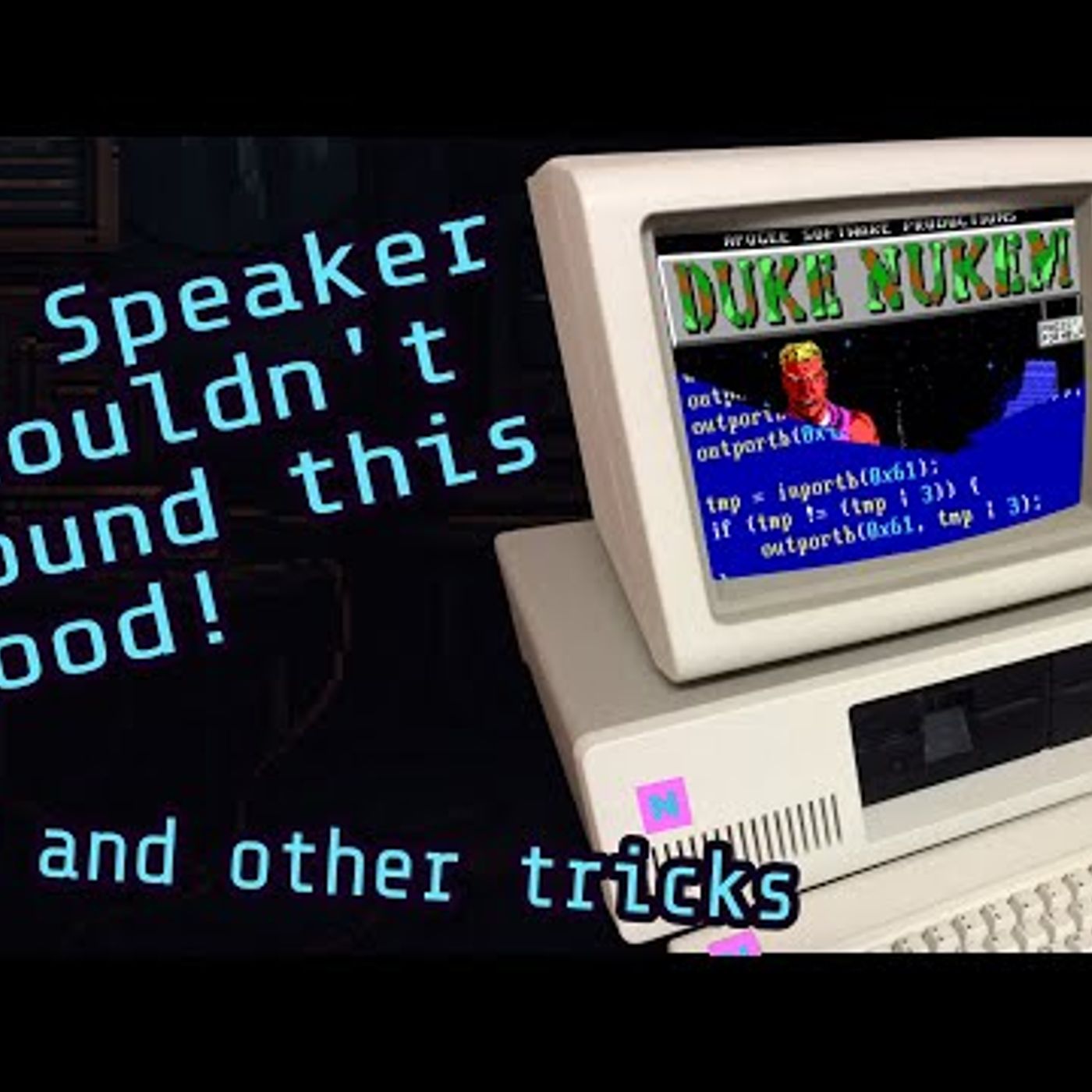
The PC Speaker shouldn\'t sound this good!
from NCOT Technology Hosted by juytre
To try everything Brilliant has to offer—free—for a full 30 days, visit https://brilliant.org/NCOTTechnology/ . You’ll also get 20% off an annual premium subscription. Support me on Patreon - https://www.patreon.com/ncot_tech Source code - https://github.com/ncot-tech/pc-speaker Visit the community! - https://github.com/ncot-tech/community/discussions Think the old PC speaker was only good for making awful beeps? Yeah, me too—until I started digging into how it actually works. In this video, I go down the rabbit hole of early PC audio. It starts simple: how sound is made in the first place, then some hands-on fun using Borland C++ to get the PC speaker beeping. From there, I build up to playing a proper little tune. But things get wild after that. I take a shot at playing a full WAV file using nothing but PWM trickery — all through the original PC speaker, no sound card required. Then I explore how games like Commander Keen and Duke Nukem handled audio, and show off some absolutely wild DOS demos that somehow managed to squeeze real sampled sound out of a one-bit speaker. It’s weird, clever, and kind of brilliant — all at the same time. Credits ------------ This video was sponsored by Brilliant IBM PC image - By Rama & Musée Bolo - File:IBM_PC-IMG_7271.jpg, CC BY-SA 2.0 fr, https://commons.wikimedia.org/w/index.php?curid=94784371 PC XT 5160 - https://commons.wikimedia.org/wiki/File:IBM_PC_XT_5160.JPG - Veradrive, CC BY 4.0 https://creativecommons.org/licenses/by/4.0, via Wikimedia Commons #MSDOS #BorlandCPP #RetroCoding #DOSDev #chiptune
Embed this episode
No transcript yet.