
EPISODE · May 25, 2026 · 12 MIN
The People Who Actually Go
from From Down Here with Dick Hertz · host Dick Hertz
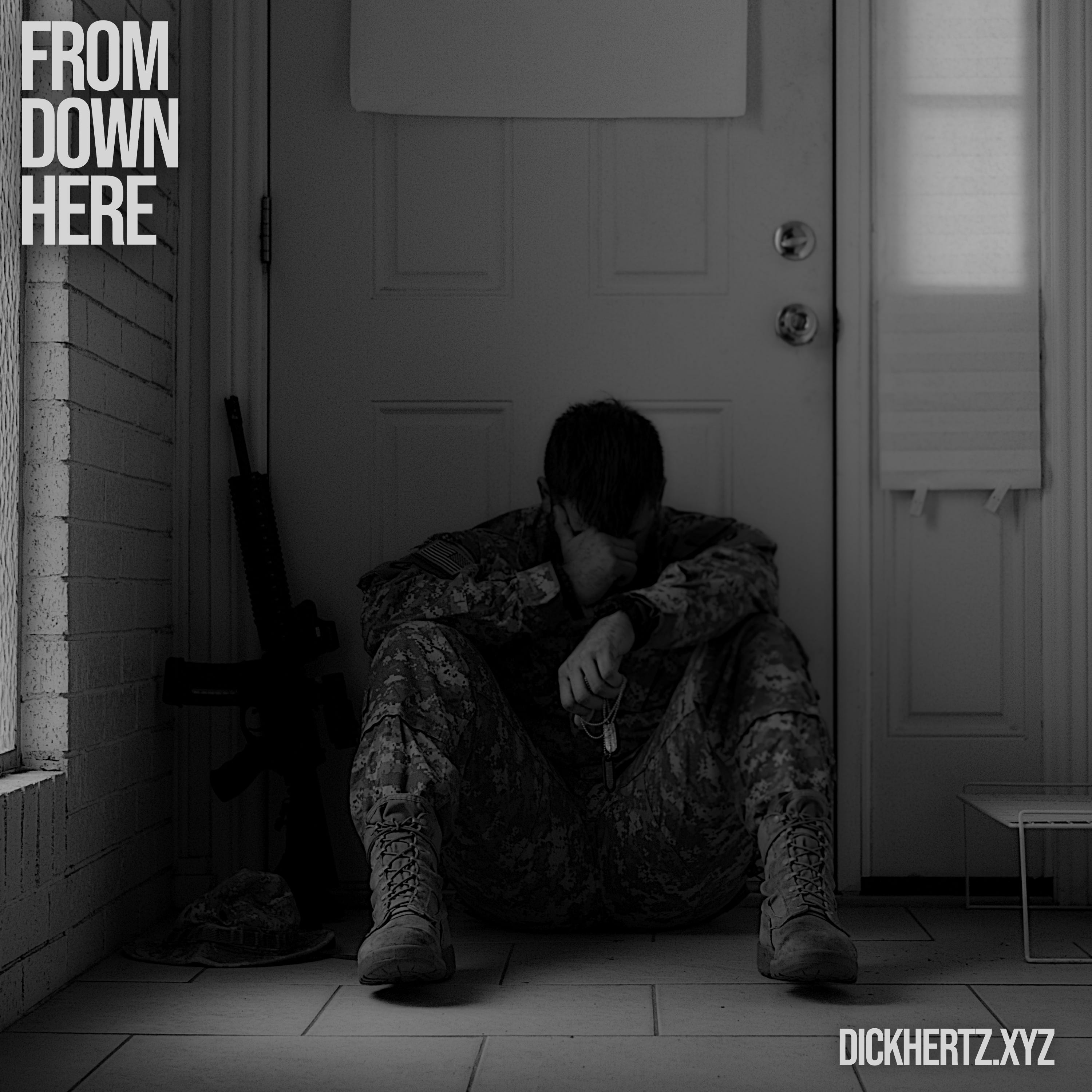
Seventy-one percent of active-duty enlisted military personnel come from households that earned below the national median income. Not below the poverty line. Below the median. The majority of the people we decorate graves for this weekend came from the bottom half of the American economy.That number comes from RAND Corporation research and is consistent with Department of Defense demographic data going back decades. It does not appear in most Memorial Day coverage.Where the recruits come fromMilitary enlistment in the United States is not a cross-section of the country. It is disproportionately drawn from rural communities in the South and Midwest, from counties with higher poverty rates and lower median incomes, from places where the economic ceiling is low and the floor has been dropping for thirty years.Research published in Armed Forces and Society found that recruits are significantly more likely to come from counties with limited economic opportunity. The military’s own term for this is “propensity to serve.” It is a phrase that describes a labor market decision as if it were a calling.When your town’s largest employer closed a decade ago, when the local job market tops out at twelve dollars an hour with no benefits, and a recruiter shows up offering a paycheck, housing, healthcare, and a path to college funding, that is not a choice made in a vacuum. That is a choice made in a context that was built by specific policy decisions over several decades.The promise and what it becameThe original G.I. Bill, passed in 1944, was a genuine commitment. Millions of World War II veterans accessed college education, home loans, and job training. It was one of the largest drivers of middle-class formation in American history.The Post-9/11 G.I. Bill, passed in 2008, is meaningfully better than what existed between Korea and the wars in Iraq and Afghanistan. Full tuition at public in-state schools. A housing allowance. A monthly living stipend. These are real benefits.But the VA that veterans return to is a different institution than the bill suggests.The VA has been chronically underfunded relative to demand. In 2014, an investigation by the VA’s own Office of Inspector General found that 40 veterans died while waiting for appointments at the Phoenix VA Health Care System. Staff had been maintaining secret waiting lists to hide actual wait times from oversight. The scandal was national news for several weeks and then it wasn’t.The VA Mission Act of 2018 was the bipartisan legislative response. It expanded access to private-sector care for veterans who couldn’t get timely VA appointments. It passed with support from both parties.Veterans service organizations have raised consistent concerns about what that expansion means long-term. Private care networks fragment medical records. They lack specialized knowledge of combat-related conditions like traumatic brain injury and PTSD. They operate in a billing environment that is not designed for the complexity of veterans’ healthcare at scale. The concern is that the Mission Act is a structural step toward privatization of a system that exists specifically because the private market was never going to serve this population adequately.The civil-military gapThe Pew Research Center has documented a growing divide between military and civilian America for years. Fewer Americans have served, and fewer have close family members who have. The communities supplying the military and the communities making policy about it have less overlap than at any point since the draft ended in 1973.In 2002, when Congress voted to authorize the invasion of Iraq, roughly a third of members had military service. By 2021, when the last American combat troops left Afghanistan, that number had fallen below twenty percent.This is not an argument about whether specific wars were right or wrong. It is an observation about distance. It is easier to make decisions about deploying the military when you are not the one going, and when your community is not the one supplying the people who do.Where it landsThe phrase “freedom isn’t free” appears a lot this weekend. It’s accurate. The cost is real. The question the phrase doesn’t answer is who pays it.The data answers that clearly. It is the people at the bottom of the income distribution, from the communities that have already been left behind by every other economic decision made in the last fifty years. They held up their end of the contract. The VA appointment is in four months. The housing market is out of reach. The town they came home to is still the same town they left.Every year on this day we put flags on graves. On Tuesday the same structural conditions will still be producing the same recruits from the same zip codes.That is not an accident. It is an outcome. And outcomes are chosen.The full episode is available wherever you get your podcasts.This Substack is reader-supported. To receive new posts and support my work, consider becoming a free or paid subscriber. Get full access to Dick Hertz at dickhertzstories.substack.com/subscribe
Embed this episode
Ready to play
The People Who Actually Go
No transcript for this episode yet
Similar Episodes
No similar episodes found.
Similar Podcasts
No similar podcasts found.