
EPISODE · Jun 23, 2026 · 35 MIN
The Philokalia - 01 - Volume 1
from Discipleship for the Present Podcast · host Kanu Emeruwa
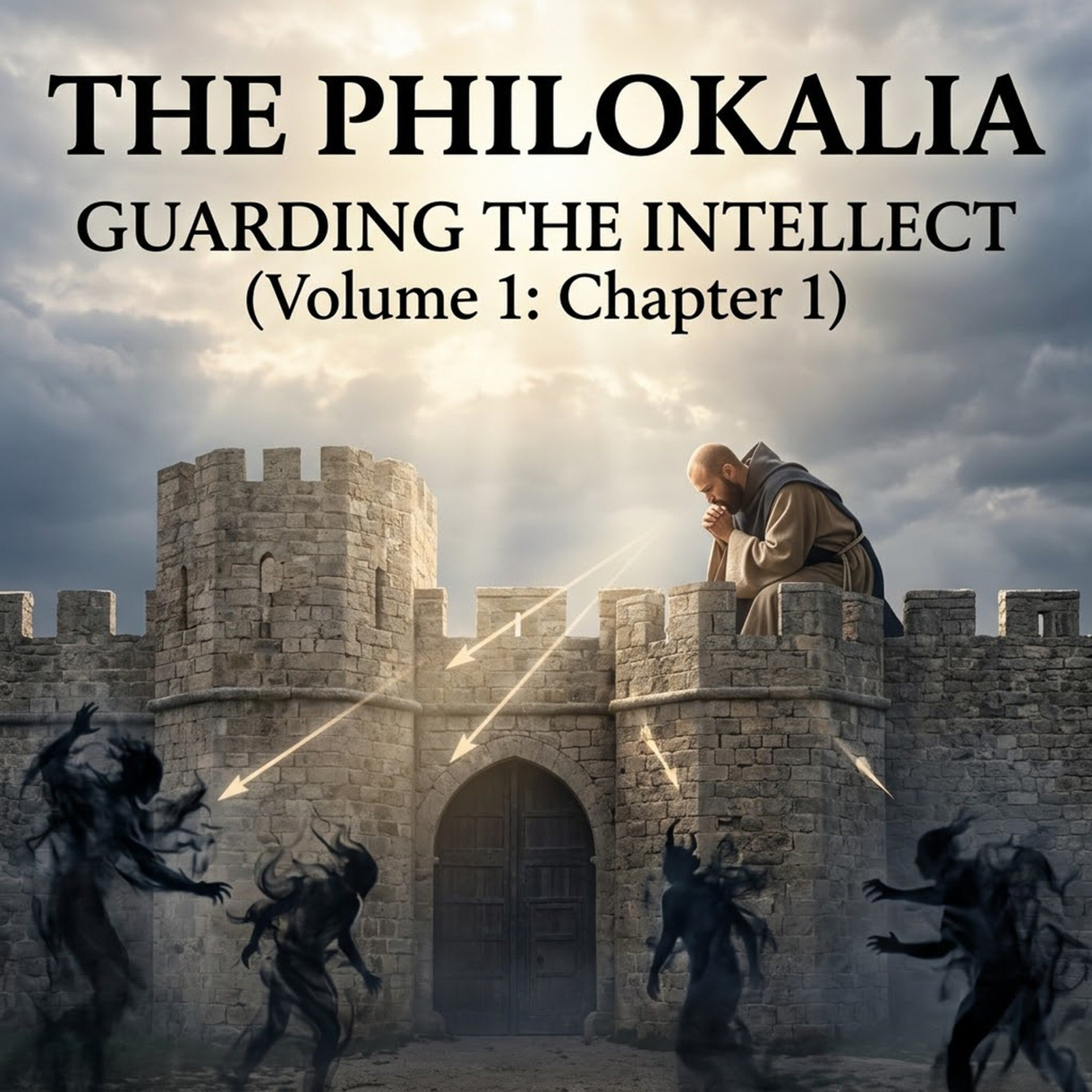
The modern world is designed to drown out the internal life. We are surrounded by continuous stimuli—constant pings, endless scrolling, and the noise of a city that never stops—all of which serve as a convenient buffer. They protect us from the one thing we fear most: sitting alone in a quiet room and facing the reality of our own minds.In this episode, we step away from our contemporary comforts to look at the "Desert Laboratory"—the 4th and 5th-century ascetic tradition preserved in The Philokalia. Men like Evagrios the Solitary and St. Isaiah the Solitary did not flee to the Egyptian wilderness to escape the world; they retreated to conduct a brutal, high-stakes experiment in human psychology. They believed that to truly follow the instructions of Jesus, one had to map the invisible battlefield of the human heart.The core of their discipline was nepsis, or "watchfulness." It is the aggressive, relentless guarding of the intellect. These monks were not interested in behavior modification; they were interested in interception. They recognized that by the time you lash out in anger or make a greedy decision, the internal war has already been lost a hundred times over. They treated sin as a biological process with a clear life cycle: provocation, coupling, assent, and finally, action.To them, the watchful intellect is a gatekeeper—a highly trained bouncer standing at the velvet rope of the heart. Every thought, image, and impulse must show its ID. If a thought identifies as resentment or pride, the gatekeeper denies it entry. It sounds exhausting, and to the modern ear, it risks sounding like spiritual paranoia. But the monks argued the opposite: by learning to recognize the "shape" of the eight major vices, the guard becomes efficient. The goal was not tension, but hesychia—a profound, unshakable stillness.Yet, as we hold these extreme practices up to the light of the Gospel, we find where the desert tradition offers profound wisdom and where it hits friction. We examine how their commitment to "secret obedience" aligns perfectly with Jesus' warnings against performative piety, and how they reclaimed the "incensive power" of the soul—not to destroy aggression, but to weaponize it against our own destructive impulses. But we also wrestle with the cost: does total isolation for the sake of internal purity come at the expense of Jesus’ command to be the salt of the earth?In This EpisodeWhy the "invisible battlefield" of the mind is more dangerous than any external threatThe concept of nepsis: Transforming watchfulness from a passive observation into an aggressive defenseThe four-stage life cycle of temptation: How a "provocation" becomes a pattern of behaviorThe "Gatekeeper" metaphor: Using pattern recognition to dismiss destructive thoughts instantlyWhy modern sensory overload is an engineered engine for avoiding self-confrontationThe "Desert Laboratory": Why the early monks viewed the wasteland as the front line of a cosmic warThe extreme asceticism of St. Makarios and St. John the Small as a reflection of internal spiritual intensityEvaluating "Secret Obedience": Why performing virtue for an audience rots the soul from withinWeaponizing the "incensive power": Turning human aggression inward to guard the heartThe tension between hesychia (stillness) and the call to serve a broken worldPractical ReflectionWhere in your daily life are you using external noise—work, media, or busyness—as a buffer to avoid facing the raw, unfiltered reality of your own thoughts?If you had to stand as a "gatekeeper" at the door of your heart today, what specific "provocations" (anger, pride, resentment) would you be forced to turn away most frequently?How do you balance the need for internal stillness with the Gospel command to engage actively with the world, and are you using your "spiritual peace" as an excuse to avoid service?Suggested Substack ExcerptBefore we can master our actions, we must master the invisible battlefield of our own thoughts. This episode dives into the ancient wisdom of The Philokalia and the desert ascetics to explore how "watchfulness" allows us to intercept destructive impulses before they take root. We analyze the tension between the quest for internal stillness and the external commands of Jesus.AI DisclosureThis episode was created using Google NotebookLM Audio Overview, based on human-curated source material, structured guidance, and editorial review. AI is used as a tool for clarity and delivery, not as a replacement for thoughtful study or engagement with the original texts.Copyright© 2026 Discipleship for the Present / Kamashcu Production Studios. All rights reserved. This is a public episode. If you would like to discuss this with other subscribers or get access to bonus episodes, visit discipleshipforthepresent.substack.com
Embed this episode
Ready to play
The Philokalia - 01 - Volume 1
No transcript for this episode yet
Similar Episodes
No similar episodes found.
Similar Podcasts
No similar podcasts found.