PodParley PodParley

The Physicist Who Says Reality Is Conscious

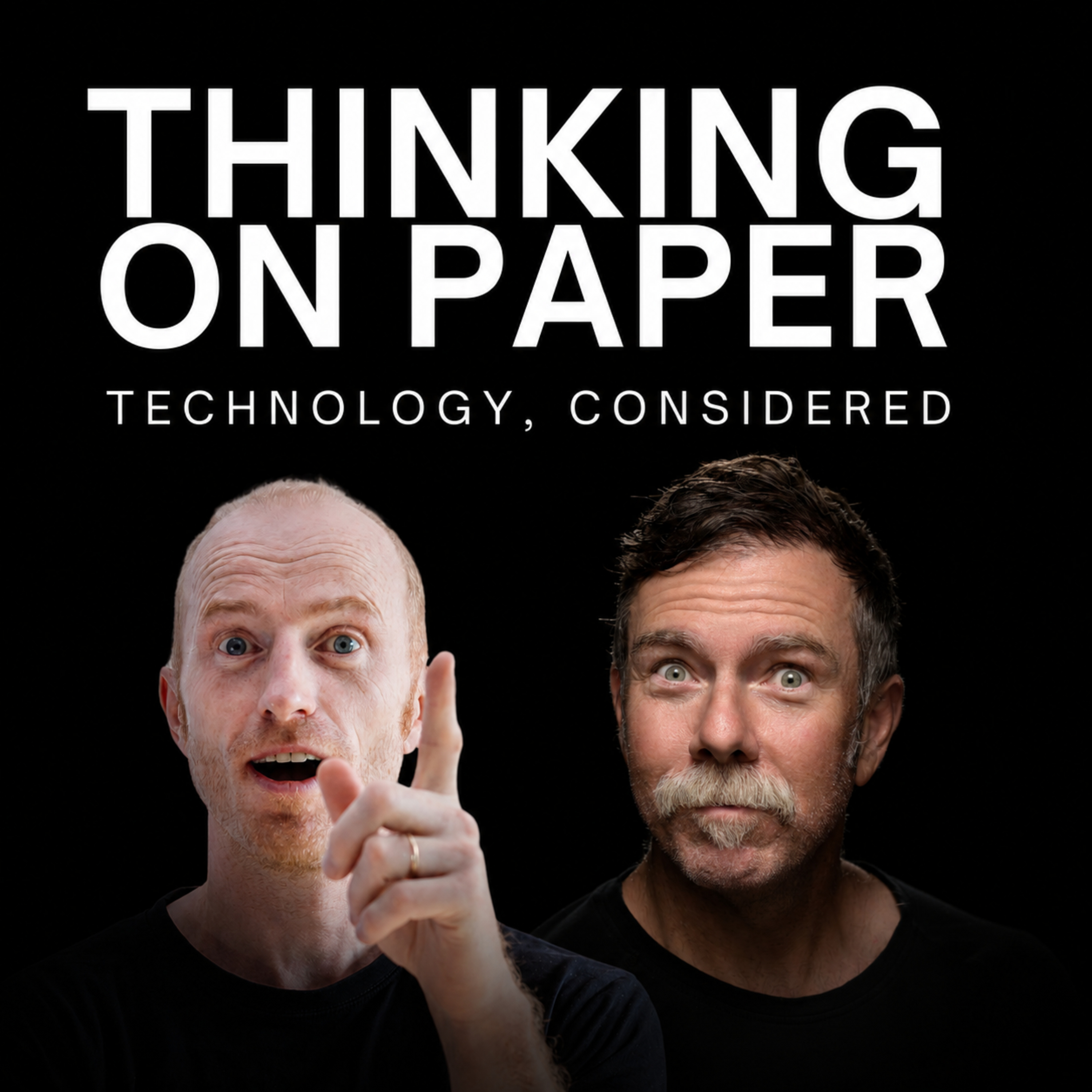
An episode of the Thinking On Paper podcast, hosted by Mark Fielding and Jeremy Gilbertson, titled "The Physicist Who Says Reality Is Conscious" was published on December 5, 2025 and runs 4 minutes.

December 5, 2025 ·4m · Thinking On Paper

0:00 / 0:00

What is consciousness?Federico Faggin—physicist, inventor of the microprocessor—says it's not created by brains. It's fundamental to reality. Everything is conscious: atoms, electrons, maybe even spacetime itself.This is panpsychism. And Faggin argues quantum physics proves it.We're reading his book, *Irreducible*, to figure out if we agree.Quantum conscious units called "Seities"? A universe that's been conscious forever? We're not sure yet. But it's fascinating.Here's Faggin's argument:For a hundred years, quantum physics has shown us something strange. Matter isn't solid—it's vibratory energy. Everything is quantum information.But we still don't have a theory that unifies general relativity and quantum mechanics. Faggin thinks consciousness is the missing piece.His hypothesis: The universe has been conscious—and had free will—forever.Why this matters:If consciousness is fundamental (not emergent from complex brains), then AI will never be conscious. Computers process information. They don't experience anything.Consciousness, Faggin argues, isn't computation. It's something else entirely. Something quantum. Something that exists at every level of reality.We explore:- The "hard problem" of consciousness (why materialism can't explain subjective experience)- What quantum mechanics reveals about observation and reality- Panpsychism: the idea that consciousness is everywhere- Why integrated information theory falls short- What "Seities" are (quantum conscious units—seriously)- Whether this is physics or philosophy (both, probably)- Why Faggin thinks free will is real (and quantum)His background:- Invented the first microprocessor (Intel 4004, 1971)- Designed chips that powered early personal computers (Intel 8080, Zilog Z80)- Spent 50 years studying quantum systems- Now argues consciousness creates reality, not the other way aroundThe implications:If he's right, everything changes. Meaning isn't something we invent—it's something we discover. Free will isn't an illusion. The universe isn't dead matter accidentally producing awareness. It's aware all the way down.We don't know if we buy it. But we can't stop thinking about it.If you've ever wondered why you experience anything at all—why there's something it's like to be you—this episode explores the most radical answer modern physics offers.---Guest: Federico Faggin, Physicist, Inventor (Microprocessor)Book: *Irreducible: Consciousness, Life, Computers, and Human Nature*Topics: Consciousness, quantum physics, panpsychism, philosophy of mind, free will, AI limits, integrated information theory, materialismWarning: Gets weird. Worth it.Please enjoy. And share with a conscious friend.Cheers, Mark and Jeremy.PS: Please subscribe. It’s the best way you can help other curious minds find our channel.Other ways to connect with us:⁠Listen to every podcast⁠Follow us on ⁠Instagram⁠Follow us on ⁠X⁠Follow Mark on ⁠LinkedIn⁠Follow Jeremy on ⁠LinkedIn⁠Read our ⁠Substack⁠Email: [email protected]

What is consciousness?


Federico Faggin—physicist, inventor of the microprocessor—says it's not created by brains. It's fundamental to reality. Everything is conscious: atoms, electrons, maybe even spacetime itself.


This is panpsychism. And Faggin argues quantum physics proves it.


We're reading his book, *Irreducible*, to figure out if we agree.


Quantum conscious units called "Seities"? A universe that's been conscious forever? We're not sure yet. But it's fascinating.


Here's Faggin's argument:


For a hundred years, quantum physics has shown us something strange. Matter isn't solid—it's vibratory energy. Everything is quantum information.


But we still don't have a theory that unifies general relativity and quantum mechanics. Faggin thinks consciousness is the missing piece.


His hypothesis: The universe has been conscious—and had free will—forever.


Why this matters:


If consciousness is fundamental (not emergent from complex brains), then AI will never be conscious. Computers process information. They don't experience anything.


Consciousness, Faggin argues, isn't computation. It's something else entirely. Something quantum. Something that exists at every level of reality.


We explore:

- The "hard problem" of consciousness (why materialism can't explain subjective experience)

- What quantum mechanics reveals about observation and reality

- Panpsychism: the idea that consciousness is everywhere

- Why integrated information theory falls short

- What "Seities" are (quantum conscious units—seriously)

- Whether this is physics or philosophy (both, probably)

- Why Faggin thinks free will is real (and quantum)


His background:

- Invented the first microprocessor (Intel 4004, 1971)

- Designed chips that powered early personal computers (Intel 8080, Zilog Z80)

- Spent 50 years studying quantum systems

- Now argues consciousness creates reality, not the other way around


The implications:

If he's right, everything changes. Meaning isn't something we invent—it's something we discover. Free will isn't an illusion. The universe isn't dead matter accidentally producing awareness. It's aware all the way down.


We don't know if we buy it. But we can't stop thinking about it.


If you've ever wondered why you experience anything at all—why there's something it's like to be you—this episode explores the most radical answer modern physics offers.


---


Guest: Federico Faggin, Physicist, Inventor (Microprocessor)

Book: *Irreducible: Consciousness, Life, Computers, and Human Nature*

Topics: Consciousness, quantum physics, panpsychism, philosophy of mind, free will, AI limits, integrated information theory, materialism

Warning: Gets weird. Worth it.


Please enjoy. And share with a conscious friend.


Cheers, 


Mark and Jeremy.


PS: Please subscribe. It’s the best way you can help other curious minds find our channel.


Other ways to connect with us:


The Higher Attitudes Podcast Tom & Julie Obenchain Read the paper, watch the news, open your news app on your phone, how much of what you see is positive? The advertising that is all around us mostly reminds of what we are not, what we don’t have, and places we have not visited. Have you ever wondered what life would feel like if more of the messaging we see every day taught us to be content, peaceful, & hopeful?That’s where The Higher Attitudes Podcast comes in. This show is dedicated to focusing on positive, hopeful, even grateful ways of thinking. Let’s ditch the lower attitudes and adopt higher attitudes. Let's learn to be happy and peaceful and then teach others to do the same. Join us won’t you? Thinking On Your Own Nicholas Peterson Run down of my personal thoughts on the school system and what needs to change The Global Discourse Hamad m "The Global Discourse" is your essential podcast for well-informed discussions on global affairs. Hosted by experts, it tackles politics, economics, culture, and more. Our mission is to foster understanding and provoke critical thinking on today's complex world issues. Join us to explore diverse viewpoints and stay informed on topics shaping our planet. Subscribe for balanced, informative conversations. In "The Global Discourse," knowledge, insight, and understanding converge to shape a more enlightened world. Festival of Dangerous Ideas Festival of Dangerous Ideas Listen to over 10 years of talks presented at the Festival of Dangerous Ideas – Australia's original disruptive ideas festival. FODI brings to light important conversations that push the boundaries of conventional thought, challenging thinking on some of the most persevering and difficult issues of our time. Hear from our festival alumni – the world's best experts, innovative thinkers and mischief makers – as they share provocative ideas and conversations that encourage debate and critical thinking. It's time to get uncomfortable…
URL copied to clipboard!