The Problem With Everything
from Lean Out with Tara Henley Hosted by Tara Henley
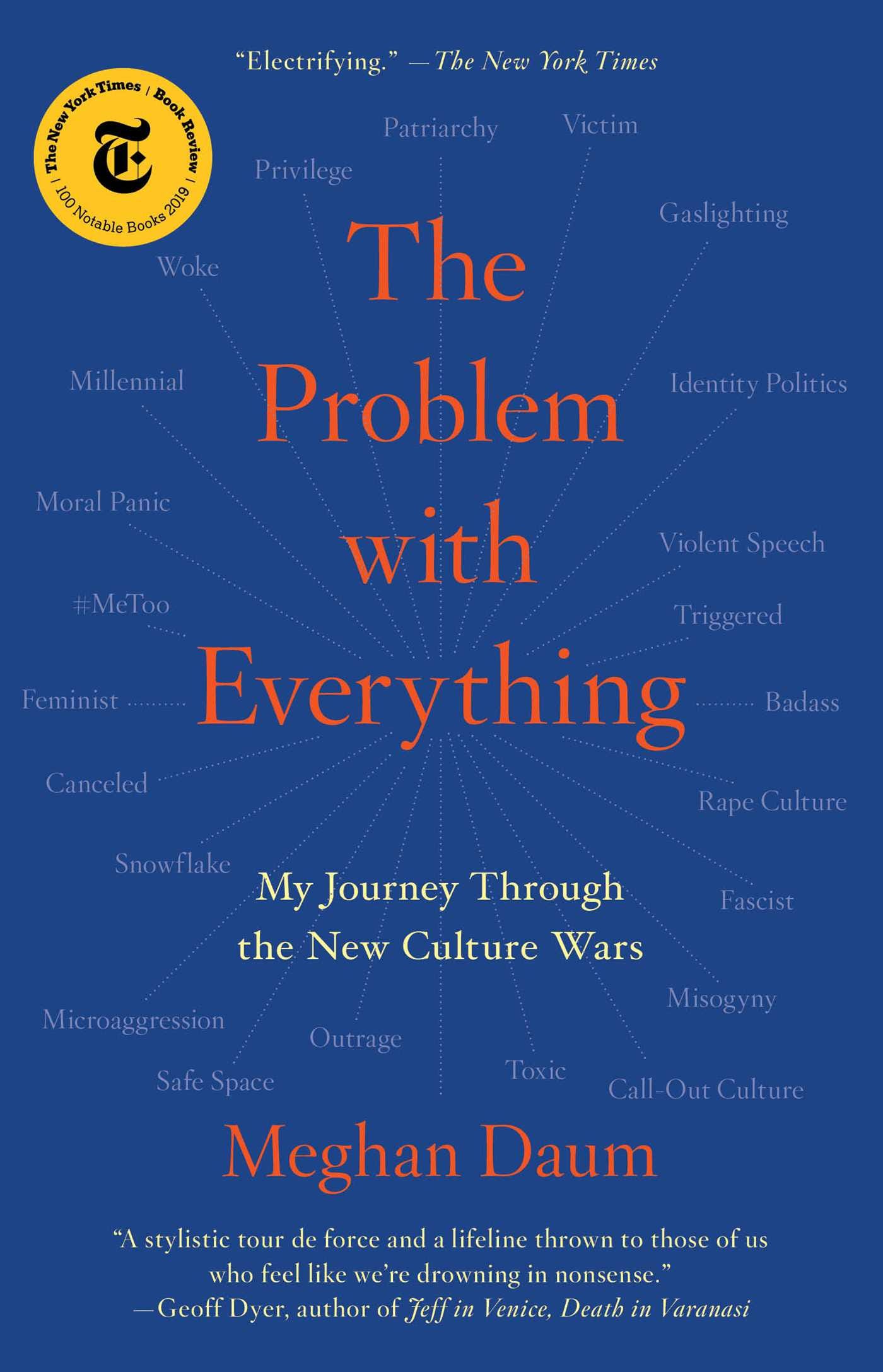
Over the last few years, many of us have had the feeling that things were just not adding up, that the narratives in the mainstream media simply were not making sense. Well, my guest on the podcast today had that experience earlier than most, years back, with online feminism. And it sowed the seed that became her most recent book. Meghan Daum is an essayist and the author of six books. She’s a former opinion columnist with The Los Angeles Times and the host of a weekly interview podcast, The Unspeakable. Her latest book, The Problem with Everything: My Journey Through the New Culture Wars, was recently released in paperback in Canada with a new introduction. Meghan joins me today to talk about the excesses of #MeToo, about cancel culture, about Elon Musk — and about the rise of heterodox thought. TH: Meghan, welcome to Lean Out. MD: Thanks for having me. It’s great to be here. TH: So nice to have you on. I first read The Problem with Everything in the summer of 2020. I was working on a current affairs radio show, and it seemed like every topic that I was interested in was off limits. So, it was a relief to read your book. And it was a gateway drug to other heterodox thought. I know you have a new introduction to the book. With some distance — with the last two years of heated culture wars, plus a pandemic — what’s it like for you looking back on the book? MD: First of all, thank you for reading it and I’m really glad it resonated with you. The book was excruciating to write. I’ve published six books and I have never had a challenge like this before. I started writing it in 2016 and it had many iterations along the way. But to answer your question, how do I feel about it two years out? I guess I feel like I thought things would have changed, and I’m unpleasantly surprised that they seem to have gotten worse. I feel like the book captures the moment that it landed and everything leading up to it. It’s impossible to hit a moving target. There’s a reason that when people are covering the current culture, they tend to do it best in columns, in weekly installments. It’s very hard to capture these kinds of cultural phenomena in a book. So it remains very much of its time, but it has certainly continued to be relevant. In fact, more so. People are responding to it better now than when it first came out. TH: That’s interesting. As you say, it is of its time, but it really captures a lot of the forces that led up to this Great Awokening that we have been living through. I want to talk about #MeToo; you write about that extensively. Take me back to when the Aziz Ansari story came out and what you were thinking and feeling. MD: I think I was thinking and feeling what most women were. It was really the record scratch moment. I think that might have been Bari Weiss’s phrase. People were more or less going along with the #MeToo movement; obviously there was much good that came out of it. But like so many of these movements, the overcorrection comes with a lot of unintended consequences. So, you have situations like Aziz Ansari. That was not a #MeToo situation as #MeToo had come to be defined. That was a misunderstanding … I think that a lot of people who had been going along with #MeToo in good faith took that situation as an occasion to take a step back and say, “What are we doing here? What are we critiquing? What kind of behaviour do we really mean to be calling out? Let’s slow down.” But I’m not sure we did slow down. Alas. TH: Yeah. When you were writing about the ironic contempt for men leading up to that moment, the #KillAllMen, the “I drink male tears” boasts on social media, that soon became inseparable from actual disdain for men. I worry sometimes listening to younger women talk about men now; I hear that disdain there. Do you think there was enough internal criticism from feminists, as this was all bubbling up? MD: Well, criticism is anti-feminist. Self-criticism is the opposite of self-care, and self-care is now synonymous with feminism, right? I mean, my book is a self-interrogation, if nothing else. I’m self-scrutinizing the whole way through. That’s just what I do in life, and that’s what I’ve always done in my work. I think that it becomes very difficult to examine anything in any depth — yourself, the world, other people — when you are dealing with everything being on screens, and every kind of media experience being incredibly short. This goes for all of us. If you’re in these younger generations, that’s just the air you’ve been breathing since you were born. But even those of us who are older, we still fall victim to this. We are all headed down this very dangerous path with respect to our abilities to look at ourselves with any degree of honesty, and also look at the world and get past our own confirmation biases. And understand the difference between how things are and how we want them to be. Because those two things are often very much at odds. TH: In the book, you list some media headlines, and there’s one that really stood out, a BBC headline in 2018: “Climate change impacts women more than men.” This trend is very much present with us now. We’re used to it — this rolling emergency, and everything being about this one thing. But I don’t remember that happening before #MeToo. I wonder if this contributed to the backlash that we’re seeing now. I remember Dave Chappelle warning about this in one of his specials. What do you think about the backlash that we’re seeing? MD: Well, there’s always been that kind of hyperbole in media. I mean, that was always a joke in news organizations. There would be a headline: “World ends, women and children affected the most.” So, there’s always been that kind of tendency. But, yeah. The reason that I was moved to write about this stuff was because I grew up in the 70s and the 80s, and I was a young woman in the 90s. And the feeling — it wasn't just a feeling, it was a fact — was that women were doing better than men, on balance. Women were graduating from college and getting higher degrees in greater numbers than men. They were buying their own homes as single women, much more so than single men. Across any number of metrics, women were surpassing men. At the same time, there was this narrative on social media, and in the digital media sphere, in a lot of online journalism, that really took as its premise that women were suffering. That women were a marginalized group. That it had never been a more sexist time. That even to walk down the street and fight the patriarchy at every corner, meant that you were a badass that needed to be congratulated. It didn’t make any sense to me. I wrote the book as a way of trying to figure out what I was missing. TH: You write about toughness. I loved reading that, and it made me think. I started my career in hip-hop and I experienced sexism. But the way I thought about it was: This toughened me up. I felt good about myself, that I could be tough in those ways. But that’s not how the next generation of women sees it. Is there a middle ground between us probably putting up with more than we needed to, at times, and them embracing their vulnerability? MD: I think that our generation, we probably overvalued toughness. We fetishized it. And millennials, Gen Z, they perhaps overvalue or fetishize fairness. And we really need to meet in the middle. I remember there was a critique of the book that said: “Why is she taking all this time to praise toughness and talk about how important it is to be tough, instead of working to build a world where toughness is not necessary?” I mean, that’s absurd. We call this the naturalistic fallacy. Just because something is true doesn’t mean that we like it. You’ve talked about this a lot in your work, with biological clocks, and the biological imperative, and the differences between the sexes. In fact, there are things that women can’t do that men can, and vice versa. It’s never going be fair. It might be equal at the end of the day, but fairness is a very dif… This is a public episode. If you would like to discuss this with other subscribers or get access to bonus episodes, visit tarahenley.substack.com
Embed this episode
No transcript yet.