
EPISODE · Sep 30, 2021 · 3 MIN
The Proton
from The Field Guide to Particle Physics · host Sean Downes
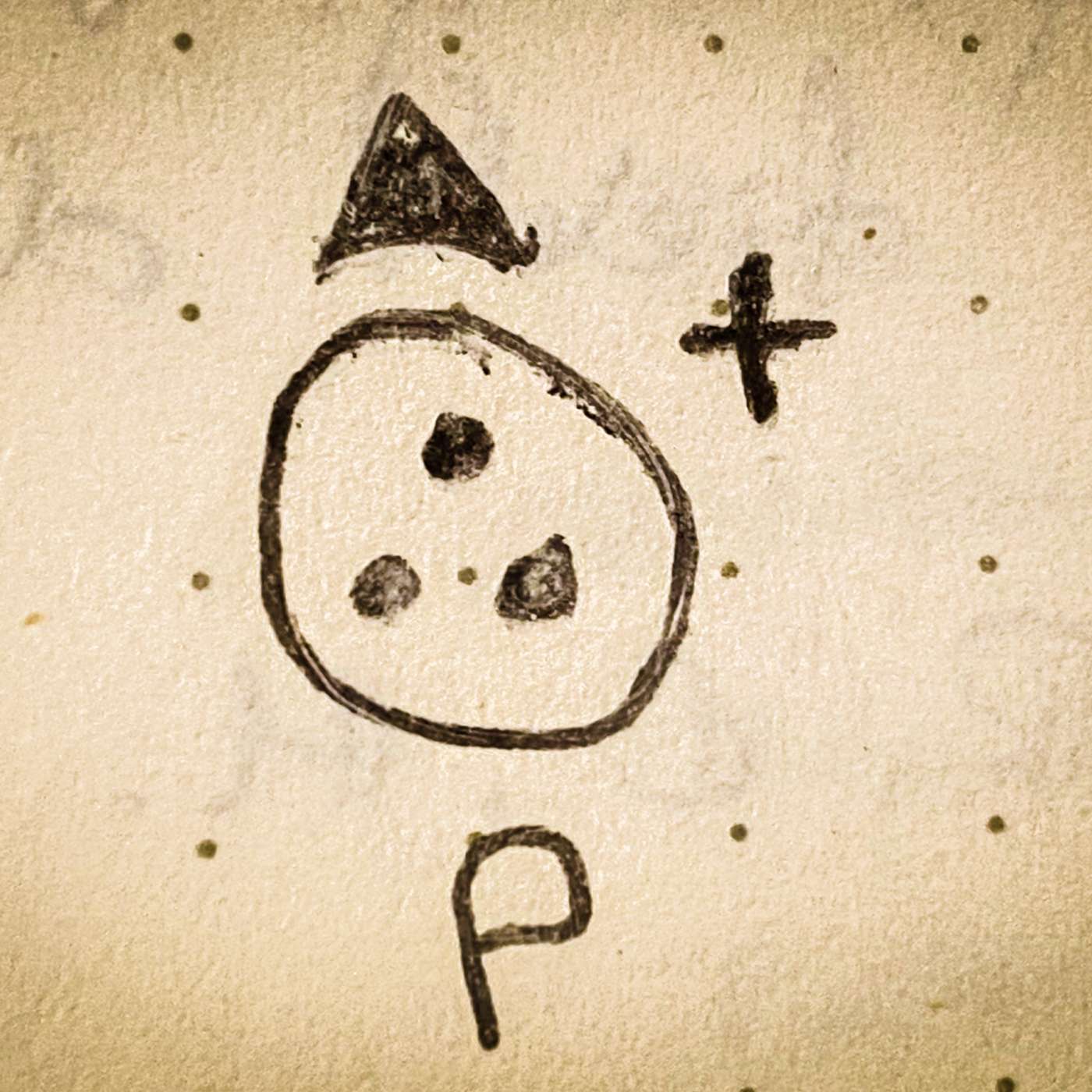
The Field Guide to Particle Physics https://pasayten.org/the-field-guide-to-particle-physics ©2021 The Pasayten Institute cc by-sa-4.0 The definitive resource for all data in particle physics is the Particle Data Group: https://pdg.lbl.gov. The Pasayten Institute is on a mission to build and share physics knowledge, without barriers! Get in touch. The Proton With a mass of 938.27 MeV, the proton is the lowest energy configuration of a trio of quarks. It has two up quarks and a down, but remember most of that mass is made up of subnuclear goo. You can find protons literally everywhere: from the nuclei of atoms on Earth to collisions at ultra high speeds from deep in outer space. From our accounting of electric charge, the proton has two copies of the up charge, and one of the down, which means that electric the charge of the proton is 2/3e + 2/3e − 1/3e = e. So far as we can tell, the proton is stable. It’s the only stable quark triplet or baryon because it has the lowest mass. Anything heavier would decay… to it. There are a host of experiments looking for evidence that protons decay, but so far all we can say is that it’s average lifetime longer than 10^34 =10000000000000000000000000000000000 years. That’s like expecting to find only a single proton decay out of all the atoms in one million people per year. There are a lot of reasons to expect the proton to decay - at lot of really compelling, interesting ones. But they’re all hypothetical extensions to the standard model of particle physics. So again, as far as we know, the proton is stable. And all quark triplets - the baryons - eventually decay to the proton. Given that the down quark mass is slightly heavier than the up quark mass, one might think that the lightest baryon would be a triplet of up quarks: uuu. If it were, the electric charge would be 3×2/3e = 2e. But it is not. Again, it is important to remember that a baryon's mass is made up almost entirely by its internal energy. The uuu-baryon does exist - its called a Δ++ , but its internal energy - and therefore its mass - is quite a bit larger than that of the proton.
Embed this episode
What this episode covers
With a mass of 938.27 MeV, the proton is the lowest energy configuration of a trio of quarks. It has two up quarks and a down, but remember most of that mass is made up of subnuclear goo. You can find protons literally everywhere: from the nuclei of atoms on Earth to collisions at ultra high speeds from deep in outer space.
Ready to play
The Proton
No transcript for this episode yet
Similar Episodes
No similar episodes found.
Similar Podcasts
No similar podcasts found.