
EPISODE · Mar 24, 2026 · 46 MIN
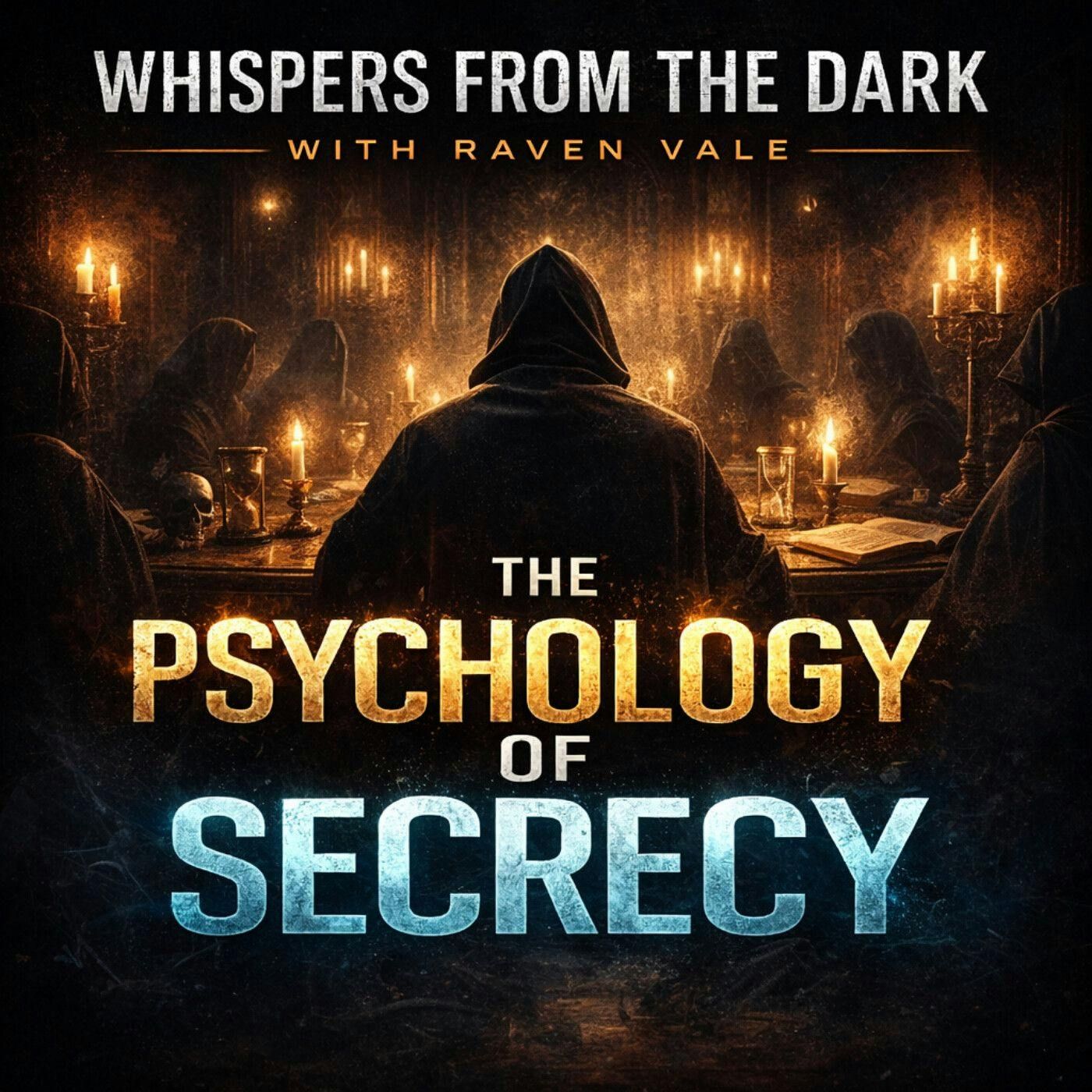
127: The Psychology of Secrecy — Why Hidden Groups Always Rise to Power
There is something magnetic about a closed door. Not because of what you know is behind it. Because of what you don't. In this episode of Whispers From the Dark, host Raven Vale examines one of the most durable and recurring patterns in human civilization: the rise of secret societies, hidden networks, and exclusive groups — and the psychological architecture that makes secrecy, in and of itself, a mechanism for generating authority. This is not a conspiracy theory episode. It is something more difficult to dismiss: a careful, evidence-based investigation into why the human brain responds to concealment the way it does, and what that response has produced across thousands of years of history. Raven opens with the information gap theory — the documented cognitive phenomenon in which the mere awareness of missing knowledge intensifies curiosity and elevates perceived value. Secrecy, she argues, is a machine for manufacturing that gap. The vault does not make the gold more valuable. It makes it feel more valuable. And feeling, in the architecture of human psychology, often matters more than fact. The episode moves through the evolutionary origins of exclusion — why the tribal brain responds to restricted access with heightened desire rather than indifference — and traces the consistent historical pattern by which priesthoods, royal courts, guilds, fraternal societies, and modern elite networks have all leveraged the same fundamental dynamic: restrict access, and the thing being restricted becomes desirable; make it desirable, and the group holding it acquires authority. Raven examines initiation rituals through the lens of effort justification — the psychological phenomenon in which investment increases perceived value — and explores how shared struggle and shared secrets build the kind of relational trust that produces extraordinary group cohesion and loyalty. She traces the function of hidden knowledge as currency through history, from the restricted literacy of medieval religious institutions to the closely guarded trade secrets of Renaissance guilds to the alchemists who held enormous cultural authority on the basis of a secret that was almost certainly false — but remained unverified long enough to shape the behavior of kings. The episode confronts the paradox of trust: how secrecy, which withholds information, can actually increase the confidence outsiders place in a group by suggesting selectivity, discretion, and hidden competence. And it examines the modern incarnation of all of this — the invitation-only conference, the private forum, the encrypted channel, the off-the-record dinner — where the psychology is identical to what it was in the lodges of eighteenth-century Freemasons, even if the aesthetics have changed entirely. The episode closes with the hardest question: is hidden knowledge inherently powerful, or does power reside not in the secret but in the belief surrounding it? And if the latter — if the belief is the amplifier and secrecy only the spark — what does that mean for the way we understand influence, authority, and the persistent human conviction that somewhere, behind a closed door, the people who really run things are meeting right now? This episode is for anyone who has ever: — Wondered why exclusive groups seem more powerful than open ones — Asked what Skull and Bones, Freemasonry, or the Bilderberg Group actually do — Sensed that the most important decisions are made in rooms you'll never enter — Wanted to understand the psychology behind conspiracy thinking without endorsing it — Been drawn to a closed door and wanted to know why The secret doesn't have to be real. It only has to stay hidden. Whispers From the Dark — available wherever you listen to podcasts. secret societies psychology why secret groups rise to power psychology of secrecy hidden power structures secret society explained exclusive groups and authority information gap theory Freemasons Skull and Bones psychology hidden kn
Embed this episode
Ready to play
127: The Psychology of Secrecy — Why Hidden Groups Always Rise to Power
No transcript for this episode yet
Similar Episodes
No similar episodes found.
Similar Podcasts
No similar podcasts found.