
EPISODE · May 1, 2026 · 27 MIN
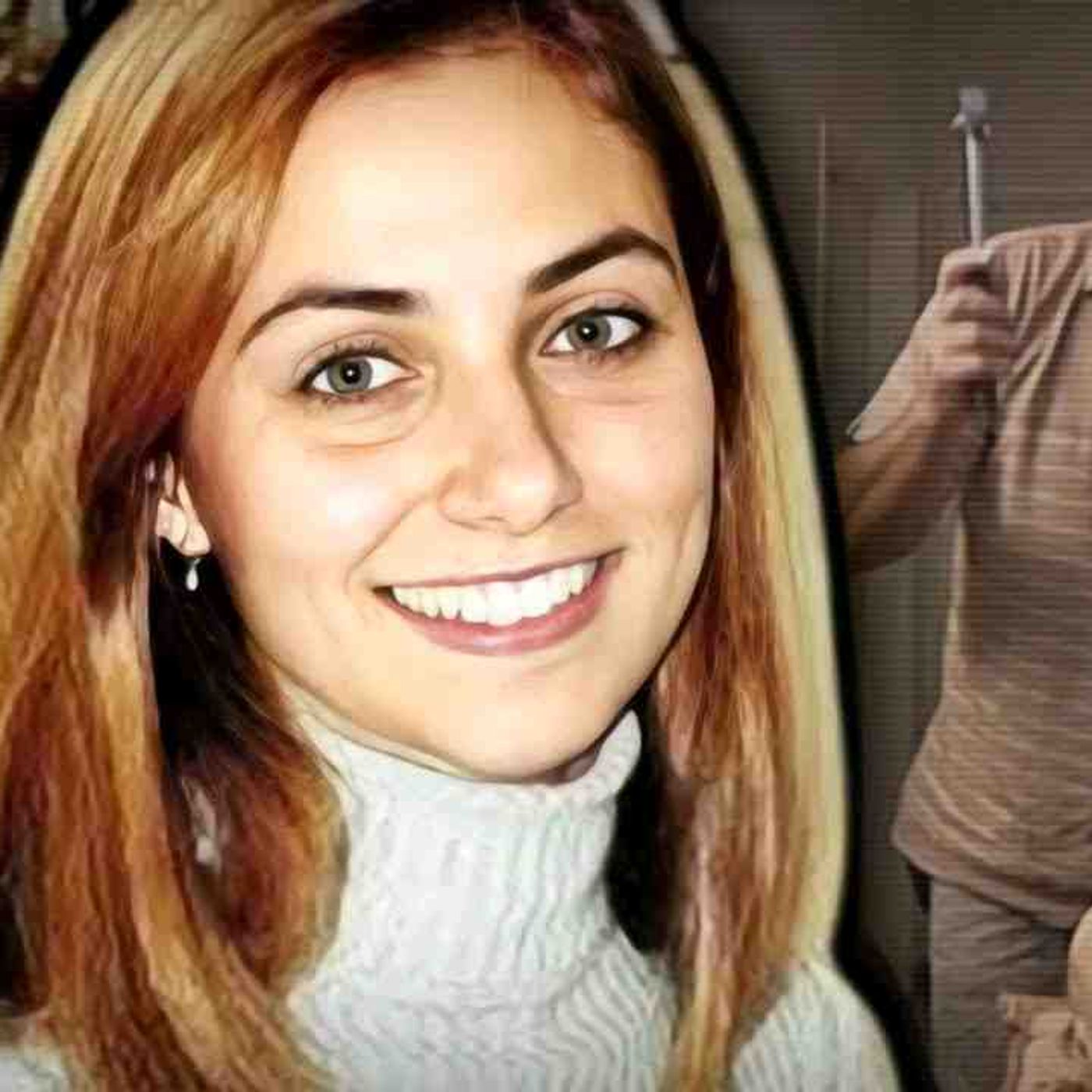
The Puzzling Story Of Inge Lotz
from TruRed CRIME · host TrueRed CRIME
On 16 March 2005, 22-year-old Inge Lotz — a brilliant Mathematical Statistics master's student at Stellenbosch University in South Africa — was brutally murdered in her apartment at the Klein Welgevonden estate [citation:1][citation:9]. She had been stabbed repeatedly in the chest and beaten so severely over the head that the attack involved both a knife and blunt-force trauma [citation:9][citation:10].That morning, Inge said goodbye to her boyfriend, actuary student Fred van der Vyver, around 8:15 a.m. after he had spent the night at her flat. Her body was discovered around 10:36 p.m. that same night [citation:1]. The case that followed became one of South Africa's most controversial and puzzling murder mysteries — marked by allegations of planted evidence, a high-profile acquittal, and millions in legal battles that continue to this day.**The Suspicion and the Evidence**Police quickly suspected Van der Vyver. There were no signs of forced entry to Inge's flat, and detectives noted that in cases involving such violence, the perpetrator is almost always someone close to the victim [citation:3]. The state built what appeared to be a compelling case:- **The Hammer**: A small ornamental hammer — a gift from Inge's parents to Van der Vyver — was found in his bakkie (pickup truck). Police believed this hammer could have been the blunt-force weapon used to inflict Inge's head wounds [citation:1][citation:3].- **The Fingerprint**: Inge had rented a DVD on the afternoon of her murder. Police lifted a fingerprint belonging to Van der Vyver from the DVD cover — suggesting he had been present after she returned home [citation:3].- **The Bloody Footprint**: Investigators claimed a bloodstained footprint found in Inge's bathroom matched Van der Vyver's Hi-Tec sports shoe [citation:3][citation:7].Van der Vyver maintained his innocence throughout. His family sold their farm to fund his legal defence [citation:3].**The Trial and Explosive Acquittal**The case went to trial in February 2007 before Judge Deon van Zyl in the Western Cape High Court [citation:1]. What followed was a dramatic dismantling of the state's case.The defence produced an American fingerprint expert who testified that the print on the DVD cover had **rounded edges** — a pattern consistent with being lifted from a curved surface like a wine glass, not the flat surface of a DVD cover. The argument was that the print had been planted [citation:3].Even more damning was the testimony of former FBI agent Bill Bodziak, a world-renowned forensic footwear expert who had testified for the prosecution at the OJ Simpson murder trial. Bodziak told the court that when South African police investigator Superintendent Bruce Bartholomew flew to Florida to consult him, Bartholomew brought only poor-quality photographs and no properly scaled evidence. Bodziak concluded that Van der Vyver's shoe **could not** have produced the bloody mark on the bathroom floor — and in fact, there was not enough detail in the stain to say it was even made by a shoe [citation:7].Bodziak revealed that the three small white dots Bartholomew had linked to grains of sand in the shoe's groove were more likely produced by the police forensics team wiping excess staining agent off the bloodstain instead of rinsing it as protocol required [citation:7]. He testified that Bartholomew appeared "very concerned" after this failed attempt to match the shoe [citation:7].On 29 November 2007, Judge Van Zyl acquitted Van der Vyver, rejecting the state's evidence on the hammer, the fingerprint, and the bloodstain. The court found that police had fabricated evidence against him [citation:1][citation:9].**The Aftermath: Legal War**The acquittal did not end the story. Van der Vyver sued the Minister of Police for R46 million for malicious prosecution. In August 2011, Judge Anton Veldhuizen found in his favour, awarding the damages [citation:1][citation:10]. The court found that police Captain Munnik Maritz had acted wrongfully in presenting misleading evidence [citation:10].But the state appealed — and won. In March 2013, the Supreme Court of Appeal overturned the malicious prosecution finding [citation:1]. The Constitutional Court refused Van der Vyver's application to appeal further [citation:1][citation:6]. Undeterred, Van der Vyver took his case to the United Nations Human Rights Commission, seeking compensation for human rights violations and legal fees. The commission turned down his application [citation:1][citation:6].**Alternate Theories and Unanswered Questions**While the state's case collapsed, Inge's murder remains unsolved. In 2012, her father, Professor Jan Lotz, offered a R1 million reward for information leading to a conviction and hired legendary former detective Piet Byleveld — known as "Piet Byl" (Piet the Axe) — to investigate. In June 2013, Lotz terminated Byleveld's mandate, having received no answers [citation:1][citation:5].One theory that emerged involved a gang motive. A witness claimed that a group of men had gained access to the complex using a bunch of keys. When Inge returned home and locked the security gate behind her, she inadvertently trapped the intruders inside. According to this account, they murdered her to silence her [citation:2]. The witness was reportedly a member of a "tik" (methamphetamine) gang and provided a drawn map of Inge's flat, demonstrating knowledge only someone present could have [citation:2]. However, this lead did not result in an arrest.**The Amateur Investigators**The most unexpected turn came from two brothers: Thomas and Calvin Mollett, a language practitioner and an engineer who took it upon themselves to re-examine the case forensically. Their book "Bloody Lies" — followed by "Bloody Lies Too" — argued that every key element of the prosecution's case actually withstood scrutiny, contrary to what the trial court accepted [citation:4]. They used models, mathematical formulae, and overseas expert testimony to argue that the hammer could have matched the head wounds and that the disputed fingerprint was not necessarily planted [citation:4].Remarkably, Professor Jan Lotz — himself a radiologist and academic — found the brothers' work so compelling that in 2017 he announced he would help Thomas Mollett obtain a Master's degree in biomedical forensic science at the University of Cape Town. Lotz wrote that their books "have brought to an end my search for the truth about my child's death" [citation:9].**The Present**As of 2026 — twenty-one years after Inge's murder — the case remains officially unsolved. The National Prosecuting Authority (NPA) has closed the case and shown no interest in reopening it [citation:1][citation:8]. The Lotz family has endured not only the loss of their daughter but a decades-long legal nightmare that has consumed millions of rands and produced no justice.In 2013, after the NDPP declined to reopen the case, Professor Lotz expressed his anguish: "People tell me I should close the book and get on with my life, but how can I close a book I don't understand?" [citation:1].The story of Inge Lotz is not merely a murder mystery — it is a tragedy compounded by a failed prosecution, allegations of police corruption, and a family left to search for answers from armchair detectives while her killer remains free.This overview presents documented facts from investigative records, court transcripts, and news reports, focusing on the strange and unresolved elements of one of South Africa's most puzzling cases.
Embed this episode
What this episode covers
On 16 March 2005, 22-year-old Inge Lotz — a brilliant Mathematical Statistics master's student at Stellenbosch University in South Africa — was brutally murdered in her apartment at the Klein Welgevonden estate [citation:1][citation:9]. She had been stabbed repeatedly in the chest and beaten so severely over the head that the attack involved both a knife and blunt-force trauma [citation:9][citation:10]. That morning, Inge said goodbye to her boyfriend, actuary student Fred van der Vyver, around 8:15 a.m. after he had spent the night at her flat. Her body was discovered around 10:36 p.m. that same night [citation:1]. The case that followed became one of South Africa's most controversial and puzzling murder mysteries — marked by allegations of planted evidence, a high-profile acquittal, and millions in legal battles that continue to this day. **The Suspicion and the Evidence** Police quickly suspected Van der Vyver. There were no signs of forced entry to Inge's flat, and detectives noted that in cases involving such violence, the perpetrator is almost always someone close to the victim [citation:3]. The state built what appeared to be a compelling case: - **The Hammer**: A small ornamental hammer — a gift from Inge's parents to Van der Vyver — was found in his bakkie (pickup truck). Police believed this hammer could have been the blunt-force weapon used to inflict Inge's head wounds [citation:1][citation:3]. - **The Fingerprint**: Inge had rented a DVD on the afternoon of her murder. Police lifted a fingerprint belonging to Van der Vyver from the DVD cover — suggesting he had been present after she returned home [citation:3]. - **The Bloody Footprint**: Investigators claimed a bloodstained footprint found in Inge's bathroom matched Van der Vyver's Hi-Tec sports shoe [citation:3][citation:7]. Van der Vyver maintained his innocence throughout. His family sold their farm to fund his legal defence [citation:3]. **The Trial and Explosive Acquittal** The case went to trial in February 2007 before Judge Deon van Zyl in the Western Cape High Court [citation:1]. What followed was a dramatic dismantling of the state's case. The defence produced an American fingerprint expert who testified that the print on the DVD cover had **rounded edges** — a pattern consistent with being lifted from a curved surface like a wine glass, not the flat surface of a DVD cover. The argument was that the print had been planted [citation:3]. Even more damning was the testimony of former FBI agent Bill Bodziak, a world-renowned forensic footwear expert who had testified for the prosecution at the OJ Simpson murder trial. Bodziak told the court that when South African police investigator Superintendent Bruce Bartholomew flew to Florida to consult him, Bartholomew brought only poor-quality photographs and no properly scaled evidence. Bodziak concluded that Van der Vyver's shoe **could not** have produced the bloody mark on the bathroom floor — and in fact, there was not enough detail in the stain to say it was even made by a shoe [citation:7]. Bodziak revealed that the three small white dots Bartholomew had linked to grains of sand in the shoe's groove were more likely produced by the police forensics team wiping excess staining agent off the bloodstain instead of rinsing it as protocol required [citation:7]. He testified that Bartholomew appeared "very concerned" after this failed attempt to match the shoe [citation:7]. On 29 November 2007, Judge Van Zyl acquitted Van der Vyver, rejecting the state's evidence on the hammer, the fingerprint, and the bloodstain. The court found that police had fabricated evidence against him [citation:1][citation:9]. **The Aftermath: Legal War** The acquittal did not end the story. Van der Vyver sued the Minister of Police for R46 million for malicious prosecution. In August 2011, Judge Anton Veldhuizen found in his favour, awarding the damages...
NOW PLAYING
The Puzzling Story Of Inge Lotz
No transcript for this episode yet
Similar Episodes
No similar episodes found.