
Bookies New and Use Books is a supporter of WXAV88.3 FM in WXAV.com. Located at 10324 S.F.W. in Chicago, Bookies offers a selection of new and use books with orders available for books not currently in stock. For more information, visit their website at bookiesbookstores.com.
Support for WXAV88.3 is being provided by Northwest Community Credit Union located on campus inside the Graham School of Management. The credit union provides us with a variety of financial products and services to help them achieve their financial goals. Members can access services and bank on NWCCU's mobile app. For more information, visit their website at NWCCU.com or call them at 1-800-TUBELONG.
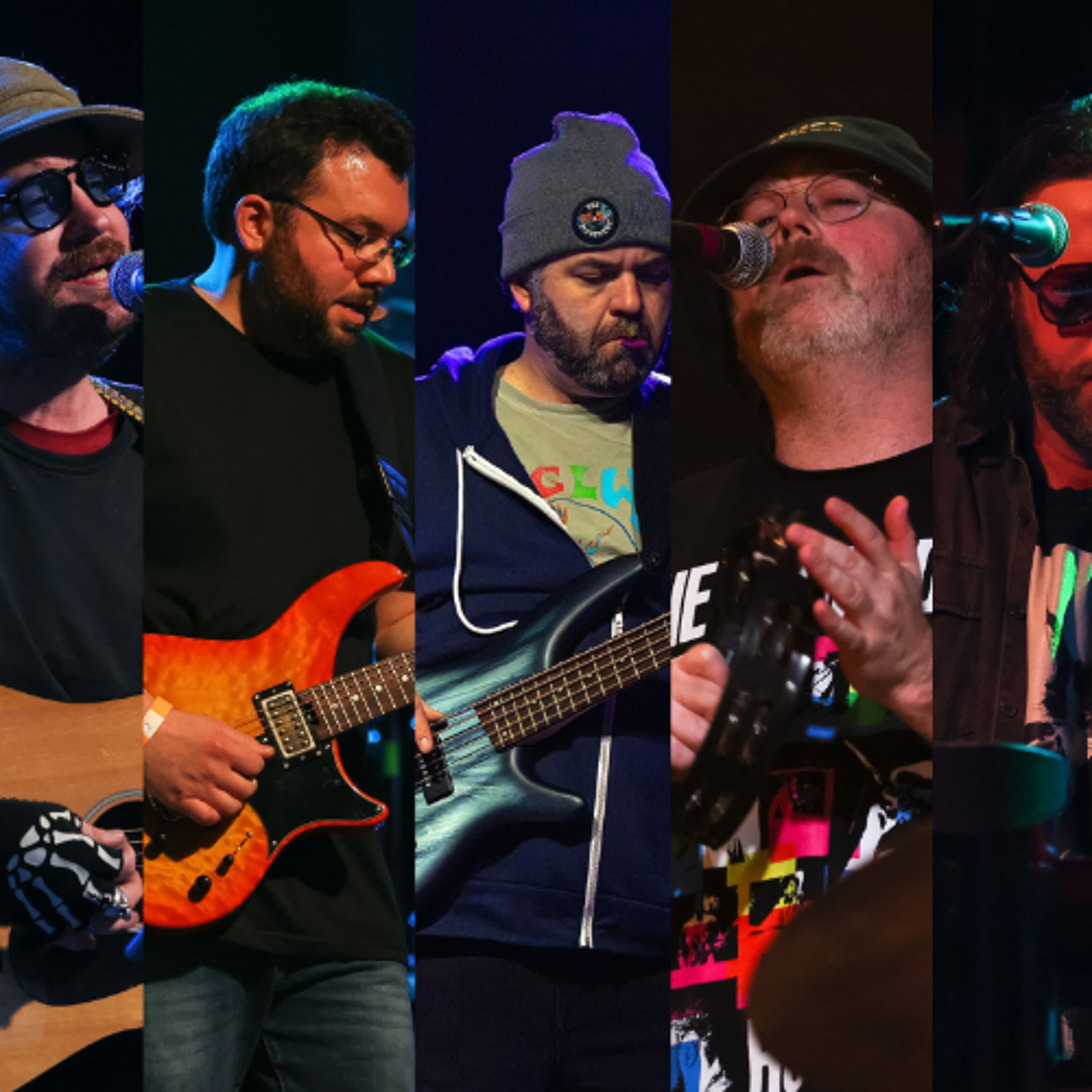
This is a WXAV 773 S.F.W. podcast introducing you to the best local bands in the Chicago land area. Hi, this is Peter Creighton from 773 Sounds and I am so excited for this next band that we have here as our featured artists of the week. For so many reasons, one, because they describe themselves as cosmic Americana, but also, like yours truly, they hail from the south side of Chicago.
We have the great local folk Americana band, the railway gamblers here. And that's going to go around and get some introduction. So we have Matt. Matt, how are you?
How's it going, Peter? Thanks for having us, man. Our pleasure. And with you, Matt, we have...
Brandon, I play the rhythm guitar and I sing. Matt plays the lead guitar. And then we have Sean too. We have Sean here.
Thanks for having us. He plays the beat of the band drums. And then we have, well, we don't have him. But there's also Mike Ellis.
He plays the keys and then Joe Saxon is the bass player too. I mean, we got three-fifths of the band. That is always a good time. And it is.
It is. So thank you guys for joining me tonight. Let's kind of go back to the beginning to kind of start with. How did you guys kind of first discover music?
Yeah, I started playing guitar when I was in fifth grade, just learning, you know, how to read music, reading chord charts. When I got to high school, I started playing in the Brother Ice band. That's where Sean, who also went to the Rice First, saw me playing. We kind of connected from there and did a cover band in high school together.
Sean, I've been playing music since 2010, nonstop. So it's pretty crazy. Like, he and I go back a long time. It's a lot of the chemistry on stage and the studio comes from and in the writing process.
But yeah, guitar was just something that I wanted to pick up at an early age after, you know, my mom wanted to play an instrument. My dad was introducing me to a lot of classic rock stuff, Floyd's, Stone's, Beatles, and got hooked ever since. And then just really never stopped. Sean.
Yeah, I mean, similar story. I mean, I feel like a lot of musicians say their parents influenced them a lot. My parents are not playing any instruments, but we had a very musical family in terms of what we listened to. You know, big Beach Boys, Beatles, and those are Mountain Dern Devils, you know, kind of country stuff.
Definitely fed into what we started doing as the gamblers after that band me and Matt talked about. But I just when you're introduced to the band in fourth grade at St. John Fisher, the school I went to, I saw a snare drum and you know, pretty much thought how can I make the most noise? And I played bang on the drum all day by Todd Runburn, my first live performance ever in the snare drum.
Oh, that's awesome. Yeah, I remember that too. Yeah, I remember that. What about you, Bob?
Don't you pick it up? I don't know, like it was later on in life, like I was big baseball player when I was like a kid, you know, you have those like, see how I told you I got the rasping voice, but that's all right. Yeah, like I was big baseball player like sports guy. And then started after like at the end of grammar school, it was like skateboarding.
So I picked up skateboarding. Skateboarding was life, you know, it was like what do I practice baseball day and stuff like that? Or do I just go to the skate park and everything like that? So then you go to the skate park and then you meet all these kids from like all the neighboring like neighborhoods, you know, and they all come together into the skate park and people you never would have met through like school or high school or anything like that.
And I met so many people and became so many had so many close friends that played music. And then when we watched skateboarding videos, they had like soundtracks like David Bowie, Bob Dylan, and all these great artists that you probably heard the names before, but you never really heard the music before. And then you would hear the music when you watched the skate videos and stuff like that. And it kind of like transcended you into this different universe.
And then one of my closest friends told Doug he had, I went to his house and he had guitars. And I never knew somebody that had guitars before that you could just pick up and play. And so he like taught me a couple of chords or whatever. And then I went home and then I wanted to play a guitar.
Yeah, from there, not out. It was over. It was over. It was like skateboarding turns into this, turns into that.
And then turns into music. And you learn from like David Bowie, then you get into like Lou Reed, then you get into like Debbie Ary and all that kind of stuff, New York kind of scene. And you just kind of do your own like research and stuff through that records and all that kind of stuff. Yeah, that's all the fun stuff and everything.
And it's just like for you, the journey that you were meant to do, that you were meant to play baseball to get into skateboarding, to then find that guitar and explore it. I have to say very quickly, this is the most southside conversation because it's like, where'd you go? Oh, I went to Fisher, Barnabas, we were murders. Yeah, brother Rice.
We are we are true blood south siders. We all still live down here. I mean, if you if anyone from a different part of the city or not, not in Chicago, or this, we would all just have Chicago accents. Talk about talking about parishes and what bars we went to.
Yeah. Yeah. It's like the S and L. It's like the S and L.
It's like George went and got dressed as so with the Chicago boys. Yeah. Exactly. Yeah, that's outside stuff is like it's crazy because like it is true.
Like we grew up by the Western bars. Yeah. Like everyone thinks like shameless. That ain't the south side.
No, it's not. It's not when you leave your house in the morning and you see like three people in the block, leaving with like firemen shirts and like cop shirts and stuff. That's the south side. Yeah.
Add to it the hoodies and the gym shorts in 30 degree weather with the flip flops. Yep. While you're shoveling snow. Yep.
Yep. Yep. Well, I should let you know, I don't know if you remember this, but the White Hennon, a 103rd Street in Western. I used to work there all throughout high school and college.
And the south side Irish parade. That was war, man. That was absolutely. Oh, yeah.
White hand, front of back, man. White hand. That's always been a home game for all of us. Oh, yeah.
Oh, yeah. That's nice. It's 7-11, but that's my home. I walked there every day, probably.
I'll grocery shops at that 7-11. Yeah. I don't even go to the Jules. I just go to 7-11.
Go to the Jules. Go to the Jules. Couple of two tree of this, couple of two tree of that. And yeah.
So getting back to the railway gamblers, how did the band come together? Well, like I said, Sean and I had been playing for a while together. And then when I was in college, you know, Sean and I were still playing, you know, occasionally and I had known Brendan through Sean from high school, but we never really hung out. And Brendan got my number from Sean one day and was like, hey, I'm doing a Valentine's Day show at a Rorx office acoustic and I want to do a Rolling Stone set.
I know you're a big stones guy. Do you want to play some tunes together? I said, sure. So he came out to my apartment.
I lived out by UIC. We rehearsed a couple times. I did accidentally give him a parking ticket after a rehearsal. Sorry.
I didn't even have a parking ticket. It's actually made me sound. We played a bunch of Stones songs and then after we rehearsed the 12 or 13 Stones songs, he was like, hey, I got a bunch of these original songs that you want to play on a couple of them. And I think one or two of those ended up on our first record and he was showing me.
I'm like, wow, these are pretty incredible tunes, like just the songwriting behind it, the arrangement of the chords, the lyrics. I mean, it's just great. I had never had like exposure to a local songwriter that had that sort of like this metaphorical approach to mental distancing. I mean, that too.
But we played a couple of original tunes too in that set. And then I remember Sean talking, he's like, hey, I'll set that Brendan said that went really well with you and him. We're going to start a band. You're going to play guitar ring at Joanne Bass and we booked a show at hearts and we have a month and a half to learn 25 songs and it was kind of just throwing together.
I mean, I'll let Sean take over how that booking process went, but it just kind of felt together like that by chance. I'll tell you how the booking process went. What I mean, Sean Hammer at the bar and then the guy from the bar said, when are you guys going to play here? And then we just put something on the calendar and I'll boom.
Yeah, we left it go with no band. Only on the influences we listened to on vinyl in my parents' basement. We really don't want to be able to talk about it. We want to be able to talk about it.
We used to listen to records all the time in my parents' basement pregame before we went to Keegan's and then we'd go to hearts later on in the night or to see all the local stuff over at hearts. You know, when that was really popping over there, that was a great local scene. And we'd do the bartender's well. We'd just hang out at bars all the time and we'd push out without a band.
That's the story. It was one of those things where you're like, oh, like, we're just going to start a band. We're just going to do this. You know, when you're in the basement all the time and you just come up with a crazy idea, like, I got an invention or something.
That's what it was. It was like, yeah, let's start a band. We should start this band. And then when the guy has this from the bar, what data are you guys going to play?
There we are. Yeah. Then they got real. Yeah, I got real.
Now, I mean, obviously it was successful because you guys have been around now for 11 years. You've done six albums. And you guys are really critically acclaimed. And the thing that I really love is while you're a folk band and you're a Americana, you also have your own vibe where you are a little psychedelic.
You are a little classic rock with your songs and everything. And it really gives you guys a really unique sound. I'm kind of curious when you're writing a track. Do you kind of focus on like the melody first or do you go from lyrics and then build the melody off of the lyrics then?
So I build the lyrics off the melody. There's, I don't want to make it too complicated, but there's all sorts of ways like everybody writes differently and yourself, you write differently. Like I started writing like original music because I didn't know it was important. Like original music is important, right?
And I didn't know it was important. And when I started playing the guitar, like I said, I started doing like open mics and stuff. And I would play like Neil Young and Dylan and stuff. I like, you know, easy stuff.
And I would just play by myself. And I would go to these open mics and play these tunes. And then I kept playing the same tunes. And when you go to these open mics, you're seeing the same people over and over again because they're all playing the open mic too.
So you're like, how can I like, you know, change it up for them, not only them but myself a little bit. And I was like, oh, I'll just write a tune or something like that. You know? And I didn't think that was that important of an issue, you know, to write a tune or whatever.
And so I started playing all these original tunes and then everyone was like freaking out that they were like, oh my God, that's so good. Is that your own tune? And I didn't know that was like a real thing. Like people were like so enthusiastic about like, yeah, original stuff.
And I was like, oh, no, yeah, I wrote that the other day. I have a tooth there. Kitchen. I don't know.
Well, I was making like a craft mac and cheese or something. But I didn't know it was that important and then you got to realize like, as you go on, like maybe this is important. I'm getting all my life stuff out there through a song because sometimes you're not putting it out there so much through like therapy or that's a therapy thing. Yes.
Writing and so, yeah, I think when you write the song, it comes in waves. I always like walking and sitting on the porch. I'm like, people walk and they put the headphones in and they're missing out. And just to hear the sound of like traffic, see the lights, take it all in and like trip over a thing of ice, you could take two seconds of something and make it into a whole song.
Two when I'm talking about is you could dance with like a girl that you really that you really like, right? So say you're at a bar. I love this. I love this.
I love it. I like it. You're like, you really like a girl safe from like high school. You haven't seen her like five years or something like that.
So you're at a bar. You see her and you're like, wow, there she is. Like the girl I was in love with or something like that. And you can't talk about like say you're talking about like stretching out a single moment.
No, but I'm like, you can't like nobody can like understand unless they like feel it where it's like the first look when somebody like I look at you and I fell in love. Yeah. Okay. So then like five years later, you see the same girl like a bar or whatever, but I go stretching a two second moment.
You're like, you want to like dance or something like that. And so you dance for like two seconds. And then she goes on her way, you go on your way, but I'm like, you can take that and make it into like a three minute song where it's like, what color was her eyes? How did she look?
How was her hair? What were the lights like? What bar were you at? What song was playing?
All that, all those details is the story. And a lot of people think they're not, don't think they're creative. And they're like, I don't know how you're so talented and creative and everything like that. I'm like, you ever read a book before?
Even when somebody describes the character in the book, you literally make a movie in your head about what that character looks like. I go, what do you think directors do? I'm like, all these producers and everybody, I'm like, they are literally thinking this as they read it. And I'm like, you're doing that with a book.
You are creative. Yeah. But going back to the question about the song. The whole song.
Sometimes you play, you pick up the guitar and you'll find like a melody and then you'll sing the lyrics and they just spurt out. And sometimes you spurt out lyrics and then you have to find the melody. And sometimes you think it's more difficult than it is, like with the chords. And sometimes someone like two chords and you're like, ah, you just get to bounce back to the chords.
It's different every time. Yeah. Well, I think you're talking a lot. It's like the worst voice ever right now.
You mentioned the band and our sound and I appreciate you mentioning Casio Goneracana. That's definitely something I made up. I love it. And I'll never let it go.
But I think, you know, we go back to that first show and the first show and the first album were in that same year. And the second album came out, we're right after the first. And those two albums really, I would say, were very much the idea of putting the band together and being a little bit folky, a little bit country. And I feel like as we progressed, our other influences from each of us kind of came to play, we get to like a way in the wind.
The third record was like, to me, the one that really was like a come, you know, the breaking out party of like who we are as a band and kind of had all of our influences on it. We started becoming a little bit more of a rock band, a little less of a folk band. We still had that folk feel you hit the nail on the head. We were a little bit psychedelic.
We're, you know, we're grateful. Dead fans were fish fans. And as time goes on, you're an album four and I were an album five. And to me, we're like in 80s rock band and album four and album five.
Like we start really like honing it on the Smiths. Like, and then this newest record is, you know, I would say a kind of a culmination of everything. It's nice to like kind of go back and have some memories through each of them because I do think they all kind of tell a unique story to how this record is going to sound. Yeah, which leads me into it.
You guys are currently recording your sixth album right now. How's that process been coming along? Any ideas when it may be released or kind of the sound you're going for? Anything you would like to share?
Yeah. So we're on. So we have a couple different working titles for it. It's album numbers seven.
I know we kind of tossed a couple of song, album titles back and forth. But the direction of it right now is we're doing a lot of behind the scenes work and that's kind of what I was, you know, you about to like, you know, it's one of those things we're right now, there's a ton of work happening behind the scenes. We've kind of taken a step away from playing live to really focus on the writing process. I will say we had a bunch of demos recorded in like 2024.
Some of those songs are still in the mix, but some of the songs were kind of like, oh, it's not up to our standard. Like what are we going to do differently? And taking that, that cautious approach, there's close to the 30 ideas in the mix right now. Some of them have concrete lyrics and concrete quarter arrangements.
Some of them are just a chorus with a catchy hook, but I will say, you know, there's at least a couple albums worth of tunes that are, have some really concrete ideas and it's super exciting. It is kind of going back to the earlier sound. We're taking a really delicate approach to it. We're focusing on the singer-songwriter aspect.
I'm not saying this because he said next to me, but you know, we're very lucky to have a songwriter that has a very clear vision and a really strong lyrical approach to the tunes. The storytelling aspect makes it super fun and super engaging for listeners, but we're playing around with, you know, I'm playing a little bit of lap steel and mandolin. There's still going to be, you know, big guitar moments and big drum moments on occasion. And but we are going back to that, you know, earlier sound that folky sound that ballad sound incorporating, you know, a session musician with some strings.
So right now it's a lot of demoing and just finalizing what we think makes the best possible record. And there's so many ideas that are great that are just going to end up on the cutting room floor. More so with this album than previously, but we are doing our best to make it super special. He meant that they're nice to say he wasn't sitting next to a lunge.
That's what he is. He's sitting next to a lunge. Yeah, right. Yeah, it's a lunge thing.
No, it's going to be, it's going to be something cool. It's just, it'll be a little more delicate, but have its, you know, dynamic moments. And, but it's exciting, you know, it's, we have Mike Ellis on keys now. So, you know, to have a full time keys player, you know, something that was always, I think, underappreciated on the earlier records was Joe Sacksen's bass lines.
I mean, the guy can write a great bluegrass folky bass line. And so to have that, you know, in the mix too, it's just, it's coming together. We do a lot of listening sessions going through the demos, talking through with the arrangements are going to be, you know, foul and I have Joe before where, you know, if anybody knew the process that we were doing, they would think we're crazy hill hums something in a phone for a song and like record it and send it to me and I'll send him something and just sometimes it's the text messages where nobody outside of that contact would have any clue what's going on. There is just a lot of cool stuff in the works and it's going to be tough to finalize that track list because there's some stuff left behind.
Yeah. Yeah. I think the one thing that I kind of keep, I'm probably like a broken record of these two, but like I want to make sure this record isn't just a repeat of the last gambler record. Like I really, we kind of, I feel like I've all agreed on that.
I don't know that indie country, Americana, more delicate field, not be afraid to make slow songs, but also just challenge ourselves to not be the real wagammers. Let's try our best and not make it sound like us. Well, at the same time, our fans are familiar with this, how we approach songs. So don't know it's us.
But I think that's kind of the hardest piece of the puzzle for bands, but on six records, it's, you know, let's have a talk and make it make it sounds like someone. It's like their best friend that they haven't seen in 20 years. Yeah. Yeah.
Or that girl you saw in the bar that you haven't seen five years. Yeah. Yeah. Yeah.
But I think like that too, where it's like you people say like I heard like Rick Rubin. Yeah. He said, make it for yourself. Blah, blah, blah.
You know, everybody else can, you know, get it lost. Yeah. But I go, you're kind of making it for yourself, but at the same time, all the people that have supported you and love you, you're kind of making it for them because at the end of the day, when you like play live or like you play a song for them, just to see the smirk on their face, you're making it for them, you know, yes, you're making it for yourself. It's part of your life.
But at the same time, they're always in your mind. You can't get that out of there. And I think that's a special thing that people like you're making it for yourself and people like it. They like it if they don't, well, then, then, you know, people like, well, you know, you're doing it for the fans.
You're doing it for the fans. You're playing the shows. Yeah. So it's like, yeah, you're making the songs to surprise them and be like, we're doing this, we're doing that.
And you can't wait for them to hear it. Yeah. It's not like that. You can't wait for them to hear it and be like, we're going to surprise them by doing this.
They're going to love it. And then when you see the smirk on their face, man. It's a great feeling. Yeah.
Yeah. I can only imagine I'm here with three members of the railway gamblers. I've Sean. I have Matt and I have Brandon here.
If people want to check you guys out on social media, where can they go and where can they find you Facebook? We don't lift me up. Facebook and Instagram, we do have a bandcamp page. I know I've listened to a couple of your previous interviews, Peter, I believe when you're talking with artists too.
That's a great way to support, you know, not just us, but all local artists is go to bandcamp. You know, as we're getting in the mix with about to be getting into studio time to put this thing together in hopes of possibly pressing it on vinyl too, those bandcamp purchases or any way of sharing our music, streaming it, every cent goes from us goes into the studio time to make the best record possible. It goes towards paying session musicians and getting merchandise for to support the record and promote it. Facebook, Rayway Gamblers, Instagram, at Rayway Gamblers.
Bandcamp, if you look us up, all six albums along with an acoustic record that Brendan and I did back in 2019, I think it's all on there. You can download it. Any purchase helps. And then when the seventh one is ready, you'll see it there too.
Next band. Next bandcamp Friday is February 6th, 2026. We got 100% of the purchases. Go buy stuff on that day.
Yeah. Anybody like local, like there's a lot of great local bands that like we grew up with that, like inspired us to like do stuff like lead foot and like caution is like a grateful dead cover band, but all those guys are great musicians. Blue fish fellows, a brown bag. There's a Santa Baker and the burners.
There's a, you know, motel breakfast. The dead bolts. That bolt's kind of right. Yeah.
Yeah. All those guys. EJ Kennedy and Uncle Saxony. Yeah.
They were all these great people are playing around this. So like you'll have interviews forever. Yeah. And the great thing is they were all a part of that that heart scene from about five, ten years ago and everything.
Yeah. Yeah. Yeah. I have to say though, hearing lead foot just brought me back to early days of college and everything.
They were brand new on the local scene when I started my undergrad in the early 2000s. Yeah. Oh, older, you look like you're like 22. I just turned 42 on two.
Oh, wait. Yeah. That looks like a 90. Wait.
So you're a lead foot fan. Oh, okay. So did you, were you able to get one of the, we did a charity release one time years ago, where we covered jailhouse on one side of a 45 and they covered one of our tunes on the other side. You didn't get one of those?
No, I will get you. I will get you one. I will find one. I will find one.
I will find one. It's so funny. So my dad's a jazz guitarist and that's how I got into music, but he's really close friends with Steve at down home guitars. Yeah.
Yeah. Well, like that was even something that like I went into the process when I was doing those open mics or whatever and I was doing by myself before we played as a band. I looked at those guys. They were the best musicians I've ever seen.
Yeah. They were playing right in front of you, you know, like Waterman, Anthony Masaro and Veneer and Veneer and Steven. And best musicians ever. And you know, that we didn't name a drummer.
Oh, yeah. Hold still. Hold still. Sorry.
You watch that and then you're like, they can play anything they want. And then they played like simple three chord bop dillingsongs and I was like, I can play that. And that's where like your mind goes, oh, they're playing it because it's a good song. So if you write good songs, it doesn't have to be complicated.
It doesn't have to be. It just has to be simple. Yeah. And the best part too is like they're the nicest guys in the world and you can approach them and pick their brains about like anything.
My favorite guys. I always think Waterman is the best musician around. No, they're all great guys. Yeah.
I always think that they're a great guy too. But be sure, go to a railwaygamblers.bancamp.com, especially on February 6th so that we can do our best to support the local music scene here in Chicago. Now I'm kind of really curious what you guys think about this. And Sean, I'm going to throw it to you first.
Chicago Loki has an incredible folk music history with Old Town School of Folk Music. John Prine getting his start here. But it's kind of always thought about with like the North Side. South Side's a little bit forgotten with it and everything.
How would you describe your experience being in this great folk band, but also being like a South Side or bringing that South Side touch to it? He's going to give a good answer. He is. I think it's extremely difficult to be an original band on the South Side whether you're folk or whether you're punk.
Because you know, no, no, dig on the South Side, but you don't really have that kind of young, hungry scene that's willing to support bands and listen to stuff that they don't already know. You know, you are living in an area that's a lot of families. You know, thankfully at the time we started going, you know, the bars were still kind of popping off and a lot of people were willing to go out and see new music. But again, no knocking on the other band that was put out records.
But we saw a lot of bands before us put out one record and we really didn't want to be the band that was the one and done. You know, we wanted to have staying power when it comes to a band that is from the South Side that pretty much says, you know, screw it, we're here to stay and whether you listen to us or not, we're going to be here to stay, whether you like it or not, we're going to be here to stay. But just, you know, regarding the South Side in general, you might use the words critically to claim that I kind of chuckled to myself because at the end of the day, we're just a group of friends that have been friends, you know, I've been friends with all my entire life. And I think the importance of friendship in our band and being Southsideers and having a relationship and a friendship with our entire band on the outside of the band, you know, the band's obviously an important driver of, you know, why we are friends, but it isn't the driver of why we're friends.
It didn't exist. I believe this group of friends would still be exactly who we are now. And I do think, you know, just kind of having that hard nose, Southside, or pick yourself up when you're down type of attitude. I kind of feel like it's why we're kind of still doing what we're doing.
Yeah, that is a great answer. That's a great answer. Yeah. Yeah.
Like he said though, too, like, like Matt, he has a, like we're taking a little bit of time to like make this new record, but Matt has a young guy now and then Sean has two young guys now. And I'm like the guy father to their sons. Yeah. You know, it's crazy.
That's why we'll always be like, we're not just a band. We're like just guys that get together to play music and somehow we create some records. Yeah. Like it's not just like a band.
It's like a family. Yeah. And you're closer with these guys than some of your actually like blood related family, which sounds I don't know bad. Maybe something.
No, it doesn't. We talk to each other like every day. Every day. We'll call each other and joke around.
And it's not always about like, you know, some people have, they call each other and it's just about business music this, that, that we got to play this show. We're joking around half the time. We don't even talk about shows like for like an hour and a half of the conversation. Then we'll be like, oh, wait, we forgot to talk about like, how are we getting to that show?
And then we'll like text messages. But that's the beauty of it. And I think that's why a lot of bands like are great, but they like break up, you know, and sometimes I think it's nowadays like money deals that nobody's making enough money. So they have to get like jobs, but we keep our jobs and we still do our, we live so close to each other and we're family.
So it's really easy to make it work. Yeah. Yeah, for sure. That's that, that's the South side.
Yeah. You live two blocks from everybody. Friends of the family you choose. Yeah.
Yeah. I know, yeah. Absolutely right. And that closeness really comes through on the music and everything.
So final question I have for you guys. What would you just say is the state of local music in Chicago? But also, you know, being at St. Xavier being a college radio station, there's a lot of kids that want to get into the music scene, but they're nervous.
They don't necessarily know how to start. How would you encourage them to take that risk to go check out that local band that they've never heard of? One thing that I've always posed, a question I've always posed to people to or just a, just kind of an idea of where, like I'm a teacher and, you know, over the years, you know, playing music in class, students always ask me to put on something that they know. And I would always tell students like, Oh, hey, I could put that on.
So if in school appropriate, I could put it on. But at the same time, just remember at one point in your life, you did not know your favorite song or your favorite artist at one point, you were first exposed to it. And so I think just kind of reminding people of that, like, you know, we have a million texts message threads where we're finding a new artist on Spotify and sending it out to each other, just like, Hey, check this song out. Like this could be inspiration for the new record.
Or just something that's nice to listen to. So I think just kind of reminding, you know, folks, especially at the college level where they can go to bars, they can go out and they don't have age restricted venues like providing them from seeing music, just encouraging them to take a shot. Most of those shows we discovered incredible artists are, you know, five to ten bucks to get into. What's five to ten bucks?
Like all of us like, and it was spearheaded by Sean, we just went to empty bottle on Sunday on fall's birthday and we went to see Ryan Davis and the Roadhouse Band. I mean, a cheat ticket and the show was unlike anything I've seen in the last year. I mean, and it was just a matter of, Hey, devote a night to giving a band a chance, you know, throw down cheat money where that is now, you know, concert tickets at big arenas. So expensive nowadays, you can see really incredible music for a five to $10 cover.
And so keep in mind, like at some point, you know, you will discover someone knew that could end up being your favorite. Yeah. Outside's tough, you know, there's open mics, go to Clancy's, the guys in the dead, both host that open mic. There's a couple other open mics, but you know, you just don't have a lot of local shows in the south side empty bottle.
I praise and preach to that, you know, preach that place to everyone out there. Shout out to Robbie over at Reggie's to you, right? He says great stuff coming through to free music Mondays on an empty bottle. Always has great local stuff.
And it's free, but yeah, shout out to Reggie's. That's definitely one of our own basis for sure. No, there's a lot of good stuff, man. It's just people got to be willing to go find it and take a chance.
If you want to like, the people can only inspire themselves, I think, like, you can only like guide them a little bit. You're there to like guide them, but you can't like tell them anything. Like I said, like you go through like stages of life, like you wanted to be like when you're a little kid, you want to be a football, a professional football player, then you want to be a professional wrestler, then you want to be a professional this, then you want to to be that you go through stages of life. And I think that's important for like, if you want to be like a musician, like, or like a singer or something like that, you're going to go through periods and stages of life where your songwriting changes, your voice changes, your style of music changes, and you just kind of got to go with it.
And I think if you believe in it and you keep going with it, it's going to go places. But you just have to keep doing it. And I think a lot of people stop that when they go, I got nowhere with it. I'm not doing anything.
Nothing's happening for me. No, that's nothing. Keep doing it and you keep going at it and you keep writing songs and keep singing and doing all that kind of stuff. And it's going to happen because sometimes you'll be 42 years old.
And then all of a sudden you'll be this crazy, you know, DJ Jackie or something. But yeah, I mean, like, that's what it is though. It comes out unexpected times. Yeah, sometimes people hate it young, like actors and stuff like that.
And that's fine, you know. And then they trade, then you don't see them for a while. Yeah. And then some people hate it later and then you see them all the time.
Yeah. It's just like, whatever is your vibe and whatever you do and just keep doing what you do and what you love writing, singing. And you'll be just fine. I think at the end of the day.
Yeah. So what you're saying, Sally, is that there's just pieces of life. I know he said it too. I looked at him when he said that.
He said, so please, the life is one of the two. It's on the new record. So he's already suddenly dropping it in a little. Yeah.
I think you got a single there. Well, this was so much fun. Brendan, Matt, Sean, three fifths of the railway gamblers again. Check them out.
Railway gamblers.com. Guys, thank you so much. You're awesome. Thank you so much.
You were so good. Thank you for your great questions. Thank you for listening to this WXAV 773 Sounds podcast. For more information on 773 Sounds, please visit our website, WXAV.com.