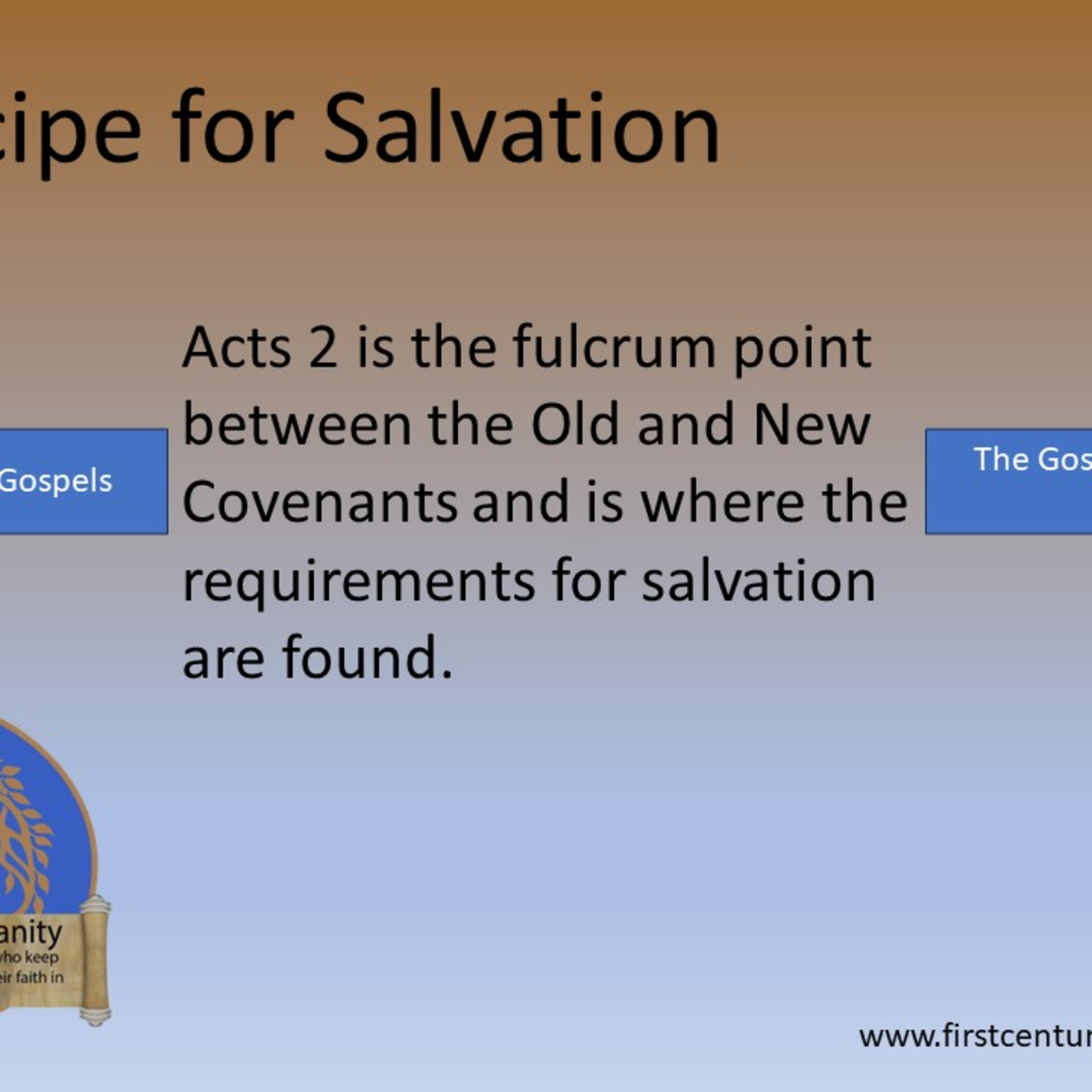
The Recipe for Salvation episode artwork

EPISODE · Jan 7, 2024 · 1H 34M

The Recipe for Salvation

from First Century Christianity · host First Century Christianity

When the Spirit came upon the Apostles in acts two, Peter was inspired to explain the recipe for salvation with power and authority. The video below is a group discussion about the requirement for water baptism in detail. We cover the origins of baptism, who is authorized to baptize another, when it's appropriate to be re-baptized, and the theological/spiritual meanings of this outward sign of faith. Tagore Kota visited this week. He is studied on Koine Greek and explained in great detail the meaning of the Greek words behind baptism. He also gives a remarkable correlation between Noah's Ark and the blood of Messiah. Other contributors to the discussion are Everett Leisure, Tim Roberson, and Tiffany Flores. Acts 2 is the dividing line between the Old Covenant and the New. The Spirit guided Peter's words and allowed the message to be heard in all the languages present. Peter was inspired to preach, just as Yeshua prophesied. Most of his sermon were direct citations of the Old Testament. But the new information included the recipe for salvation: Repent of your sins, accept Yeshua as the Messiah/Son of God, and be baptized. This is the Gospel that was preached to the known world from that moment on. Theologically and spiritually, the fulcrum point between the Old and New Covenant is the death and resurrection of Yeshua. But the 50 days after His resurrection go on the left side of the dividing line because He was teaching them without parables and explaining everything, starting with Moses. The Ruach, aka the Holy Spirit, was yet to come, as well. Once the Ruach came, the New Covenant kicked off and the word went forth from Zion. The final, and perhaps most important topic covered, is what exactly the Jews who didn't accept Yeshua rejected. The recipe for salvation is defined above but is a starting point. After one is baptized, one must learn the Torah. This is because the remnant, those who are Messiah's at His return, are those who believe in Him and who keep the Torah. The Jews believe in Yahweh and keep the Torah. Mainstream Christianity believe in Yeshua (they call Him Jesus), but they do not keep the commandments. Please enjoy the discussion! Please visit https://firstcenturychristianity.net/ for more messages on First Century Christianity!

When the Spirit came upon the Apostles in acts two, Peter was inspired to explain the recipe for salvation with power and authority. The video below is a group discussion about the requirement for water baptism in detail. We cover the origins of baptism, who is authorized to baptize another, when it's appropriate to be re-baptized, and the theological/spiritual meanings of this outward sign of faith. Tagore Kota visited this week. He is studied on Koine Greek and explained in great detail the meaning of the Greek words behind baptism. He also gives a remarkable correlation between Noah's Ark and the blood of Messiah. Other contributors to the discussion are Everett Leisure, Tim Roberson, and Tiffany Flores. Acts 2 is the dividing line between the Old Covenant and the New. The Spirit guided Peter's words and allowed the message to be heard in all the languages present. Peter was inspired to preach, just as Yeshua prophesied. Most of his sermon were direct citations of the Old Testament. But the new information included the recipe for salvation: Repent of your sins, accept Yeshua as the Messiah/Son of God, and be baptized. This is the Gospel that was preached to the known world from that moment on. Theologically and spiritually, the fulcrum point between the Old and New Covenant is the death and resurrection of Yeshua. But the 50 days after His resurrection go on the left side of the dividing line because He was teaching them without parables and explaining everything, starting with Moses. The Ruach, aka the Holy Spirit, was yet to come, as well. Once the Ruach came, the New Covenant kicked off and the word went forth from Zion. The final, and perhaps most important topic covered, is what exactly the Jews who didn't accept Yeshua rejected. The recipe for salvation is defined above but is a starting point. After one is baptized, one must learn the Torah. This is because the remnant, those who are Messiah's at His return, are those who believe in Him and who keep the Torah. The Jews believe in Yahweh and keep the Torah. Mainstream Christianity believe in Yeshua (they call Him Jesus), but they do not keep the commandments. Please enjoy the discussion! Please visit https://firstcenturychristianity.net/ for more messages on First Century Christianity!

NOW PLAYING

The Recipe for Salvation

0:00 1:34:34

No transcript for this episode yet

We transcribe on demand. Request one and we'll notify you when it's ready — usually under 10 minutes.

No similar episodes found.

No similar podcasts found.

Frequently Asked Questions

How long is this episode of First Century Christianity?

This episode is 1 hour and 34 minutes long.

When was this First Century Christianity episode published?

This episode was published on January 7, 2024.

What is this episode about?

When the Spirit came upon the Apostles in acts two, Peter was inspired to explain the recipe for salvation with power and authority. The video below is a group discussion about the requirement for water baptism in detail. We cover the origins of...

Can I download this First Century Christianity episode?

Yes, you can download this episode by clicking the download button on the episode player, or subscribe to the podcast in your preferred podcast app for automatic downloads.
URL copied to clipboard!