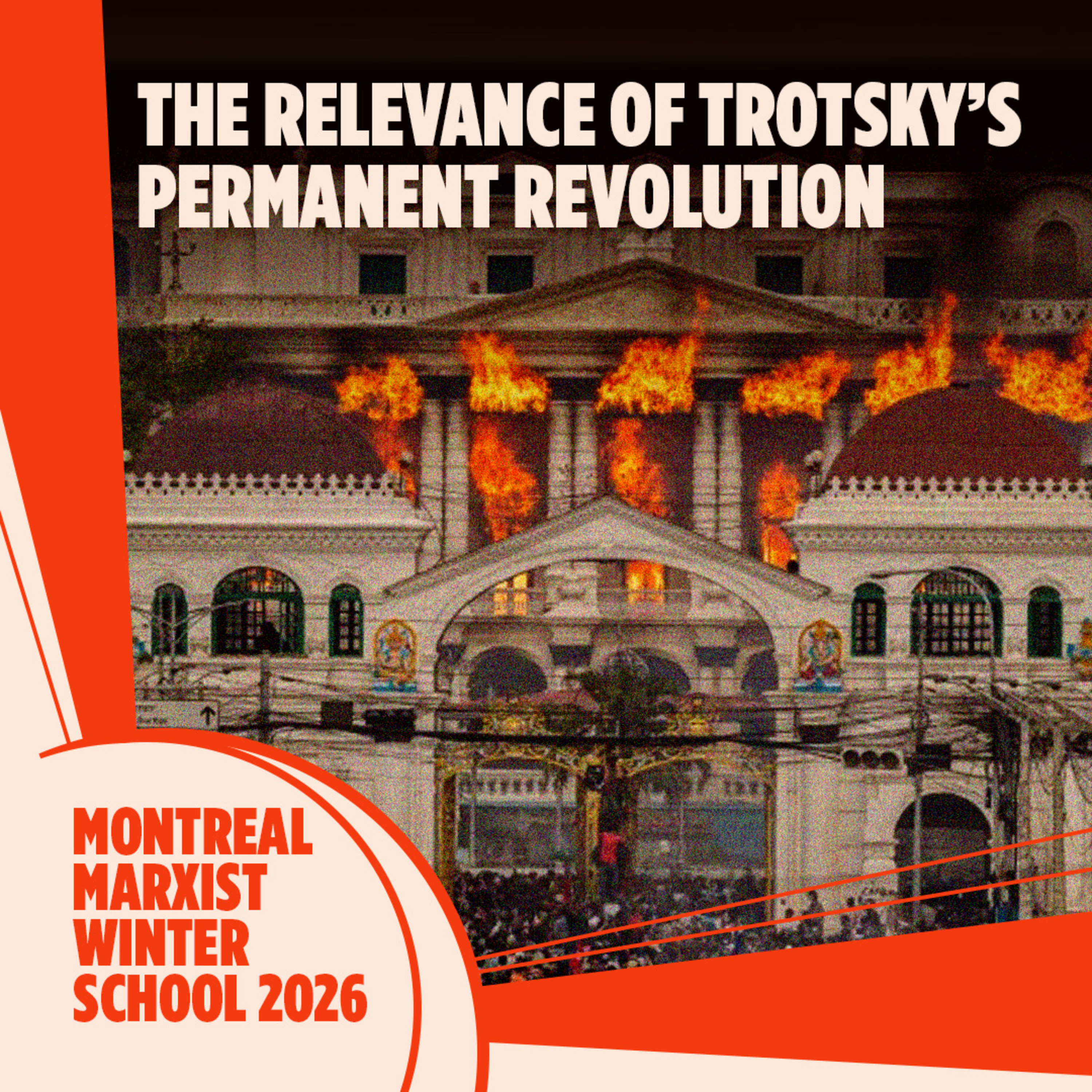
The Relevance of Trotsky’s Permanent Revolution
from Marxist Audio Archive Hosted by Revolutionary Communist Party
Trotsky’s theory of permanent revolution is one of the most important—and most misunderstood—ideas in the theoretical arsenal of Marxism. Drawing on the experience of the 1905 Russian Revolution, Trotsky explained that the capitalists in undeveloped or colonized countries could not play a progressive role; they would be a barrier in the fight for agrarian reform, parliamentary democracy, and national independence. The leadership of the revolutions in these countries would thus fall to the working class. This perspective was brilliantly confirmed in 1917, when the Bolsheviks led the proletariat of undeveloped Russia to power, creating the world's first workers’ state. But this is not just the perspective of a century ago. With billions labouring under imperialist exploitation, it’s more relevant than ever. In this presentation from the 2026 Montreal Marxist Winter School, Joel Bergman (member of the RCP Executive Committee and host of The Class Line) explains the theory of permanent revolution, how its distortion has led to disaster, and why it is vital that revolutionaries understand it today. This presentation was recorded on February 14, 2026. Note: translation has been edited out for clarity. Join the Revolutionary Communist Party here
Embed this episode
No transcript yet.