
EPISODE · Aug 26, 2026 · 10 MIN
The Rest of the World Report | August 26, 2026 — Evening Edition
from The Rest of the World Podcast · host Rudy Martinez and Rest of the World Report
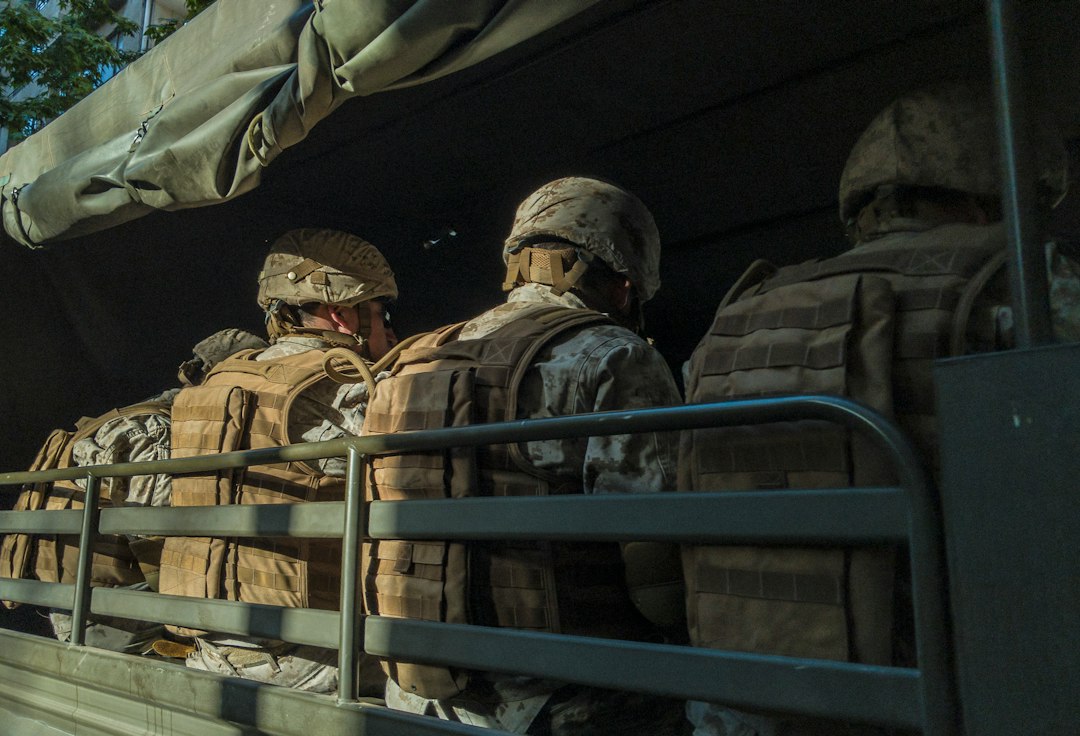
Weekday morning and evening editions. Saturdays once. Good news on Sundays. All sources labeled.A WALL OF WATER AT 8:40 IN THE MORNINGA flash flood tore through Nepal’s northern Rasuwa district Wednesday morning. It killed at least 157 people and left hundreds more missing along the border with Tibet. Nepali police said the toll stood at 157 confirmed dead as of Wednesday evening, with identification of victims still underway. Chinese state media reported three deaths on the Tibetan side of the border.The flood struck the Bhotekoshi River around 8:40 a.m. local time, according to Nepali authorities, and quickly spread into the neighboring Nuwakot and Dhading districts. Nepal’s Disaster Management office said the flood was triggered by a landslide roughly 20 kilometers northeast of the Rasuwagadhi border crossing. A disaster risk reduction specialist told PBS the surge began when an ice-rock avalanche from a glacier blocked the river. The blockage then released a sudden wall of water downstream, on a tributary that has now flooded twice in fourteen months. Villages, roads, and hydropower facilities were swept away in the flood’s path. Three Nepali army helicopters attempting to reach the area for relief operations were forced to turn back Wednesday due to bad weather.The number of people missing has been reported inconsistently as the situation develops. Nepal’s Prime Minister’s Office put the figure at 403 foreign nationals and 93 Nepali citizens as of Wednesday evening. An earlier count from the Nepal Tourism Board had put total missing tourists at 384, including 291 foreign nationals. Chinese media separately reported 265 missing. Officials said most of the missing were likely travelers headed toward Mount Kailash in Tibet, a site of religious pilgrimage. Nationals from India, the United States, Britain, Malaysia, South Africa, the Netherlands, and Australia are among those reported missing. American news outlets have reported figures for missing US citizens ranging from 33 to 47, reflecting the same fast-moving uncertainty. Three of the missing Americans were reported traveling with a Nepali tour operator, Fishtail Tours and Travel.Nepal’s president, Ram Chandra Poudel, said he was “extremely saddened” by the loss of life and property. He called on the government and public to intensify rescue efforts. The Prime Minister’s Office, under Balendra Shah, issued a written statement expressing “deep sorrow” and condolences to bereaved families. A Nepali government spokesperson said the country has formally asked both India and China for help with search and rescue. Authorities have warned residents along the Bhotekoshi, Trishuli, and Narayani rivers to move away from the banks as search efforts continue.🌍 TRANSLATOR’S NOTE: PBS’s own reporting placed Wednesday’s flood within a documented pattern specific to a warming Himalaya. It cited a disaster risk specialist’s direct warning about the need for early warning systems in the region. That framing, treating this as a climate-linked disaster consistent with a broader trend rather than an isolated tragedy, has been more prominent in outlets covering the region’s climate vulnerability than in general US wire coverage. US coverage has largely led with the tourist casualty angle instead.🇺🇸 WHAT AMERICAN READERS NEED TO KNOW: Hundreds of people, including dozens of Americans, are missing after a glacial flood tore through a remote stretch of the Himalayas with almost no warning. The exact numbers are still being sorted out by the Nepali government itself. That’s a normal part of a disaster this size and this fast-moving, not a sign of confusion to be alarmed by on its own.Sources: ABC News (US — 403 missing figure, 157 confirmed dead, Fishtail Tours detail); CBS News (US — President Poudel’s statement, flood location and time, district administrator warning); PBS NewsHour (US — 384 missing figure, avalanche mechanism detail, disaster risk specialist quote, India/China assistance request)THREE HUNDRED FORTY STUDENTS, NO SCHOOLIsraeli forces raided and seized a UNRWA vocational training center in East Jerusalem’s Kafr Aqab neighborhood Tuesday, expelling employees and ordering them not to return. The Qalandiya Training Centre served roughly 340 students, most from disadvantaged families. It was part of UNRWA’s wider network supporting about 16,000 Palestinian refugees in the area. Five Palestinians were injured by Israeli gunfire near the site during the raid, according to the Jerusalem governorate.Far-right National Security Minister Itamar Ben-Gvir personally took part in the raid. He declared there was “no place for the agency in Jerusalem and Israel.” He did so against Netanyahu’s own wishes. According to Ynetnews, Netanyahu summoned Ben-Gvir to his office the night before the raid, with Defense Minister Israel Katz and Foreign Minister Gideon Sa’ar also present, and asked him not to personally join the operation. Ben-Gvir went anyway, later posting video from inside the seized compound. Israeli authorities said the property belongs to the Jewish National Fund and has been reallocated to the Jerusalem Municipality for a planned educational and community complex. They cited Israeli legislation passed in October 2024 that restricts UNRWA’s activities. Netanyahu said the evacuation was lawful and carried out on his orders. UNRWA rejected that characterization entirely, maintaining the facility is a UN premises protected under international law.UNRWA’s acting Commissioner-General, Christian Saunders, told Al Jazeera the raid is part of a deliberate campaign to weaken the agency. Weakening the agency, in turn, weakens the broader question of Palestinian refugee rights. “If UNRWA is defunded and UNRWA is eliminated,” Saunders said, “then they are hoping that the issue of the refugees will go away.” He said that would extend to the right of return and reparations claims tied to refugee status. Saunders said the agency’s mandate comes directly from the UN General Assembly. He said it will keep operating until the assembly decides otherwise or a durable political solution is reached. He acknowledged the UN’s own limits without collective action from member states, noting that such determination has been absent for more than seven decades.🌍 TRANSLATOR’S NOTE: Al Jazeera’s coverage placed this seizure directly inside the pattern this space documented Monday, drawing from OCHA’s own tracking of West Bank operations, settler violence, and demolitions. That continuity, one raid as a data point in a years-long, formally tracked campaign rather than an isolated incident, is the framing Al Jazeera’s reporting emphasized directly. Saunders’ own words connected today’s raid to underfunding efforts that predate this specific incident by years. American wire coverage of UNRWA generally treats funding disputes and facility seizures as separate storylines rather than parts of the same strategy Saunders describes.🇺🇸 WHAT AMERICAN READERS NEED TO KNOW: A UN agency’s own training center, serving 340 students from poor families, was shut down this week. The government minister who did it said the agency doesn’t belong in the city at all. The UN’s own aid chief says the goal isn’t really about one building. It’s about making the entire refugee question disappear by defunding the agency that keeps the claim alive.Sources: Al Jazeera (Qatar, state-funded/editorially independent — Saunders’ full remarks, raid detail, Ben-Gvir quote, Netanyahu’s response, Jewish National Fund property claim); Al Jazeera (Qatar, state-funded/editorially independent — initial raid report, checkpoint closure detail); Ynetnews (Israel — Netanyahu-Ben-Gvir meeting detail, Katz and Sa’ar attendance, Ben-Gvir’s defiance and compound video)THE ONES ASKING TO LEAVEApplications for conscientious objector status inside the US military have surged to their highest rate in 25 years. The surge is driven by moral objections to strikes carried out in the war against Iran and to ongoing US strikes on suspected drug-trafficking boats. Mike Prysner, executive director of the Center on Conscience and War, told MS NOW his organization has taken on roughly 140 applicants since the war against Iran began in late February. A typical year’s total is about 50. He described the increase as six times the normal rate, higher than at any point in the past quarter century.Conscientious objector status allows a service member to formally discharge from combat duties on moral, ethical, or religious grounds. Applicants must show the belief is sincerely and consistently held, not a reaction limited to one conflict. Approved applicants receive an honorable discharge or reassignment to a non-combat role. MS NOW spoke with five service members who described specific incidents driving their decision. One said they were troubled by strikes on Iranian civilian infrastructure, including bridges. That person questioned whether military lawyers were simply finding ways to justify strikes the president wanted carried out regardless of legality. Others cited strikes on suspected drug-trafficking vessels in the Caribbean and eastern Pacific. The Pentagon has acknowledged it often does not know who is aboard the boats being targeted there.Prysner said what distinguishes this wave from past surges, including during the Vietnam and Iraq wars, is who is applying. Historically, most conscientious objectors have been junior enlisted personnel. Many of the current applicants have served more than a decade, with ranks reaching as high as major. The Center on Conscience and War has run for eight decades. A separate organization, the GI Rights Hotline at Quaker House, reported taking on more than 80 new clients in March alone, nearly double its typical annual volume. One single day brought in 12 new clients.🌍 TRANSLATOR’S NOTE: Democracy Now’s earlier interview with Prysner, conducted as the surge began building in March, framed the phenomenon differently than most US wire coverage has since. Prysner explicitly tied the shift to a broader generational change in attitudes toward US military action, connecting it to the war in Gaza as well as Iran. That framing treats the objector surge as part of a longer arc of changing attitudes among young Americans toward the wars their country fights. It has appeared more consistently in independent and left-leaning US outlets than in general wire coverage, which has tended to treat this as a standalone story about the Iran war specifically.🇺🇸 WHAT AMERICAN READERS NEED TO KNOW: Service members with a decade or more of experience, some holding officer rank, are formally asking to leave combat roles. They cite moral objections to strikes on civilian infrastructure and to boat strikes where the military itself doesn’t always know who it’s killing. This is not a story about young recruits getting cold feet. It’s coming from people who have already served through multiple deployments and are now drawing a line.Sources: MS NOW (US — Prysner’s full account, five service member interviews, 140-applicant figure, bridge-strike and drug-boat concerns); Raw Story (US — “Operation Epic Fury” name confirmation, sixfold increase figure); NPR (US — GI Rights Hotline figures, Galvin interview, March client surge detail); The New Republic (US — 25-year comparison, typical annual volume confirmation)NUMBERS AT PUBLICATION🇮🇷 Iran: 3,636 killed 🇱🇧 Lebanon: 4,346 killed, 12,301 wounded 🇮🇱 Israel: 1,200+ killed, ~5,400 wounded (includes 472 killed, 3,004 wounded in Gaza) 🇺🇸 US military: 18 killed, 687 wounded 🇵🇸 Gaza: 73,407 killed, 174,335 wounded 🇵🇸 West Bank: 316 killed (incl. 73 children), 5,641 wounded (incl. 915 children), since January 2025 🛢️ Brent crude: $87.45/barrel ⛽ US gas: $4.10/gallon Sources: HRANA (Iran), Lebanon MOPH, INSS (Israel), DCAS (US, disputed — see Aug 4 story), OCHA/MoH Gaza (Gaza and West Bank), OilPrice.com, AAA.“Whenever the people are well informed, they can be trusted with their own government.” — Thomas Jefferson, 1789 Get full access to The Rest of the World Report at www.restoftheworldreport.com/subscribe
Embed this episode
Ready to play
The Rest of the World Report | August 26, 2026 — Evening Edition
No transcript for this episode yet
Similar Episodes
No similar episodes found.
Similar Podcasts
No similar podcasts found.