
EPISODE · Sep 11, 2026 · 13 MIN
The Rest of the World Report | September 11, 2026 — Evening Edition
from The Rest of the World Podcast · host Rudy Martinez and Rest of the World Report
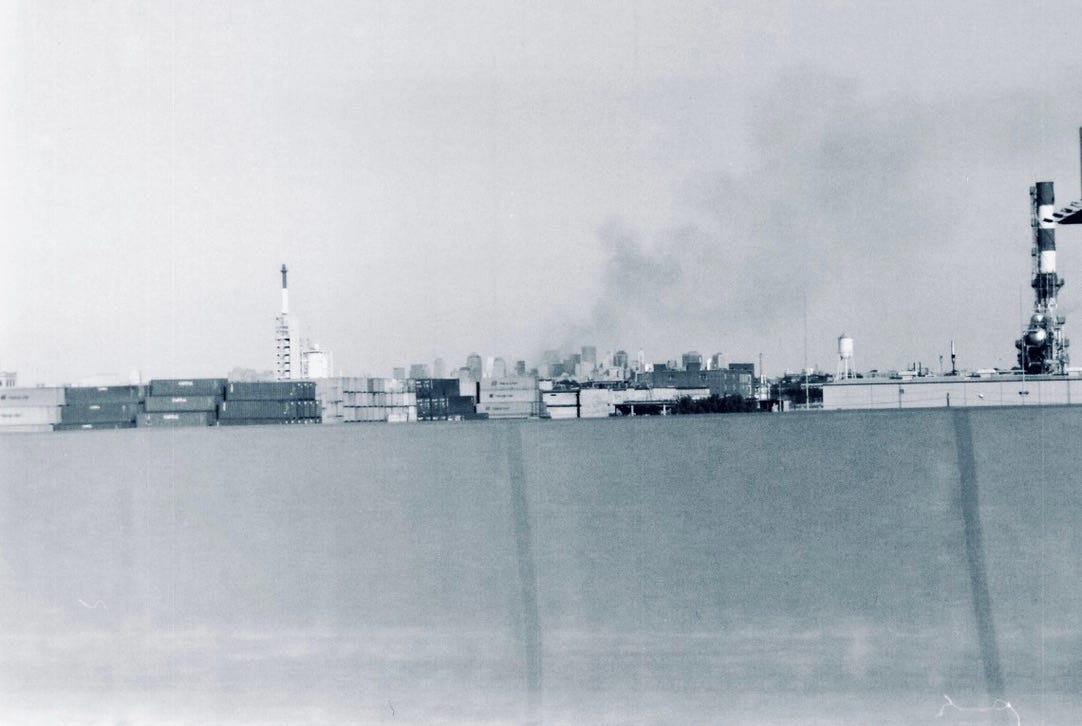
Weekday morning and evening editions. Saturdays once. Good news on Sundays. All sources labeled.TWENTY-FIVE YEARSOn September 12, 2001, NATO invoked Article 5 of its founding treaty for the first time in the alliance’s history. An attack on one member, the treaty says, is an attack on all. NATO had never used it, not once in the Cold War, not during any Soviet provocation. It used it for the United States, the day after nearly 3,000 people were killed in New York, Washington, and a field in Pennsylvania. Leaders across the world, including many who would later become Washington’s sharpest critics, stood with the United States that week. France’s Le Monde ran the headline “Nous sommes tous Américains.” We are all Americans.Twenty-five years later, that solidarity is a historical artifact. What replaced it is a record now documented in exhaustive, granular detail by researchers, journalists, and human rights monitors across two decades of continuous US military engagement in dozens of countries.According to Brown University’s Costs of War project at the Watson Institute, US-led wars since 2001 have killed an estimated 4.5 to 4.7 million people through a combination of direct violence and indirect causes. Roughly 940,000 of those deaths came from bombs, bullets, and combat itself. The remaining 3.6 to 3.8 million died from disease, malnutrition, and the collapse of health systems and infrastructure in the countries where the fighting happened. The project classifies these as indirect deaths.The war in Afghanistan, the longest in US history, spanned nearly 20 years and four presidents. An estimated 176,000 people died as a direct result of the fighting. Food insecurity in the country rose from 62% of the population before the war to 92% after it. The Taliban retook the country within weeks of the US withdrawal in 2021, erasing two decades of stated nation-building objectives.The 2003 invasion of Iraq, launched on the false premise that Saddam Hussein’s government possessed weapons of mass destruction, killed an estimated 315,000 people through direct violence. More than a million Iraqis remain internally displaced today, more than two decades later.Alongside the ground wars, the United States conducted largely undeclared air and drone campaigns across Pakistan, Yemen, Somalia, and against ISIL in Iraq and Syria. The Bureau of Investigative Journalism has recorded 423 US strikes in Pakistan since 2004, killing an estimated 2,499 to 4,001 people, including up to 966 civilians. In Yemen, it recorded at least 186 strikes and raids, killing at least 853 people, including 158 civilians. In Somalia, 19 to 23 strikes between 2001 and 2016 killed 188 to 276 people. In Libya, US and NATO forces carried out nearly 9,700 airstrikes over seven months in 2011 under a UN civilian-protection mandate, according to Amnesty International. Muammar Gaddafi was captured and killed by rebel fighters before the campaign ended. The US-led campaign against ISIL in Iraq and Syria, Operation Inherent Resolve, saw officials acknowledge 1,417 civilian deaths by 2018. Airwars, a London-based monitoring group, estimates the real toll at between 8,264 and 13,360.The Costs of War project puts total displacement from the post-9/11 wars at more than 38 million people across Afghanistan, Iraq, Pakistan, Yemen, Somalia, the Philippines, Libya, and Syria. That displacement has not stopped. Last year, Iran and Pakistan pushed roughly 2.9 million Afghans back across the border into a country most had fled.The financial cost, per the Costs of War project, runs to at least $8 trillion, including an estimated $2.2 to $2.5 trillion in future veteran care that remains largely unpaid. Stephanie Savell, the project’s director, told Al Jazeera that four times as many US service members and veterans have died by suicide as were killed in combat during the post-9/11 wars.Savell also drew a direct line from that history to the present moment. Trump won some support, she said, by promising to end “forever wars.” She told Al Jazeera that promise has given way to the opposite: intensified strikes in Somalia and Yemen, loosened rules of engagement, reduced civilian protections, the war in Iran now entering its seventh month, and strikes on boats in the Caribbean. Trump, she said, is “intensifying US violence” across the board.The parallel now being drawn. Al Jazeera’s opinion section published a piece today arguing that the September 11 attacks reshaped how Israel sold its own military campaigns to an American audience. The attacks reframed a preexisting conflict with Palestinians as part of the same “war on terror” that had just consumed American attention, and deepened US-Israel intelligence cooperation and financial support in the years that followed, the piece argues. The argument is not new. Commentators across the ideological spectrum, from the foreign policy realist outlet Responsible Statecraft to the left-leaning Jacobin, have drawn some version of the same comparison since October 2023: a mass-casualty attack, a wave of near-universal international sympathy, and a military response that expanded well past its stated aims while that sympathy eroded.What is different is how quickly it has happened, and how thoroughly it is now documented. America’s post-9/11 wars took the better part of two decades before the erosion of global sympathy fully registered in the public record. The equivalent process around Israel’s campaign in Gaza has compressed into under two years. South Africa’s genocide case against Israel is active before the International Court of Justice. The International Criminal Court issued arrest warrants for Prime Minister Benjamin Netanyahu and former Defense Minister Yoav Gallant in November 2024. And tonight, a new documentary premiering at the Venice Film Festival adds something the post-9/11 reckoning took years to produce: an accounting built not from outside investigation, but from the words of the people who ran the targeting systems themselves. (See NAZA, below.)🌍 Translator’s Note: Al Jazeera’s own opinion pages made the connection explicit today, in a piece arguing that 9/11 gave Israel a ready-made narrative framework it has used for a quarter-century, embedding itself in America’s own “war on terror” to secure political cover it might not otherwise have received. That is a minority framing in American coverage of the anniversary, most of which has focused on domestic commemoration rather than international consequence. Turkey’s state-affiliated TRT World went further in a recent piece, arguing that Israeli leadership treated 9/11 as a political windfall.🇺🇸 What American Readers Need to Know: The United States has now spent nearly a quarter-century treating open-ended military engagement abroad as close to a policy default, under four presidents from both parties. That default did not end with any administration’s stated intentions to end it. It is currently expanding, not contracting: a live war with Iran, strikes inside Yemen and Somalia, and now strikes on boats in the Caribbean. The 25th anniversary of the attack that started this pattern lands this week. By coincidence of the calendar, so does new documented evidence about how a close US ally has run its own campaign in Gaza. Whether that evidence changes anything about how Washington engages with either war is an open question. It is not, this week, changing the trajectory.Sources: Al Jazeera (Costs of War data, named testimony, Savell interview); Al Jazeera Opinion (9/11-Israel framing argument); Brown University Costs of War Project (methodology, veteran costs); Responsible Statecraft (early sympathy-erosion parallel); TRT World (Turkey, state-affiliated — Netanyahu framing argument, flagged for orientation)NAZAA new documentary premiering at the Venice Film Festival this week adds a fresh layer of documentation to the pattern described above: testimony from the people who built and ran Israel’s targeting systems in Gaza, in their own words.NAZA, directed by Yuval Abraham and Rachel Szor, premiered in Venice’s main competition on September 10. Abraham and Szor are two of the four directors behind No Other Land, which won the 2025 Academy Award for Best Documentary. It takes its title from an Israeli military acronym: NAZA, short for “Nezek Agavi,” or collateral damage — the number of civilians an airstrike is expected to kill, calculated before that strike is carried out.The film runs 80 minutes and was shot in secrecy at night on rooftops in Tel Aviv, across nearly three years of production. It presents interviews with 24 Israeli military and intelligence sources, active and former, who spoke on condition of anonymity, describing how the targeting systems actually worked. It builds on investigative reporting published between 2023 and 2025 by the Israeli-Palestinian outlet +972 Magazine, the Hebrew-language outlet Local Call, and the Guardian, which also produced the film.Abraham told AFP the goal was straightforward: to let the people who carried out the killing describe it in their own words. “We are letting the soldiers and the officers speak about what they did,” he said.The film received a standing ovation lasting almost 25 minutes at its premiere. By most accounts, that is the longest ovation in the festival’s history. It broke the previous record, set exactly one year earlier at the same festival by another Gaza film. The Voice of Hind Rajab received a 23-minute ovation at its September 2025 premiere. It went on to win the Silver Lion Grand Jury Prize, Venice’s second-highest honor.The connection between the two films is not just thematic. Jonathan Glazer, the director of The Zone of Interest, executive produced both. The Voice of Hind Rajab, directed by Tunisian filmmaker Kaouther Ben Hania, reconstructs the January 2024 killing of five-year-old Hind Rajab and her family in Gaza City. The film is built from the real recordings of the girl’s hours-long emergency call to the Palestine Red Crescent Society, as rescuers tried to reach her. Accepting the Silver Lion, Ben Hania said cinema “can preserve her voice, make it resonate across borders.”That is, in a narrower sense, what NAZA does as well. Where Ben Hania’s film reconstructs what happened to one child, NAZA documents the system that decided, in advance, how many children a strike was allowed to kill. Two consecutive years, two record-breaking ovations, two films built around material Israel did not choose to release. Foreign journalists remain barred from entering Gaza except under tightly controlled conditions set by the Israeli military. Neither film exists because that access was granted. Both exist because people inside the system, or close to its victims, decided the record needed to be made anyway.🌍 Translator’s Note: Al Jazeera’s own coverage of the NAZA premiere placed the film in the context of press access, noting that Gaza’s Health Ministry puts the death toll since October 2023 at roughly 73,500 killed and 174,500 wounded. That figure is measured from a different start date than the OCHA-sourced figures ROTWR carries in its own numbers block, which track only the period since the October 2025 “ceasefire.” Both figures are accurate; they measure different windows. European outlets covering the premiere, including Euronews, focused heavily on the ovation itself as a data point, treating the audience reaction as newsworthy in its own right. That framing is largely absent from the more restrained American trade coverage, which focused on production credits and distribution prospects.🇺🇸 What American Readers Need to Know: Neither film has guaranteed wide US distribution on the strength of a Venice premiere alone; Hind Rajab found one, opening in New York and Los Angeles in December, and was nominated for the Academy Award for Best International Feature. What both films demonstrate does not depend on distribution reaching an American audience at scale. Direct testimony from inside Israel’s military and intelligence establishment about how Gaza targeting decisions were made now exists on the record, on camera, corroborating years of investigative reporting American audiences have had limited exposure to.Sources: Variety (production background, ovation length, director quotes); Al Jazeera (press access context, Gaza Health Ministry figures); Deadline (background); Euronews (ovation framing); SCMP (Abraham AFP quote); The National (Hind Rajab prize, Ben Hania quote, ovation length); JTA (Glazer’s dual role); Variety (Hind Rajab US distribution, release date)NUMBERS AT PUBLICATION🇮🇷 Iran: 3,684 killed 🇱🇧 Lebanon: 4,352 killed, 12,318 wounded 🇮🇱 Israel: 1,200+ killed, ~5,400 wounded (includes 472 killed, 3,004 wounded in Gaza) 🇺🇸 US military: 18 killed, 756 wounded 🇵🇸 Gaza: 1,344+ Palestinians killed, 4,464 wounded, since the October 10, 2025 "ceasefire" 🇵🇸 West Bank: 316 killed (incl. 73 children), 5,641 wounded (incl. 915 children), since January 2025 🛢️ Brent crude: $104.50/barrel (OilPrice.com) ⛽ US gas: $4.30/gallon (AAA) Sources: HRANA (Iran), Lebanon MOPH, INSS (Israel), DCAS (US), OCHA (Gaza, West Bank), OilPrice.com, AAA.Whenever the people are well informed, they can be trusted with their own government. — Thomas Jefferson, 1789 Get full access to The Rest of the World Report at www.restoftheworldreport.com/subscribe
Embed this episode
Ready to play
The Rest of the World Report | September 11, 2026 — Evening Edition
No transcript for this episode yet
Similar Episodes
No similar episodes found.
Similar Podcasts
No similar podcasts found.