
EPISODE · Apr 21, 2026 · 17 MIN
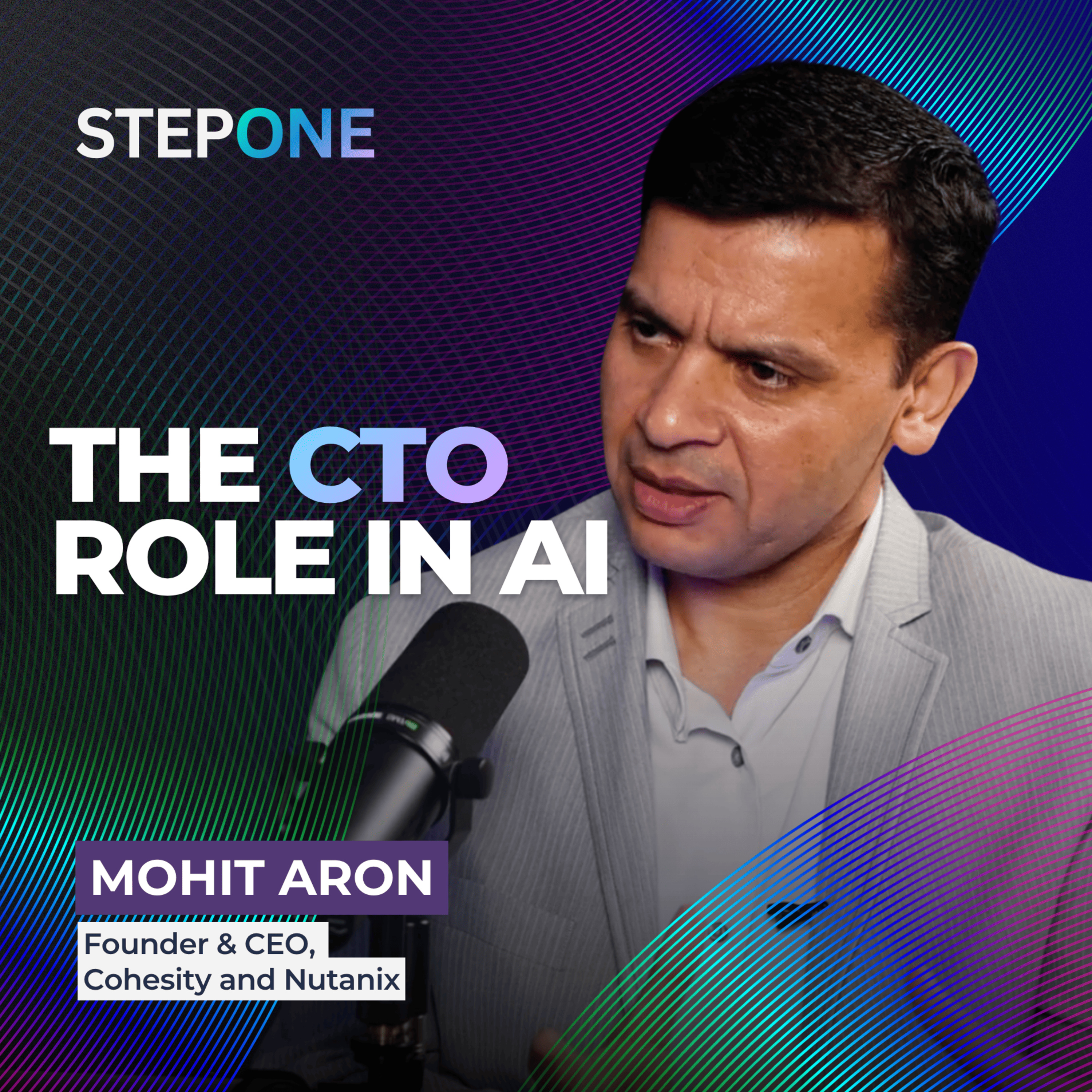
The Role of CTO in AI Companies (Mohit Aron)
from StepOne · host The Front Lines
Most CTOs talk about AI productivity gains in the abstract. Mohit Aron, Founder of Cohesity and Nutanix, has a concrete system — one he built by taking his pre-AI coding methodology and mapping AI directly onto every phase of it. He still writes unit tests, runs two coding agents in parallel for different tasks, and has a firm view on why hiring for AI fluency before engineering fundamentals is a trap that will cost you.In this conversation with Ashish, Mohit shares his full AI-assisted development methodology — natural language spec first, then API boundaries, intermediate state, skeleton functions, implementation, and only then unit tests — and why skipping that order is exactly how teams end up owning code they don't understand. He also pushes back on blanket productivity claims: 20x gains are real for unit tests and pattern-heavy work, but design-heavy work with humans in the loop will see far less. And on the prediction that 90% of engineering jobs disappear in 18 months, he's not buying it — his company is still actively hiring, and good engineers remain hard to find.Topics discussed:Early-stage CTO as player-coach: when to build alongside the team vs. step backThe 5-step AI coding methodology: spec, API, intermediate state, skeleton functions, implementationWhy open-ended AI prompting produces bad output and who is accountable when it doesApplying a looser review standard to AI-written unit tests vs. production code and whyInterviewing engineers without AI to test fundamentals — fluency is a bonus, not a baselineWhy high token usage means nothing if the output quality is poorRunning multiple coding agents in parallel and switching between them by task typeWhy AI as a pattern matcher still requires strong engineers to catch what it gets wrong
Embed this episode
NOW PLAYING
The Role of CTO in AI Companies (Mohit Aron)
No transcript for this episode yet
Similar Episodes
No similar episodes found.
Similar Podcasts
No similar podcasts found.