
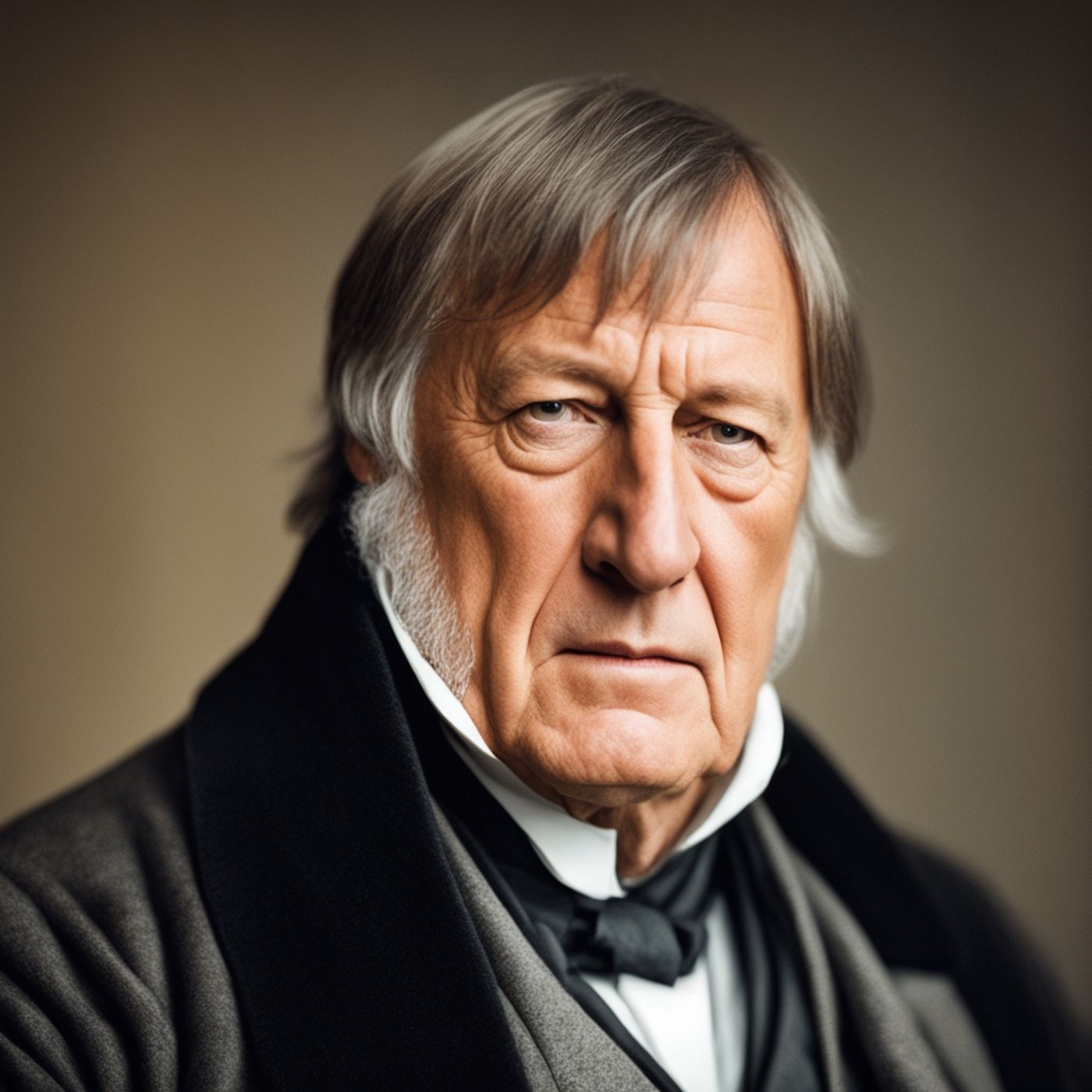
EPISODE · Apr 29, 2025 · 4 MIN
The Role of Language in Hegel's Philosophy
from The Philosophy Channel · host Robbert Veen
When we think of language, we often consider it as a tool—a means to express our thoughts and ideas. However, for Georg Wilhelm Friedrich Hegel, language transcends this conventional role. It isn't just a vessel for thought; it is deeply interconnected with and constitutive of thought itself, especially within his dialectical method. Let’s delve into Hegel's intricate philosophy to understand how language serves as the very foundation of thought.Hegel views language as the essential medium in which the activity of thinking unfolds. It is not merely an empirical tool for communication, but the material through which thought operates and expresses itself. In his philosophy, language is the "objective medium" that enables subjective communication and articulation to exist for the first time.This interplay between thought and language is profound—logical forms permeate the spirit's conscious and unconscious realms through language. Hegel even suggests that language holds us in its possession, embodying the universal logic of his dialectical method.For Hegel, language is more than a medium; it is the Dasein, or determinate being, of Spirit. Thoughts achieve their existence and specificity when expressed as words, which represent the "highest and truest existence" of those thoughts.Hegel challenges the notion of internal meaning preceding external expression. Instead, the act of externalizing thought through language is what makes internal meaning complete and determinate. Words stabilize meanings over time, facilitating "higher-order" thinking—a process essential to rational thought.In Hegel’s philosophy, the dialectical method epitomizes the continuous effort to unite opposites. Language is not just a static medium for this method; it is the method itself. Language’s dynamic nature mirrors the dialectical movement of thought, embodying the very essence of contradiction and negation.Hegel highlights the speculative spirit of language—its capacity to resist binary logic through ambiguity and multivalence. Procedures like Bedeutungsverschiebung (shifting meanings) within language allow speculative logic to transition between concepts, driving the dialectical process forward.For Hegel, words used in genuine thinking do not merely refer to reality; they embody reality in a higher conceptual form. Analyzing a concept means analyzing the word itself, as language and reality converge in philosophical inquiry.Hegel’s philosophy invites us to rethink our understanding of language. It is not an external tool encoding pre-existing thought; rather, it is the condition, medium, and structure within which thought takes shape and evolves dialectically. The inherent ambiguity and dynamism of language are not flaws but essential features, enabling the expression and movement of speculative thought.Language, in Hegel’s view, is inseparable from the activity of thinking—an integral part of human spirit and understanding. His insights remind us that the words we speak and write are not merely instruments; they are the essence of the ideas we seek to convey.Become a supporter of this podcast: https://www.spreaker.com/podcast/the-philosophy-channel--4573240/support."Dare to use your own reason" - Immanuel Kant
Embed this episode
Ready to play
The Role of Language in Hegel's Philosophy
No transcript for this episode yet
Similar Episodes
No similar episodes found.
Similar Podcasts
No similar podcasts found.