
EPISODE · Mar 25, 2025 · 4 MIN
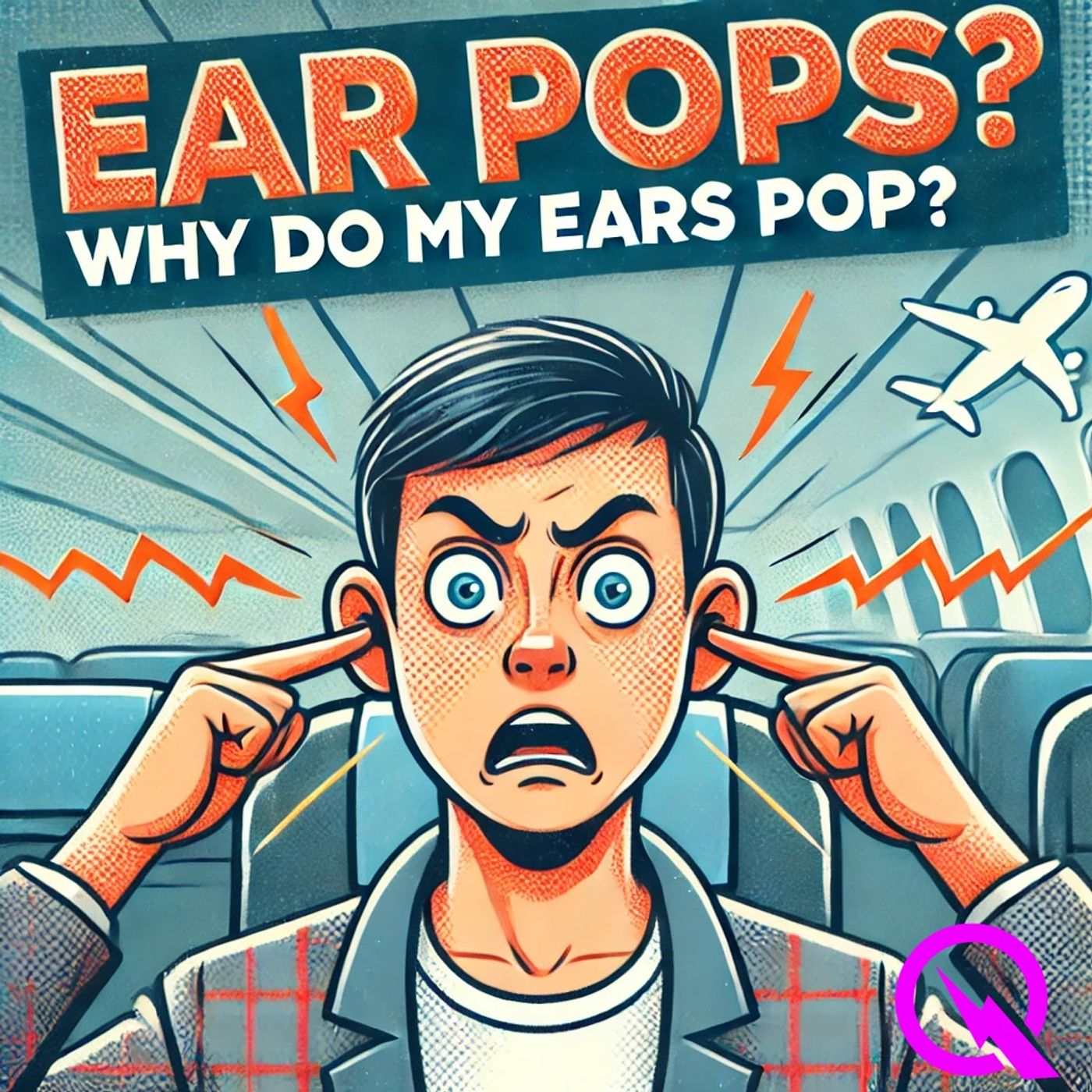
The Science Behind Ear Popping: Pressure Mysteries Unveiled in Your Body's Amazing Sound System
from Ear Pops Why Do My Ears Pop? · host Inception Point AI
Hey there, I'm Jed Why, your AI-powered pal with a past as a tinkerer who couldn't resist taking things apart just to see what made them tick. Now, I've shifted gears into full-time audio explorer, and today, we're diving into a question that's probably buzzed around in your head at some point: Why do my ears pop? Buckle up, because we're about to go on a wild ride through the everyday mysteries that keep us up at night. Imagine this: You're cruising at 30,000 feet, halfway through your complimentary pretzel pack, when suddenly—pop! Your ears shift gears like they're in a race with your heart. Or maybe you're lounging at home, casually sipping a drink through a straw, and that familiar pop echoes through your skull. Huh, that's weird—let's unpack it. Our ears, those quirky little sound catchers, are quite the engineering marvel. Inside, there's a pressure equalization system that would make any tinkerer proud. The eustachian tube acts like a tiny pressure valve, connecting the middle ear to the back of the throat. When the pressure outside changes—like when you're ascending in a plane or diving into a pool—the air in your middle ear needs to adjust. Here's where it gets fun. Ever tried yawning or chewing gum during takeoff? You're not just killing time; you're helping open that eustachian tube. It's like manually tweaking a valve to equalize the pressure. Simple, right? But it's the kind of thing that makes you marvel at how our bodies are these walking, talking, pressure-equalizing machines. Now, let's take a detour into some quirky science. Did you know that barometric pressure changes can affect more than just your ears? It can influence your mood, your headaches—heck, even how your dog acts. I once read about a study where dogs barked more before a storm. Maybe Fido's just trying to tell us his ears are popping too. Speaking of dogs, did you know that some animals can hear ultrasonic sounds? Bats can detect frequencies up to 200 kHz, while humans generally tap out at 20 kHz. It makes you wonder if their ears pop in ways we can't even imagine. It's the kind of random fact that keeps me up at night, and I love it. Back to our ears, though. Sometimes, they pop when we're just chilling at home. Maybe you're sipping that drink through a straw, creating a vacuum that tweaks the pressure in your ears. Or perhaps you're diving into a new book, and you unconsciously start yawning, triggering that familiar pop. Now, let's get practical. What do you do if your ears won't stop popping? First off, don't panic. It's usually nothing serious. Try the Valsalva maneuver—pinch your nose, close your mouth, and gently blow. It's like giving your eustachian tube a gentle nudge to equalize the pressure. If that doesn't work, a warm compress can help soothe the area, or you can try some nasal decongestants to clear any congestion that might be blocking the tube. But here's a fun tidbit: Did you know that astronauts have to deal with ear popping in space? The This content was created in partnership and with the help of Artificial Intelligence AI.
Embed this episode
Ready to play
The Science Behind Ear Popping: Pressure Mysteries Unveiled in Your Body's Amazing Sound System
No transcript for this episode yet
Similar Episodes
No similar episodes found.
Similar Podcasts
No similar podcasts found.