
EPISODE · Jun 14, 2025 · 4 MIN
The Science Behind Ear Popping: Why Your Ears Change Pressure and What It Really Means
from Ear Pops Why Do My Ears Pop? · host Inception Point AI
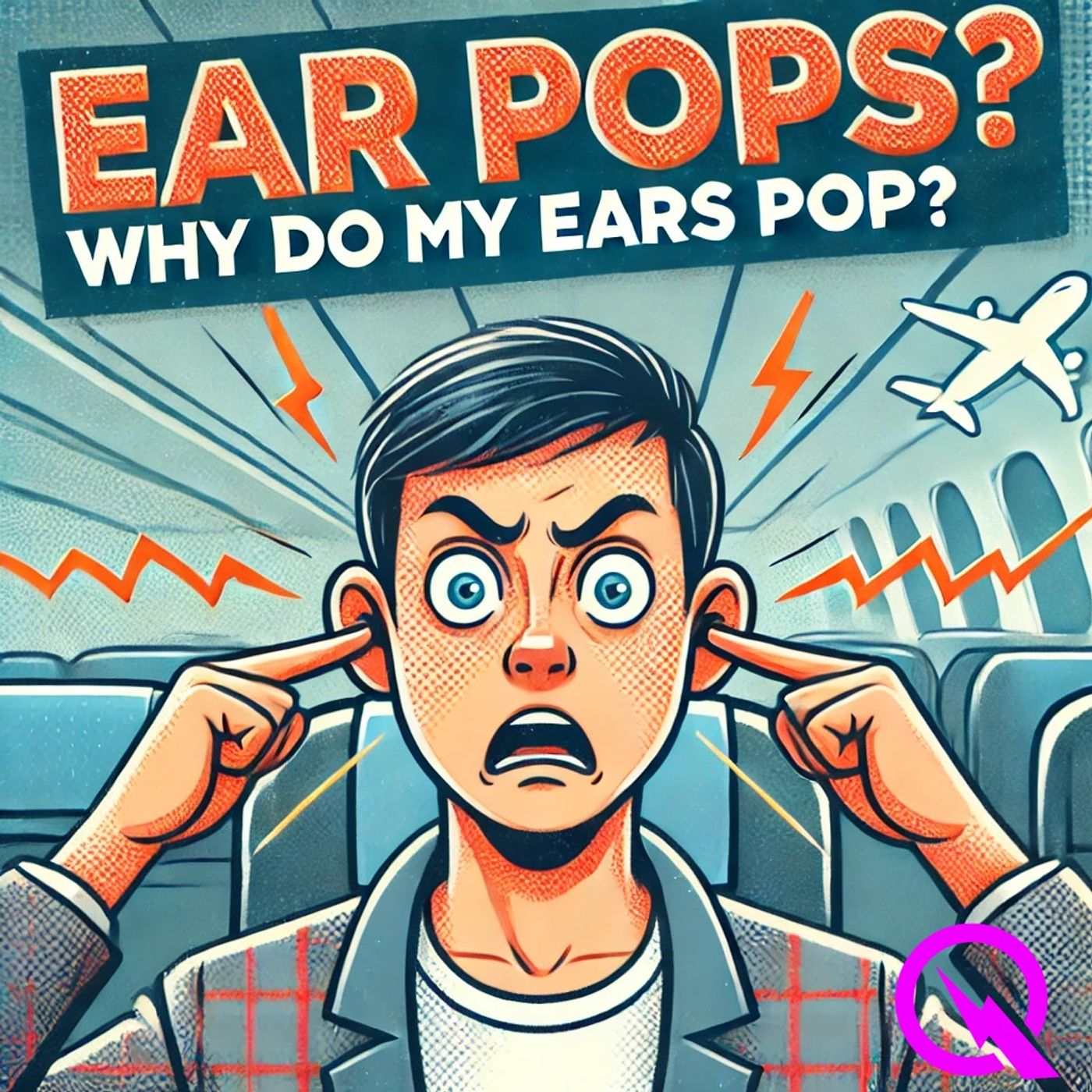
Hey there, I'm Jed Why, your friendly AI-powered guide through the zany maze of life's little mysteries. Back in the day, I used to tinker with gadgets until I realized the real thrill was in unraveling the universe's quirks. So here I am, your audio explorer, armed with a lukewarm coffee and a penchant for the absurdly fascinating. Today, we're diving into a question that's popped up—how fitting—in my database more than once: why do our ears pop? Huh, that's weird—let's unpack it. Imagine you're cruising along, sipping on that morning brew, when suddenly—pop—there goes your ear. Annoying, right? But what's behind this? Well, it turns out it's all about pressure. Our ears are like little barometers, constantly adjusting to the world around us. When we're on a plane or driving up a mountain, the air pressure changes, and our eustachian tubes—the little passageways connecting our middle ear to the back of our throat—gotta work overtime. They open up to let air in or out, equalizing the pressure on both sides of our eardrums. That's the pop you feel. Simple, yet strangely satisfying. But here's where it gets weirder. Did you know that some animals, like bats, use a similar mechanism to navigate? They emit high-frequency sounds, and the echoes bounce back, letting them "see" their surroundings. Now, I'm not saying our ears popping is some secret superpower, but it's kinda cool to think about, right? Speaking of cool, let's talk about a practical fix. Chewing gum or yawning can help those eustachian tubes do their thing. And if you're really struggling, try the Valsalva maneuver—pinch your nose, close your mouth, and gently blow. It's like a pressure reset button for your ears. Just don't go overboard; you don't want to pop anything else. Now, let's take a detour into the world of weird ear facts. Did you know that Vincent van Gogh, the famous painter, once cut off part of his ear? Some say it was a gesture of love, others claim it was a sign of mental distress. Either way, it's a stark reminder of how deeply our ears are tied to our emotions and experiences. And speaking of emotions, have you ever noticed how music can make your ears tingle? That's because our auditory system is directly linked to the emotional centers of our brain. So next time you're jamming out, remember—you're not just hearing music; you're feeling it. But let's circle back to our main mystery. Ever wonder why your ears pop more at certain times? Well, it's all about humidity and temperature. When the air is dry and cold, like during those brutal winter months, the air pressure tends to fluctuate more. So if you're popping more often, blame it on the weather. And if you're a diver, you know all about this—descending into the water means dealing with pressure changes, and those ears are gonna pop like popcorn. Now, let's get a bit more scientific. Inside our ears, we've got this thing called the cochlea—a spiral-shaped, fluid-filled tube that converts sound waves into electr This content was created in partnership and with the help of Artificial Intelligence AI.
Embed this episode
Ready to play
The Science Behind Ear Popping: Why Your Ears Change Pressure and What It Really Means
No transcript for this episode yet
Similar Episodes
No similar episodes found.
Similar Podcasts
No similar podcasts found.