The science behind the emotions in 'Inside Out 2' episode artwork

EPISODE · Aug 9, 2024 · 1H

The science behind the emotions in 'Inside Out 2'

from Berkeley Talks

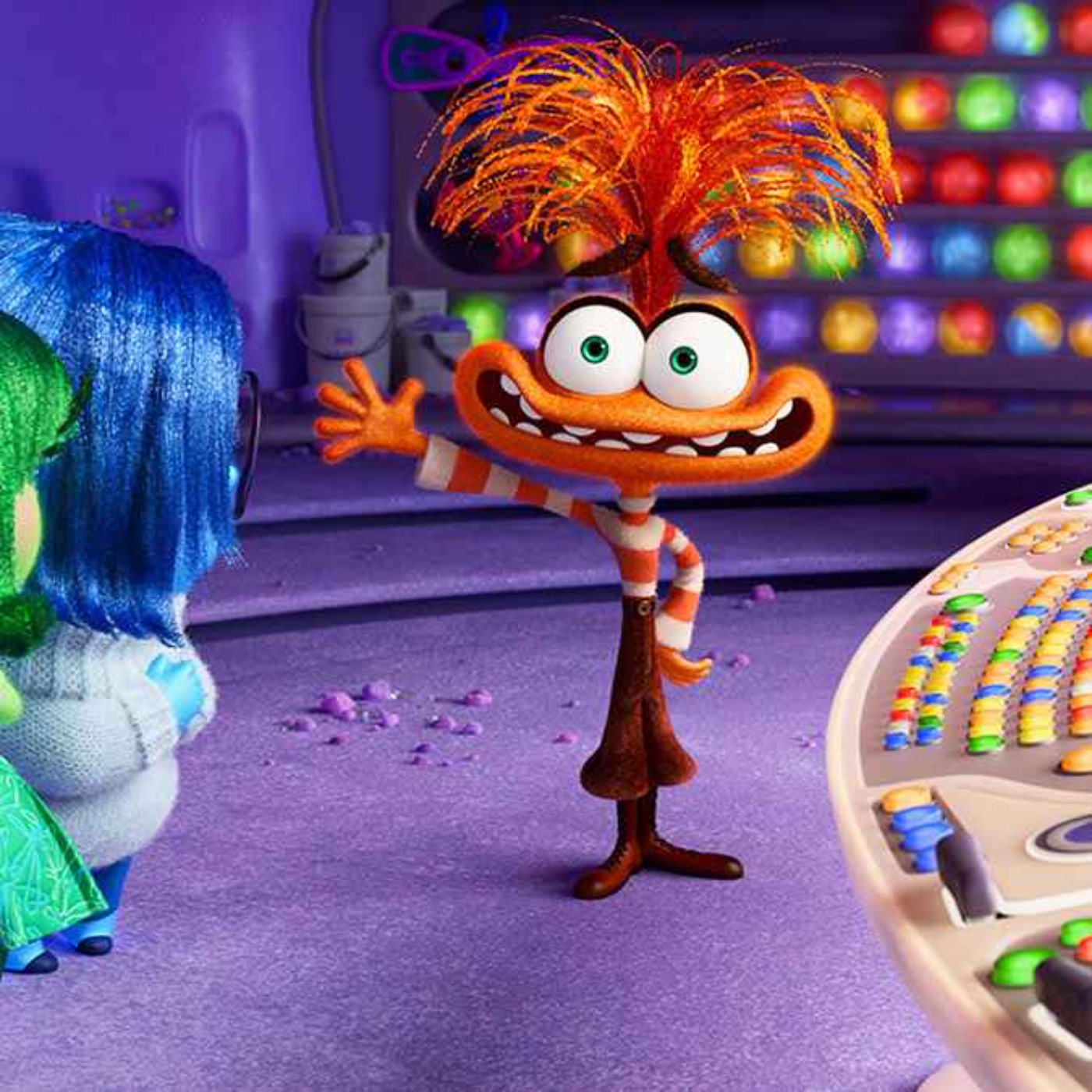
There’s a scene toward the end of the new Pixar film Inside Out 2 where the main character, 13-year-old Riley, is having a panic attack in the penalty box at a hockey match. She’s just been reprimanded for tripping an opponent in frustration. On the outside, she’s seen sitting in the small space while grasping at her chest and neck, breathing in and out, faster and faster. On the inside, the character Anxiety, one of Riley’s newest emotions, is spinning in a glitchy loop at her brain’s control board. After a few moments, Riley slowly begins to notice and reconnect with the world around her. Her panic subsides, her breathing steadies and she centers herself.It’s a gripping illustration of a common (and terrifying) experience, and a reminder for teens and parents alike that there’s nothing to be ashamed of when it comes to anxiety. For experts who consulted on Inside Out 2, normalizing the emotion was part of the goal.“You have so much pressure on young people to be perfectionistic and excel in everything,” said UC Berkeley psychology professor Dacher Keltner, who consulted on how to convey and understand emotions in the film. “Panic and anxiety, those are part of our evolutionary design. They have their point. They can get excessive, of course, but just to be there and to have a language, to let the child know they're not alone, that these are common reactions, is such a powerful [message].”In Berkeley Talks episode 206, Keltner joins a panel of others who worked on Inside Out 2 — clinical psychologist Lisa Damour, who served as a scientific consultant on the film with Keltner, and the film’s lead editor, Maurissa Horwitz. Together, they discuss the unique pressures that teenagers face, the science behind emotions, and how all of them, even the most uncomfortable, have a purpose.“I felt like I was learning more about my adolescent self as I worked on this movie,” said Horwitz. “I think being able to really name those emotions that come up during this period … and knowing that there's that amount of growth and reworking going on physically inside [your brain], it's just a great thing to be aware of as a touchstone.”“I'm hearing that conversations are happening in families, whether it's around anxiety or self-talk,” she continued, “and that parents and families are feeling seen by this movie and relate to it so much. It's really incredible to be a part of that.” This July 2024 conversation was moderated by Allison Briscoe-Smith, a child clinical psychologist and a senior fellow at Berkeley’s Greater Good Science Center, where Keltner is the faculty director.Listen to the episode and read the transcript on Berkeley News (news.berkeley.edu/podcasts).Music by Blue Dot Sessions.Screenshot from Inside Out 2. Hosted on Acast. See acast.com/privacy for more information.

There’s a scene toward the end of the new Pixar film Inside Out 2 where the main character, 13-year-old Riley, is having a panic attack in the penalty box at a hockey match. She’s just been reprimanded for tripping an opponent in frustration. On the outside, she’s seen sitting in the small space while grasping at her chest and neck, breathing in and out, faster and faster. On the inside, the character Anxiety, one of Riley’s newest emotions, is spinning in a glitchy loop at her brain’s control board. After a few moments, Riley slowly begins to notice and reconnect with the world around her. Her panic subsides, her breathing steadies and she centers herself.It’s a gripping illustration of a common (and terrifying) experience, and a reminder for teens and parents alike that there’s nothing to be ashamed of when it comes to anxiety. For experts who consulted on Inside Out 2, normalizing the emotion was part of the goal.“You have so much pressure on young people to be perfectionistic and excel in everything,” said UC Berkeley psychology professor Dacher Keltner, who consulted on how to convey and understand emotions in the film. “Panic and anxiety, those are part of our evolutionary design. They have their point. They can get excessive, of course, but just to be there and to have a language, to let the child know they're not alone, that these are common reactions, is such a powerful [message].”In Berkeley Talks episode 206, Keltner joins a panel of others who worked on Inside Out 2 — clinical psychologist Lisa Damour, who served as a scientific consultant on the film with Keltner, and the film’s lead editor, Maurissa Horwitz. Together, they discuss the unique pressures that teenagers face, the science behind emotions, and how all of them, even the most uncomfortable, have a purpose.“I felt like I was learning more about my adolescent self as I worked on this movie,” said Horwitz. “I think being able to really name those emotions that come up during this period … and knowing that there's that amount of growth and reworking going on physically inside [your brain], it's just a great thing to be aware of as a touchstone.”“I'm hearing that conversations are happening in families, whether it's around anxiety or self-talk,” she continued, “and that parents and families are feeling seen by this movie and relate to it so much. It's really incredible to be a part of that.” This July 2024 conversation was moderated by Allison Briscoe-Smith, a child clinical psychologist and a senior fellow at Berkeley’s Greater Good Science Center, where Keltner is the faculty director.Listen to the episode and read the transcript on Berkeley News (news.berkeley.edu/podcasts).Music by Blue Dot Sessions.Screenshot from Inside Out 2. Hosted on Acast. See acast.com/privacy for more information.

NOW PLAYING

The science behind the emotions in 'Inside Out 2'

0:00 1:00:59

No transcript for this episode yet

We transcribe on demand. Request one and we'll notify you when it's ready — usually under 10 minutes.

Carnivores Don't Get Sunburn - Carnivore Diet Talks Carnivores Don't Get Sunburn - Carnivore Diet Talks Welcome to “Carnivores Don’t Get Sunburn,” where we have fun and explore the carnivore diet and its transformative power. Join us as we uncover real stories from individuals who have thrived on this diet, defying convention and embracing optimal health. Plus, stay tuned for our upcoming documentary featuring diverse carnivores overcoming health challenges. Learn more at www.carnivoredietdocumentary.com.Excitingly, we’re working on an upcoming documentary where we’ll feature carnivores from various walks of life, conquering diverse health challenges. Join us on this journey and learn more at www.carnivoredietdocumentary.com.Join us in uncovering the power of the carnivore diet. Prepare to be inspired, informed, and empowered to embrace optimal health and well-being.Welcome to “Carnivores Don’t Get Sunburn: Unveiling Real Stories of the Carnivore Diet.” Stay tuned for our upcoming documentary. Discover how this lifestyle can transform lives. Learn more at www.carnivoredietdocumentary.com IT IS WHAT IT IS with SHALLZ - SHALLY ZOMORODI Shally Zomorodi What?  "It is what it is" with ShallZ – Shally ZomorodiWhen? WeeklyHow long? 35 minutesEvery week, Mother of 4, wife, morning TV news anchor and ultimate hostess, Shally Zomorodi talks about life - its up's and downs and how to stay on track in her weekly podcast, ‘It is what it is.’  Known for her high energy, infectious smile and ability to see the cup as half full Shally talks about all things in life and how to work through its challenges. From parenting, marriage, friendships, current events to how to smile when it just seems impossible ‘It is what it is’ is the perfect podcast to help inspire you to dance through the rain. Tracking Nuclear Weapons Programs Center for Strategic and International Studies The CSIS Proliferation Prevention Program talks to experts about transparency and nuclear weapons. Cover Stories with Chess Life US Chess Chess Life Editor John Hartmann talks to the authors of each month's Chess Life cover story.

Frequently Asked Questions

How long is this episode of Berkeley Talks?

This episode is 1 hour and 0 minutes long.

When was this Berkeley Talks episode published?

This episode was published on August 9, 2024.

What is this episode about?

There’s a scene toward the end of the new Pixar film Inside Out 2 where the main character, 13-year-old Riley, is having a panic attack in the penalty box at a hockey match. She’s just been reprimanded for tripping an opponent in frustration. On the...

Can I download this Berkeley Talks episode?

Yes, you can download this episode by clicking the download button on the episode player, or subscribe to the podcast in your preferred podcast app for automatic downloads.
URL copied to clipboard!