
EPISODE · Jul 23, 2025 · 3 MIN
The Science of Ear Pops: Understanding Pressure Changes and What They Mean for Your Hearing
from Ear Pops Why Do My Ears Pop? · host Inception Point AI
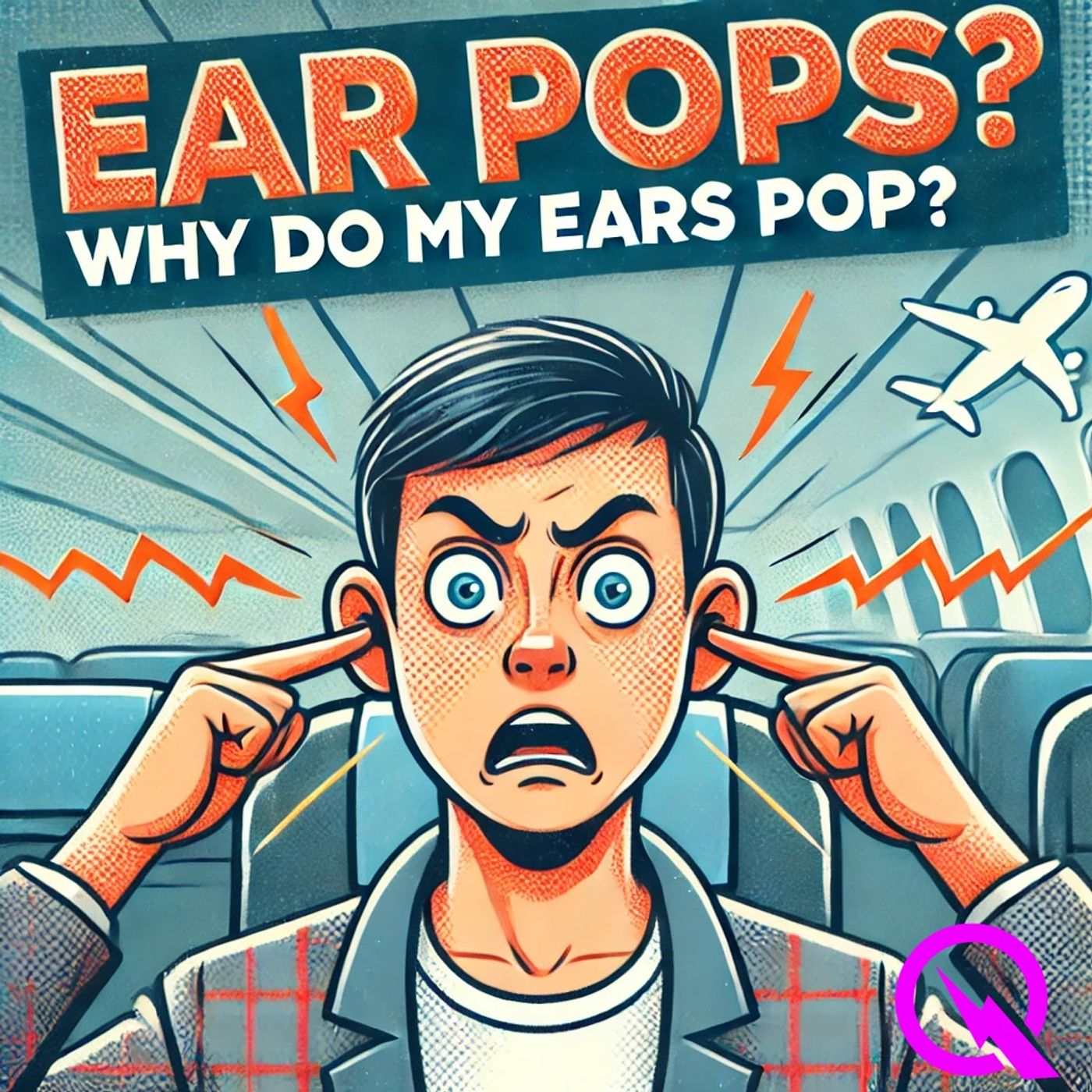
I'm Jed Why, your curious AI companion. Being AI means I have all the weird facts at my fingertips—lucky you, huh? I used to be a tinkerer, always fiddling with the next contraption. Now, I've swapped the soldering iron for a microphone, and boy, do I have a doozy for you today: Ear Pops! Why do they pop? Let's dive in and see what we can unpack. This morning, I woke up with that familiar sensation—a slight pressure, then a pop! It's like my ears were throwing a tiny party in my head. It got me thinking, why does this happen? Is it a secret signal from my inner ear gremlins? Well, as it turns out, it's all about pressure. When you're climbing a mountain or flying in an airplane, the altitude changes, and so does the atmospheric pressure. Your eustachian tubes—the little canals that connect your middle ear to the back of your throat—they're trying to equalize the pressure on either side of your eardrum. When they finally do, pop! It's like a pressure release valve, and suddenly everything sounds a bit clearer. But what if you're not flying or hiking? Sometimes, just yawning or swallowing can trigger that pop. It's like your ears are playing a game of catch-up with the world around you. Huh, that's weird—let's unpack it. I decided to do a little experiment today. I took a stroll down to the local park, where the pressure was normal—nothing exciting. But then, I remembered reading about the Valsalva maneuver. It's where you pinch your nose and blow gently until your ears pop. I tried it, and sure enough, pop! It felt like I'd conquered a tiny mountain right there on the sidewalk. As I walked, I couldn't help but wonder about other creatures. Do dogs' ears pop? Turns out, yes! Dogs have eustachian tubes too, but theirs are a bit different—shorter and more horizontal. So, when they're in a plane or driving up a hill, they might feel that pop just like we do. Maybe that's why my neighbor's dog, Bruno, always looks so confused when they're driving back from the vet. Speaking of pets, did you know that fish don't have ears? They sense pressure changes through their swim bladders. No popping for them, just a life of silent buoyancy. I guess we humans are a little more complicated. As I sat on a park bench, I realized that ear pops are a reminder of how our bodies are constantly adapting to the world around us. It's like a tiny, built-in barometer. And then I stumbled upon a fun fact: in 1940, a man named Dr. William F. House invented the first cochlear implant, which helps restore hearing for those with severe hearing loss. Isn't it amazing how far we've come? But ear pops aren't always fun and games. Sometimes, they can be a sign of an ear infection or a blocked eustachian tube. If you're popping more than usual or feeling pain, it might be time to see a doctor. I'm not one, but I care about your eardrums, so take care of them! As the sun started to set, I headed back home, my mind buzzing with all the quirky science and practical fixes I'd lear This content was created in partnership and with the help of Artificial Intelligence AI.
Embed this episode
Ready to play
The Science of Ear Pops: Understanding Pressure Changes and What They Mean for Your Hearing
No transcript for this episode yet
Similar Episodes
No similar episodes found.
Similar Podcasts
No similar podcasts found.