
EPISODE · Mar 18, 2026 · 16 MIN
The Silicon Frontier: Tesla and Samsung Reshape Automotive Compute
from Breaking News To Trading Moves
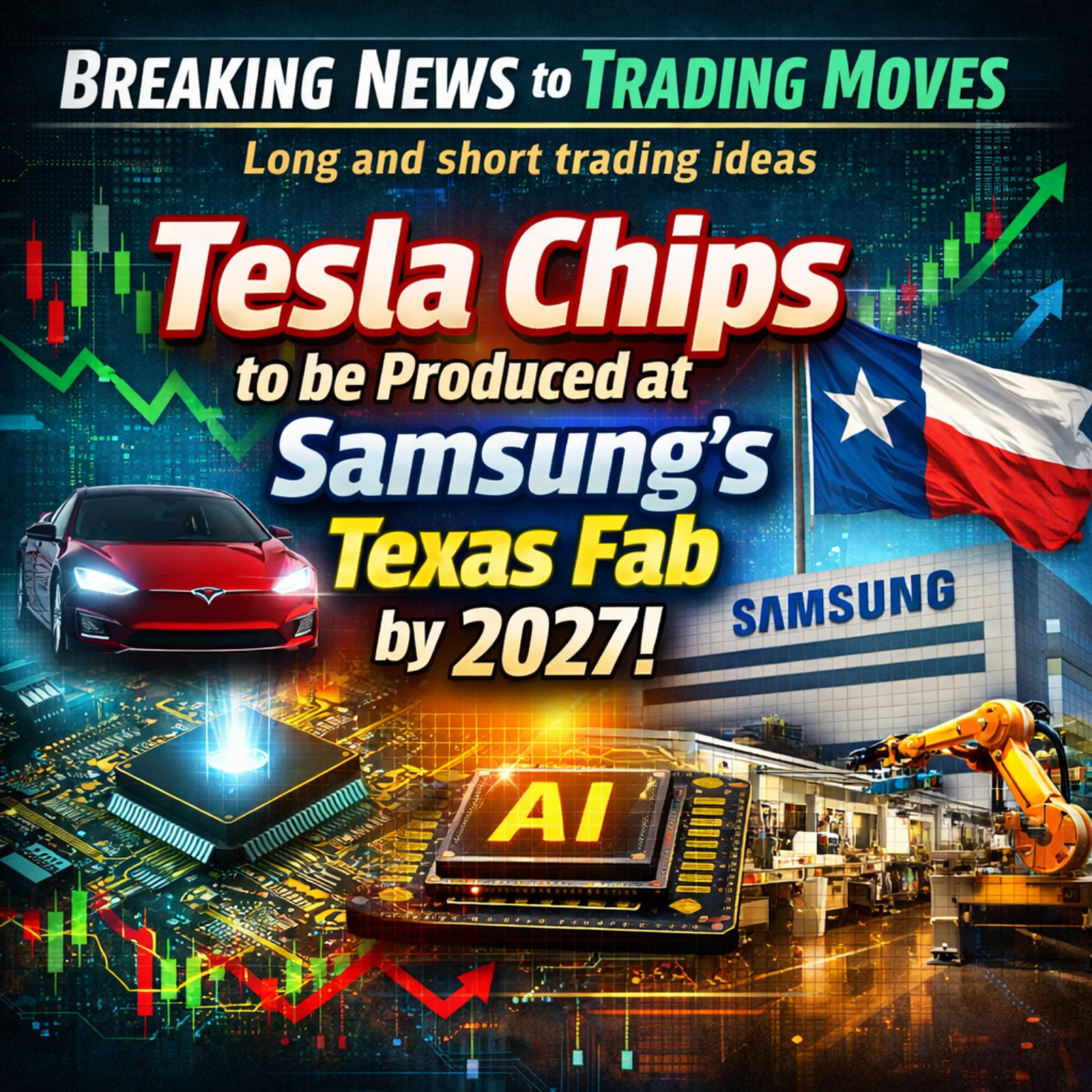
Samsung Electronics says it expects to start volume production of Tesla chips at its Texas factory in the second half of 2027. That is a notable signal for US-listed stocks because it strengthens the view that Tesla is building deeper control over its own compute and AI stack.Why this matters:Tesla is not just being valued as a carmaker. It is increasingly being judged as a software, AI, and hardware integration story. A future Samsung-Tesla chip production ramp in Texas adds to that long-term narrative. It supports the idea that Tesla wants tighter control over in-car compute, driver-assistance systems, and broader AI workloads. It is strategically important, even if it is not an immediate 2026 earnings catalyst.Main discussion:This headline reinforces the idea that the next phase of the EV race may be shaped by proprietary chips, software integration, and AI capability as much as by vehicle deliveries. That is why the read-through goes beyond Tesla itself and into semiconductors, autonomy, and the wider auto supply chain.WinnersEV and autonomy platform leadersTesla is the clearest direct beneficiary because the news strengthens its custom chip and long-term compute story. Rivian could also benefit in sympathy as a software-led EV name.Names: $TSLA (Tesla), $RIVN (Rivian)Automotive AI and semiconductor namesMore compute inside vehicles is a positive for the broader automotive AI stack. Nvidia and AMD benefit from stronger demand expectations around automotive processing, while Mobileye gains from renewed focus on driver-assistance silicon.Names: $NVDA (Nvidia), $AMD (AMD), $MBLY (Mobileye)US semiconductor equipment ecosystemA Texas production ramp keeps attention on advanced chip manufacturing in the US. Equipment makers can benefit when complex semiconductor production expands.Names: $AMAT (Applied Materials), $LRCX (Lam Research), $KLAC (KLA)LosersLegacy automakers with less chip and software integrationThis kind of headline can make traditional automakers look less differentiated if investors focus more on vertically integrated EV models built around proprietary compute.Names: $F (Ford), $GM (General Motors), $STLA (Stellantis)Traditional auto suppliersIf investors lean further toward AI-led vehicle architecture, some conventional suppliers may attract less attention in the near term.Names: $BWA (BorgWarner), $LEA (Lear), $VC (Visteon)US chip manufacturing laggards in market narrativeSamsung’s Texas link to Tesla may increase comparisons with other US-listed chip manufacturing stories that are still trying to prove leadership in strategic programs.Names: $INTC (Intel), $GFS (GlobalFoundries)Trading takeaway:The cleanest direct winner is $TSLA. The second-order winners are names tied to automotive AI, chips, and semiconductor equipment, including $NVDA, $AMD, and $MBLY. The likely pressure point is on legacy automakers such as $F, $GM, and $STLA.What to watch next:Watch for more detail on the type of Tesla chips involved, whether the timeline holds, and whether this connects to future AI or driver-assistance expansion.#StockMarket #Trading #Investing #DayTrading #SwingTrading #Tesla #TSLA #Semiconductors #AIStocks #EVStocks #AutonomousDriving #USStocks #MarketNews #TechStocks #ChipStocks
Embed this episode
Ready to play
The Silicon Frontier: Tesla and Samsung Reshape Automotive Compute
No transcript for this episode yet
Similar Episodes
No similar episodes found.
Similar Podcasts
No similar podcasts found.