
EPISODE · Feb 25, 2026 · 16 MIN
The Silicon Squeeze: HP and the Global PC Margin Crisis
from Breaking News To Trading Moves
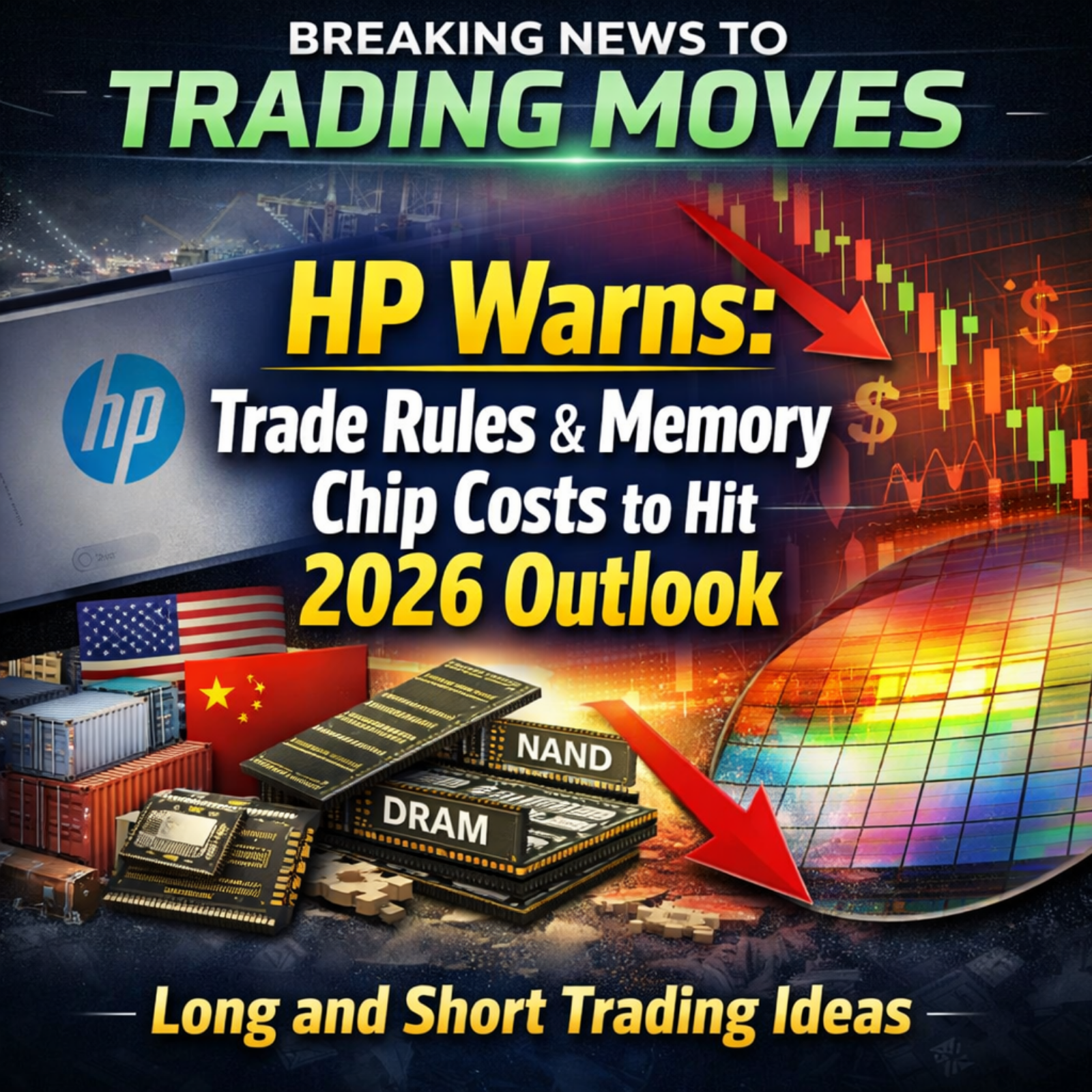
HP Warns Trade Rules and Memory Costs Will Pressure FY2026 OutlookWhat happenedHP ($HPQ) said US trade regulations and rising memory chip costs are expected to weigh on its fiscal 2026 outlook, with management guiding toward the low end of its prior EPS range and calling out ongoing volatility in DRAM and NAND pricing. HP also flagged a likely double-digit decline in PC shipments, and the stock dropped in after-hours trading after the update.Why this matters for tradersThis is a clean “margin squeeze” setup for PC and device OEMs:1. Memory prices rise (DRAM and NAND) → bill-of-materials costs jump fast.2. OEMs try to pass costs through → demand gets sensitive (especially if units are already rolling over).3. If tariffs and trade restrictions increase cost and complexity, it adds another layer of uncertainty on pricing, inventory planning, and sourcing.The market takeaway: even if AI PCs are growing as a mix, the broader PC unit environment can still weaken, and cost inflation can compress margins if pricing power is limited.The trading mapCore question: Who has pricing power, and who is price-taker?If memory stays tight and pricing stays elevated, memory suppliers can benefit while OEMs and hardware sellers feel the squeeze.If PC units decline double digits, anyone tied to PC volume (OEMs, resellers, consumer electronics retail) can see pressure.WinnersMemory and storage pricing leverageRising DRAM and NAND pricing tends to expand revenue and margins for suppliers with exposure to memory and flash cycles. If OEMs are openly saying memory costs are jumping, that often confirms supplier pricing power in the near term.Names: $MU (Micron), $WDC (Western Digital)AI compute ecosystem sustaining the “memory pull”HP explicitly tied memory volatility to AI-driven data center demand keeping memory supply tight. If AI infrastructure demand remains strong, the compute layer (GPUs and accelerators) can stay supported alongside the broader data center buildout theme.Names: $NVDA (NVIDIA), $AMD (AMD)CPU platforms riding the AI PC and premium mix shiftWhen component costs rise, OEMs often push consumers toward higher-priced configurations where they can preserve dollar margin. HP noted premium and AI-powered PCs were a meaningful share of shipments, which can support AI PC silicon platforms even in a softer unit market.Names: $QCOM (Qualcomm), $INTC (Intel)LosersPC OEMs and device makers facing direct margin pressureThey absorb the cost shock first. If memory prices double sequentially or stay volatile, OEM gross margins can compress unless they can raise prices fast without killing demand. HP also warned of a double-digit shipment decline, which is a negative operating leverage signal.Names: $HPQ (HP), $DELL (Dell Technologies)PC demand and distribution exposureIf PC units slump and pricing rises, it can slow replacement cycles and reduce sell-through at retail and commercial resellers. Even if revenue holds up from higher ticket prices, unit-driven attach (accessories, services, warranties) can soften.Names: $BBY (Best Buy), $CDW (CDW)PC peripherals and office hardware tied to volumesA weaker PC shipment environment can hit peripherals demand (keyboards, webcams, accessories). On the office side, if device refresh and office hardware budgets get cautious, it can pressure legacy office equipment spending trends, especially if broader IT budgets get reallocated toward AI infrastructure.Names: $LOGI (Logitech), $XRX (Xerox)#StockMarket #Trading #Investing #DayTrading #SwingTrading #Semiconductors #MemoryChips #DRAM #NAND #PCs #AIPCs #TechStocks #Earnings #Tariffs #SupplyChain
Embed this episode
Ready to play
The Silicon Squeeze: HP and the Global PC Margin Crisis
No transcript for this episode yet
Similar Episodes
No similar episodes found.
Similar Podcasts
No similar podcasts found.