
EPISODE · Dec 16, 2024 · 54 MIN
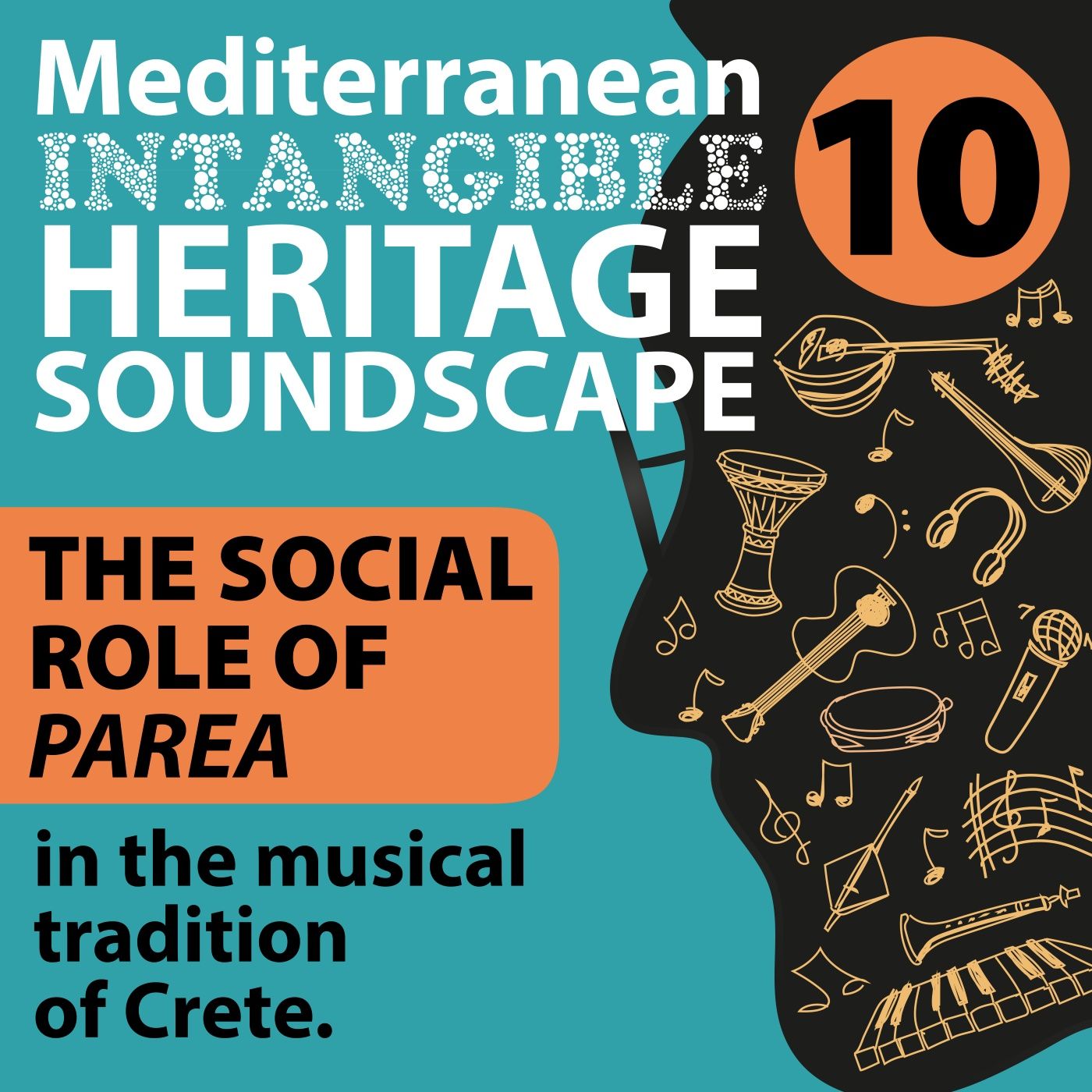
The social role of parea in the musical tradition of Crete.
from Mediterranean Intangible Heritage Soundscape · host Paolo Scarnecchia
Ioannis Papadatos has been a long‐term participant‐observer during a fieldwork in the island of Crete to prepare his dissertation about the local performances of Cretan traditional music for the University of Kent’s degree of Doctor of Philosophy. He participated and enjoyed the convivial atmosphere of social gatherings called parees in which music plays a pivotal role, mostly in Heraklion where he resided in 2012 and 2013.These meetings are very inclusive, because at the same time are a social space where sharing the passion for music and singing or playing independently from the technical level and the knowledge of the repertoire, and where learning the unspoken rules that govern the musical sequences of the performances while improving one’s own ability. The key concept of meraklís (enthusiast, fan, aficionado, devotee, lover, buff) reveals this inclusive and participatory kind of gatherings where people socialize through music, and the parees open performances keep alive the original musical traditions of this big Greek Mediterranean island.About Ioannis PapadatosIoannis Papadatos is an ethnomusicologist in the field of Greek studies and the Cretan musical tradition. He lives in Athens and has conducted a long-term ethnographical fieldwork in the island of Crete as part of his doctorate research at the University of Kent. Episode's musical sources listΈla san éheis órexi (Come if you like, known as: Na mpóries me ta máthia mou If you could see through my eyes)Ioannis Papadatos field recording 2012Έla san éheis órexi (Come if you like, known as: Na mpóries me ta máthia mou If you could see through my eyes)Ioannis Papadatos field recording 2012Agrimia ki agrimakia mou (My beasts and little beasts)Arranged by Yannis Markopoulos, singer Nikos Xilouris https://www.youtube.com/watch?v=OG6WZoVfGaoHtikiaris (Sickly person)Karolos Kouklakis and Irini Derebei - Ioannis Papadatos field recording 2011Ta vasana mou (I rejoice in my sorrows)Ioannis Papadatos field recording in Roustika 2013PentozalisIoannis Papadatos field recording in Roustika 2013Ki an mou 'heis kapsei tin kardia (Even if you’ve burnt my heart)Ioannis Papadatos field recording 2012Staras – apo to 1968 Lefkogiani parea – kalamatiana, (parea at Lefkogia of Rethymnon prefecture) Nikos Petrakis (https://www.youtube.com/watch?v=-0EDlimpNwk)Courtesy of the Staras Family to Ioannis PapadatosΌla gia séna ta ’pexa (I risked everything for you)Ioannis Papadatos field recording 2012KsirosterianosIoannis Papadatos field recording in Roustika 2013Έla san éheis órexi (Come if you like, known as: Na mpóries me ta máthia mou If you could see through my eyes)Ioannis Papadatos field recording 2012Mmono ekeinos p'agapa (Only the one who loves)Ioannis Papadatos field recording in Roustika 2012KastrinosIoannis Papadatos field recording in Roustika 2013Pote tha kanei xasteria (When will the skies clear again)Nikos Xilouris https://www.youtube.com/watch?v=nzSjGLAVQpYand Polytechnic students’ street protest of November 1973 where they sang Pote tha kanei xasteria https://www.youtube.com/watch?reload=9&app=desktop&v=8Qa9DisclaimerMediterranean Intangible Heritage Soundscape is a podcast by Paolo Scarnecchia, produced by UNIMED, Mediterranean Universities Union. Musical works included in the Podcast are used for purpose of illustration for teaching, and not for commercial purposes.Please notice that opening and closing voice over is generated with AI tools.This episode includes AI-generated content.
Embed this episode
Ready to play
The social role of parea in the musical tradition of Crete.
No transcript for this episode yet
Similar Episodes
No similar episodes found.
Similar Podcasts
No similar podcasts found.