
EPISODE · Oct 5, 2026 · 7 MIN
The Solace Project
from The Solace Project · host Carrie Rebora Barratt
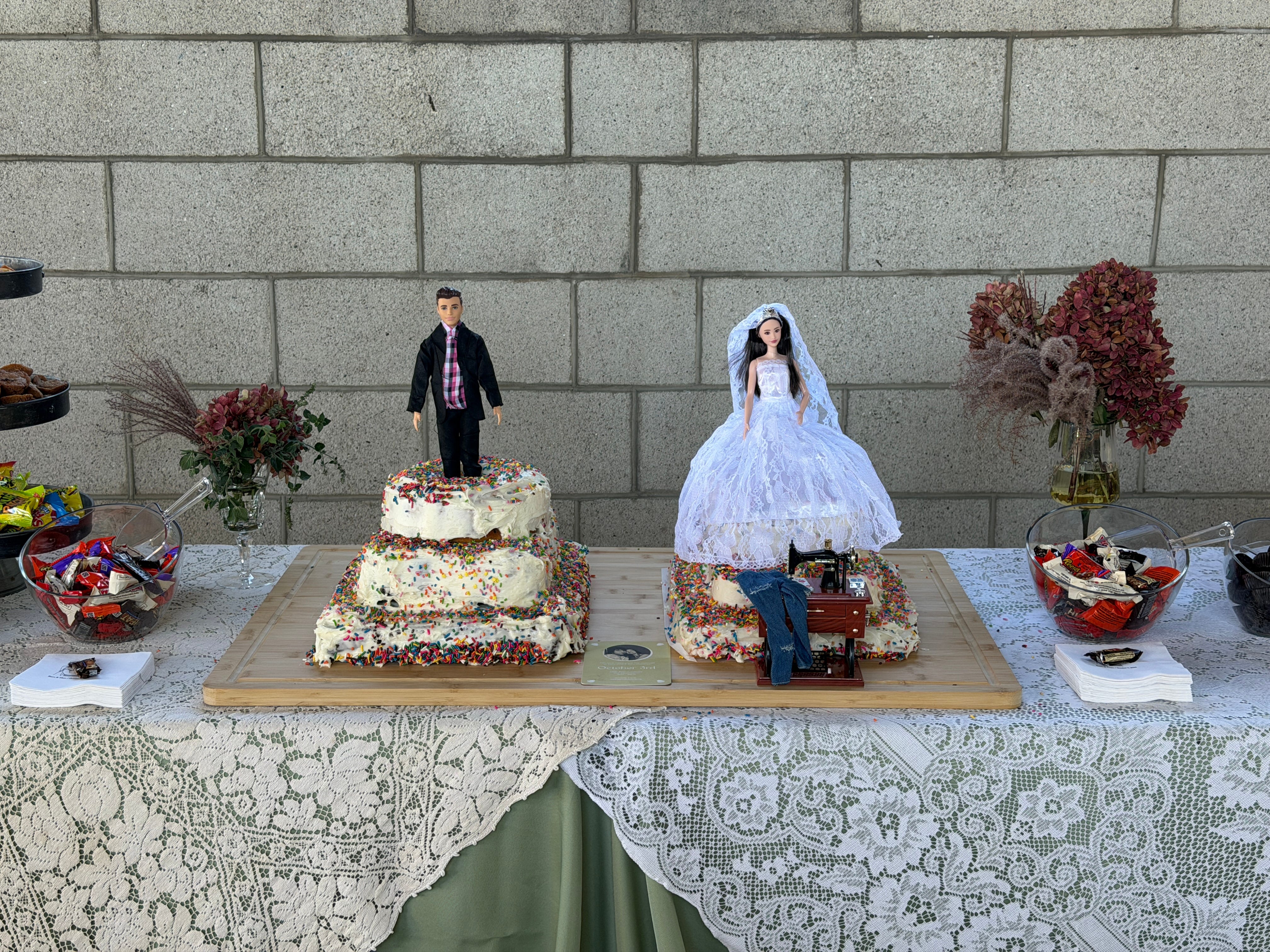
Look For the past few years, I have wanted to write about memory and its loss. My mother’s memory failed toward the end of her life. I have always wondered whether that loss was somehow tied to grief. My father, her husband, died, and very soon afterward her son, my brother, died suddenly and tragically. Sometimes I wondered whether she simply did not want to remember. Memory, however, is a strange and selective thing. She remembered the wild feminist performance we saw at the Museum of Contemporary Art in the 1970s. She remembered the process for mixing colors in jars for her paintings. She remembered every delicious thing she had ever cooked for us when we were children. But she couldn’t remember Dad. She couldn’t remember Mark. My mother died about eighteen months ago. She would have loved my niece’s wedding, stunning Sara and Cass, longing for a simple event that was co-created by the family. I made doll cakes for the celebration, inspired by the ones my mother used to make for birthdays—the only trick is that the girl doll wears a bundt cake like a hoop-skirted gown. My cakes were considerably messier than hers would have been, but I doubt she ever frosted cakes in an Aquatorium in Gary, Indiana. She would have criticized them. I miss that criticism. I’m not ready yet to write the essay or the book that holds all I want to say about my mother’s memory and its loss, about grief and forgetting and what the mind chooses—or needs—to hold onto. Instead of digging into that now, I want to say something my mother taught me about remembering. Look Again When I was a little girl, maybe eight or ten years old, my mother created a game for birthday parties. She would set up a card table and cover it with a beautiful tablecloth. Then she would fill the table with strange little things gathered from all over our home: a lemon, a shell, a spool of thread, a basket of yarn, a stuffed animal. Needles. Pencils. Hats. Small books. Tiny figurines. Acorns and walnuts. Things from the kitchen, things from drawers and closets, things she found in the backyard. She arranged them all over the table. Then she invited my friends and me to gather around and look. Really look. We had five or ten minutes, which felt like an eternity, to study everything on that table. We looked and looked, trying to fix each little thing in our minds. Then my mother would say, “Stand back, girls.” We stepped away, and she threw a sheet over the entire table. She asked us to draw or write down everything we could remember. So much fun and laughter. Looking back, I think that it wasn’t really about who remembered the most. The fun was the chatter, the “how could I have missed that” moments. “Oh! I missed the acorn!” “I didn’t see the Barbie doll!” “Who saw that?” We gathered around the table again, comparing what we had remembered with what we had drawn, what we missed with what someone else had seen. Years later, when I had the opportunity to teach a graduate seminar for the City University of New York at The Metropolitan Museum of Art, I found myself playing my mother’s game again in the grand American paintings galleries in an exercise meant to bring the students together, sit still, and look. I asked them to study Francis William Edmonds’s The New Bonnet, painted in 1858, It is a narrative painting filled with details, almost as crowded with things to notice as my mother’s birthday table. The students sat on camp stools in front of the painting. I asked them to look. And look. And keep looking. Five minutes is a very, very long time to look at a painting. Eyes wandered. Students looked at their watches. “Keep looking,” I would say. “Look harder.” “Stand up. Come closer to the painting. What else can you see?” Eventually, I asked everyone to turn their stools around. I couldn’t throw a sheet over a painting at The Met, but I could make the painting disappear. Then I asked them to draw or write down everything they could remember. Some of them became annoyed with me. “I can’t draw!” And “No way! That’s not what we do in an art history class.” Studying and memorizing, the hallmarks of art historical textbook learning, were very different than looking and remembering at an actual painting. I would tell them not to worry about drawing, no one will see your drawing. Just write. Write what you remember. Then we turned the stools around again. And suddenly the graduate seminar sounded remarkably like my eighth birthday party. “I didn’t see the cat.” “I didn’t notice that the father is holding a bill.” “Why is there a broken mirror in the background?” In my life, decades had passed. The card table in our Chicago living room had become a gallery at The Metropolitan Museum of Art. My mother’s game had become a graduate seminar. But the conversation was almost exactly the same. That first exercise was always the beginning of our work together. We would repeat the exercise two or three more times over the course of the semester, and I watched the students become more comfortable with looking and remembering. Before interpretation, before scholarship, before argument, there was attention. We started by looking very, very carefully. And by laughing. And noticing. It has taken me a long time to understand what my mother was teaching us at that birthday party. She wasn’t really teaching us how to remember. She was teaching us how to look. Looking takes time. It takes concentration. Sometimes it even takes a little discomfort. Five minutes can feel like an eternity when we are accustomed to glancing. And no matter how carefully we look, none of us sees everything. One child remembers the acorn. Another remembers the doll. One student sees the cat. Another sees the bill in the father’s hand. Perhaps memory works that way too. None of us gets to remember the whole table or the entire painting. We carry pieces of it. Other people carry the things we missed. Families and friends, photographs and recipes, objects and stories hold parts of our lives for us. Practice I am still not ready to write about my mother’s forgetting. Someday, I will be. For now, I’m gathering ten or twenty ordinary things from around your house. I’ll put them on a table. A spoon. A button. A lemon. A photograph. A pencil. An acorn. Something so familiar I hardly notice it anymore. Do this with me. Give yourself five minutes. Look. Then cover the table and write down everything you remember. Better yet, do it with someone else. Uncover the table together. See what you remembered. See what you missed. See what the other person saw that you did not. And look again. That is solace. The Solace Project is a reader-supported publication. To receive new posts and support my work, consider becoming a free or paid subscriber. Get full access to The Solace Project at carriereborabarratt.substack.com/subscribe
Embed this episode
Ready to play
The Solace Project
No transcript for this episode yet
Similar Episodes
No similar episodes found.
Similar Podcasts
No similar podcasts found.