
EPISODE · May 20, 2025 · 21 MIN
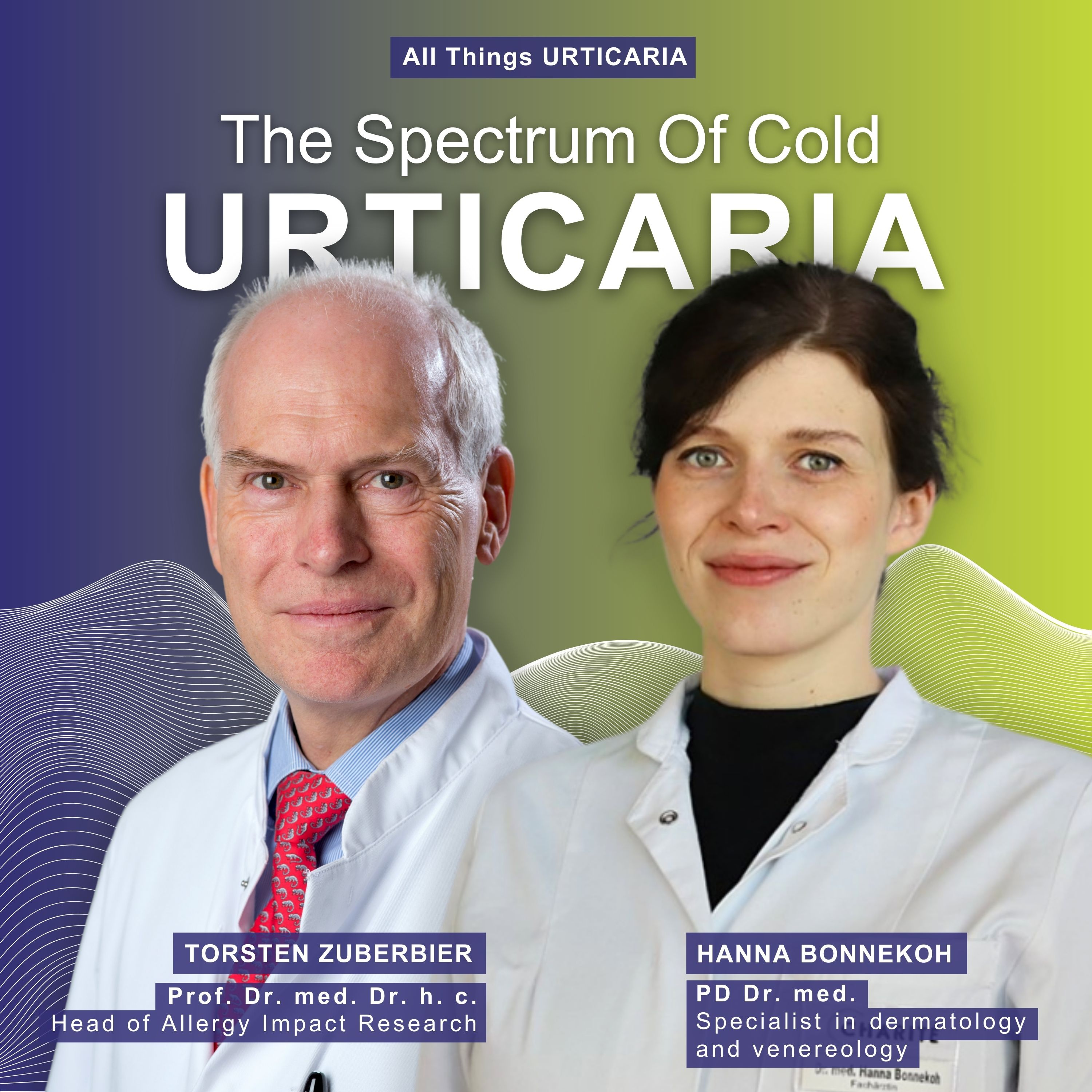
The spectrum of cold urticaria
from All Things Urticaria – Learning about urticaria with Prof. Dr. Torsten Zuberbier · host UCARE, the Global Allergy and Asthma Excellence Network for Urticaria
In this episode, Prof. Torsten Zuberbier calls up Dr. Hanna Bonnekoh, dermatologist and researcher at Charité Berlin, to dive into the complexities of cold-induced urticaria—particularly rare and familial forms that challenge current diagnostics and treatments. They discuss: 🔹 What makes wind-induced cold urticaria so difficult to diagnose? 🔹 How can physicians distinguish between histamine- and IL-1-mediated disease? 🔹 What role do biologics like omalizumab and dupilumab play in treatment? 🔹 Why are IL-1 blockers crucial in autoinflammatory syndromes like Muckle-Wells-syndrome? Dr. Bonnekoh shares her clinical perspective on diagnostic tools like the TempTest, the pathophysiology behind cold urticaria variants, and how novel therapies like anti-CKIT antibodies are shaping the future of care. She also emphasizes the importance of family history, wheal morphology, and systemic symptoms when evaluating patients with atypical urticaria. Join us for a deep dive into cold urticaria phenotypes, treatment strategies, and the call for more research and global registry data to support patients worldwide. Key Learnings from the Episode Cold urticaria includes rare phenotypes, such as wind-induced and familial forms, often undetectable by standard tests. The TempTest is useful for threshold diagnosis, but not all cold urticaria types respond. Histamine-mediated urticaria may respond to antihistamines or omalizumab, while IL-1-mediated types (e.g., Muckle-Wells) require immunomodulatory therapy. IL-1 plays a key role in autoinflammation; identifying its overproduction is crucial in diagnosis. CRP and ESR are easy, accessible lab markers to differentiate urticaria types. New biologics like anti-CKIT antibodies (e.g., barzolvolimab) are promising in depleting mast cells. Wheal appearance, duration, and sensations (itch vs. burn) help guide subtype classification. Cold-induced cholinergic urticaria is an emerging phenotype needing further research. Global registries like CURE are key to improving care for rare urticaria types. Chapters 00:00 Introduction to Cold-Induced Problems 03:29 Understanding Atypical Cold Urticaria 06:23 Treatment Options for Cold Urticaria 09:12 Exploring Rare Forms of Cold Urticaria 11:53 The Role of Interleukin-1 in Cold Urticaria 14:40 Differential Diagnosis in Cold Urticaria 17:15 Research and Future Directions in Cold Urticaria Do you have suggestions for future episodes? Please provide feedback and offer your suggestions for future topics and expert selection here.Feedback form:ATU: https://forms.office.com/e/m6a2uEdsUH
Embed this episode
NOW PLAYING
The spectrum of cold urticaria
No transcript for this episode yet
Similar Episodes
No similar episodes found.
Similar Podcasts
No similar podcasts found.