
EPISODE · May 21, 2026 · 30 MIN
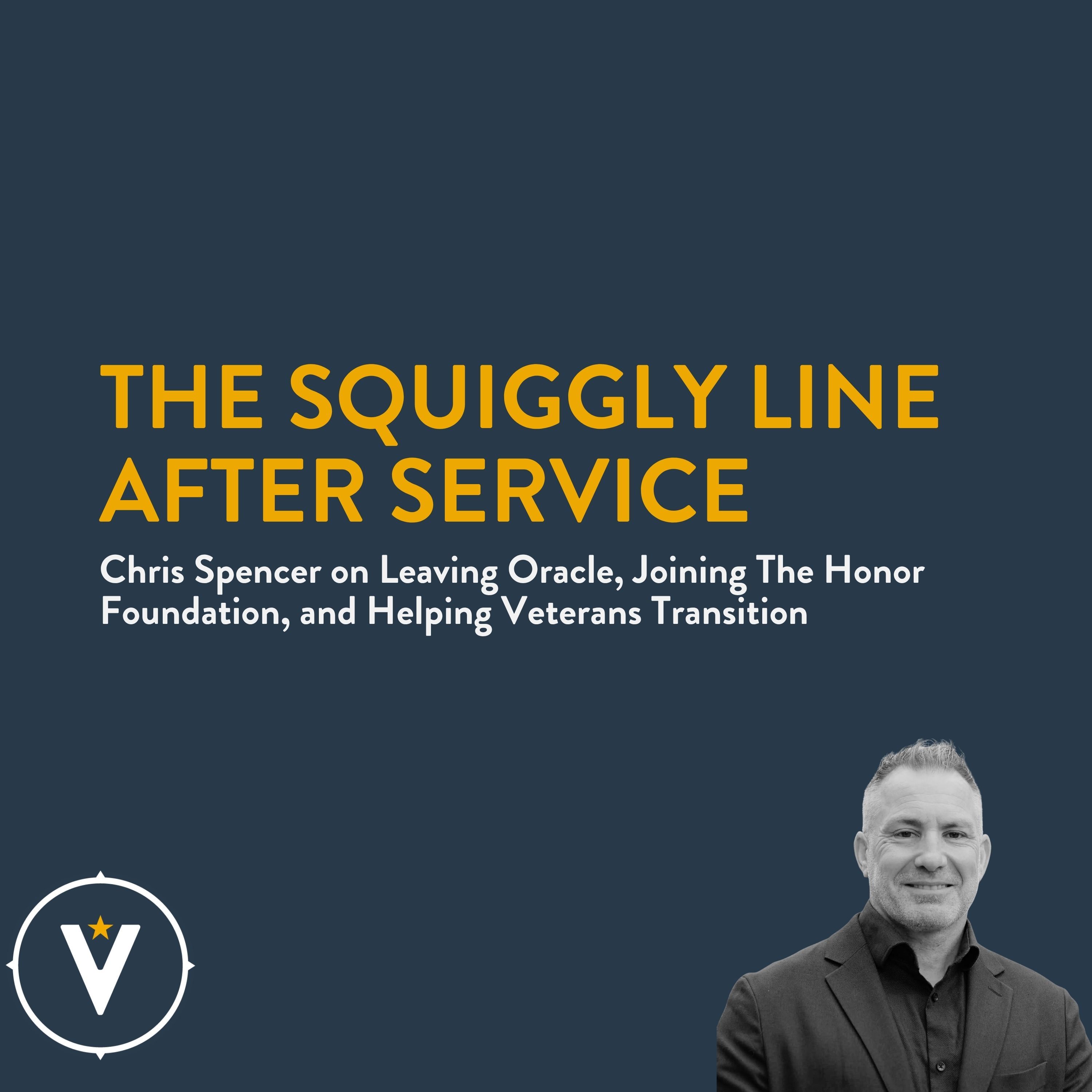
The Squiggly Line After Service: Chris Spencer on Leaving Oracle, Joining The Honor Foundation, and Helping Veterans Transition
from Vector Accelerator · host Vector Accelerator
Episode Overview In this episode, Scott Schimmel sits down with Chris Spencer, a former Oracle leader who spent more than 30 years with the company after serving in the Army, to talk about transition, identity, purpose, and the power of finding work that aligns with who you are. Chris shares his path from enlisted Army mechanic to Silicon Valley temp employee to long-term corporate leader supporting sales operations, early-career talent, veteran hiring, and employee resource initiatives. His story becomes a powerful example of how careers rarely unfold in a straight line. Instead, they are shaped by curiosity, relationships, preparation, values, and the willingness to keep showing up. The conversation then turns to Chris’s new role with The Honor Foundation in San Diego, where he now serves as Director of People and Engagement. Chris reflects on what it felt like to leave a 30-year corporate identity behind and step into a mission-driven role that feels deeply aligned with his military experience, corporate leadership, and passion for helping transitioning service members. A major theme throughout the episode is that veterans should not assume their next chapter has to be a direct translation of what they did in uniform. Instead, Chris and Scott emphasize the importance of asking better questions: Who am I? What do I want? What value do I bring? What kind of life do I want to build? That message connects directly to Vector Accelerator’s focus on helping veterans gain clarity around identity, purpose, and community before jumping straight into resumes, LinkedIn, and job interviews. Key Takeaways 1. Transition is not just a career move — it is an identity shift. Chris describes leaving Oracle after 30 years as something that affected more than his email address or job title. It meant recalibrating after decades of roots, relationships, routines, and identity. That mirrors what many veterans experience when they leave the military. 2. Veterans do not have to do what they did in uniform. One of Chris’s clearest insights is that veterans are often told they can do project management, program management, or similar roles — but the better question is not only “What can I do?” It is “What do I want to do?” 3. Perception can limit transition options. Chris explains that many veterans form assumptions about the corporate world based on secondhand inputs: social media, TV, stereotypes, or incomplete transition advice. Real conversations with people who care can help reshape those assumptions. 4. Careers are often built through curiosity and small steps. Chris entered Oracle through a temp job keying information into spreadsheets. From there, he learned by looking over cubicle walls, asking questions, building websites, understanding operations, supporting teams, and eventually leading major programs. 5. Every interaction can be an interview. Chris’s move to The Honor Foundation was not random. It came after years of relationships, credibility, and aligned work in the veteran transition space. His story reinforces that how you show up over time matters. 6. The “squiggly line” is part of the process. Chris challenges the idea that a career path should be linear. Plans matter, but life rarely moves in a straight line. The unexpected turns often become the most meaningful parts of the story. 7. Companies need better conversations about veteran talent. Chris encourages organizations to look at veteran and military spouse hiring not as charity, but as a strategic opportunity to strengthen culture, leadership, retention, and business outcomes. 8. Vector Accelerator and The Honor Foundation fill a critical gap. The episode reinforces that traditional transition support often skips the deeper questions of identity, purpose, values, and community. Vector broadens access to that kind of introspective work for veterans beyond the SOF community. Best Quotes “You don’t have to do what you did. You’ve got to think about what you want to do.” — Chris Spencer “It isn’t until you have a live conversation with those that care about what you actually need to hear where it changes that.” — Chris Spencer “A plan is just a plan… it’s never going to be this direct thing.” — Chris Spencer “I got in because I asked my mom to teach me how to type.” — Chris Spencer “Every interaction is an interview.” — Chris Spencer “Who you are is not a mistake. It’s how you’re wired. And there’s great value in that.” — Scott Schimmel “Figure out who you are and then go do it.” — Scott Schimmel “What was in front of me is I was asked to do a job and do it to my best ability.” — Chris Spencer “Let’s expose you to all those types of things that you haven’t yet been tapped into understanding. Let’s change your perspective.” — Chris Spencer “Vector broadens that… it’s results oriented.” — Chris Spencer About Chris Chris Spencer is the Director of People & Engagement for The Honor Foundation in San Diego, where he supports transitioning Special Operations service members, their families, Fellows, alumni, and the broader THF ecosystem as they navigate life after service with clarity, confidence, and purpose. Born and raised in Northern California, Chris began his professional journey after serving in the U.S. Army, where he worked as a support asset and developed a lasting respect for the mission, precision, and uncompromising standards required of those in uniform. Service runs deep in his family, with generations of Marines and Air Force members before him, though Chris proudly became the first to join the Army. After leaving active duty, Chris joined Oracle, beginning what would become a remarkable 30-year career. Over three decades, he held roles spanning sales support, operations, organizational development, onboarding, veteran hiring initiatives, employee resource groups, coaching, and leadership development. He built and supported high-performing teams, helped create pathways for early-career talent, and became deeply involved in helping veterans and military spouses find meaningful opportunities in the corporate world. Today, Chris brings that same heart for service to The Honor Foundation. His work is rooted in relationship building, transformative thinking, coaching, problem solving, and helping others see the value they bring into their next chapter. For Chris, service is not just something he once did in uniform. It is the throughline of his life. As a son, brother, soldier, leader, husband, father, coach, and mentor, he believes he is most alive when he is helping others move forward with greater clarity and confidence. Chris’s own transition from a 30-year corporate career into mission-driven work with THF gives him a unique perspective on what it means to step into the unknown. He understands that transition is not only about finding the next job. It is about identity, purpose, patience, faith, and trusting that sincere effort applied for the right reasons will lead to what is meant for you. His favorite THF value is “Be You,” because he believes authenticity is the foundation for trust, growth, and meaningful relationships. To Chris, when people show up fully and honestly, everything else becomes possible. Chris can be reached directly at [email protected].
Embed this episode
Ready to play
The Squiggly Line After Service: Chris Spencer on Leaving Oracle, Joining The Honor Foundation, and Helping Veterans Transition
No transcript for this episode yet
Similar Episodes
No similar episodes found.