
EPISODE · Jun 5, 2026 · 3 MIN
The Statues of the Nave
from Modena si Mostra - Church of St. Pietro · host eArs
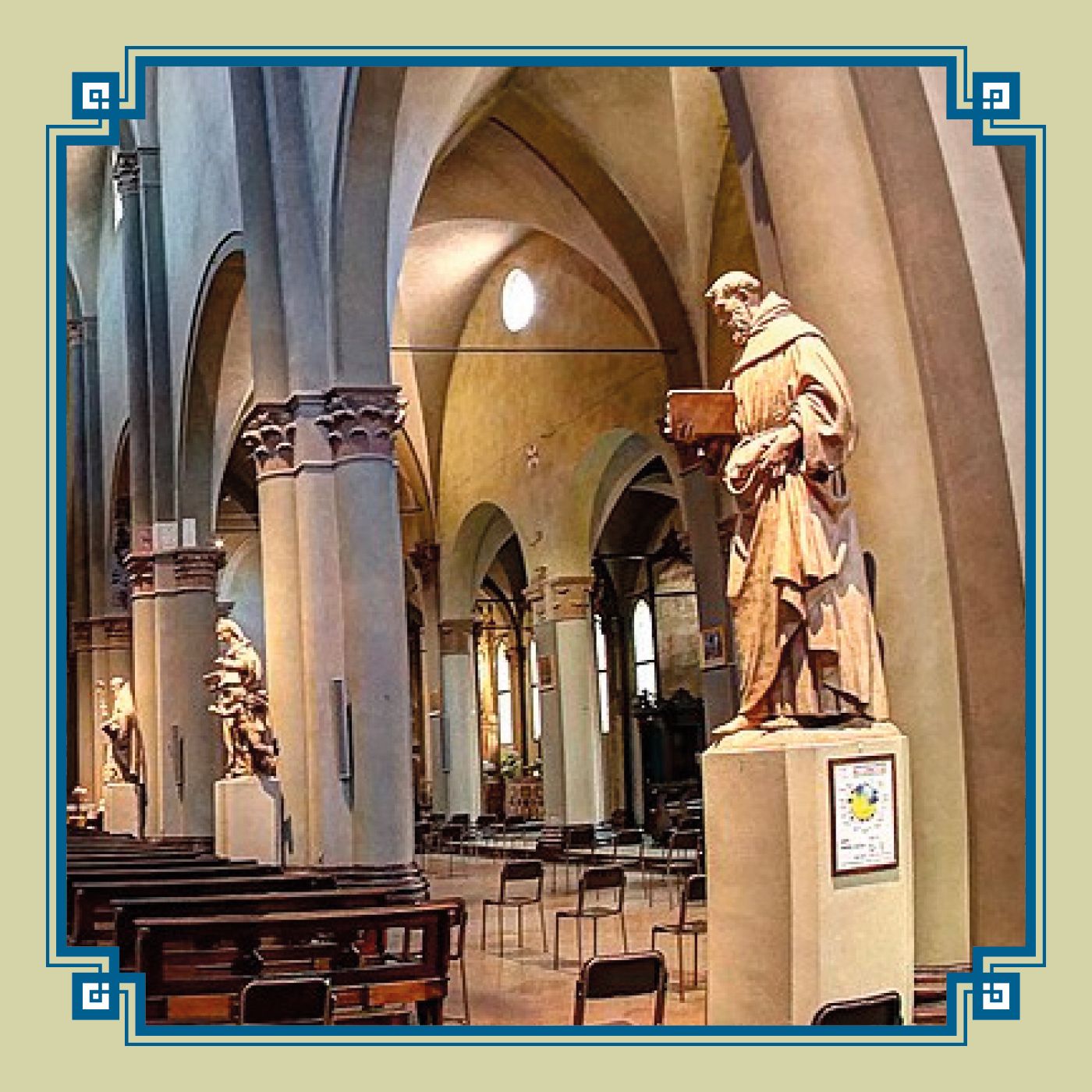
It is customary to say of a statue, in a metaphorical sense, that it looks alive or even seems to move. You may be surprised to learn that, far more often than one might think, statues really do move—not figuratively, but in a literal sense. This is the case, for example, of the six terracotta sculptures in the nave of San Pietro Church, which only set foot on their current pedestals in 1819, three centuries after they were made by Antonio Begarelli, a Modenese sculptor born in 1499 and active until 1565. Not only that, these works, dating between 1528 and 1542, did not all originally share the same location. Starting from the entrance, the first two - depicting St Francis and St Bonaventure - were originally located in the Church of San Francesco in Modena. The other four were indeed made for this abbey complex, but were initially placed in the monks' dormitory.This detail is not merely an interesting historical fact; it helps us understand the style of the works.Stand in the centre of the four sculptures towards the apse. These depict the Virgin and Child, St Justine, St Benedict and St Peter. Now imagine them in their first location: the abbey dormitory. The Benedictine monks, in silent contemplation, would raise their gaze toward them, while the saints returned that gaze with solemnity. They appear like apparitions from the divine realm, their garments still seeming to move in the winds that blow through the heights of Paradise. They are statues designed for an intimate dialogue between monk and divine, within a private space dedicated to meditation and spirituality.Now return toward the entrance and look at St Francis and St Bonaventure. Do you notice any differences? For example, look how the folds of the garments are less airy, so much so that Saint Bonaventure must hold his habit to keep it from touching the ground. Their more austere character suits their original location, behind the altar of the church of San Francesco. There, the dialogue is no longer intimate, but more distant and extended to all participants in the liturgy. We no longer have apparitions, but statues in their own right, becoming focal points for the community of the faithful. It is no coincidence that they depict the cardinal saints of the Franciscan order, to which the church once belonged.Already in the 16th century, artists clearly understood the importance of the space that would house a work and the audience it was meant to address. They were not only skilled craftsmen but, as we might say today, almost experts in marketing.
Embed this episode
NOW PLAYING
The Statues of the Nave
No transcript for this episode yet
Similar Episodes
No similar episodes found.
Similar Podcasts
No similar podcasts found.