
EPISODE · Sep 4, 2026 · 8 MIN
The Story of Money: The Great Crash of 1929
from Vīta Brevis, Wit Artefāctōrum Ætērna Podcast · host Ash Stuart ✅
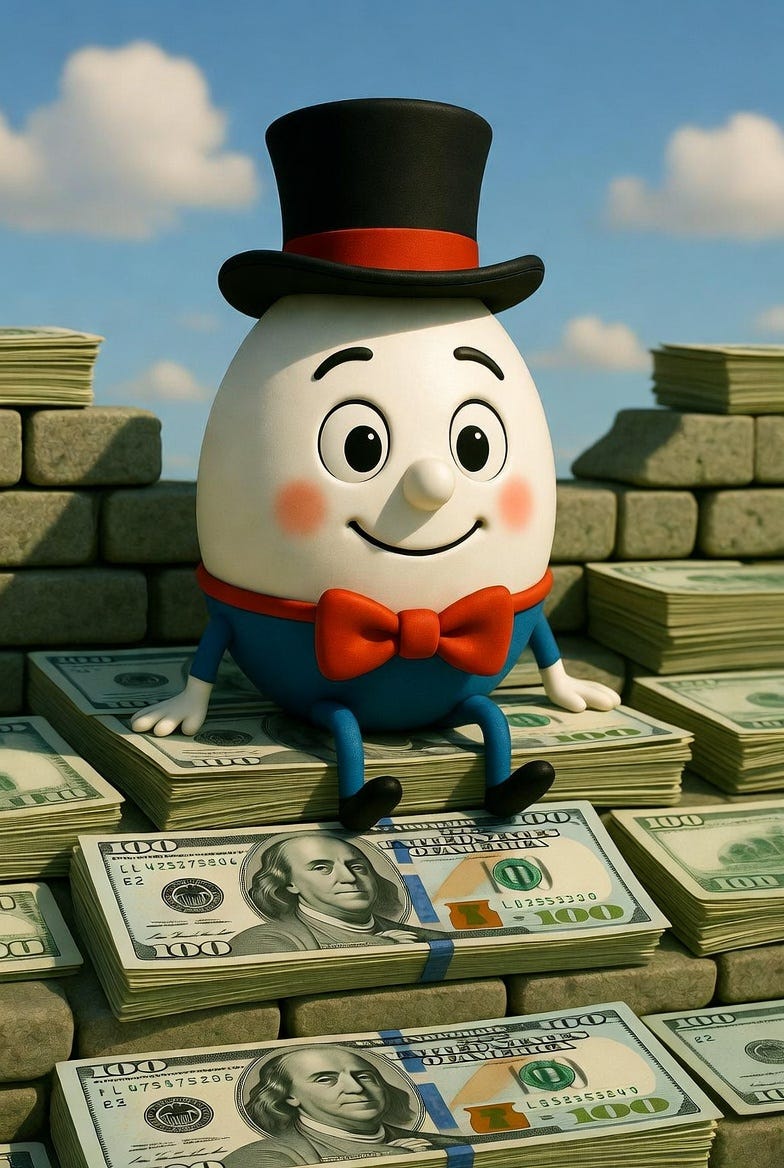
Last time we looked at the phenomenon of supposedly ‘rational’ behavior leading to wild aggregate market outcomes. Let’s now look at what’s arguably the most spectacular and devastating real-world example of this.For, even as the 20s in this article series come to an end at 029, we shall trace how the Roaring Twenties ended with this extraordinary crash in 1929!We won’t be featuring our fictional friends on this topic, the real-world characters involved here, as we shall meet in due course, themselves go beyond what fiction could conceive. And there’s a lot of ground to cover!Let’s first set the historical stage to provide enough context. After the First World War, the United States was set on the road of massive economic expansion, in good part thanks to the rapid growth of electrification and thus the manufacture of electrical appliances and related goods.This rapid expansion in industrial manufacturing with a large number of such goods entering the market meant that the purchasing power, or at least the purchasing intent, of the public at large had to grow. Thus eventually emerged the concept of consumer credit, where organizations would lend money to people wanting to buy such goods, and on the cheap - you could get a loan of 100 dollars by just putting up 10 dollars as initial payment!However, given the interest rates were very low, meaning you got very low yield for your cash sitting in a bank’s savings account, people starting using such loans to buy stocks and shares in the booming industry - also a relatively new phenomenon for most people.Just as we saw with the Tulip Mania in the previous episode, all this led to asset prices only going up and people becoming complacent in expecting that it would keep going up forever (Now, where have we heard of that in our own lifetime?!)Humpty Dumpty sat on Wall StreetAnd then it all came crashing down, because just as we think the prices of such assets will keep going up and up, once that bubble burst, as it always eventually does, the sentiment goes right into reverse - everyone wants to sell of theirs before others do, leading to a free fall of the prices.Fundamentally, there were structural weaknesses in the economy that were masked by the exuberance. Importantly the agricultural sector hadn’t been doing well all this while but most folk in the cities and towns were busy enjoying the party! Also, despite all the industrial expansion, actual wage growth was low, but then again, the cheap credit phenomenon served to obscure that anomaly. The major turning point came when Benjamin Strong, a very astute and influential banker heading the Federal Reserve Bank (of New York) died in 1928 leaving a massive intellectual vacuum and even paralysis at the Fed.And then the music stopped. There had been minor panics prior to the main historic crash but the market managed to brush it off. There had been siren voices warning that things had gone too far and there was a massive speculative bubble that would burst any time, but they were promptly ignored. Until they could be ignored no more!The two dates etched in historical memory would be Black Thursday, October 24, 1929 and Black Tuesday the following week. There’s a lot of gory, or if you prefer juicy, detail about what ensued, all good enough to read in a thriller novel but you wouldn’t want to be there. On Black Thursday, within the first 3 minutes 3 million shares are said to have changed hands. The selloff was so intense that the ticker-tape... the printed paper tape that displayed prices simply couldn’t keep up and was delayed by hours resulting in total chaos. But Black Tuesday is seen as the worst day - about 16 million shares were traded and the index fell 12%.Dealing with It AllThis account barely scratches the surface of what happened - both the bubble and the crash. It took the authorities 3-4 years to even grapple with the situation, especially given the then president Herbert Hoover didn’t think it was for the government to intervene - the decisive changes came only with the election of a new administration under Franklin D Roosevelt in 1933 - the New Deal, which we will have a lot to say about in due course.We all have black-and-white images of those long breadlines, there’s even this picture I once saw of this now-former banker with a placard offering to sell his rather fancy car for.. food or similar! All of this is in quite stark contrast to the good times - both the economic prosperity and the cultural dynamism that accompanied it. The crash would lead to the Great Depression in the US and much worse in continental Europe, with the tide turning only by 1945.The regulatory changes in response to the crash were massive. Previously the New York stock exchange, for example, operated on its own, and as we saw any member of the public was able to participate in the trading even if they knew almost nothing of the intricate details of such activity. The Federal Reserve was not the same centralized national institution it later became, it was fragmented and as we’ll see in detail another time, shackled in some rather dangerous economic dogma that only poured fuel to the fire.The easy line to take here is “those greedy bankers”, or “our corrupt politicians”, but if we take a more honest look, the public at large were happy to partake not just of the prosperity but the excesses of speculative trading as well? As we saw with the Dutch Tulip Mania and this episode, when things are going well, very few people want to pause to think about fundamental flaws in the system?There are many lessons from these events in the 1920s and the aftermath. How many of those lessons have governments and indeed the public learned? And how many of them conveniently forgotten or put aside when the ‘good times’ come back?Article written by Ash StuartImages, video, voice narration and some footnotes generated by AINothing in this presentation constitutes as advice - financial, investment or other This is a public episode. If you would like to discuss this with other subscribers or get access to bonus episodes, visit ashstuart.substack.com
Embed this episode
Ready to play
The Story of Money: The Great Crash of 1929
No transcript for this episode yet
Similar Episodes
No similar episodes found.
Similar Podcasts
No similar podcasts found.