
EPISODE · Mar 29, 2025 · 28 MIN
The Symbolism of the Tarot: A Journey Through the Occult Mind
from Occult Archives · host Falcon Millenium
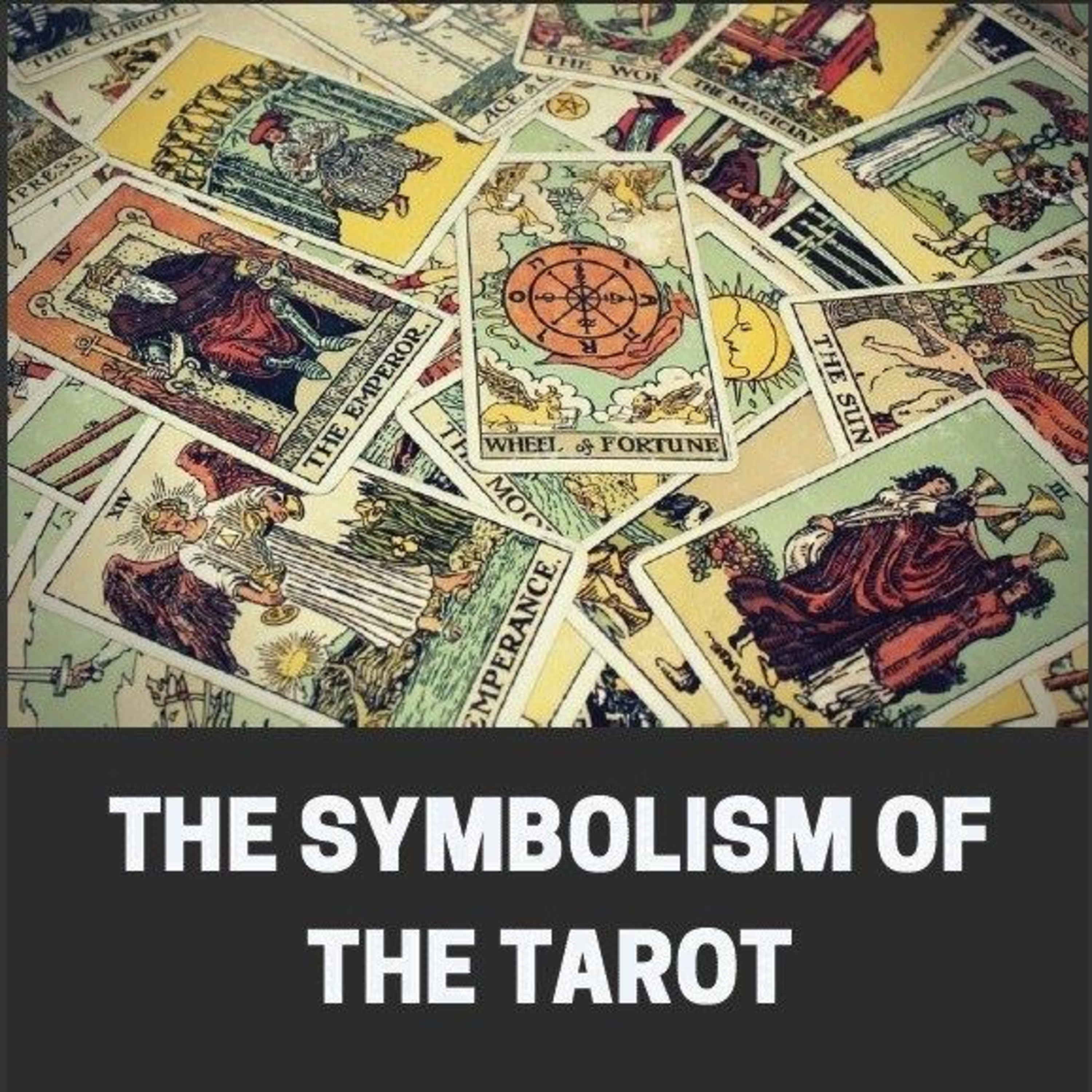
The Symbolism of the Tarot by P.D. Ouspensky is not merely a commentary on cards—it is an esoteric voyage into the hidden architecture of human consciousness, as revealed through a mysterious and ancient symbolic system. Published in 1913, this work merges mystical philosophy, occult science, and psychological depth, redefining the Tarot as a metaphysical language rather than a tool for fortune-telling. Ouspensky argues that the Tarot encodes the very principles of Hermeticism, alchemy, the Kabbalah, and astrology—all compressed into a visionary alphabet of images and numbers.In this podcast episode, we dive deep into Ouspensky’s revolutionary framework. He presents the Tarot as a “book” made of 78 living symbols—22 Major Arcana and 56 Minor Arcana—each reflecting layers of reality and paths of initiation. Ouspensky repositions the Tarot away from common superstition and reframes it as a philosophical puzzle, a mystical mirror through which humanity can glimpse the structure of the universe and the nature of the soul. From The Fool to The World, the cards unfold a cosmic drama of evolution, inner transformation, and the reconnection of man with the divine.The symbolism isn’t static; it’s a moving meditation. The cards represent not just archetypes, but dynamic states of being, psychological forces, and metaphysical truths. In describing them, Ouspensky builds a triangular model with “God” as the world of ideas, the “point” as the soul, and the “square” as the visible world—bridging concepts of creation, consciousness, and universal law. Each suit of the Minor Arcana corresponds to elemental spirits and metaphysical properties, while the Major Arcana represent spiritual initiations and stages of awakening.Ouspensky doesn't merely decode the Tarot—he synthesizes it. The text is filled with poetic “pen pictures” that vividly describe each card’s energy, often pairing them as complementary opposites to express duality and unity. His interpretations blend insights from Plotinus, Eliphas Levi, and Nietzsche, showing that the Tarot isn’t an isolated artifact, but a living stream of perennial wisdom flowing through philosophy, mysticism, and art.This episode brings Ouspensky’s vision to life, inviting listeners to see the Tarot not as prophecy, but as philosophy in symbolic form. If you’ve ever suspected the cards hold more than fortune-telling tricks, this journey will open you to their profound hidden language—the language of initiation, transformation, and the eternal mystery of the soul.
What this episode covers
The Symbolism of the Tarot by P.D. Ouspensky is not merely a commentary on cards—it is an esoteric voyage into the hidden architecture of human consciousness, as revealed through a mysterious and ancient symbolic system. Published in 1913, this work merges mystical philosophy, occult science, and psychological depth, redefining the Tarot as a metaphysical language rather than a tool for fortune-telling. Ouspensky argues that the Tarot encodes the very principles of Hermeticism, alchemy, the Kabbalah, and astrology—all compressed into a visionary alphabet of images and numbers.In this podcast episode, we dive deep into Ouspensky’s revolutionary framework. He presents the Tarot as a “book” made of 78 living symbols—22 Major Arcana and 56 Minor Arcana—each reflecting layers of reality and paths of initiation. Ouspensky repositions the Tarot away from common superstition and reframes it as a philosophical puzzle, a mystical mirror through which humanity can glimpse the structure of the universe and the nature of the soul. From The Fool to The World, the cards unfold a cosmic drama of evolution, inner transformation, and the reconnection of man with the divine.The symbolism isn’t static; it’s a moving meditation. The cards represent not just archetypes, but dynamic states of being, psychological forces, and metaphysical truths. In describing them, Ouspensky builds a triangular model with “God” as the world of ideas, the “point” as the soul, and the “square” as the visible world—bridging concepts of creation, consciousness, and universal law. Each suit of the Minor Arcana corresponds to elemental spirits and metaphysical properties, while the Major Arcana represent spiritual initiations and stages of awakening.Ouspensky doesn't merely decode the Tarot—he synthesizes it. The text is filled with poetic “pen pictures” that vividly describe each card’s energy, often pairing them as complementary opposites to express duality and unity. His interpretations blend insights from Plotinus, Eliphas Levi, and Nietzsche, showing that the Tarot isn’t an isolated artifact, but a living stream of perennial wisdom flowing through philosophy, mysticism, and art.This episode brings Ouspensky’s vision to life, inviting listeners to see the Tarot not as prophecy, but as philosophy in symbolic form. If you’ve ever suspected the cards hold more than fortune-telling tricks, this journey will open you to their profound hidden language—the language of initiation, transformation, and the eternal mystery of the soul.
NOW PLAYING
The Symbolism of the Tarot: A Journey Through the Occult Mind
No transcript for this episode yet
Similar Episodes
Jul 14, 2025 ·26m
Apr 20, 2025 ·21m
Jan 10, 2025 ·20m
Dec 20, 2024 ·29m
Nov 12, 2023 ·11m
Nov 12, 2023 ·11m