
EPISODE · Feb 24, 2025 · 6 MIN
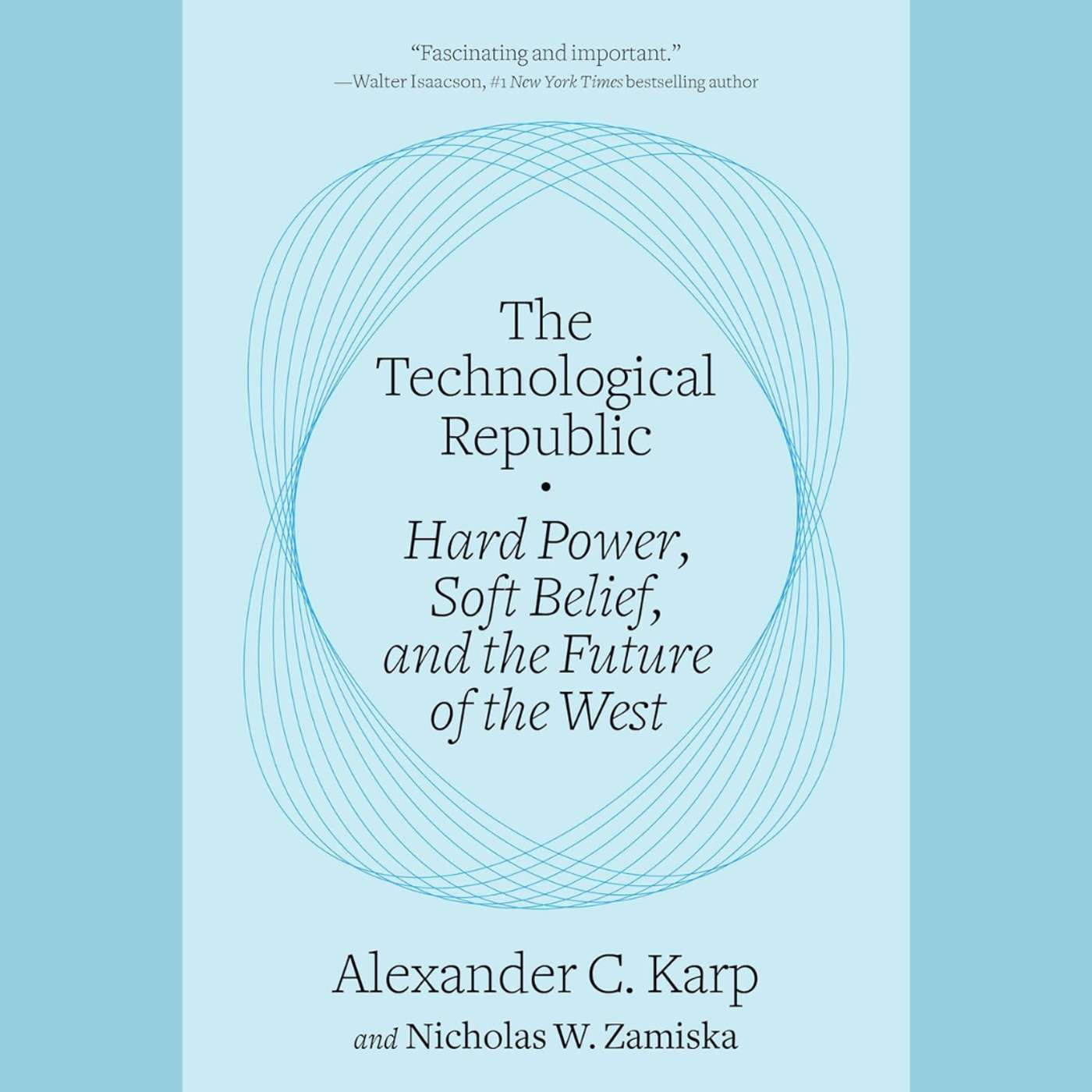
The Technological Republic by Alex Karp
from Business Book Summaries for CEOs and Founders, ApolloSkills · host Apollo Skills
In The Technological Republic: Hard Power, Soft Belief, and the Future of the West, Alexander C. Karp and Nicholas W. Zamiska argue that the defining factor of global power in the 21st century will not be geography, ideology or even military force—but technological dominance. The book makes a bold case that artificial intelligence, cybersecurity, and digital governance will determine which nations and political systems succeed and which fall behind.👉 Free Course https://www.apolloskills.com/courses/techrepublicThe book introduces the concept of the "Technological Republic,” where power is defined by control over AI-driven decision-making, mass surveillance, cybersecurity, and dominance of the digital economy. Unlike traditional nation-states, where power rests on military strength and territorial control, modern governance will be shaped by the ability to harness data, algorithms, and cyber influence.Key Topics Explored in the Book1. The Geopolitics of TechnologyKarp and Zamiska emphasize that global power is shifting toward nations that invest in artificial intelligence, cybersecurity, and digital infrastructure. The book compares how different political systems—democratic and authoritarian—are adapting to this shift.China’s AI-driven surveillance state has given it a strategic advantage in controlling its population, ensuring political stability, and exerting influence abroad.The U.S. approach relies on a mix of government agencies, private corporations, and academic institutions. While this decentralized model fosters innovation, it can also create inefficiencies in national security and AI policy.The semiconductor arms race has become a crucial battleground, with nations vying for control over the microchips essential to AI and defense technologies.Key Quote: “Missiles once determined military superiority. Now, it’s microchips.”2. The Growing Threat of Cyber WarfareThe book presents a stark warning: cybersecurity is the new national defense. Countries with weak cybersecurity infrastructures are as vulnerable today as those without standing armies in past centuries.The Stuxnet virus (2010) demonstrated how digital attacks can cripple a nation’s infrastructure.Russia’s cyber campaigns—including election interference and cyberattacks on Ukraine—show how digital warfare is used for geopolitical influence.The rise of AI-powered cyberattacks means future conflicts may target financial markets, communication networks, and critical infrastructure rather than military bases.Key Quote: “The wars of the future will not be fought with bullets and bombs but with algorithms, data, and cyber influence.”3. The Role of Ideology in Technological PowerWhile technology is critical, Karp and Zamiska argue that belief systems and ideology still shape global influence. Democracies historically thrived by inspiring belief in freedom, innovation, and human rights. However, they face new challenges:AI-generated misinformation and deepfakes threaten public trust in media and elections.Foreign disinformation campaigns by nations like China and Russia manipulate public perception.The decline of shared cultural narratives weakens societal cohesion and national identity.In contrast, China’s centralized approach—with strict internet controls, AI-driven censorship, and a state-led innovation model—offers an alternative governance model that is gaining traction globally.Key Quote: “Technology will not make authoritarianism obsolete. It may make it stronger.”4. The Future of Global Power: Three Possible ScenariosKarp and Zamiska outline three potential futures:Corporate-Led Innovation – Private tech giants drive AI and cybersecurity advancements, reducing government influence but increasing corporate control over critical infrastructure.Authoritarian Digital Empires – Centralized states like China dominate global AI, setting the standard for digital governance and suppressing democratic alternatives.A Western Technological Renaissance – Democracies reform institutions to compete, leveraging AI and digital governance while upholding individual freedoms.Key Quote: “The future of democracy depends on whether it can outthink and outbuild its rivals in the digital age.”ReviewStrengthsTimely and Relevant: The book provides an urgent and compelling analysis of how AI and cybersecurity shape global power dynamics. This book is essential in an era where cyber threats, data privacy, and misinformation dominate the news.Deep Research and Real-World Examples: From the Stuxnet virus to the semiconductor arms race, the authors use concrete examples to illustrate their arguments, making complex technological topics more accessible.Balanced Discussion of Democracy vs. Authoritarianism: Instead of merely advocating for one political model, the book objectively assesses the strengths and weaknesses of democratic and centralized approaches to technological governance.Actionable Solutions: The authors don't just diagnose the problem—they propose a strategic action plan for how democratic societies can maintain their technological edge, including increased funding for AI and cybersecurity, regulatory reforms, and stronger public-private partnerships.WeaknessesHeavily Focused on Government Policy: While insightful, the book focuses primarily on national strategy and less on what individuals, small businesses, or non-governmental organizations can do to adapt to these technological shifts.Limited Discussion on Ethical AI Use: The authors explore the ethical dilemmas democracies face but provide fewer concrete solutions for balancing privacy rights with security needs.No Clear Prediction of Which Scenario Will Prevail: While the book outlines possible futures, it does not take a firm stance on which direction the world will most likely take. Depending on the reader’s expectations, this open-endedness is both a strength and a limitation.RecommendationWho Should Read This Book?✅ Policy Makers & Government Officials – The book serves as a wake-up call for leaders in democratic nations to take AI and cybersecurity more seriously as strategic assets.✅ Business Leaders & Tech Executives – Executives in AI, cybersecurity, and data-driven industries will find valuable insights into the geopolitical stakes of emerging technologies.✅ Academics & Researchers – The book explores AI ethics, cybersecurity threats, and digital governance and provides valuable material for those studying international relations and technology policy.✅ Cybersecurity & AI Professionals – Anyone working in AI, digital security, or data governance will gain a broader perspective on the strategic implications of thei...
Embed this episode
Ready to play
The Technological Republic by Alex Karp
No transcript for this episode yet
Similar Episodes
No similar episodes found.
Similar Podcasts
No similar podcasts found.