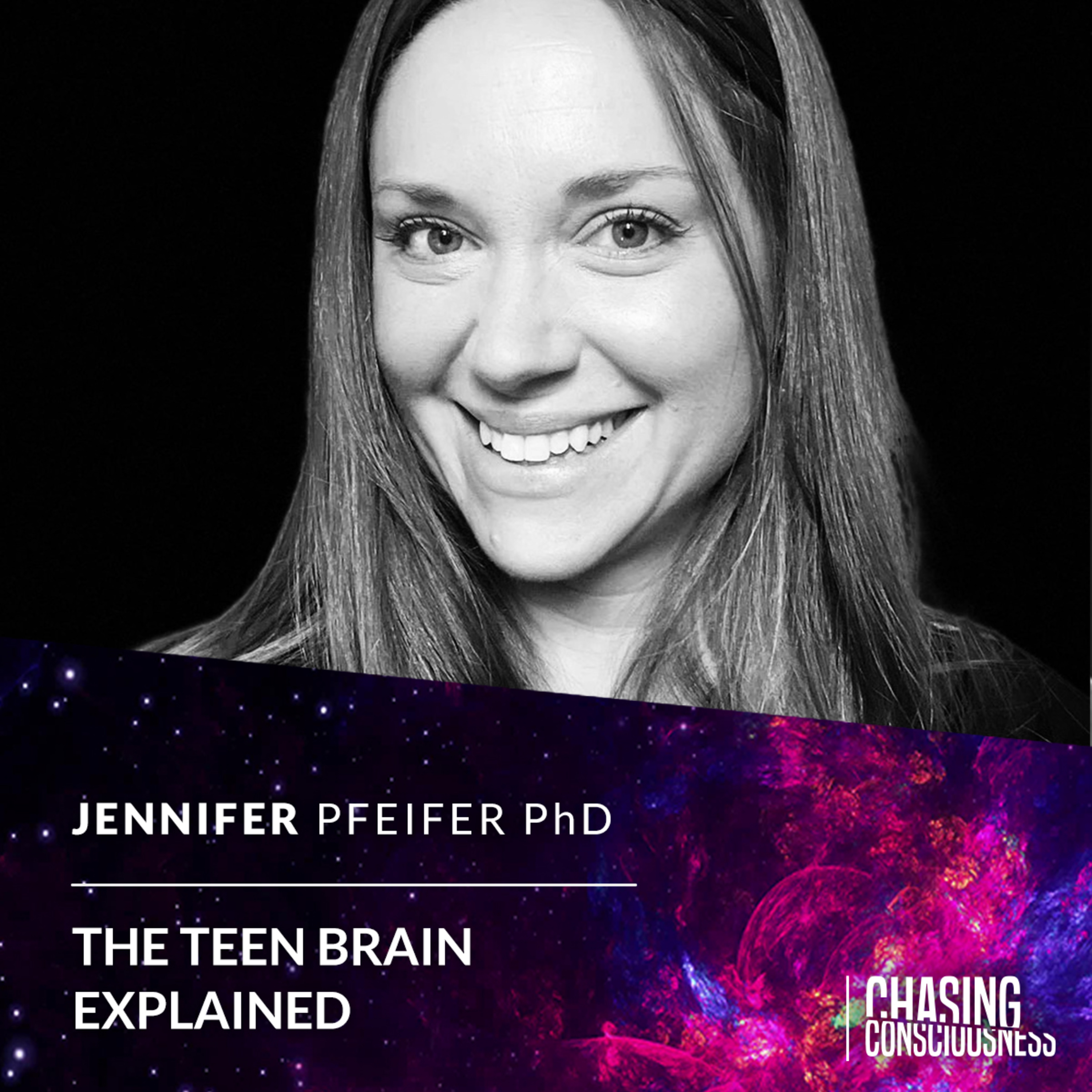
THE TEEN BRAIN EXPLAINED - Jennifer Pfeifer #86  episode artwork

EPISODE · May 14, 2026 · 1H 11M

THE TEEN BRAIN EXPLAINED - Jennifer Pfeifer #86

from Chasing Consciousness · host Freddy Drabble

Are our preconceptions about teen behaviour true? What can we learn from the psychology and neuroscience of teen development to help support them rather than blame them? Are mobile phones and social media responsible for the jump in youth mental health issues?In this episode we have the topic of the adolescent brain to get the up to date science on. So we’re going to be testing our preconceptions about teenagers, and comparing the evidence base from research, to what we’ve come to believe through friends, family and heresay. So, we get into the development of the brain during puberty; just what behaviour hormones are and aren’t responsible for; whether the late completion of the frontal cortex, responsible for self control and reasoning, affects their ability to make important decisions; the consequences of social connection circuits developing for their sense of belonging or exclusion; the alarming rise in mental health issues among young people over the past 15 years, and whether the research supports recent claims that digital devices and social media are largely responsible.Fortunately to navigate these choppy waters we have the co-director for Center for Translational Neuroscience at the University of Oregon and the co-director of the National Scientific Council on Adolescence, Jennifer Pfeiffer. She is the author of over 150 scientific papers on the neuroscience and Psychology of adolescence, puberty, social cognition and teen mental health and self regulation. She is on a mission to use science to change our narratives about the adolescent brain which she explains in her excellent new TED X talk, “The surprising science of adolescent brains”.https://www.youtube.com/watch?v=wr8VVJRcRSgWhat we discuss: 00:00 Intro06:11 Need to shift the narrative about teens.12:10 Puberty Vs Adolescence. 16:25 Preconceptions about teen development.17:00 Impulsive and risk taking (1st preconception).17:50 Frontal cortex not complete before 21/22 yo. (Executive reasoning)19:50 So called “Bad decisions” could be just from an adult point of view.21:40 Environmental factors deeply influence teen cognitive function.26:00 Interested only in friends, not in family relations, (2nd preconception).30:40 Teen brains mirror adults in the home.35:45 They love to break rules and push boundaries, (3rd preconception).36:40 Testing limits and failing integrates learning.39:50 Hormones make them emotionally vulnerable and erratic, (4th preconception).46:22 Trivialise fear of fitting in, missing out, and exclusion, (5th preconception).49:30 Fear of exclusion research.51:10 They’re more likely to become addicted to persuasive technologies, (6th preconception).55:10 Metanalyses show a %15 increase risk from social media.56:25 %300 increased risk when there are parents with mental health problems.57:25 %150-200 increased risk from bullying.59:25 Factors in doubling of youth mental health issues.01:03:00 Recommendations for technology and young people.01:08:00 Advice to avoid blaming and shaming teens.References:Jennifer Pfeifer, TED X talk, “The surprising science of adolescent brains”.BJ Casey,  Kristina Cause, ‘The Teenage Brain: Self Control’.Laurence Steinberg, ‘Cognitive and affective development in adolescence’Roy Baumeister, “Negativity Bias” CC Interview.Jonathan Haidt - “The Anxious Generation”. National Scientific Council on Adolescence report “What science tells us adolescents need online”.

Are our preconceptions about teen behaviour true? What can we learn from the psychology and neuroscience of teen development to help support them rather than blame them? Are mobile phones and social media responsible for the jump in youth mental health issues?In this episode we have the topic of the adolescent brain to get the up to date science on. So we’re going to be testing our preconceptions about teenagers, and comparing the evidence base from research, to what we’ve come to believe through friends, family and heresay. So, we get into the development of the brain during puberty; just what behaviour hormones are and aren’t responsible for; whether the late completion of the frontal cortex, responsible for self control and reasoning, affects their ability to make important decisions; the consequences of social connection circuits developing for their sense of belonging or exclusion; the alarming rise in mental health issues among young people over the past 15 years, and whether the research supports recent claims that digital devices and social media are largely responsible.Fortunately to navigate these choppy waters we have the co-director for Center for Translational Neuroscience at the University of Oregon and the co-director of the National Scientific Council on Adolescence, Jennifer Pfeiffer. She is the author of over 150 scientific papers on the neuroscience and Psychology of adolescence, puberty, social cognition and teen mental health and self regulation. She is on a mission to use science to change our narratives about the adolescent brain which she explains in her excellent new TED X talk, “The surprising science of adolescent brains”.https://www.youtube.com/watch?v=wr8VVJRcRSgWhat we discuss: 00:00 Intro06:11 Need to shift the narrative about teens.12:10 Puberty Vs Adolescence. 16:25 Preconceptions about teen development.17:00 Impulsive and risk taking (1st preconception).17:50 Frontal cortex not complete before 21/22 yo. (Executive reasoning)19:50 So called “Bad decisions” could be just from an adult point of view.21:40 Environmental factors deeply influence teen cognitive function.26:00 Interested only in friends, not in family relations, (2nd preconception).30:40 Teen brains mirror adults in the home.35:45 They love to break rules and push boundaries, (3rd preconception).36:40 Testing limits and failing integrates learning.39:50 Hormones make them emotionally vulnerable and erratic, (4th preconception).46:22 Trivialise fear of fitting in, missing out, and exclusion, (5th preconception).49:30 Fear of exclusion research.51:10 They’re more likely to become addicted to persuasive technologies, (6th preconception).55:10 Metanalyses show a %15 increase risk from social media.56:25 %300 increased risk when there are parents with mental health problems.57:25 %150-200 increased risk from bullying.59:25 Factors in doubling of youth mental health issues.01:03:00 Recommendations for technology and young people.01:08:00 Advice to avoid blaming and shaming teens.References:Jennifer Pfeifer, TED X talk, “The surprising science of adolescent brains”.BJ Casey,  Kristina Cause, ‘The Teenage Brain: Self Control’.Laurence Steinberg, ‘Cognitive and affective development in adolescence’Roy Baumeister, “Negativity Bias” CC Interview.Jonathan Haidt - “The Anxious Generation”. National Scientific Council on Adolescence report “What science tells us adolescents need online”.

NOW PLAYING

THE TEEN BRAIN EXPLAINED - Jennifer Pfeifer #86

0:00 1:11:34

No transcript for this episode yet

We transcribe on demand. Request one and we'll notify you when it's ready — usually under 10 minutes.

Consciousness with Naskar Abhijit Naskar Official Podcast of Celebrated Neuroscientist, Bestselling Author and Peace Advocate Abhijit Naskar Heart Centered Revolution | Kundalini Yoga + Conscious Living Jen & Ramtin Pourvasei Welcome to the Heart Centered Revolution podcast! We are Jen and Ramtin Pourvasei, and we aim to uplift and inspire you by sharing wisdom and techniques from Kudnalini Yoga and other consciousness practices. Listen to learn tools to feel connected to your true self, and to understand what it means to be a spiritual being having a human experience. Each episode ends with a short pranayam, or breathing meditation. Learn more at www.heartcenteredrevolution.com. Choice Hacking: The Marketing Psychology Podcast Jennifer Clinehens This is THE podcast for marketers, product designers, business owners, consultants, and coaches who want to sell smarter using the power of buyer psychology and behavioral science.If you're tired of chasing algorithms, trends, and tactics that fizzle and want a deeper understanding of why people buy, Choice Hacking will help you build a business rooted in what makes *your* buyers tick.Hosted by marketing psychology expert Jennifer Clinehens MS/MBA (who's worked with brands like McDonald’s, Adidas, Microsoft, T-Mobile, Starbucks, and more), the show breaks down how the world’s biggest brands use marketing psychology to drive action…And how you can apply the same insights, even without a Fortune 500 budget.Expect bite-sized (Whether you're a seas King Cam's Ujumbe Podcast Marques D Cameron Sr.,M.Ed King Cam’s Ujumbe Podcast is an African-centered podcast that explores the hidden knowledge, spiritual, sacred traditions, and untold legacies of African civilizations— especially Ethiopia, Kush, and Kemet — with the goal of cultural healing, consciousness elevation, and global Black unity. Let’s talk about African, Kemetic, and Kushite History. I look forward to sharing History with you. Subscribe for more Paypal: https://paypal.me/MDCameronSrCash App: https://cash.app/$MarQuesCamFor show interviews, lectures, and for booking email me at [email protected]

Frequently Asked Questions

How long is this episode of Chasing Consciousness?

This episode is 1 hour and 11 minutes long.

When was this Chasing Consciousness episode published?

This episode was published on May 14, 2026.

What is this episode about?

Are our preconceptions about teen behaviour true? What can we learn from the psychology and neuroscience of teen development to help support them rather than blame them? Are mobile phones and social media responsible for the jump in youth mental...

Can I download this Chasing Consciousness episode?

Yes, you can download this episode by clicking the download button on the episode player, or subscribe to the podcast in your preferred podcast app for automatic downloads.
URL copied to clipboard!