
EPISODE · Sep 4, 2026 · 55 MIN
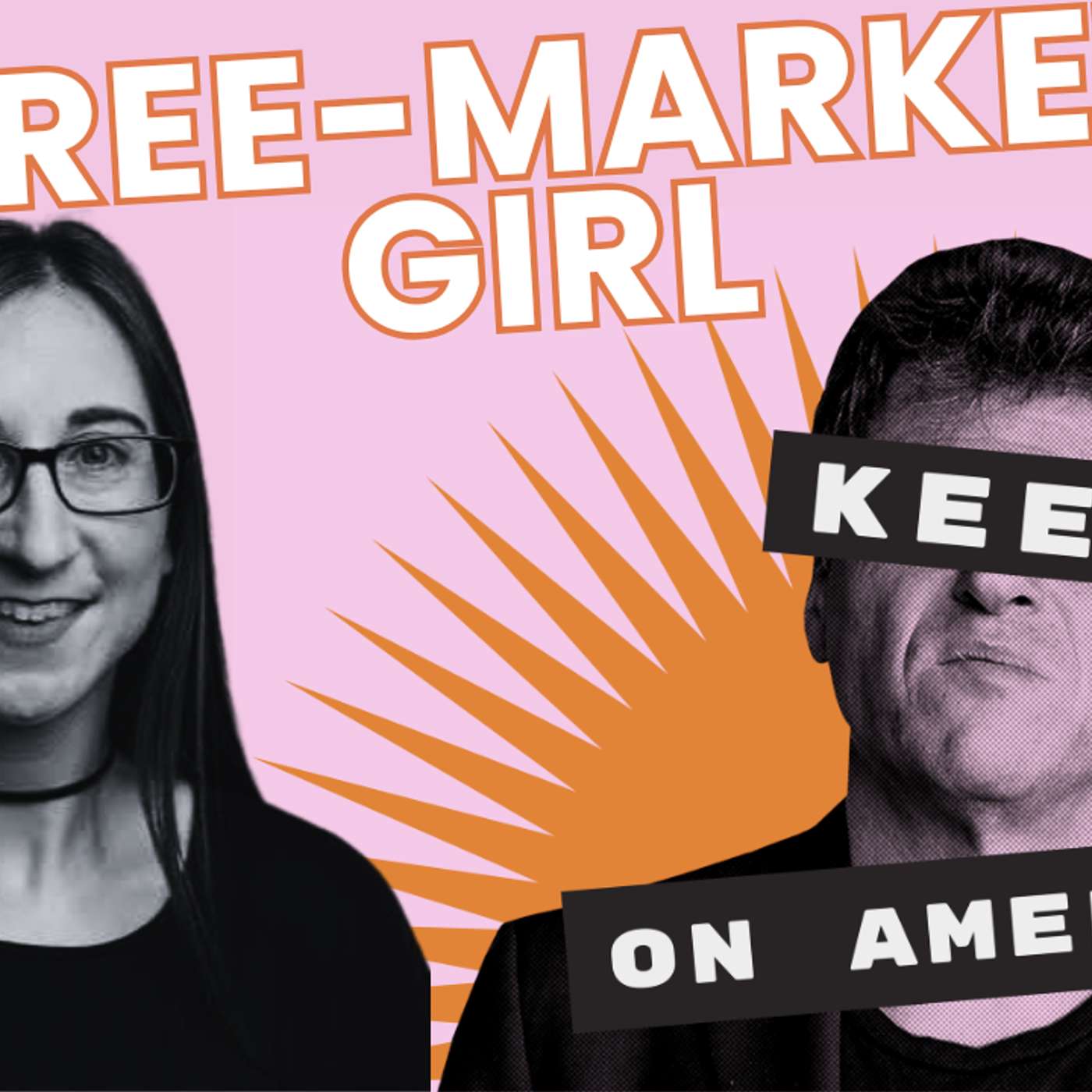
The Trickle-Down Morality of a Free-Market Girl: Stephanie Slade on Libertarian Fusionism
from Keen On America · host Andrew Keen
“We all kinda secretly at some level wanna use power against our enemies.” — Stephanie Slade Earlier this week, Silicon Valley heretic Paulina Borsook railed against libertarianism. Today, the libertarians get their turn. Stephanie Slade is a senior editor at Reason and the author of Fusionism in which she lays out a contemporary path for American conservatism. For Slade, libertarianism is captured by that New York City intersection where Church Street meets Liberty Street. “Fusionism” = Hayek + Aquinas. It marries the classical liberal defense of individual freedom to the Judeo-Christian tradition of moral virtue. And it’s a polemic against what she calls “will-to-power” conservatism of America-first statists like JD Vance and Tucker Carlson. These are Slade’s enemies. The real threat to the future of American conservatism. Slade might be politically homeless but is hardly a moderate. She is radically committed to limited government, a pro-life Catholic and, in her words, a “free market girl.” Ronald Reagan championed trickle-down economics. Stephanie Slade fuses that with trickle-down morality. Sladeian rather than Borsookian. Five Takeaways • Church & Liberty Street. Fusionism, defined: the marriage of the classical liberal political tradition — individual rights, limited government, rule of law — with the Judeo-Christian understanding of virtue as the habits that let human beings flourish within an objective moral order, a lineage running from Aristotle through Aquinas. It is not sectarian: the irreligious Hayek counts as a fusionist for his respect for the tradition’s inherited wisdom, and virtue is not partisan either — Hayek and Keynes became close friends at wartime Cambridge, and “Keynes could be a virtuous person.” Slade herself is a practicing Catholic in a famously secular, even atheistic movement — a minority within a minority, which is where the whole fusionist project began. As for William Buckley: conservatism’s founding father, not libertarianism’s — and, against Andrew’s Vidal-flavored skepticism, she defends him as a man who evolved, renounced his early racial views, and declared in the eighties that “America needs a black president” — “imperfect and flawed the way we all are.”• Economic Liberty Is Individual Liberty. Libertarianism spans freedoms coded right (markets, trade) and left (drug legalization, the bedroom) — and Slade’s core claim is that the economic ones are not a separate category: the right to make a living, dispose of your property, and trade across borders is individual freedom, full stop. Crony capitalism — government picking winners — gets no defense. On the culture wars, the fusionist rule is coercion-last: preach from pulpits, persuade, change the culture, and reach for law only when someone’s basic rights are violated — which is why she finds abortion restrictions consistent with a hands-off philosophy (two lives in the equation, on her view) while rejecting laws against how others live. Against Mill, via the scholar Jacob Levy: hers is pluralist rather than rationalist liberalism — defending the right of internally illiberal associations, the Catholic Church included, to exist free of the state. And popes get free speech too: she has disagreed with them in print.• Will-to-Power Conservatism. The book’s target, named: a rising creed — especially among the young right — that says “politics is war, and the only question is who’s gonna acquire and wield state power against their enemies.” Trump practices it without theory (“not a philosopher… he’s just doing what he wants to do” — and, to Andrew’s wannabe-mafia-leader framing, “all of the above”); JD Vance theorizes it self-consciously; Tucker Carlson preaches it — “we wanna defeat them and destroy them… unperson them.” Her Reason essay “JD Vance and the Politics of Victimhood” tracks the mechanism: the right adopting the left’s victimhood politics — “it works for them. We should do it too” — with straight white men recast as the aggrieved class. The siege mentality underneath is real but “blown out of proportion,” and now functions as “a permission slip to do the things that everybody secretly wants to do.” Hence the episode’s pull quote — the most honest line of the hour, because it implicates everyone, herself included.• What Trump Voters Actually Believe. Slade’s data point against the populist-economics story: an Ethics and Public Policy Center poll of 2020 Trump voters found them scattered on economics — split even on trade, with a majority calling international trade good for America, against their candidate’s signature position — but united at roughly ninety percent on the cultural siege questions: Christianity under attack, media as an arm of the Democratic Party, rising prejudice against white people. Trumpism, on this evidence, is a cultural phenomenon wearing economic clothes. The deeper commitment survives underneath: at the Heritage Foundation, she asked a man celebrating the GOP’s working-class turn whether the party should rethink free markets — he was horrified: “Of course not. We’re conservatives. That means we believe in freedom.” Recovering that buried instinct is what she cheerfully calls her quixotic hope. DOGE gets no credit toward it: all for shrinking the state, she had “zero faith” in an initiative that started breaking institutions before understanding them.• Trickle-Down Morality. Where fusionism meets the moment. On abundance: Klein, Thompson, and past guest Marc Dunkelman share her critique of red tape, but the goal inverts — they want efficient government so it can do more (high-speed rail, Medicare for All); she wants government to do less, and would rather the market decide than “some Ezra Klein type podcaster.” The New Deal, she argues, set America back; China’s rail proves only what command economies mandate. On AI and data centers: techno-optimist — the backlash is “quite misguided,” built partly on water-use misconceptions — but with a caveat rare in her camp: “you have to build democratic legitimacy for anything you wanna do in a democratic country.” Kids not writing their own papers is a real problem; the answer is evolved norms, not top-down rules. (No, she didn’t use AI to write Fusionism: “Not at all.”) For 2028: Cruz and Rubio are closer than Vance; the true fusionists — Ben Sasse, Justin Amash — were driven out. Her bet is on reviving the ideas and letting them trickle down — which handed Andrew his closer: Reagan had trickle-down economics; Slade has trickle-down morality. About the Guest Stephanie Slade is a senior editor at Reason magazine, where she covers the ins and outs of the American conservative movement. Her writing has also appeared in The New York Times, America, and U.S. News & World Report. A fusionist libertarian and practicing Catholic, she lives in Washington, DC — the belly of the beast, she concedes, but a journalist has to be where the subject matter is.
Embed this episode
Ready to play
The Trickle-Down Morality of a Free-Market Girl: Stephanie Slade on Libertarian Fusionism
No transcript for this episode yet
Similar Episodes
No similar episodes found.
Similar Podcasts
No similar podcasts found.