
EPISODE · May 31, 2026 · 48 MIN
The Tulsa Tapes: The “Bystander" who saw Black Wall Street Burn
from Say What? with Michele Norris · host Say What? with Michele Norris
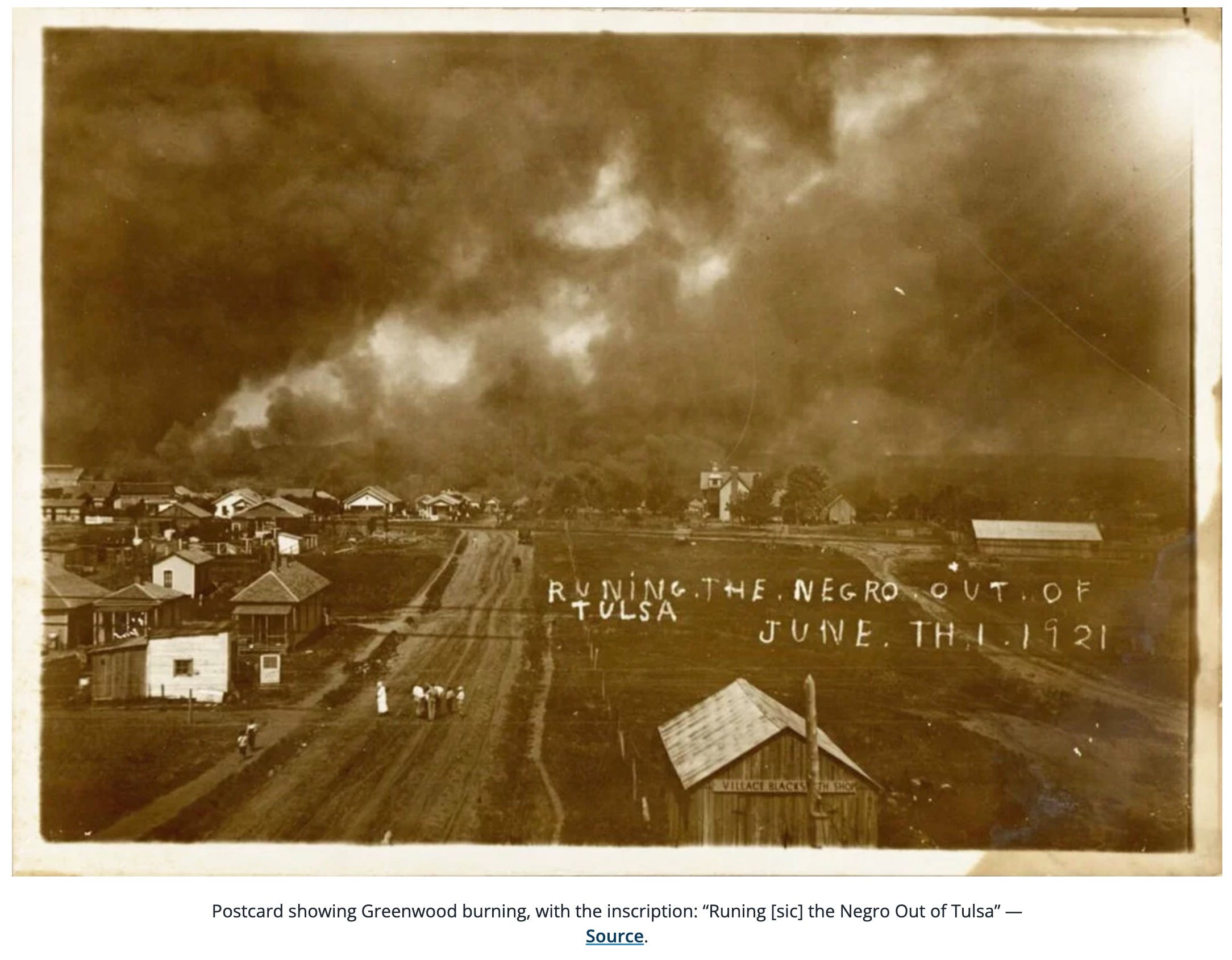
I have been eager to share this story with all of you for years, and as we hit the 105th anniversary of the 1921 Tulsa Massacre, it’s time to finally pull it off the shelf.What you’re about to hear is the pilot episode of You People, a podcast we created five years ago , inspired by our work at The Race Card Project, where we collect 6-word stories about race and cultural identity. The journey started with a 6-word story about “carnage.” A word like that captures your attention. We dove in and did reporting. We recorded a fantastic episode. We believed in it. We were proud of it. And then, because of the vagaries of legacy media, it was never picked up.That changes today. Some stories are too important to stay on the shelf collecting dust.On May 31st, 1921. A White mob descended on a neighborhood in Tulsa, Oklahoma, called Greenwood. At the time, it was one of the most prosperous Black communities in America — a boomtown known as Black Wall Street. Tensions were running high that night because a 19-year-old Black man who worked as a shoeshiner had been accused of attacking a 17-year-old White elevator operator named Sarah Page the previous day. That accusation led to an incendiary article in the afternoon newspaper under the headline, “Nab Negro for Attacking Girl in Elevator.” By the evening of May 31, a large crowd assembled in front of the courthouse where the shoeshiner, Dick Rowland was being detained. Black residents, worried for his safety, also went to the courthouse to protect Rowland. Several confrontations flared up, and in the chaos, gunfire erupted, and quickly things spiraled out of control. Law enforcement decreed that Black people were the instigators and joined forces with the angry Whites headed toward Greenwood to quell what they called a “Negro Uprising.”What happened next turned into the most destructive act of anti-black violence in modern American history. The mob destroyed everyone and everything in sight. Thirty-five city blocks were obliterated. As many as 300 people were killed. More than 1,200 homes were destroyed. One hundred and ninety-one businesses were wiped out. What was left was stolen and looted.By the morning of June 1st, the once prosperous area of Greenwood had been reduced to rubble and ash. And then, the erasure began. The bodies were buried. The police reports disappeared. Photos were increasingly hard to come by. And the White community in Tulsa moved forward with silence. First, a community was wiped out. Then the act itself was removed from collective memory.What makes this episode so rare and so important is that it spotlights a fragment of history that actually survived — a rare set of first-person audio recordings of a White eyewitness to the massacre. This story revolves around a former White Tulsa resident named Elgon Wilson. He was 18 years old in 1921 and had been working for Western Union as a delivery man. He was delivering telegrams by motorcycle in Greenwood on the night of the massacre and into the next day. He watched the mayhem. His own life was threatened. And he kept working. And then, for the rest of his life, he did something rare. He kept talking about what he saw and experienced.He told the stories to his family members over and over again, often at the dinner table with Sunday supper spread out on the good linen. And the reason I can share this story with you is that his family put a tape recorder on the table. He told the stories over and over, and they recorded those tales over and over.Years later, one of Elgon Wilson’s grandsons sent his 6-word story to The Race Card Project, and it wound up being a portal into this gruesome chapter of American history.Zachary Wilson is a Presbyterian pastor in St. Paul. After listening to those stories throughout his childhood, Zach has been ruminating over deep questions for most of his life. Zach has spent years wondering , not just what his grandfather saw, but what he did beyond driving his motorbike. His grandfather, who left Tulsa soon after the massacre and began a family elsewhere in the Midwest, said he was just a “bystander.” Zach wondered if that was the right word for a witness to carnage? What was his responsibility since he and his brothers hold a piece of history that no one else has? What does it mean to inherit an intimate view of a story that so many people tried to hide?This episode doesn’t offer easy answers. It gets complicated. And messy. And honest in a way that will most certainly cause some discomfort. And there are a few twists and turns that upend easy assumptions. I hope you hit play and take a listen. I hope you share your thoughts about what you hear. And I hope you will come back because we are going to be talking to Zachary Wilson again because so much has happened since we recorded his story five years ago. We will also spend some more time with Anneliese Bruner, whose great-grandmother survived the massacre and then wrote one of the very first books about the terror in Tulsa back in1922.As you listen, remember this episode was recorded years ago, around the 100th anniversary of the Greenwood annihilation. You will hear references to COVID-19 and a time when people were not venturing out to restaurants. At the time we recorded this, historians told us that the Wilson family recordings of Grandpa Elgon represented one of the only incidents where a White witness to the Tulsa massacre recorded an account of what they saw. In recent years, more witnesses may have come forward, but these recorded accounts are still VERY rare.The work of reckoning in Tulsa continues. A Department of Justice investigation produced a 126-page report that found that the terror in Tulsa was triggered by an unfounded allegation. Still, no charges have been filed for crimes committed. The statute of limitations leaves few paths to justice. After all these years, no reparations or restitution. And with recent efforts to use ground-penetrating technology and advanced genealogical tools, bodies that were hastily buried are still being recovered, exhumed, investigated, and identified.It reminds me of the African Proverb I heard Skip Gates reference at a book festival years ago, “the body you tried to bury in the yard years ago has a toe sticking out of the ground today.” I have no idea whether that is a real proverb, but the metaphor certainly applies here..One more thing before you press play.We are so glad we can finally share this episode. We’d love to hear your thoughts, questions or observations. And if you want to share your own 6-word story, the inbox at The Race Card Project is always open and we will occasionally roll out new episodes of You People in coming months. Stay tuned.Take care of yourself and each other. Stay safe out there.The Tulsa Tapes- Hosted By Michele NorrisYou People Episode 01Guest: Zachary WilsonChapters:00:00 Introduction to the Race Card Project00:34 About TRCP01:16 Exploring Inheritance and Identity04:39 Zachary Wilson’s Family History10:21 The Tulsa Massacre: A Historical Context16:05 The Role of Bystanders in History21:32 Zach’s Journey to Tulsa27:09 Confronting Family Legacy32:49 The Complexity of Racial Identity38:29 Reflections on Change and ResponsibilitySHOW CREDITS:You People is a podcast inspired by The Race Card Project. This episode was produced by Futuro Media, whose commitment to stories that matter made this work possible. Special thanks to Nicole Rothwell, Mike Sargent, Marlon Bishop, Maria Hinojosa and the Futuro Team. There’s a reason that team keeps racking up awards! David Walters served as content editor. Melissa Bear is the coordinating producer for Say What Media and The Race Card Project. A big round of thanks to Mitch Kapor and Freada Kapor Klein who have supported TRCP on this long journey. About Zachary Wilson:Zachary Wilson grew up in Yakima, Washington, twin brother at his side, apple orchards out the window, which he’ll tell you was more formative than it sounds. He studied Philosophy and Classics at Augustana College, earned his M.Div. from Princeton Theological Seminary, and has spent his career as a Presbyterian pastor in the Twin Cities, most recently serving as “Acting Co-Executive Presbyter” of the Presbytery of the Twin Cities Area of the Presbyterian Church (U.S.A.) It a title akin to a Bishop. He and his wife have called St. Paul home for many years.He is also, it turns out, the grandson of a man who was riding a motorcycle through Tulsa, Oklahoma on the night of May 31st, 1921 — and talked about it for the rest of his life. That inheritance is what brought Zach to The Race Card Project.Say What? Substack is a reader supported project kept alive by reader donations and the generosity of our community. It’s a really exciting model, but I need your help to keep it going. Subscribe so you never miss Say What?. Get full access to Say What? with Michele Norris at michelenorris.substack.com/subscribe
Embed this episode
NOW PLAYING
The Tulsa Tapes: The “Bystander" who saw Black Wall Street Burn
No transcript for this episode yet
Similar Episodes
No similar episodes found.
Similar Podcasts
No similar podcasts found.