I'm Redrong, I cover climate and the environment for The New York Times. I recently spent eight weeks on a research ship going to Antarctica, the planet's getting warmer, ice is melting away. Sea level rise is going to change our coastal cities. It's one thing to read about what scientists have discovered when they write papers, but it's another thing entirely to be there with them. This is what we do with The New York Times.
We want to bring you closer to the biggest stories that matter for how we all live in the world. If you'd like to support this work, you can become a subscriber. But nytimes.com. Subscribe. I have real concerns about our defense industrial base and God forbid we find ourselves in a lengthy, serious war and our ability to produce what we need.
Today, my colleague Eric Schmidt explains why we're running out of key missiles so quickly and how that could impact the safety of U.S. troops and the Trump administration's efforts to end the war. It's Tuesday, August 11. Eric, you told us very early on in the war with Iran that we could start to have an issue with the limited supply of certain munitions.
It seems as though we have now reached that point where this is, in fact, a very real problem. So just explain what's happening right now. Absolutely. So what we've seen is since the start of the war, there were offensive missiles and defensive missiles that were in short supply to start with and they've been drained even more so since the war has gone on. You had offensive missiles like stealthy cruise missiles that the U.S. was firing at underground
bunkers and around. You had tomahawk cruise missiles that were fired off of ships and submarines. But what we've seen both then and now are on the defensive side. These are the defensive systems that help protect U.S. troops in the region as well as their allies.
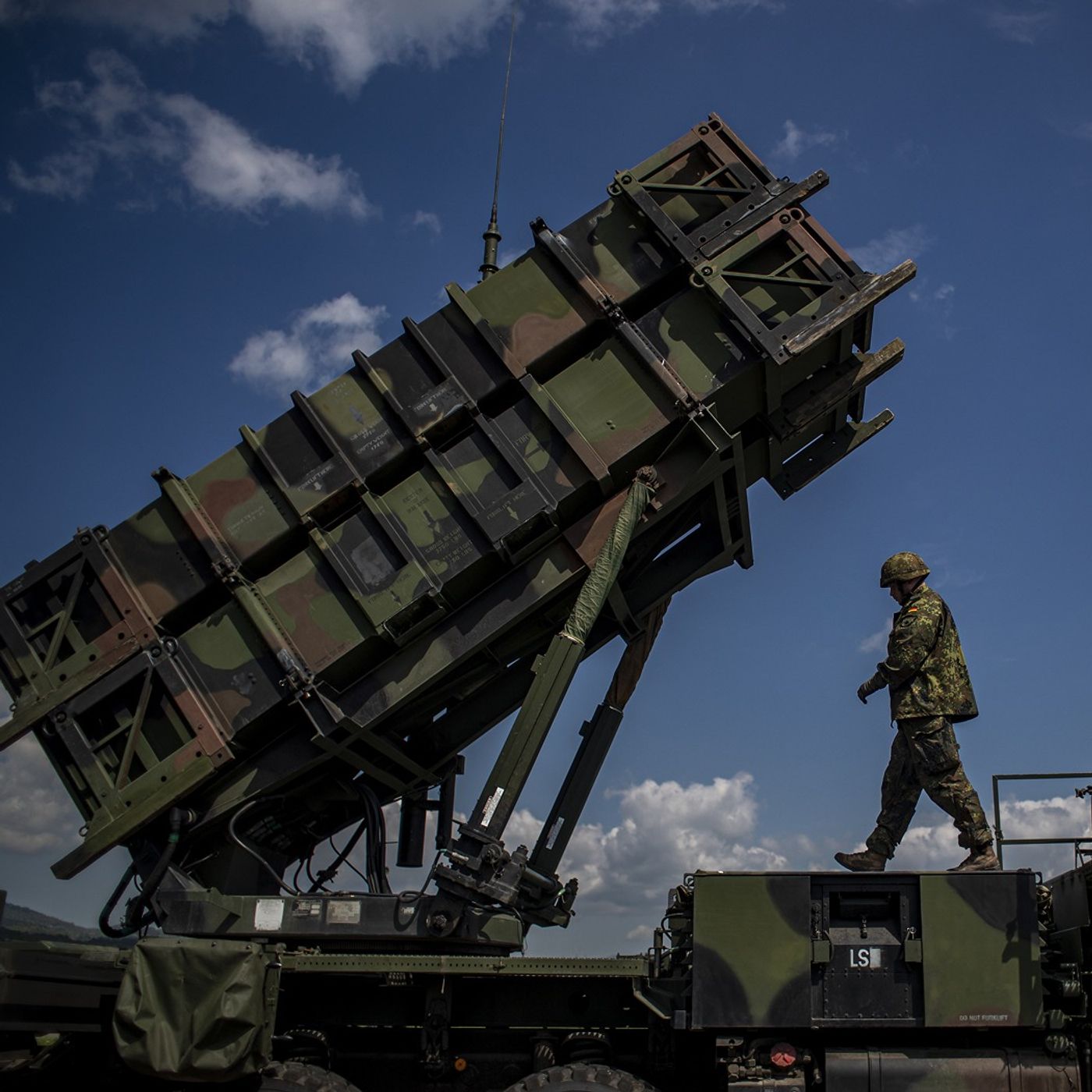
These are called interceptors, right? These are called interceptors. Patriot interceptors are probably the most common people have heard of. There's also one called THAAD which hits targets even higher in the atmosphere. But the Patriots are the ones that are really kind of the gold standard and they're basically missiles that are aimed at hitting incoming missiles.
If you will, hitting a bullet with a bullet to try and defeat, in this case, the Iranian missiles that are being fired at bases, at energy facilities in the region. All sorts of targets the Iranians are aiming at. Pitting a bullet with a bullet sounds really hard and complex. It is hard. I mean, these are very fast moving missiles.
In some cases are approaching Mach 5. And so what the United States has done, in fact, even though the interceptors, they have a quite good and quite advanced now, to be sure that they knock them down the doctrine for the military has been that you actually fired two of these interceptors for every incoming missile. Just to ensure that you increase your chances of destroying or at least damaging knocking off course these very destructive missiles. Basically, you need a ton of these from what you're saying. You need double whatever the enemy is firing at you.
Yeah, if you have enough, I mean, that's the plan, is that you want to be able to create a shield. These Patriot systems basically create a radius around them that they can defend whether it's a city or a base or an oil refinery or something like that, something valuable. And how many of these do we have left, Eric? Well, the numbers are classified. The military doesn't want to be telling everybody what they've got left.
But the best estimates from our sources inside the military are that they have somewhere in the neighborhood of 1700 left in the whole global arsenal. And that's after the US has burned through about 1500 of these since the start of the war. So just under half overall. But again, even as major combat has lessened, as the war has gone on and these episodic back and forth exchanges between Iran and the United States, the US is still going through dozens in some cases of these weapons at a time or in a given week. And just so I make sure I understand this, you're saying we've burned through 1500 of these missiles already, which is about half of the global stockpile?
Roughly what they started with. Since February 28 when the war started, that's approximately how many interceptors, Patriot interceptors the US has gone through on its own. Now, allies have gone through their own stockpiles in countries like Bahrain and Kuwait and Saudi Arabia. They have their own Patriot systems and they too are burning through their munitions as they come under attack from Iran. They want to be able to defend their cities, their oil refinery, their infrastructures, desalination plants, that kind of thing.
But the common denominator is they all need these interceptors that are quite valuable right now and in short supply across the board. Okay, how did we get to this point where we are running out so quickly of something that is that valuable? That is that crucial? Well, you have to go back several years actually, at least into the Biden administration. When the administration starts supplying some of these munitions, including some Patriot interceptors to Ukraine.
The Patriot missile defense system could soon be on its way from the US to Ukraine to help it fend off attacks from Russia. Now, many of these were older version Patriot interceptors and were not the same kind of munitions that the US needed in the war with Iran. But that's kind of where it starts. And then we move forward when the US got into a shootout with the Houthis. The US and British military striking back against the Iranian back to the rebels for their continued attacks against ships in the Red Sea.
The rebel group, the militant group in Yemen that had basically started firing on ships in the Red Sea and that led to a long 50 day campaign or so where the US carried out numerous airstrikes. US and British military airstrikes hitting 18 targets at eight locations in Yemen, including underground storage facilities, weapons and even a helicopter. Going after their infrastructure, their underground stockpiles and things like that. But then you come into last year when things really start getting tighter and that is during the 12 day war when Israel attacks Iran, the Israelis are striking targets inside of Iran, Iran is responding and the US essentially comes to Israel's aid and they're helping knock down a lot of the incoming Iranian missiles.
Israel has its own air defenses of course but the US is helping with other kind of systems. Right. This is what this guy looks like over Tel Aviv for the more than 4 million people who live in that metro area. Is Israel's Iron Dome system race to stop Iranian missiles and drones that you see here? And so all of these things taken together are slowly but steadily wearing down the stockpiles that the United States has.
And this is before the Iran War even starts. This is all before the big one, the Iran War starts on February 28th. And this is not a secret going into this war. As we reported over the weekend, my colleagues and I, General Dan Cain, the chairman of the Joint Chiefs of Staff, warned President Trump that these levels were already quite low and that going into a major war as a war in a kind of conflict with Iran would be would be a serious problem. It could be a serious problem.
Now the president basically took into that information according to our sources and said I'm going to go ahead with this anyway because I think this war will be over quickly and we can basically replenish those stockpiles at a later time after we take care of the Iranian regime. That proved to be a serious misjudgment and miscalculation. Because obviously this has not been a short and efficient war. No, obviously not. But as things kind of ramped up again, these shortages really became apparent.
It also seems like the shortage may be influencing the options that President Trump has as he seeks to end the war on terms that are favorable to the United States. Absolutely. And we reported this very fact just two weeks ago after President Trump threatened to unleash a huge escalation of bombing attacks against Iran. And so is the president mulled over his options just a couple of weeks ago? Again, the military went to him and said, look, if you carry out this major strike, you're going to run down these already depleted municipal levels even more, maybe even exhaust some or close to exhausting some.
And so this was, as we reported, one of the main factors in the president's decision to pull back, there were others, but that was a key factor. But Eric, during those first 38 days of war, did we not in the barrage of attacks that you've described destroy Iran's capacity to fight back with missiles? I mean, we were told right by the administration that the result of those attacks had been to really make an impact on Iran's capabilities. That's right. And in fact, Defense Secretary Pete Hetz said just after the ceasefire took effect in early April, Iran has no air defenses.
Iran has no air force. Iran has no Navy. Their missiles, their missile launchers and drones being destroyed or shot out of the sky. Their missile volume is down 90%. And that Iran's ability to launch its missiles had been essentially functionally destroyed, eliminated almost.
And was that not true? Well, again, this proved to be another fundamental most calculation because the two or three months after the April ceasefire began, a couple of months, the Iranians proved remarkably resilient and also quite adept at digging out both these bunkers that housed the remaining missiles as well as the missile sites, some of which were mobile missiles. So they just had kind of scooted out of the way of the oncoming American attack. But they basically were able to use that delay, use that time period of the ceasefire to reconstitute. They've been able to threaten in some cases actually carry out attacks on commercial shipping in the Strait of Hormuz.
But they've also been able to hit targets in some of the neighboring countries, including American military bases. And what we've seen over and over is that the Iranian side has just been consistently able to adapt, including it sounds like on this run. That's right. And this really comes from lessons they learned in the last year or so. After that 12-day war back in June, the Iranians really did their homework.
They basically said, we know another attack will be coming. We're going to decentralize much of our arsenal of our command structure. So it's not an all-in-one place. It's not all in Tehran, for instance, the Capitol. It's spread out.
And we're going to have more autonomy to regional commanders, so that if one or two of a section of the military around the country goes down, the others can fight on. Another example of Iran's adaptation to the current conflict is the way the tactics they're using and the kind of missiles they're firing. The way the Iranians are attacking, they do a barrage of a combination of drones, slower moving cruise missiles, and some of these very fast moving ballistic missiles. And the whole idea here is to see, initially, can you overwhelm a particular site's defenses, whether it's a base or a refinery or whatever, because there's just so much coming at them. The other thing Iranians have are specific ballistic missiles.
These are missiles that basically launch way up high and they come up all the way up into space and they come back down again. But rather than just following one trajectory in which an air defense could lock onto and blast down within one of these interceptors, they've been developing over the last year or so a maneuverable missile, at least a maneuverable warhead. That is, so as it starts coming back down toward a target, and the defenses are locked onto what they think will be a kill, suddenly the incoming missile swerves and it goes in a different direction. Sounds like a running back in football, juking a defender. Exactly.
Exactly. And the whole swarm of these things suddenly coming down, it looks like they're all coming down together at once, and then they all are going to zig and zag in different directions. That's going to just, you know, oh my God, you look at that and go, okay, your defense is really going to be top-rate to knock these things down. Remember, again, the US doctrine has been used at least two, sometimes even three of these interceptors to go after these incoming missiles. Well, you can just see if it's a major attack, you're going to burn through a whole bunch of these interceptors in that one particular assault.
And that's what the Iranians have been able to do in a couple of specific instances. And as they look at carrying out attacks, they also change things up as if they're trying to use different speeds, different trajectories, as if they're trying to zero in on weaknesses and vulnerabilities and the air defenses. So in some cases, including a particular base in Jordan, they attacked it more than four times, just trying to figure out where was the most vulnerable place that they could possibly come into and carry out a strike. So it shows on their end, even with their limited resources, they're looking for strategic targets to hit. Ones that if they're successful, you know, again, all they have to do is have one lucky hit.
If you think of it that way, whereas the Americans have to be able to defend against everything, you're completely successful. Yeah, if it's your job to defend those strategic targets, it's hard enough to hit a bullet with a bullet to say nothing of a swerving bullet. The map balloons pretty quickly. I mean, you need a ton of interceptors in that case, because if even one gets through, you're in trouble. That's right.
And so the Americans adapt. You can either shrink the area that you are defending and basically leave some areas that are less valuable, unprotected. But this one base in Jordan that had been coming under attack, sadly, tragically, in the evening of July 16, we're night into the 17th, one of these missiles slipped through and it hit some housing units and killed three American soldiers and wounded over a hundred and did a lot of damage to other facilities on the base as well. And there were other strikes we later learned that same week that it hit two other bases in Jordan that housed American troops and equipment. So they really focused the Iranians had in that third week of July on several bases in Jordan that were receiving troops.
Again, remember, this is a time when the president is talking about escalating attacks. So troops were coming in. You know, additional aircraft were flying in. It was a time when the Iranians basically said, we're going to go after this very important base in Jordan and they were successful in this one case. And with that uniquely devastating attack in Jordan demonstrates is that Iran can still be very effective even if the US does everything it can in its own defense.
That's right. The attack on Jordan was important for several reasons. Obviously, it was tragic. This was the first US service members to die since early in the war. It once again showed that this war, which still hadn't ended, by the way, this war that Trump had said would run four to six weeks.
Suddenly we're hearing about Americans killed and being wounded in the attack. It puts the administration in a really tricky position. Now they're again having to defend this war that's gone on much longer than the president originally said it would. It's enraging the American public. It's undermined confidence among regional allies who thought they could rely on the United States to protect them against this kind of threat.
So all of a sudden, this kind of confluence of events from this one deadly strike really begins to cause serious problems for the administration as it tries to address the question of how do we wind this war down and finding that there's no easy solutions, no easy pathways. We'll be right back. Now transforms agreement into reality. A word becomes an agreement. An agreement becomes a contract.
A contract becomes law. Today, Harvey, the AI platform for legal work, is writing the next chapter. More than 200,000 lawyers are building with Harvey, accelerating review, sharpening negotiations, and more. This is how the future of agreements is being crafted now. Harvey, learn more at Harvey.ai.
Harvey does not provide legal advice. Users should always independently review and verify any output from Harvey. This week on the Wire Better Show, we're talking about face sunscreen. What do you think so far about the ones that you have shacked at this new ingredient? I think it's sunscreen.
And I'm excited it exists. Find out how the new FDA-approved ingredient is changing formulations and whether our experts think it's worth it. The Wire Better Show is on the Near Time's App or where we like to listen. So Eric, how are the White House and the Pentagon reacting to this moment to the very tricky position that they're in? Well, President Trump's initial reaction is he is outraged at these published reports in the Times and other news organizations.
The White House and Pentagon spokesman basically deny that there's any kind of shortage, that they've got plenty of munitions to do whatever the President orders the military to do. But privately, we learn and report that the President is so mad that he orders a leak investigation into our story. And at a meeting at Camp David, he berates Pete Haggseth, the Defense Secretary, and his deputy Steve Feinberg for basically what we report is that he's misled them on how bad the munitions situation is. And this caused a huge uproar inside the administration because Secretary Haggseth has in public testimony to Congress and public statements basically said, we've got this under control.
We've got this. When reality, he doesn't. There is a logical question. I feel like implicit in Trump's anger here. Which is, why don't we have a bigger stockpile of these weapons?
Well, it's a really good question. And it's one we've been asking. Our editors have been asking us to answer for readers and viewers and listeners as well. Oh, God, sorry to pile on. Yeah, right.
But it's basically a problem that dates back several administrations, both Democratic and Republican. And part of it was just not catching up on the threats, still being caught in this post-9-11 counterterrorism world where you're not thinking about enemies loaded up with missiles that could launch in large numbers. There was obviously concern about threats coming from North Korea and other countries. But nobody really anticipated the kind of back and forth exchanges that we've seen in Russia and Ukraine or that we've now seen between the United States and Iran. And they were caught flat-footed, basically.
It sounds like you're saying we thought we'd moved on from traditional wars, but it turns out we very much have not. So now that we're in this position, what can the US do to build a stockpile back up? Well, the problem is just to make a Patriot missile. It takes about two years. And you say, well, how can that be?
How hard can it be to make a missile? Well, the problem is it's all the components that make up a missile. The Patriot missile is made up of all sorts of different components of engines and casings in the warhead. All these are made by different contractors and subcontractors. By some estimate, it takes maybe several dozen of these suppliers to come together and increase what they're doing in order to produce more Patriots.
If you want them to do that, many of them have to go out and they have to increase the size of their factories or build new factories altogether. You need to train more people. That takes weeks, if not months to do. And so it just takes a long time for some of these very, as the military calls and exquisite weapons. The Pentagon is trying to crunch down this time, but this is one of the other problems.
Defense contractors are basically saying, we understand that there's a need for more of these, but we need to actually drop the contracts to do this. Right. The US can't just make these companies do this. You can't just fire up the factories if you're the DOD. We're not trying to, we don't have that kind of industrial control over these contractors.
That's right. And so for instance, earlier in the year, the Pentagon struck an agreement in principle with Lockheed Martin, which assembles Patriot missiles to basically triple production of these interceptors. They're making around 600 a year now, and they were going to probably make up around 2000 or so by the year 2030. The problem is you need money to pay for this. And as the defense contractors say, we're not going to do this for free.
We're not going to front the money. You got to get it from Congress. Well, the Pentagon has gone before the Congress and asked for a record $1.5 trillion defense budget and additional spending to pay for things like this. And so far, Congress hasn't done it at a time when the war just isn't going very well. That's part of his promise.
He's going up there and asking for a record budget in the law makers to say, well, wait a minute, you're asking for more money to do what? So you can carry out more of what they consider to be a failed war. This may be a naive question, but can we buy these from other countries that have them? Well, some of these very specialized munitions like interceptors are proprietary. The United States has only allowed licenses for Japan and Germany to make these Patriot interceptors as well.
So it's not like you can just go out and find somebody else to make these things. And so it's very difficult to expand the production site. There's one place that Lockheed Martin has a plant in Arkansas that basically assembles all these things right now for Patriot interceptors. So it's trying to supercharge this industrial base. And by the way, it's an industrial base that's changing very quickly to digress for a second.
You remember a couple of years ago, everybody was worried about artillery shells and the war with Ukraine. And now we've gone well past that and everybody's talking about interceptors against ballistic missiles. And that's the other thing. It's the uncertainty about what kinds of weapons will modern warfare require moving forward. Right.
And if it's really difficult to predict what's going to be in high demand in even a few months or a few years, it becomes even harder to commit all that investment that it takes to supercharge production. That's right. They've got shareholders. They have to satisfy and they need to have certainty. That's why they want these multi-year contracts basically to lock in some certainty on their end that if they build these things, the Pentagon will buy them.
You know, it strikes me that we have these weapons that everyone wants. We've cornered the market on them. There's this one place that makes them in the United States. But our strength is kind of our Achilles heel right now because while we've designed a whole war strategy around them and the ability to use them, now that we're running out, we're in a lot of trouble because we just can't make them that quickly and no one else can either. Right.
And that's what's spurring other countries and even companies here in the United States. Can we come up with a cheaper alternative that can be produced more quickly? Maybe it isn't as capable as the most advanced Patriot interceptor missile, but maybe it's something that will make do for now. So there's a scramble on because there's a worldwide shortage of these missiles and the threats not going away. It's increasing.
Can I just say what I think a lot of people might be thinking when they hear this, which is it seems very bad and scary that we are so reliant on things that are extremely difficult to build quickly and that we need for this war. Has anybody wondered about that before? Am I the very first one? No, it's one of the fundamental questions here. I think there was an assumption, obviously a misjudgment that the US had time to make these adjustments.
People recognize there was a problem here. People recognize there were shortages and they were moving in a direction of certain solutions. It's just suddenly they're overwhelmed by the events of the real world. You've got two major wars and some other hot conflicts too that burn up a lot of these things and before you know it, in a matter of months, the cupboards basically bear for some of these key munitions and there's no quick and easy way to replenish them. So where does that leave us, Eric?
You've made it very clear that as this war drags on, we are becoming vulnerable in conflict with Iran in the Middle East in general. What about much more advanced adversaries militarily speaking? I'm thinking of China and Russia. Well, exactly. My colleagues and I just over the weekend reported this is one of the real big concerns at the Pentagon that the draining of this global supply of munitions has forced the Pentagon to rush a lot of the bombs and missiles and other hardware to the Middle East from military commands in Asia and Europe.
And these drawdowns from those commands have left them less ready to confront potential adversaries like Russia and China who are watching this very closely. I mean, they're reading about it in real time in their intelligence services certainly have been tracking this for a while. And so it creates a greater risk that China says maybe we should try and seize Taiwan and the Americans may not be as capable because they've had to divert so much of their firepower from the Pacific to the Middle East. Or maybe Vladimir Putin in Moscow says, hmm, maybe now is the time that I make a push in Eastern Europe or the Baltics now that the US is maybe a little bit less formidable.
Because what we've done is literally steal munitions from other bases. We've robbed Peter to pay Paul in order to make this war possible. Yes, that's correct. The Pentagon has basically said the fight against Iran is really the top priority. And even if it means assuming more risk, we'll just have to deal with that later because we've got a fight right now right in front of us that we have to deal with immediately.
And we don't like having to do this. The commanders out in those regions are upset about it. They say this privately, of course, they can't come out publicly and complain. But certainly they've made it clear to me and my colleagues who report on this, they feel this is a very serious situation. You know, we've been talking a lot during this war about how effectively Iran has exploited the world's economic vulnerability to the Strait of War moves and shipping.
What you're describing is Iran exploiting a military vulnerability that the United States has. It knows that if it wears down our supply of these missiles, it can gain an advantage. That's right. And so, Iran's coming together now. How the Iranians are being able to continue to exploit their economic advantage over the Strait of War moves.
At the same time that they're realizing they now have found these vulnerabilities and can exploit some of the security gaps that the United States has, whether it's the physical gaps and the coverage by the air defenses or back home in the industrial base and its lack of ability to send more supplies forward. And the Iranians know all this as they try and reach a final settlement to end this war. It's almost like Iran is watching and taking note of its leverage expanding in real time. That's right. And if they increase their ask, their requests from President Trump, just as recently as this weekend, pressing for more.
They see the advantage now. They recognize President Trump is eager to make a deal and they are pressing for as much as they can get right now, understanding that they have this leverage over the United States. Well, Eric, thanks so much for coming on the show again. Thank you, Natalie. We'll be right back.
I'm Gilbert Cruz. This week on the Book Review Podcast, we have a special Halloween treat or trick or treat. Two hard riders recommend some titles that are sure to keep you up at night. I am a big fan of sentient houses in general. I think this is one of the scariest books I've ever read.
Listen to the Book Review, wherever you get your podcasts. That door shouldn't be open. Who left it open? Here's what else you need to know today. I'm delighted to be here in the Oval Office as our administration takes another historic step in our mission to make America healthy again.
For the third time in less than a year, President Trump issued an executive order calling for children to be routinely immunized against fewer diseases. The order embraces a revised schedule that recommends vaccinating children against 11 diseases, rather than the 17 that are currently recommended by the Centers for Disease Control and Prevention. We have a reason for such epidemic rates of autism. And we're going to bring it back too much closer to where it was. Speaking to reporters in the Oval Office, Trump said that he was motivated in part by the worry that vaccines were tied to autism, even though dozens of studies have found no link between the two.
The President also took issue with the volume of shots given to children. They have a vaccination. They look like the size of a bottle of soda poured into a little child's body. Most shots though contain no more than one tenth of a teaspoon. Today's episode was produced by Michael Simon Johnson and Chris Banderov.
It was edited by Chris Haxle with help from Paige Cowett and contains music by Dan Powell and Diane Wong. Our theme music is by Wonderly. This episode was engineered by Alyssa Moxley. That's it for the Daily. I'm Natalie Kitrowak.
See you tomorrow. Bye. Bye.