
EPISODE · Jan 17, 2026 · 17 MIN
The Union Pacific-Norfolk Southern Merger: Regulatory Delays and Market Impacts
from Breaking News To Trading Moves
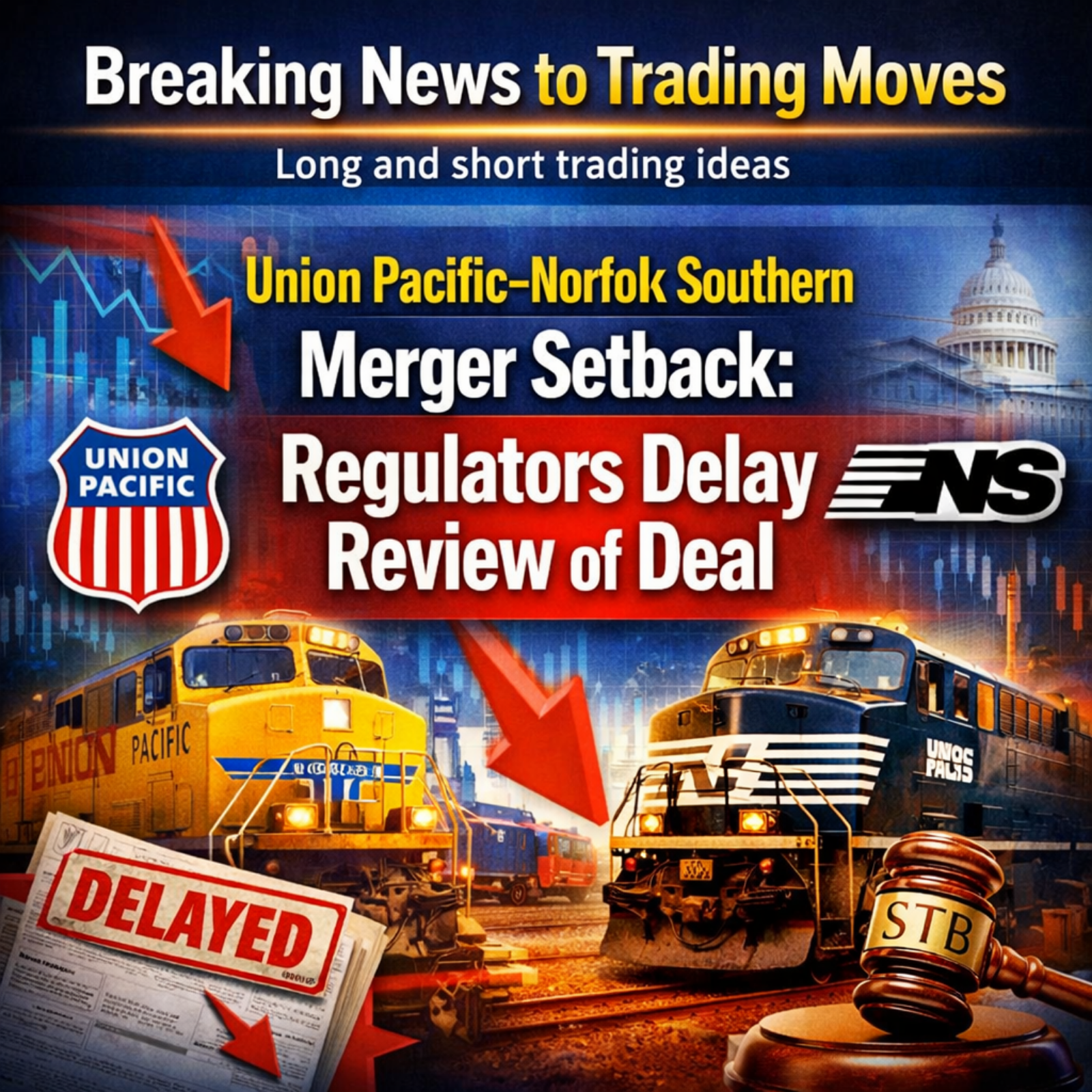
The U.S. Surface Transportation Board (STB) said Union Pacific’s proposed merger with Norfolk Southern is not ready for review, calling the filing incomplete and sending it back “without prejudice” so the companies can refile with more detail. Regulators flagged missing or insufficient information, including market-share projections and analysis of how the deal would affect competition.Why this matters for traders1. Timeline risk just went up If the application has to be rebuilt and refiled, the review clock effectively slips. That increases uncertainty around synergies, financing optics, and management focus.2. Competition and “2001 rules” are the centre of gravity This is the first major U.S. railroad merger being tested under the STB’s tougher post-2001 framework, which puts a higher bar on proving public benefits and competitive outcomes.3. Rivals and shippers now have more leverage A longer, more data-heavy process gives competitors and large shipper groups more time to press for conditions that could dilute the merger’s upside.WinnersRival railroads that benefit from delay and uncertaintyIf a coast-to-coast giant is delayed, incumbents keep the current competitive map longer. That can preserve routing leverage, pricing power on contested lanes, and negotiating strength while regulators scrutinise “competition impact” claims.Names: $CSX (CSX Corporation), $CNI (Canadian National Railway Company)Trucking and intermodal carriers that can capture modal share during rail disruption riskLarge rail combinations often create near-term customer anxiety around service, interchange, and network changes. Even before any integration happens, the headline risk can push some freight to truck and intermodal alternatives, especially for time-sensitive shipments.Names: $JBHT (J.B. Hunt Transport Services), $ODFL (Old Dominion Freight Line)Freight brokers and 3PLs that thrive on carrier optionalityA delayed merger generally keeps more carrier choices in the market for longer. Brokers can play more options across rail and truck, potentially improving pricing outcomes and keeping capacity flexible for customers.Names: $CHRW (C.H. Robinson Worldwide), $XPO (XPO, Inc.)LosersThe deal parties facing a longer, tougher regulatory pathA rejected filing raises execution risk and extends the period of management distraction, advisory spend, and regulatory uncertainty. It can also increase the probability of tougher remedies or concessions that lower the deal’s value.Names: $UNP (Union Pacific Corporation), $NSC (Norfolk Southern Corporation)Rail equipment and railcar supply names tied to big-cycle capex timingIf the merger is delayed, any “integration-driven” capex or fleet strategy changes can get pushed out, and planning uncertainty can slow large order decisions (even if long-term demand remains).Names: $WAB (Wabtec), $TRN (Trinity Industries)Deal-fee sensitivity in the M&A ecosystemIf regulators show early resistance to a headline mega-deal, it can cool follow-on consolidation momentum in the sector and reduce near-term confidence in closing timelines, which can pressure the “fee pipeline” narrative around large transactions.Names: $GS (The Goldman Sachs Group), $MS (Morgan Stanley)What to watch next1. The refile: whether UP/NS provide the missing market-share and competition datasets regulators demanded2. Rival filings: competitors may push for stricter conditions or more disclosures3. Shipper feedback: large industrial shippers and trade groups can shape remedy requirements#StockMarket #Trading #Investing #DayTrading #SwingTrading #Railroads #Logistics #Freight #TransportationStocks #MergersAndAcquisitions
Embed this episode
NOW PLAYING
The Union Pacific-Norfolk Southern Merger: Regulatory Delays and Market Impacts
No transcript for this episode yet
Similar Episodes
No similar episodes found.
Similar Podcasts
No similar podcasts found.