
EPISODE · Apr 11, 2026 · 34 MIN
The War on Pause and Unstoppable Economic Effects
from The Orbis Sentry Report - Geopolitical Risk & Global Trends · host George Olson
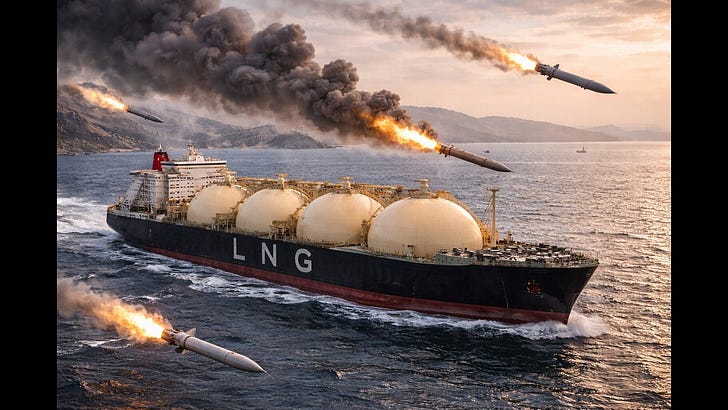
This podcast was produced as part of the ministry of Orbis Sentry.For the video version of this podcast, click on the link below:Please note that the video contains images, many of which are AI generated for illustration, which are not included in the text below. So if you are interested in listening to this while seeing it illustrated, you might be more interested in checking out the video.April 9, 2026Who wins a war? And what will be the economic effects?by George OlsonWe have certainly seen some geopolitical theatrics over the past few weeks. After President Trump threatened to completely annihilate the country and the people of Iran, on Tuesday evening, April 7, he announced that the war was on pause. Two weeks ago, the Trump administration had sent Iran a 15 point proposal on ending the war. Because of the condition of the Iranian government and difficulty in determining who is actually making decisions for the entire nation over there, we don’t know who might have read it and considered its points. In any case, earlier this week Iran apparently sent a proposal to the USA on ending the war. Iran’s news agency released a copy of what it said was their 10 point proposal, but then the White House said that they received a different proposal. However, it was on this basis of receiving any proposal, not the one in the press and not based on the content of what the proposal said, that Trump officially “paused” the war and a tenuous ceasefire began. Annihilation is now on hold for the next two weeks to give the two sides a chance to iron out their differences and scale down the conflict.So let’s look at the 10 points of Iran’s peace proposal that was released publicly:* A guarantee of no further US attacks against Iran.* Iran maintains control of the Strait of Hormuz.* Ending the regional war on all fronts, including against Hezbollah in Lebanon.* Withdrawal of U.S. combat forces from all bases and positions in the region.* Reparations to Iran for war damages.* Acceptance of Iran’s right to nuclear enrichment.* Lifting all primary sanctions on Iran.* Lifting all secondary sanctions on Iran.* Termination of all resolutions against Iran by the Board of Governors of the International Atomic Energy Agency.* Termination of all United Nations Security Council resolutions against Iran.iIf you read that carefully, it doesn’t look like an acknowledgment that the USA and Israel have won the war. It looks like Iran still has a lot of leverage, and they are demanding that the USA not only back off, but completely leave the area, and pay them war reparations. In addition, if the primary goal of the war was to completely dismantle Iran’s nuclear program, there is absolutely nothing in this proposal that indicates Iran has even budged an inch on this demand.If Iran was really a defeated power and they just wanted the American military to stop killing their soldiers and destroying their infrastructure, the proposal would look drastically different. You would be hearing them say, “Please stop, we will do what you say.” But that’s not the messaging that is coming from Iran. Instead, it is still defiant. Iran’s proposal reads like a victory proposal in which they, not the USA and Israel, are demanding the terms to end the war.The additional goal of regime change also seems to have failed, or at least it has not yet gotten started. If there was any indication of a rising civilian power in Iran actually threatening the rule of the IRGC,ii you would be hearing reports about it in all of the major news outlets. The mainstream media may not like the Trump administration, and they may skew the news to try and make him look bad, but they would not completely ignore a reality that is happening on the ground if it is actually there.The internal security apparatus of Iran apparently remains as strong as it was before the war started. The massive nationwide protests across over 100 cities in Iran back in January was so severely repressed, with tens of thousands killed by the regime, that it seems that there is no will among the population to rise up against their government. The IRGC and the Basij, who enforced the crackdown, have not fractured and remain as defiant as ever against the USA. There are no reports of military defections, which would be a key component for a revolutionary uprising to take root and succeed.So what have been the effects of the war? Here are some of the things I have observed. I am not making any judgments on this; just observing the facts.* The Iranian leadership from before the war was killed off, allowing a new crop of leaders to come to power.* The IRGC and the Basij remain in control, solidifying their grip on the entire country, and are able to solidly deter any uprising through severe repressive measures.* Iranian offensive weapons, as in missiles and drones, have been destroyed by the thousands.* We do not know how effective the destruction of production factories for the Shaheed drones and other missiles has been.* As far as we know, Iranian offensive missile capability against Israel has been significantly degraded for the time being.* We do not know what their capability will be to rebuild a missile arsenal, and we have no evidence that the material support and resupply efforts by Russia and China have been degraded.* The war was begun while an American team was involved in active negotiations for peace with an Iranian delegation. This signals to America’s enemies that American led negotiations will never be trustworthy, and could likely be considered a ruse to distract them before hostilities begin.* The enriched uranium fuel which was buried beneath rubble by bunker buster bombs last June remains unaccounted for.* The Strait of Hormuz has closed, sending oil prices significantly higher, putting stress on global trade relationships.* Sea mines that were laid in the strait are still there. Maritime insurance agencies don’t want to insure ships passing through the strait, which significantly raises the cost and reliability of shipping of any products coming out of that region.* Iran fully controls the Strait now, requiring a payment for permission to transit, whereas before the war it was free passage.* Based on various news reports, in April so far, maritime reporting agencies said that 11 ships passed through the Strait of Hormuz on the 7th and the 8th, and then 7 ships on the 9th, the first day of the ceasefire. So on the first day of the ceasefire, only 7 ships passed through the Strait of Hormuz. This is compared to a pre-war average of around 130 ships per day transiting the Strait.iii* Petrochemical refineries and infrastructure all through the Middle East region have been damaged and taken off line. This has had a significant effect on the many products, including oil, natural gas, LNG, helium, ammonia, fertilizers, and others.* In particular, the impact on Liquefied Natural Gas (LNG) is as follows. Qatar’s Ras Laffan refinery was damaged, taking 20% of global LNG production off-line.* LNG is critical for Europe and South Asia’s energy needs.* Fertilizer shortages are likely to have an impact on global food supply over the next year.* On April 9 (the day I started writing this), Iranian President Masoud Pezeshkian, after the supposed peace proposal negotiations started, said that Israeli strikes on Lebanon would render negotiations “meaningless.”ivThose are just a few of the facts.Thanks for reading Intersections with Orbis-Sentry! Subscribe for free to receive new posts and support my work.Here is what the situation looks like to me. President Trump was hoping that an attack on Iran, because of the overwhelming firepower of the US military, would quickly topple the Iranian government and cause a civilian uprising. There are 2 factors internal to Iran it seems that he didn’t consider. First, the violent suppression of protests in January which killed anywhere from 15,000 to 30,000 Iranians likely scared the remaining Iranian people so badly that they have no fight left in them. They didn’t rise up against their own government. Second, the IRGC is so deeply embedded in all aspects of Iranian social, civilian, and economic life, that the act of killing off the leaders of the government would not have the effect of causing its collapse. The IRGC has been preparing for this kind of attack for years, and that is why they embedded themselves the way they did. There is no reason now to believe that the Iranian people are going to rise up and topple the IRGC or their government, especially now that a supposed ceasefire and negotiations have begun. This seems to have been a huge systemic and strategic failure on the part of the Trump administration when they were choosing to decide whether or not to initiate the war.In addition to the above, with the re-supply lines for armaments and munitions continuing from Russiav and China,vi we can expect that Iran will be able to re-arm and make more Shaheed drones and make more missiles over time, just like they did from last June until the start of this war. They also now have complete control over the Strait of Hormuz, and all of their adversaries in the region are economically crippled due to attacks on refineries. With the price of oil staying elevated, though it is not all the way up at 120 anymore, it could go there over time (the initial spike in the price was a reactionary event). If the ceasefire holds, the price could go up slowly on account of the significant reduction in supply. If the ceasefire fails and the war restarts, price will likely spike again. Regardless, damaged infrastructure will take years to rebuild. The fundamentals are in place for a rise in energy prices until these things work their way through the market. This is likely to cause a slowdown in economic activity over the entire world. Eventually this could result in a massive fall in energy prices, but for now energy prices are set to continue higher.Remember at the beginning of the pandemic when it was in the news that the price of a barrel of oil went negative for a short bit? That was because economic activity had stopped as everyone went home. Nobody needed oil because all of the factories were shut down and nobody was driving anywhere. Any time there is an economic slowdown, one of the effects is a drop in the price of oil because of what is called “demand destruction.” Factories that couldn’t afford to purchase the energy at the higher prices ended up closing their doors. The workers in those factories end up going home, maybe going back to some provincial area in their home country, planting gardens for food, and doing what humans do in order to figure out how to survive. That is what happens in a severe economic slowdown, also known as a depression. So even though the economic effects will start out with what looks like inflation, with energy prices rising, the longer term effect will be to slow down the economy, and even bring some parts of the economy to a complete halt.Here is the way I see the economic sequence of events playing out, assuming that things play out on a massive scale (which all indications are that they will). Either a slow or rapid rise in the price of oil due to this war causes a scramble for dollars in international markets as companies look to try and keep their factories going. This causes the strength of the dollar to go up compared to other currencies, which induces more selling of US dollar denominated assets, like US stocks and US treasury bonds. The reason those get sold off is that the owners of those assets need the dollars to buy the more expensive energy to pay debt and try and keep their businesses going. Many of the sellers are foreigners, as there are a huge number of foreigners that own both US stocks and US treasury bonds.viiYou can see from this graph I pulled off the Federal Reserve’s website that around $15 trillion of US stocks are held by foreigners, which makes up somewhere around 25%-30% of the overall market.As US treasury bonds sell off, US interest rates rise, making it very difficult for the US government to continue to finance its debt, something that is deeply integrated into the functioning of the world economy. As US stocks sell off, US tax receipts fall because they are directly correlated to the value of the stock market, making the problem worse. The only way to save the treasury market at that point and prevent the system from collapsing will be if the Federal Reserve not only cuts short term interest rates, but caps long term interest rates by purchasing US treasury bonds with printed money. This is the reason why the Trump administration had been pushing for the Fed to cut interest rates late last year. They were seeing that there is likely to be a coming economic crisis which will hit us hard, and they wanted to force cuts, rather than wait until the crisis gets here, when it may be too late. If they would have cut rates at the beginning of this year, instead of worrying about inflation, it might have been enough to induce economic activity strong enough to overcome the condition we are about to face. Of course it would have been inflationary, but inflation is only a problem when it is inflation without economic growth. If there is economic growth alongside inflation, and that economic growth is stronger than the inflation, goods and services may get more expensive, but most people still have the means to sustain themselves because of the growth. By waiting to cut rates, however, we are now facing inflation without economic growth, which will eventually reverse itself into a severe deflationary environment. That is the point where recession or depression sets in.The perfect economic storm happens if the price of oil rises at such a pace that at first it causes a selloff in US treasury bonds and US stocks, and then it stays elevated long enough to induce manufacturing shutdowns all over the globe. Trade will slow down significantly as economic growth stagnates with rising energy prices. The selloff in US treasuries and US stocks will make it very difficult for the US government to get financing for its operations. Rising energy prices will also cause a rise in fertilizer prices, especially nitrogen fertilizer, a petrochemical byproduct. This is a primary ingredient for corn, which is not only a food staple, but it is also a feedstock ingredient for many of the packaged foods that we all consume. So we are also looking at potentially significant inflation in food prices in the coming months.With oil and gas prices soaring, there will be a drive to push harder into other sources of energy, such as nuclear and solar. In order to facilitate this transition, we need to produce tons more copper and other industrial metals. Yet producing these metals will be problematic. Without copper, nickel, and uranium, this transition will go only in fits and starts. Then on top of this, there is the need for data centers, which would not only facilitate economic growth, but would help businesses and consumers remain competitive. However, the ability to build out data centers will be stifled. Not because of the lack of funds, but on account of the lack of materials available to physically build the electrical infrastructure needed for the transition. We need copper, nickel, steel, aluminum, uranium, and other industrial metals.So, why don’t we just produce more of those metals, especially copper, nickel, and uranium? Just ride over the regulations that get in the way and build more production plants and dig more mines? We have the resources for those materials in the ground in North America and can also get a lot of the ore from friendly countries. Well, all 3 of these metals that are critical for building out the electric grid depend not only on burning fuel to have the energy for production, but also on sulfuric acid as a reagent in the metallurgical process. Did you expect to hear that? Where does sulfuric acid come from? It is made in acid plants from raw sulfur. Raw sulfur is shipped all over the world in bulk, because it is safer to ship raw sulfur than to make the acid and ship the acid. So where does raw sulfur come from? It is a by-product of processing what is called “sour crude” into usable fuels.So let’s talk about sulfur and its connection to global energy markets. But first, what is sour crude? There are many different grades of crude oil, and sour crude is one of the ones that most of America’s refineries are designed to process. Where does it from, being the primary source of sulfur? Primarily the Middle East, and most of it passes through the Strait of Hormuz. There are other sources, thankfully, such as Canadian oil sands, but this is being held back from export by the environmental lobby’s influence on the Canadian government. There is also sour crude sourced from both Mexico and Venezuela, but those both have serious political obstacles to getting the sour crude to US refineries. Mexico has a challenge in that a cartel controls one of the areas their oil pipelines pass through, and the cartel members have been siphoning off much of it to sell for their own profits. Mexico is working on taking out the cartel that has been stealing oil, but that will take considerable time. Venezuela will be able to eventually begin supplying large volumes of sour crude again, but that also will take time as the oil fields need to be re-developed after years of mis-management under Hugo Chavez and Nicolas Maduro’s leftist governments.So the loss of sour crude imports from the Persian Gulf means a reduction in sulfur production, leading to a reduction in sulfuric acid production, leading to a reduction in copper, nickel, and uranium production, leading to longer lead times in what is already a very delayed process to building out the US electric grid. Add onto this the current political backlash to building new datacenters in communities around the country, and things look even slower.In the meantime, China has already built out much of their electric grid, they are not stifled by an environmental lobby, and they already have significant competitors in AI to the American AI companies. If American datacenters can’t be built on account of not having a strong enough electric grid, American AI companies are going to lose the competition to China, because China’s grid is robust and growing. Then when the economic recovery finally begins to happen, at that point Chinese AI companies will have already surpassed American AI companies. The world will look to China instead of America for implementing AI processes as part of the necessary means to bring back economic growth, and China will become the new global hegemon as America fades into the background. In so doing, China will be able to export not only their economics, but their political philosophies of Maoism, Marxism, authoritarianism, and communism, along with their complete lack of ethics, all over the globe. Christian missions will come increasingly under scrutiny, as those authoritarian systems always look with suspicion on Christian activity.As far as the effects of rising oil prices on China, they will be somewhat insulated for several months on account of their huge strategic petroleum reserve. America also has a strategic petroleum reserve, but the Biden administration unnecessarily depleted it 3 years ago, and our government has only partially been able to re-fill it since then. So we don’t have the cushion that China has. Not only that, China controls rare-earths, the necessary materials to produce the magnets that our military needs for so many things, especially missiles. Since we have used up most of our stock of missile defenses in fighting Iran on the other side of the world, having pulled missile defenses out of South Korea and Japan in order to do so, China’s extra large military footprint in the Asia-Pacific region is by comparison growing even stronger and larger. It is possible that every country in the entire region could pivot to be becoming vassal states of China over the next 5 years, and forsake their relationships with the United States. This won’t happen because of sentiment; it will happen because it will be necessary for their survival. The United States will not be able to re-arm without China’s permission (i.e. sale of rare-earths to the USA), and hence the United States will not be able to defend Taiwan, the Philippines, Japan, South Korea, or any other country in that region. They will all be subject to bullying from China. After all, why would China sell rare-earths to the USA if it knew that the USA was just going to use those rare-earths to build up weapon systems to fight China?So this brings up the question, what will happen to Israel? I will have to hold onto that question for another essay, as it delves deeply into the religious ideas of many people and how those religious ideas are affecting geopolitics. The only thing I will point out here is that we have re-entered an era where religion is playing a role on the international stage in a much more prominent way once again, as it has through most of human history. The secularists of the past 80 years would say the solution is for the majority of the world to become non-religious. Of course, that is an absurd proposition and it will never happen. Human beings are religious by nature and this cannot be forced out of them, as much as Mao and the Chinese communists have tried to do for decades. Neither can it be educated out of them, as Western secularists pushing modernist ideas in schools have tried and failed to do for decades. It is far better to understand religious differences, just as we understand other areas of disciplined study, and develop frameworks for understanding each other so that we minimize conflict.Ultimately, when it comes to the war, the winner of the war is the one who dictates the terms. Even though tactically the USA has completely dominated Iran, we are very very far from a strategic victory. So far, Donald Trump has backed down on threats and indicated that he is ready to compromise on certain terms. On the other hand, Iran hasn’t backed down on hardly any of the terms, and their primary point of leverage is the Strait of Hormuz. They may end up compromising on some areas, but if they retain full control of Hormuz, when they didn’t have control of it before the war, that will indicate that regardless of the headlines, they are the strategic winners in this war.Of course eventually things are going to shift around. Iran’s neighbors will have a say if Iran tries to control the Strait of Hormuz unilaterally. They will do things like build new pipelines and infrastructure to ship out their oil that in some way is able to bypass the Strait. Also, other oil fields around the globe will be developed. Other energy sources, despite the difficulties in building them, will eventually become more established. In 5 or 10 years the Strait of Hormuz may not have nearly as much global significance as it does now. But all of those things will depend on the world figuring out how to overcome the economic difficulties caused by this war.I can’t think of any reasonable American that would be happy with an outcome of seeing Iran come out ahead at the end of this war and still being able to build nuclear weapons. Even most of Trump’s political opponents for the most part don’t want that to be the result, even though it would be a major strategic defeat for Trump, which would make them happy. But as unpleasant as that the idea of an Iran win is, reality dictates that we must consider it as one of the possible outcomes that may happen. After all, if you are like me, we don’t have an effect on policy decision makers; we are just observers. We have to prepare for what’s coming, but in general we can’t affect it except by normal democratic means, such as voting, writing your representative, and living life as a good citizen. Regardless, it does not affect my hope and my outlook on life. God is still God, and He is still a loving heavenly Father, we are still made in His image, and we still have a relationship with Him through Christ. And He is still sovereign over the affairs of nations in this world, so we have no reason to despair. We have a responsibility to do our part, and to keep the faith, but there is no reason to become despondent. The promises of God are certain and true for those who believe. So let us not lose hope, no matter what the outcome.I hope this was an encouraging message for you. Please stay tuned to our channel, and we will have more to share with you soon.Endnotes:i https://www.nytimes.com/2026/04/08/world/middleeast/iran-10-point-proposal-trump-us-ceasefire.htmlii The IRGC is the Islamic Revolutionary Guard Corps, a military organization set up to protect the Islamic revolution in Iran. The Basij are a paramilitary volunteer militia that serve as the IRGC’s auxiliaries. Together they have about 220,000 soldiers. These are responsible for sowing domestic terror among the Iranians to keep the Islamic revolution in power. They are also the ones who have sought to empower and equip the Iranian terrorist proxies in the Middle East, such as the Houthis, Hamas, and Hezbollah. They are deeply embedded in all aspects of Iranian life, controlling businesses and trade in addition to their military duties. Extracting them from power would be extremely difficult.iii https://www.wsj.com/business/logistics/see-which-ships-are-slipping-through-the-strait-of-hormuz-24eb931div https://www.criticalthreats.org/analysis/iran-update-evening-special-report-april-9-2026v https://www.reuters.com/world/europe/russia-supplies-iran-with-cyber-support-spy-imagery-hone-attacks-ukraine-says-2026-04-07/vi vii https://fred.stlouisfed.org/series/BOGZ1LM263164100Q This chart shows that around $15 trillion of US stocks are held by foreigners, which makes up somewhere around 25%-30% of the overall market. If they need dollars to pay their bills, which is common, they will sell US stocks and US treasuries in order to get those dollars. At this volume, it could have a very outsized effect on all of the global markets.Thanks for reading Intersections with Orbis-Sentry! Subscribe for free to receive new posts and support my work.Orbis Sentry websiteCarl Teichrib’s substackHere are some other links - Click one of the links below or copy and paste the URL beside the description into your browser.Carl Teichrib’s book about the changing worldview landscape, titled “Game of Gods”, on AmazonThe entire youtube geopolitical playlist from GeorgeOrbis Sentry Rumble channel for Dayton DialogueOrbis Sentry Rumble channel for postings similar to this podcastFull audio podcast link on substackFull audio podcast RSS feed for podcast search enginesOrbis Sentry is a non-profit ministry that exists to equip and educate the body of Christ in the worldview changes and trends that are happening all around us. We are not monetizing through analytics or advertising, and are supported by generous donations from viewers like you. If you believe in what we are doing and would like to support our ministry, please click the link below or copy and paste the URL below into your browser to setup a donation. Orbis Sentry is a registered non-profit organization in the State of Texas and has approved non-profit 501(c)(3) status with the IRS.Donation URL This is a public episode. If you would like to discuss this with other subscribers or get access to bonus episodes, visit schinaseatribe.substack.com
Embed this episode
Ready to play
The War on Pause and Unstoppable Economic Effects
No transcript for this episode yet
Similar Episodes
No similar episodes found.
Similar Podcasts
No similar podcasts found.