
PODCAST · religion
The Orbis Sentry Report - Geopolitical Risk & Global Trends
by Christian Worldview & Geopolitical Analysis
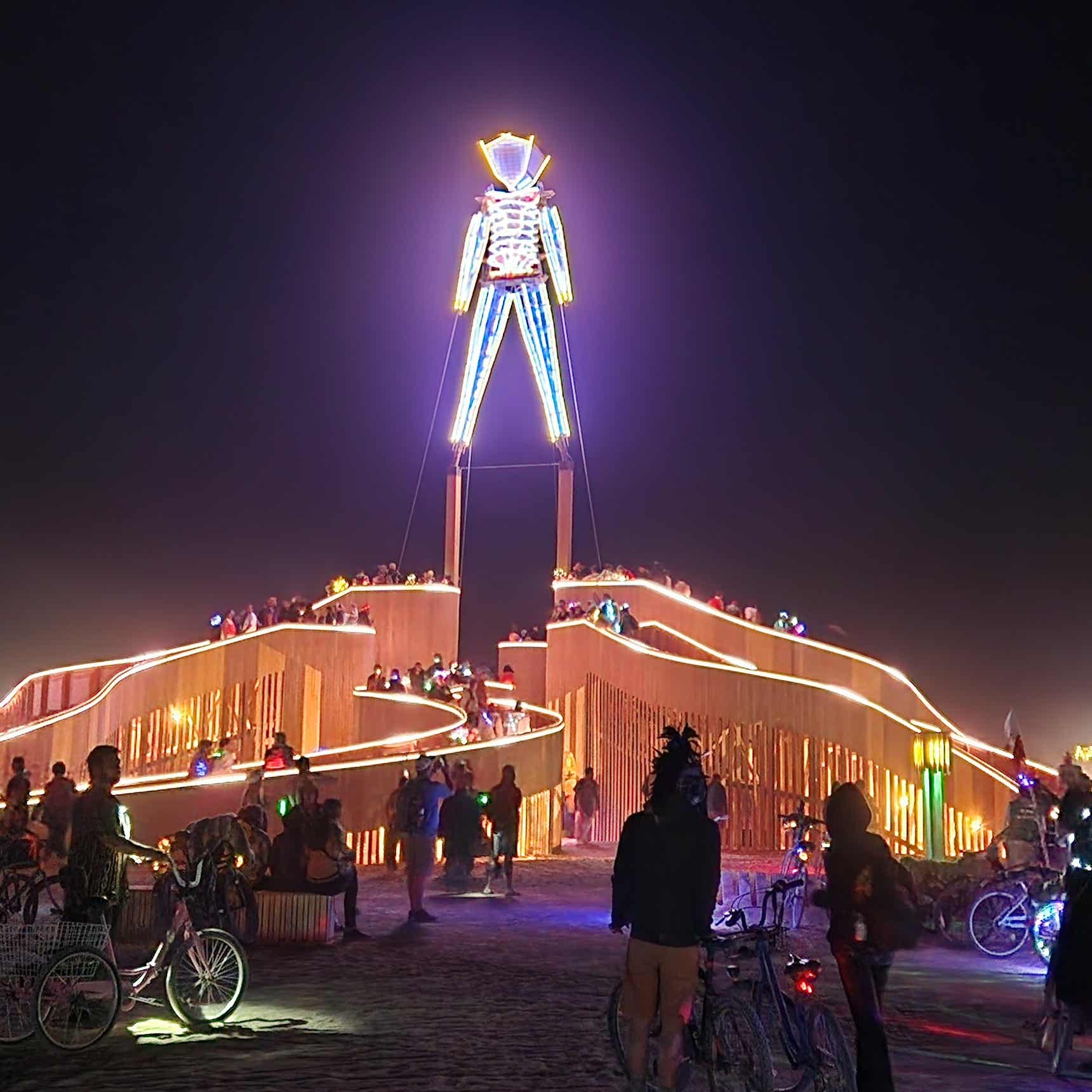
Hosted by Carl Teichrib and George Olson, a weekly deep-dive into worldview thought trends, geopolitical risk, domestic and international political trends, investment trends, Indo-Pacific strategy, European strategy, energy grid security, worldview intelligence, and related topics. We will also discuss our visits to Burning Man, Paganicon, NATO forums, and other events to show how these are impacting the world around us.Perfect for analysts, security and risk managers, investors, Christian thought leaders, and mission minded professionals.For more information go to our website:https://orbis-sentry.org/ schinaseatribe.substack.com
-
55
War, Technology, and Worldview: What is the Catalyst to get us to a War Economy?
To view the full part series in one long form video, and for other long form videos, become a member on our website (it’s free) by following the link here, and you will see the link to other long form videos.This is the second of a 3 part series in which Carl Teichrib and George Olson deepen the conversation, moving from the mechanics of a war economy to the worldview conditions that make a war economy possible. Carl opens by arguing that a wartime economy is not merely an industrial arrangement; historically, it rests on a shared story, identity, or worldview. He uses Nazi Germany as a dark example of a society whose industrial, educational, religious, and political systems were permeated by a unifying myth of blood, soil, and national destiny. The point is not to equate every mobilized society with Nazi Germany, but to show that mass mobilization requires a binding cultural narrative.As Carl and George discuss the catalyst that could drive the transition to a war economy, they discuss all the peripheral issues surrounding the transition and what considerations must be made to bring the transition together.There is a contrast between the Christian worldview and the wider cultural narrative of human evolution, AI, spacefaring destiny, and Burning Man as a microcosm of the hoped-for future. Yet one thing that could unite the fragmented culture of the West is recognition of the need for our survival as a culture.War economies do not emerge from growth in technology. They emerge when a society’s worldviews, fears, industrial capacities, and survival instincts converge and find common ground. AI, drones, laser defense, and grid vulnerability are not separate topics; they are signs of a civilizational transition where utopian visions collide with hard security realities.note -Documentation backing up the the statement George made on the electric grid is based on the January 31, 2024 House Select Committee on the CCP hearing, titled “The CCP Cyber Threat to the American Homeland and National Security.” It was not the DHS Secretary, but Jen Easterly, Director of CISA, which is part of DHS, testifying alongside FBI Director Christopher Wray, NSA/Cyber Command Director Gen. Paul Nakasone, and National Cyber Director Harry Coker.More information on this hearing and links to congressional testimony can be found by clicking here.Here are some other links for Orbis Sentry related material:Our discussion with Dr. Christian B. Keller on the US Civil War and Historical MindednessClick here for all of our debrief discussions for South by Southwest (SXSW). Videos will be added to this playlist as we are able to process and publish them.Orbis Sentry websiteCarl Teichrib’s substackCarl Teichrib’s book about the changing worldview landscape, titled “Game of Gods”, on AmazonThe entire youtube geopolitical playlist from GeorgeOrbis Sentry Rumble channel for Dayton DialogueOrbis Sentry Rumble channel for postings similar to this podcastFull audio podcast link on substackFull audio podcast RSS feed for podcast search enginesOrbis Sentry is a non-profit ministry that exists to equip and educate the body of Christ in the worldview changes and trends that are happening all around us. We are not monetizing through analytics or advertising, and are supported by generous donations from viewers like you. If you believe in what we are doing and would like to support our ministry, please click the link below or copy and paste the URL below into your browser to setup a donation. Orbis Sentry is a registered non-profit organization in the State of Texas and has approved non-profit 501(c)(3) status with the IRS.Donation URL This is a public episode. If you would like to discuss this with other subscribers or get access to bonus episodes, visit schinaseatribe.substack.com
-
54
War, Technology, and Worldview: A Christian Look Inside SOF Week
The Beginning Stages of a Full Response to our Civilizational CrisisTo see all 3 episodes together, pre-released, click here to become a member on our website and access the long form videos which are available for members only. Membership to Orbis Sentry is free.YouTube link: This is the first of a 3 part series in which Carl Teichrib and George Olson start a discussion at the intersection of the civilian industries supporting military endeavors as revealed at SOF week. Then they bring out a discussion of supply chains, new technologies (AI, drones, robotics), geopolitical considerations, the spiritual belief systems undergirding the flow of events, and the calling of Christians living and operating in this world. Society, industry, technology, history, spirituality, geopolitics, and worldview changes are all converging at a point in time in which we pass through a systemic crisis that will re-shape the world. We are still “left of bang” in any sort of ekpyrosis level event, and there is still a chance that we can prevent a major conflagration from breaking out. However, it will require faith, courage, patience, and wisdom, and for us as believers to properly represent Christ without fear to a lost and dying world. Our salvation is not a collective human endeavor achieved by our own efforts, but instead one which requires faith and turning to our Creator in humility and repentance, knowing that He is the only one who can ultimately save us.The full YouTube playlist for this discussion, once it is complete, will be found here.Here are some other links for Orbis Sentry related material:Our discussion with Dr. Christian B. Keller on the US Civil War and Historical MindednessClick here for all of our debrief discussions for South by Southwest (SXSW). Videos will be added to this playlist as we are able to process and publish them.Orbis Sentry websiteCarl Teichrib’s substackCarl Teichrib’s book about the changing worldview landscape, titled “Game of Gods”, on AmazonThe entire youtube geopolitical playlist from GeorgeOrbis Sentry Rumble channel for Dayton DialogueOrbis Sentry Rumble channel for postings similar to this podcastFull audio podcast link on substackFull audio podcast RSS feed for podcast search enginesOrbis Sentry is a non-profit ministry that exists to equip and educate the body of Christ in the worldview changes and trends that are happening all around us. We are not monetizing through analytics or advertising, and are supported by generous donations from viewers like you. If you believe in what we are doing and would like to support our ministry, please click the link below or copy and paste the URL below into your browser to setup a donation. Orbis Sentry is a registered non-profit organization in the State of Texas and has approved non-profit 501(c)(3) status with the IRS.Donation URL This is a public episode. If you would like to discuss this with other subscribers or get access to bonus episodes, visit schinaseatribe.substack.com
-
53
Can History Warn Us About the Future? Dr. Christian B. Keller | U.S. Army War College (Part 3 of 3)
Part 3 of 3 concludes our wide-ranging conversation with Dr. Christian B. Keller, Professor of History at the U.S. Army War College, as we examine how fear, identity, and human nature drive political conflict across generations.Dr. Keller explores the deep anxieties that fueled both the North and South before the American Civil War—economic fears, demographic fears, constitutional disputes, and competing visions of national identity. He explains how reactionary politics can rapidly reshape public opinion, drawing parallels to later crises in American and global history.The discussion then broadens to modern polarization in the United States and Canada, showing how cycles of action, reaction, and counterreaction continue to shape societies today. Most importantly, Dr. Keller emphasizes that while technology and institutions change, the human condition remains constant—making history an indispensable guide for understanding the present.This final segment offers powerful insights for citizens, leaders, churches, and anyone seeking wisdom in uncertain times.youtube URL:Click here for the full Historical Mindedness playlist on YouTubeHere are some other links for Orbis Sentry related material:Click here for all of our debrief discussions for South by Southwest (SXSW). Videos will be added to this playlist as we are able to process and publish them.Orbis Sentry websiteCarl Teichrib’s substackCarl Teichrib’s book about the changing worldview landscape, titled “Game of Gods”, on AmazonThe entire youtube geopolitical playlist from GeorgeOrbis Sentry Rumble channel for Dayton DialogueOrbis Sentry Rumble channel for postings similar to this podcastFull audio podcast link on substackFull audio podcast RSS feed for podcast search enginesOrbis Sentry is a non-profit ministry that exists to equip and educate the body of Christ in the worldview changes and trends that are happening all around us. We are not monetizing through analytics or advertising, and are supported by generous donations from viewers like you. If you believe in what we are doing and would like to support our ministry, please click the link below or copy and paste the URL below into your browser to setup a donation. Orbis Sentry is a registered non-profit organization in the State of Texas and has approved non-profit 501(c)(3) status with the IRS.Donation URL This is a public episode. If you would like to discuss this with other subscribers or get access to bonus episodes, visit schinaseatribe.substack.com
-
52
Can History Warn Us About the Future? Dr. Christian B. Keller | U.S. Army War College (Part 2 of 3)
Part 2 of 3 continues our compelling conversation with Dr. Christian B. Keller, Professor of History at the U.S. Army War College, as we explore how serious historical thinking can sharpen judgment in today’s complex world.This segment dives into why societies often oversimplify the past into political slogans, moral soundbites, and shallow narratives. Dr. Keller explains why understanding true historical context matters—and how failing to do so can mislead citizens, leaders, churches, and institutions alike. The discussion covers wealth, power, social tension, the complexity of slavery-era America, Native American alliances during the Civil War, and why difficult events cannot be reduced to simplistic talking points.We also examine the strengths and limits of AI in researching history, the danger of cherry-picking evidence, and how honest inquiry requires confronting facts that challenge our assumptions. If you want to think more clearly about politics, culture, leadership, and faith, this episode offers practical wisdom.youtube URL:Click here for the full Historical Mindedness playlist on YouTubeHere are some other links for Orbis Sentry related material:Click here for all of our debrief discussions for South by Southwest (SXSW). Videos will be added to this playlist as we are able to process and publish them.Orbis Sentry websiteCarl Teichrib’s substackCarl Teichrib’s book about the changing worldview landscape, titled “Game of Gods”, on AmazonThe entire youtube geopolitical playlist from GeorgeOrbis Sentry Rumble channel for Dayton DialogueOrbis Sentry Rumble channel for postings similar to this podcastFull audio podcast link on substackFull audio podcast RSS feed for podcast search enginesOrbis Sentry is a non-profit ministry that exists to equip and educate the body of Christ in the worldview changes and trends that are happening all around us. We are not monetizing through analytics or advertising, and are supported by generous donations from viewers like you. If you believe in what we are doing and would like to support our ministry, please click the link below or copy and paste the URL below into your browser to setup a donation. Orbis Sentry is a registered non-profit organization in the State of Texas and has approved non-profit 501(c)(3) status with the IRS.Donation URL This is a public episode. If you would like to discuss this with other subscribers or get access to bonus episodes, visit schinaseatribe.substack.com
-
51
Can History Warn Us About the Future? Dr. Christian B. Keller | U.S. Army War College (Part 1 of 3)
Part 1 of 3 of an in-depth conversation with Dr. Christian B. Keller, Professor of History at the U.S. Army War College, on the power of historical mindedness—using the past to better understand the present and make wiser decisions about the future.Dr. Keller explains why history is more than memorizing dates and facts. It is a discipline of asking deeper questions: How did we get here? What forces shaped today’s world? What mistakes keep repeating? The discussion explores how historical context helps explain modern political polarization, the roots of institutions like the United Nations and European Union, and the warning signs that preceded the American Civil War.This episode also examines how leaders, citizens, churches, and policymakers can use history to avoid repeating destructive patterns. If you want to better understand America’s current moment through the lens of the past, this conversation is essential listening.YouTube URL for this episode:Click here for the full Historical Mindedness playlist on YouTubeHere are some other links for Orbis Sentry related material:Click here for all of our debrief discussions for South by Southwest (SXSW). Videos will be added to this playlist as we are able to process and publish them.Orbis Sentry websiteCarl Teichrib’s substackCarl Teichrib’s book about the changing worldview landscape, titled “Game of Gods”, on AmazonThe entire youtube geopolitical playlist from GeorgeOrbis Sentry Rumble channel for Dayton DialogueOrbis Sentry Rumble channel for postings similar to this podcastFull audio podcast link on substackFull audio podcast RSS feed for podcast search enginesOrbis Sentry is a non-profit ministry that exists to equip and educate the body of Christ in the worldview changes and trends that are happening all around us. We are not monetizing through analytics or advertising, and are supported by generous donations from viewers like you. If you believe in what we are doing and would like to support our ministry, please click the link below or copy and paste the URL below into your browser to setup a donation. Orbis Sentry is a registered non-profit organization in the State of Texas and has approved non-profit 501(c)(3) status with the IRS.Donation URL This is a public episode. If you would like to discuss this with other subscribers or get access to bonus episodes, visit schinaseatribe.substack.com
-
50
Psychedelics, Consciousness, Mystical Experience, and Counseling an AI - SXSW Day 3 Debrief Part 2
To watch this in video format, click the link below:In this second segment of our day 3 debrief, we discussed a seminar given by a materialist scientist on consciousness and psychedelics. In particular, the discussion focused on how the scientist had repudiated his materialist beliefs in favor of a re-enchantment belief system, where mystical experiences become the arbiter of truth. Then we reviewed a seminar in which a professional counselor shared how she counseled a human-AI couple - a man and his AI girlfriend. We wrap up day 3 with a discussion on the philosophy of festivals, how they are implemented, what the business ideas are behind them, and how they are having an impact.Disclaimer - In Orbis Sentry, we are not endorsing any particular agenda, political or otherwise. The purpose of these videos is to inform people as to what was talked about. In our discussions we review these ideas from a Christian perspective.Click here for all of our debrief discussions for South by Southwest (SXSW). Videos will be added to this playlist as we are able to process and publish them.Here are some other links - Click one of the links below or copy and paste the URL beside the description into your browser.Orbis Sentry websiteCarl Teichrib’s substackHere are some other links - Click one of the links below or copy and paste the URL beside the description into your browser.Carl Teichrib’s book about the changing worldview landscape, titled “Game of Gods”, on AmazonThe entire youtube geopolitical playlist from GeorgeOrbis Sentry Rumble channel for Dayton DialogueOrbis Sentry Rumble channel for postings similar to this podcastFull audio podcast link on substackFull audio podcast RSS feed for podcast search enginesOrbis Sentry is a non-profit ministry that exists to equip and educate the body of Christ in the worldview changes and trends that are happening all around us. We are not monetizing through analytics or advertising, and are supported by generous donations from viewers like you. If you believe in what we are doing and would like to support our ministry, please click the link below or copy and paste the URL below into your browser to setup a donation. Orbis Sentry is a registered non-profit organization in the State of Texas and has approved non-profit 501(c)(3) status with the IRS.Donation URL This is a public episode. If you would like to discuss this with other subscribers or get access to bonus episodes, visit schinaseatribe.substack.com
-
49
Humanoid Robots, Amy Webb's Convergence Projections - SXSW Day 3 Debrief Part 1
To watch this in video format, click the link below:In this first segment of our day 3 debrief, we discussed the well publicized Amy Webb seminar, in which she announced a shift in her futurist analysis away from trend focus and onto convergence focus. We also had a short discussion about the ideas presented at an LGBTQ workshop, in which they outlined how they intend to use media and governmental pressure to raise the popularity of LGBTQ issues. The basis for the discussion was the popular LGBTQ themed tv series, “Heated Rivalry.” We finish with a long discussion on AI and humanoid robots, how these things are being implemented into various industries, and what it means for the future.Disclaimer - In Orbis Sentry, we are not endorsing any particular agenda, political or otherwise. The purpose of these videos is to inform people as to what was talked about. In our discussions we review these ideas from a Christian perspective.Here is the link to all of our debrief discussions for South by Southwest (SXSW). Videos will be added to this playlist as we are able to process and publish them.https://youtube.com/playlist?list=PLKHUzPd53o3n9NlYmkvsvH3oteHFHT3H1&si=CJvvcsZq3pgHgzxEHere is the link to the full Amy Webb seminar at SXSW 2026:Here are some other links - Click one of the links below or copy and paste the URL beside the description into your browser.Orbis Sentry websiteCarl Teichrib’s substackHere are some other links - Click one of the links below or copy and paste the URL beside the description into your browser.Carl Teichrib’s book about the changing worldview landscape, titled “Game of Gods”, on AmazonThe entire youtube geopolitical playlist from GeorgeOrbis Sentry Rumble channel for Dayton DialogueOrbis Sentry Rumble channel for postings similar to this podcastFull audio podcast link on substackFull audio podcast RSS feed for podcast search enginesOrbis Sentry is a non-profit ministry that exists to equip and educate the body of Christ in the worldview changes and trends that are happening all around us. We are not monetizing through analytics or advertising, and are supported by generous donations from viewers like you. If you believe in what we are doing and would like to support our ministry, please click the link below or copy and paste the URL below into your browser to setup a donation. Orbis Sentry is a registered non-profit organization in the State of Texas and has approved non-profit 501(c)(3) status with the IRS.Donation URL This is a public episode. If you would like to discuss this with other subscribers or get access to bonus episodes, visit schinaseatribe.substack.com
-
48
The War on Pause and Unstoppable Economic Effects
This podcast was produced as part of the ministry of Orbis Sentry.For the video version of this podcast, click on the link below:Please note that the video contains images, many of which are AI generated for illustration, which are not included in the text below. So if you are interested in listening to this while seeing it illustrated, you might be more interested in checking out the video.April 9, 2026Who wins a war? And what will be the economic effects?by George OlsonWe have certainly seen some geopolitical theatrics over the past few weeks. After President Trump threatened to completely annihilate the country and the people of Iran, on Tuesday evening, April 7, he announced that the war was on pause. Two weeks ago, the Trump administration had sent Iran a 15 point proposal on ending the war. Because of the condition of the Iranian government and difficulty in determining who is actually making decisions for the entire nation over there, we don’t know who might have read it and considered its points. In any case, earlier this week Iran apparently sent a proposal to the USA on ending the war. Iran’s news agency released a copy of what it said was their 10 point proposal, but then the White House said that they received a different proposal. However, it was on this basis of receiving any proposal, not the one in the press and not based on the content of what the proposal said, that Trump officially “paused” the war and a tenuous ceasefire began. Annihilation is now on hold for the next two weeks to give the two sides a chance to iron out their differences and scale down the conflict.So let’s look at the 10 points of Iran’s peace proposal that was released publicly:* A guarantee of no further US attacks against Iran.* Iran maintains control of the Strait of Hormuz.* Ending the regional war on all fronts, including against Hezbollah in Lebanon.* Withdrawal of U.S. combat forces from all bases and positions in the region.* Reparations to Iran for war damages.* Acceptance of Iran’s right to nuclear enrichment.* Lifting all primary sanctions on Iran.* Lifting all secondary sanctions on Iran.* Termination of all resolutions against Iran by the Board of Governors of the International Atomic Energy Agency.* Termination of all United Nations Security Council resolutions against Iran.iIf you read that carefully, it doesn’t look like an acknowledgment that the USA and Israel have won the war. It looks like Iran still has a lot of leverage, and they are demanding that the USA not only back off, but completely leave the area, and pay them war reparations. In addition, if the primary goal of the war was to completely dismantle Iran’s nuclear program, there is absolutely nothing in this proposal that indicates Iran has even budged an inch on this demand.If Iran was really a defeated power and they just wanted the American military to stop killing their soldiers and destroying their infrastructure, the proposal would look drastically different. You would be hearing them say, “Please stop, we will do what you say.” But that’s not the messaging that is coming from Iran. Instead, it is still defiant. Iran’s proposal reads like a victory proposal in which they, not the USA and Israel, are demanding the terms to end the war.The additional goal of regime change also seems to have failed, or at least it has not yet gotten started. If there was any indication of a rising civilian power in Iran actually threatening the rule of the IRGC,ii you would be hearing reports about it in all of the major news outlets. The mainstream media may not like the Trump administration, and they may skew the news to try and make him look bad, but they would not completely ignore a reality that is happening on the ground if it is actually there.The internal security apparatus of Iran apparently remains as strong as it was before the war started. The massive nationwide protests across over 100 cities in Iran back in January was so severely repressed, with tens of thousands killed by the regime, that it seems that there is no will among the population to rise up against their government. The IRGC and the Basij, who enforced the crackdown, have not fractured and remain as defiant as ever against the USA. There are no reports of military defections, which would be a key component for a revolutionary uprising to take root and succeed.So what have been the effects of the war? Here are some of the things I have observed. I am not making any judgments on this; just observing the facts.* The Iranian leadership from before the war was killed off, allowing a new crop of leaders to come to power.* The IRGC and the Basij remain in control, solidifying their grip on the entire country, and are able to solidly deter any uprising through severe repressive measures.* Iranian offensive weapons, as in missiles and drones, have been destroyed by the thousands.* We do not know how effective the destruction of production factories for the Shaheed drones and other missiles has been.* As far as we know, Iranian offensive missile capability against Israel has been significantly degraded for the time being.* We do not know what their capability will be to rebuild a missile arsenal, and we have no evidence that the material support and resupply efforts by Russia and China have been degraded.* The war was begun while an American team was involved in active negotiations for peace with an Iranian delegation. This signals to America’s enemies that American led negotiations will never be trustworthy, and could likely be considered a ruse to distract them before hostilities begin.* The enriched uranium fuel which was buried beneath rubble by bunker buster bombs last June remains unaccounted for.* The Strait of Hormuz has closed, sending oil prices significantly higher, putting stress on global trade relationships.* Sea mines that were laid in the strait are still there. Maritime insurance agencies don’t want to insure ships passing through the strait, which significantly raises the cost and reliability of shipping of any products coming out of that region.* Iran fully controls the Strait now, requiring a payment for permission to transit, whereas before the war it was free passage.* Based on various news reports, in April so far, maritime reporting agencies said that 11 ships passed through the Strait of Hormuz on the 7th and the 8th, and then 7 ships on the 9th, the first day of the ceasefire. So on the first day of the ceasefire, only 7 ships passed through the Strait of Hormuz. This is compared to a pre-war average of around 130 ships per day transiting the Strait.iii* Petrochemical refineries and infrastructure all through the Middle East region have been damaged and taken off line. This has had a significant effect on the many products, including oil, natural gas, LNG, helium, ammonia, fertilizers, and others.* In particular, the impact on Liquefied Natural Gas (LNG) is as follows. Qatar’s Ras Laffan refinery was damaged, taking 20% of global LNG production off-line.* LNG is critical for Europe and South Asia’s energy needs.* Fertilizer shortages are likely to have an impact on global food supply over the next year.* On April 9 (the day I started writing this), Iranian President Masoud Pezeshkian, after the supposed peace proposal negotiations started, said that Israeli strikes on Lebanon would render negotiations “meaningless.”ivThose are just a few of the facts.Thanks for reading Intersections with Orbis-Sentry! Subscribe for free to receive new posts and support my work.Here is what the situation looks like to me. President Trump was hoping that an attack on Iran, because of the overwhelming firepower of the US military, would quickly topple the Iranian government and cause a civilian uprising. There are 2 factors internal to Iran it seems that he didn’t consider. First, the violent suppression of protests in January which killed anywhere from 15,000 to 30,000 Iranians likely scared the remaining Iranian people so badly that they have no fight left in them. They didn’t rise up against their own government. Second, the IRGC is so deeply embedded in all aspects of Iranian social, civilian, and economic life, that the act of killing off the leaders of the government would not have the effect of causing its collapse. The IRGC has been preparing for this kind of attack for years, and that is why they embedded themselves the way they did. There is no reason now to believe that the Iranian people are going to rise up and topple the IRGC or their government, especially now that a supposed ceasefire and negotiations have begun. This seems to have been a huge systemic and strategic failure on the part of the Trump administration when they were choosing to decide whether or not to initiate the war.In addition to the above, with the re-supply lines for armaments and munitions continuing from Russiav and China,vi we can expect that Iran will be able to re-arm and make more Shaheed drones and make more missiles over time, just like they did from last June until the start of this war. They also now have complete control over the Strait of Hormuz, and all of their adversaries in the region are economically crippled due to attacks on refineries. With the price of oil staying elevated, though it is not all the way up at 120 anymore, it could go there over time (the initial spike in the price was a reactionary event). If the ceasefire holds, the price could go up slowly on account of the significant reduction in supply. If the ceasefire fails and the war restarts, price will likely spike again. Regardless, damaged infrastructure will take years to rebuild. The fundamentals are in place for a rise in energy prices until these things work their way through the market. This is likely to cause a slowdown in economic activity over the entire world. Eventually this could result in a massive fall in energy prices, but for now energy prices are set to continue higher.Remember at the beginning of the pandemic when it was in the news that the price of a barrel of oil went negative for a short bit? That was because economic activity had stopped as everyone went home. Nobody needed oil because all of the factories were shut down and nobody was driving anywhere. Any time there is an economic slowdown, one of the effects is a drop in the price of oil because of what is called “demand destruction.” Factories that couldn’t afford to purchase the energy at the higher prices ended up closing their doors. The workers in those factories end up going home, maybe going back to some provincial area in their home country, planting gardens for food, and doing what humans do in order to figure out how to survive. That is what happens in a severe economic slowdown, also known as a depression. So even though the economic effects will start out with what looks like inflation, with energy prices rising, the longer term effect will be to slow down the economy, and even bring some parts of the economy to a complete halt.Here is the way I see the economic sequence of events playing out, assuming that things play out on a massive scale (which all indications are that they will). Either a slow or rapid rise in the price of oil due to this war causes a scramble for dollars in international markets as companies look to try and keep their factories going. This causes the strength of the dollar to go up compared to other currencies, which induces more selling of US dollar denominated assets, like US stocks and US treasury bonds. The reason those get sold off is that the owners of those assets need the dollars to buy the more expensive energy to pay debt and try and keep their businesses going. Many of the sellers are foreigners, as there are a huge number of foreigners that own both US stocks and US treasury bonds.viiYou can see from this graph I pulled off the Federal Reserve’s website that around $15 trillion of US stocks are held by foreigners, which makes up somewhere around 25%-30% of the overall market.As US treasury bonds sell off, US interest rates rise, making it very difficult for the US government to continue to finance its debt, something that is deeply integrated into the functioning of the world economy. As US stocks sell off, US tax receipts fall because they are directly correlated to the value of the stock market, making the problem worse. The only way to save the treasury market at that point and prevent the system from collapsing will be if the Federal Reserve not only cuts short term interest rates, but caps long term interest rates by purchasing US treasury bonds with printed money. This is the reason why the Trump administration had been pushing for the Fed to cut interest rates late last year. They were seeing that there is likely to be a coming economic crisis which will hit us hard, and they wanted to force cuts, rather than wait until the crisis gets here, when it may be too late. If they would have cut rates at the beginning of this year, instead of worrying about inflation, it might have been enough to induce economic activity strong enough to overcome the condition we are about to face. Of course it would have been inflationary, but inflation is only a problem when it is inflation without economic growth. If there is economic growth alongside inflation, and that economic growth is stronger than the inflation, goods and services may get more expensive, but most people still have the means to sustain themselves because of the growth. By waiting to cut rates, however, we are now facing inflation without economic growth, which will eventually reverse itself into a severe deflationary environment. That is the point where recession or depression sets in.The perfect economic storm happens if the price of oil rises at such a pace that at first it causes a selloff in US treasury bonds and US stocks, and then it stays elevated long enough to induce manufacturing shutdowns all over the globe. Trade will slow down significantly as economic growth stagnates with rising energy prices. The selloff in US treasuries and US stocks will make it very difficult for the US government to get financing for its operations. Rising energy prices will also cause a rise in fertilizer prices, especially nitrogen fertilizer, a petrochemical byproduct. This is a primary ingredient for corn, which is not only a food staple, but it is also a feedstock ingredient for many of the packaged foods that we all consume. So we are also looking at potentially significant inflation in food prices in the coming months.With oil and gas prices soaring, there will be a drive to push harder into other sources of energy, such as nuclear and solar. In order to facilitate this transition, we need to produce tons more copper and other industrial metals. Yet producing these metals will be problematic. Without copper, nickel, and uranium, this transition will go only in fits and starts. Then on top of this, there is the need for data centers, which would not only facilitate economic growth, but would help businesses and consumers remain competitive. However, the ability to build out data centers will be stifled. Not because of the lack of funds, but on account of the lack of materials available to physically build the electrical infrastructure needed for the transition. We need copper, nickel, steel, aluminum, uranium, and other industrial metals.So, why don’t we just produce more of those metals, especially copper, nickel, and uranium? Just ride over the regulations that get in the way and build more production plants and dig more mines? We have the resources for those materials in the ground in North America and can also get a lot of the ore from friendly countries. Well, all 3 of these metals that are critical for building out the electric grid depend not only on burning fuel to have the energy for production, but also on sulfuric acid as a reagent in the metallurgical process. Did you expect to hear that? Where does sulfuric acid come from? It is made in acid plants from raw sulfur. Raw sulfur is shipped all over the world in bulk, because it is safer to ship raw sulfur than to make the acid and ship the acid. So where does raw sulfur come from? It is a by-product of processing what is called “sour crude” into usable fuels.So let’s talk about sulfur and its connection to global energy markets. But first, what is sour crude? There are many different grades of crude oil, and sour crude is one of the ones that most of America’s refineries are designed to process. Where does it from, being the primary source of sulfur? Primarily the Middle East, and most of it passes through the Strait of Hormuz. There are other sources, thankfully, such as Canadian oil sands, but this is being held back from export by the environmental lobby’s influence on the Canadian government. There is also sour crude sourced from both Mexico and Venezuela, but those both have serious political obstacles to getting the sour crude to US refineries. Mexico has a challenge in that a cartel controls one of the areas their oil pipelines pass through, and the cartel members have been siphoning off much of it to sell for their own profits. Mexico is working on taking out the cartel that has been stealing oil, but that will take considerable time. Venezuela will be able to eventually begin supplying large volumes of sour crude again, but that also will take time as the oil fields need to be re-developed after years of mis-management under Hugo Chavez and Nicolas Maduro’s leftist governments.So the loss of sour crude imports from the Persian Gulf means a reduction in sulfur production, leading to a reduction in sulfuric acid production, leading to a reduction in copper, nickel, and uranium production, leading to longer lead times in what is already a very delayed process to building out the US electric grid. Add onto this the current political backlash to building new datacenters in communities around the country, and things look even slower.In the meantime, China has already built out much of their electric grid, they are not stifled by an environmental lobby, and they already have significant competitors in AI to the American AI companies. If American datacenters can’t be built on account of not having a strong enough electric grid, American AI companies are going to lose the competition to China, because China’s grid is robust and growing. Then when the economic recovery finally begins to happen, at that point Chinese AI companies will have already surpassed American AI companies. The world will look to China instead of America for implementing AI processes as part of the necessary means to bring back economic growth, and China will become the new global hegemon as America fades into the background. In so doing, China will be able to export not only their economics, but their political philosophies of Maoism, Marxism, authoritarianism, and communism, along with their complete lack of ethics, all over the globe. Christian missions will come increasingly under scrutiny, as those authoritarian systems always look with suspicion on Christian activity.As far as the effects of rising oil prices on China, they will be somewhat insulated for several months on account of their huge strategic petroleum reserve. America also has a strategic petroleum reserve, but the Biden administration unnecessarily depleted it 3 years ago, and our government has only partially been able to re-fill it since then. So we don’t have the cushion that China has. Not only that, China controls rare-earths, the necessary materials to produce the magnets that our military needs for so many things, especially missiles. Since we have used up most of our stock of missile defenses in fighting Iran on the other side of the world, having pulled missile defenses out of South Korea and Japan in order to do so, China’s extra large military footprint in the Asia-Pacific region is by comparison growing even stronger and larger. It is possible that every country in the entire region could pivot to be becoming vassal states of China over the next 5 years, and forsake their relationships with the United States. This won’t happen because of sentiment; it will happen because it will be necessary for their survival. The United States will not be able to re-arm without China’s permission (i.e. sale of rare-earths to the USA), and hence the United States will not be able to defend Taiwan, the Philippines, Japan, South Korea, or any other country in that region. They will all be subject to bullying from China. After all, why would China sell rare-earths to the USA if it knew that the USA was just going to use those rare-earths to build up weapon systems to fight China?So this brings up the question, what will happen to Israel? I will have to hold onto that question for another essay, as it delves deeply into the religious ideas of many people and how those religious ideas are affecting geopolitics. The only thing I will point out here is that we have re-entered an era where religion is playing a role on the international stage in a much more prominent way once again, as it has through most of human history. The secularists of the past 80 years would say the solution is for the majority of the world to become non-religious. Of course, that is an absurd proposition and it will never happen. Human beings are religious by nature and this cannot be forced out of them, as much as Mao and the Chinese communists have tried to do for decades. Neither can it be educated out of them, as Western secularists pushing modernist ideas in schools have tried and failed to do for decades. It is far better to understand religious differences, just as we understand other areas of disciplined study, and develop frameworks for understanding each other so that we minimize conflict.Ultimately, when it comes to the war, the winner of the war is the one who dictates the terms. Even though tactically the USA has completely dominated Iran, we are very very far from a strategic victory. So far, Donald Trump has backed down on threats and indicated that he is ready to compromise on certain terms. On the other hand, Iran hasn’t backed down on hardly any of the terms, and their primary point of leverage is the Strait of Hormuz. They may end up compromising on some areas, but if they retain full control of Hormuz, when they didn’t have control of it before the war, that will indicate that regardless of the headlines, they are the strategic winners in this war.Of course eventually things are going to shift around. Iran’s neighbors will have a say if Iran tries to control the Strait of Hormuz unilaterally. They will do things like build new pipelines and infrastructure to ship out their oil that in some way is able to bypass the Strait. Also, other oil fields around the globe will be developed. Other energy sources, despite the difficulties in building them, will eventually become more established. In 5 or 10 years the Strait of Hormuz may not have nearly as much global significance as it does now. But all of those things will depend on the world figuring out how to overcome the economic difficulties caused by this war.I can’t think of any reasonable American that would be happy with an outcome of seeing Iran come out ahead at the end of this war and still being able to build nuclear weapons. Even most of Trump’s political opponents for the most part don’t want that to be the result, even though it would be a major strategic defeat for Trump, which would make them happy. But as unpleasant as that the idea of an Iran win is, reality dictates that we must consider it as one of the possible outcomes that may happen. After all, if you are like me, we don’t have an effect on policy decision makers; we are just observers. We have to prepare for what’s coming, but in general we can’t affect it except by normal democratic means, such as voting, writing your representative, and living life as a good citizen. Regardless, it does not affect my hope and my outlook on life. God is still God, and He is still a loving heavenly Father, we are still made in His image, and we still have a relationship with Him through Christ. And He is still sovereign over the affairs of nations in this world, so we have no reason to despair. We have a responsibility to do our part, and to keep the faith, but there is no reason to become despondent. The promises of God are certain and true for those who believe. So let us not lose hope, no matter what the outcome.I hope this was an encouraging message for you. Please stay tuned to our channel, and we will have more to share with you soon.Endnotes:i https://www.nytimes.com/2026/04/08/world/middleeast/iran-10-point-proposal-trump-us-ceasefire.htmlii The IRGC is the Islamic Revolutionary Guard Corps, a military organization set up to protect the Islamic revolution in Iran. The Basij are a paramilitary volunteer militia that serve as the IRGC’s auxiliaries. Together they have about 220,000 soldiers. These are responsible for sowing domestic terror among the Iranians to keep the Islamic revolution in power. They are also the ones who have sought to empower and equip the Iranian terrorist proxies in the Middle East, such as the Houthis, Hamas, and Hezbollah. They are deeply embedded in all aspects of Iranian life, controlling businesses and trade in addition to their military duties. Extracting them from power would be extremely difficult.iii https://www.wsj.com/business/logistics/see-which-ships-are-slipping-through-the-strait-of-hormuz-24eb931div https://www.criticalthreats.org/analysis/iran-update-evening-special-report-april-9-2026v https://www.reuters.com/world/europe/russia-supplies-iran-with-cyber-support-spy-imagery-hone-attacks-ukraine-says-2026-04-07/vi vii https://fred.stlouisfed.org/series/BOGZ1LM263164100Q This chart shows that around $15 trillion of US stocks are held by foreigners, which makes up somewhere around 25%-30% of the overall market. If they need dollars to pay their bills, which is common, they will sell US stocks and US treasuries in order to get those dollars. At this volume, it could have a very outsized effect on all of the global markets.Thanks for reading Intersections with Orbis-Sentry! Subscribe for free to receive new posts and support my work.Orbis Sentry websiteCarl Teichrib’s substackHere are some other links - Click one of the links below or copy and paste the URL beside the description into your browser.Carl Teichrib’s book about the changing worldview landscape, titled “Game of Gods”, on AmazonThe entire youtube geopolitical playlist from GeorgeOrbis Sentry Rumble channel for Dayton DialogueOrbis Sentry Rumble channel for postings similar to this podcastFull audio podcast link on substackFull audio podcast RSS feed for podcast search enginesOrbis Sentry is a non-profit ministry that exists to equip and educate the body of Christ in the worldview changes and trends that are happening all around us. We are not monetizing through analytics or advertising, and are supported by generous donations from viewers like you. If you believe in what we are doing and would like to support our ministry, please click the link below or copy and paste the URL below into your browser to setup a donation. Orbis Sentry is a registered non-profit organization in the State of Texas and has approved non-profit 501(c)(3) status with the IRS.Donation URL This is a public episode. If you would like to discuss this with other subscribers or get access to bonus episodes, visit schinaseatribe.substack.com
-
47
2026 SXSW Day 2 - UFO Disclosure by Steven Spielberg and the Energy Grid
For the video version of this podcast, click the link below:In this debrief, we go over the interview of Steven Spielberg in which he talked about his movie making philosophy, the UFO Disclosure movie coming out, and his views on alien life. We also go into an in depth discussion on the limitations of the energy grid based on a seminar that was presented by a Google executive.Here are some other links:Carl Teichrib’s book about the changing worldview landscape, titled “Game of Gods”, on AmazonThe entire geopolitical playlist from GeorgeSome other links:Orbis Sentry websiteCarl Teichrib’s substackGeorge Olson’s substackOrbis Sentry Rumble channel for Dayton DialogueOrbis Sentry Rumble channel for postings similar to this podcastFull audio podcast link on substackFull audio podcast RSS feed for podcast search enginesOrbis Sentry is a non-profit ministry that exists to equip and educate the body of Christ in the worldview changes and trends that are happening all around us. We are not monetizing through analytics or advertising, and are supported by generous donations from viewers like you. If you believe in what we are doing and would like to support our ministry, please click the link below or copy and paste the URL below into your browser to setup a donation. Orbis Sentry is a registered non-profit organization in the State of Texas and has approved non-profit 501(c)(3) status with the IRS.Click here to donate to support our work!Thanks for reading Intersections with Orbis-Sentry! Subscribe for free to receive new posts and support my work. This is a public episode. If you would like to discuss this with other subscribers or get access to bonus episodes, visit schinaseatribe.substack.com
-
46
2026 SXSW Day 2 - An AI Bot Sits In on a Panel Discussion with 2 Futurists
For the video version of this podcast, click on the link below:Here are some other links:Carl Teichrib’s book about the changing worldview landscape, titled “Game of Gods”, on AmazonThe entire geopolitical playlist from GeorgeSome other links:Orbis Sentry websiteCarl Teichrib’s substackGeorge Olson’s substackOrbis Sentry Rumble channel for Dayton DialogueOrbis Sentry Rumble channel for postings similar to this podcastFull audio podcast link on substackFull audio podcast RSS feed for podcast search enginesOrbis Sentry is a non-profit ministry that exists to equip and educate the body of Christ in the worldview changes and trends that are happening all around us. We are not monetizing through analytics or advertising, and are supported by generous donations from viewers like you. If you believe in what we are doing and would like to support our ministry, please click the link below or copy and paste the URL below into your browser to setup a donation. Orbis Sentry is a registered non-profit organization in the State of Texas and has approved non-profit 501(c)(3) status with the IRS.Click here to donate to support our work!Thanks for reading Intersections with Orbis-Sentry! Subscribe for free to receive new posts and support my work. This is a public episode. If you would like to discuss this with other subscribers or get access to bonus episodes, visit schinaseatribe.substack.com
-
45
2026 SXSW Day 1 - AI in Agriculture and Eco-grief
For the video version of this podcast, click the link below:In this segment we discussed the implementation of AI in agriculture, based on a seminar led by a Google executive. This led to a general discussion on how AI is being implemented and its ramifications, with commentary on what we are hearing the AI executives themselves talk about.We follow up with a discussion of a seminar on “Eco-grief,” in which the presenter talked about the stress that elementary age school children are feeling on account of the condition of the environment. They are being taught at a very young age that the world is hurtling towards environmental disaster, that it is the fault of older generations, and that they are the only ones that will be able to save the planet. We discuss how this practice is borderline abusive to children, as it subjects them to fears that are far outside their control, how it is based on questionable science, and is designed to turn young people into angry activists in order to stop climate change. We also discussed the very clear spiritual overtones that were presented in this seminar and how the climate change narrative is being presented as an existential threat to the entire earth, a threat that only activist children and AI will be able to save us from.Here are some other links:Carl Teichrib’s book about the changing worldview landscape, titled “Game of Gods”, on AmazonThe entire geopolitical playlist from GeorgeSome other links:Orbis Sentry websiteCarl Teichrib’s substackGeorge Olson’s substackOrbis Sentry Rumble channel for Dayton DialogueOrbis Sentry Rumble channel for postings similar to this podcastFull audio podcast link on substackFull audio podcast RSS feed for podcast search enginesOrbis Sentry is a non-profit ministry that exists to equip and educate the body of Christ in the worldview changes and trends that are happening all around us. We are not monetizing through analytics or advertising, and are supported by generous donations from viewers like you. If you believe in what we are doing and would like to support our ministry, please click the link below or copy and paste the URL below into your browser to setup a donation. Orbis Sentry is a registered non-profit organization in the State of Texas and has approved non-profit 501(c)(3) status with the IRS.Donation to support our work!Thanks for reading Intersections with Orbis-Sentry! Subscribe for free to receive new posts and support my work. This is a public episode. If you would like to discuss this with other subscribers or get access to bonus episodes, visit schinaseatribe.substack.com
-
44
2026 SXSW Day 1 - Where are Funds Coming From for AI and Technology
For the video version of this podcast, click the link below:In this segment we review a seminar we attended called “Who is Funding the Future.” In our review, we talk about how AI funding is coming through multiple angles, but much is coming through non-profit foundations. The implication is that this gives the board members of those foundations a seat at the table when it comes being involved in the civic discussions of how and where to implement AI. We then also discuss an educational seminar where the presenter offered a view towards education that was more about shaping the worldview of young people rather than teaching them basic skills necessary for life, such as reading, writing, history, math, science, etc. It was a very interesting discussion.Here are some other links:Carl Teichrib’s book about the changing worldview landscape, titled “Game of Gods”, on AmazonThe entire geopolitical playlist from GeorgeSome other links:Orbis Sentry websiteCarl Teichrib’s substackGeorge Olson’s substackOrbis Sentry Rumble channel for Dayton DialogueOrbis Sentry Rumble channel for postings similar to this podcastFull audio podcast link on substackFull audio podcast RSS feed for podcast search enginesOrbis Sentry is a non-profit ministry that exists to equip and educate the body of Christ in the worldview changes and trends that are happening all around us. We are not monetizing through analytics or advertising, and are supported by generous donations from viewers like you. If you believe in what we are doing and would like to support our ministry, please click the link below or copy and paste the URL below into your browser to setup a donation. Orbis Sentry is a registered non-profit organization in the State of Texas and has approved non-profit 501(c)(3) status with the IRS.Donation to support our work!Thanks for reading Intersections with Orbis-Sentry! Subscribe for free to receive new posts and support my work. This is a public episode. If you would like to discuss this with other subscribers or get access to bonus episodes, visit schinaseatribe.substack.com
-
43
2026 SXSW Day 1 - AI Implementation and Overview
For the video version of this podcast, click the link below:In this first segment of our day 1 debrief at South by Southwest, we talk about the philosophy behind the event, the connection to the cultural base of Western Civilization and Christianity, and the spiritual undertones. There was a lot of discussion on AI, what they are planning to do, how it can do good, and also how it poses a very serious challenge for humanity. There was discussion on evolution alongside AI.Here are some other links:Carl Teichrib’s book about the changing worldview landscape, titled “Game of Gods”, on AmazonThe entire geopolitical playlist from GeorgeSome other links:Orbis Sentry websiteCarl Teichrib’s substackGeorge Olson’s substackOrbis Sentry Rumble channel for Dayton DialogueOrbis Sentry Rumble channel for postings similar to this podcastFull audio podcast link on substackFull audio podcast RSS feed for podcast search enginesOrbis Sentry is a non-profit ministry that exists to equip and educate the body of Christ in the worldview changes and trends that are happening all around us. We are not monetizing through analytics or advertising, and are supported by generous donations from viewers like you. If you believe in what we are doing and would like to support our ministry, please click the link below or copy and paste the URL below into your browser to setup a donation. Orbis Sentry is a registered non-profit organization in the State of Texas and has approved non-profit 501(c)(3) status with the IRS.Donation to support our work!Thanks for reading Intersections with Orbis-Sentry! Subscribe for free to receive new posts and support my work. This is a public episode. If you would like to discuss this with other subscribers or get access to bonus episodes, visit schinaseatribe.substack.com
-
42
South By Southwest Day 1 Debriefing - unedited
For the video version of this podcast, click the following link:This is our day 1 debriefing, mostly unedited, except for the intro. Carl has posted the audio version of this on his substack feed, so I am re-posting this with video here, and with audio aligned for the podcast.South by Southwest (SXSW) sits at the convergence of trends in technology (especially AI), geopolitics, economics, the arts (primarily through music and film), psychedelics, worldview shifts, the overall re-enchantment mindset. In the same way that Burning Man represents an idea of where people hope the future direction of humanity is going with a strong spiritual emphasis, SXSW represents that same thing with less of a spiritual emphasis and more of an emphasis on the technology side. It is the practical application of Burning Man ideas in every day life as the world looks to what it hopes is its future.As followers of Christ and members of the eternal city, the City of God, we recognize what is happening, but hold our allegiance to Christ’s kingdom, not the kingdom of this world. We are His ambassadors - 2 Corinthians 5:20-21.I hope you find this helpful and enlightening.I will do my best to post our updates on video and on substack for the audio podcast as I find the time in between sessions to do my limited amount of processing. There will also be a separate playlist on youtube specifically for South by Southwest.If you would like to get them in real time, Carl is posting the raw audio on his substack and also on his facebook page, which you can follow here. Here are some other links:Carl Teichrib’s book about the changing worldview landscape, titled “Game of Gods”, on AmazonThe entire geopolitical playlist from GeorgeSome other links:Orbis Sentry websiteCarl Teichrib’s substackGeorge Olson’s substackOrbis Sentry Rumble channel for Dayton DialogueOrbis Sentry Rumble channel for postings similar to this podcastFull audio podcast link on substackFull audio podcast RSS feed for podcast search enginesOrbis Sentry is a non-profit ministry that exists to equip and educate the body of Christ in the worldview changes and trends that are happening all around us. We are not monetizing through analytics or advertising, and are supported by generous donations from viewers like you. If you believe in what we are doing and would like to support our ministry, please click the link below or copy and paste the URL below into your browser to setup a donation. Orbis Sentry is a registered non-profit organization in the State of Texas and has approved non-profit 501(c)(3) status with the IRS.Donation to support our work! This is a public episode. If you would like to discuss this with other subscribers or get access to bonus episodes, visit schinaseatribe.substack.com
-
41
The Moral Justification of the War with Iran
For the video version of this podcast, click the following link:In this first part of a multi-part overview of the war, I discuss the moral arguments behind the justification of the war. This is only the beginning of a series that I want to continue to write.I hope you find this helpful and enlightening.Trying to keep up with the pace of what is happening in this war is very challenging. There are several things I want to address in this essay, so here is the basic outline:In this first part, I will address the justification of the war, from a moral point of view, a geopolitical point of view, and an inevitability point of view. I want to go through these arguments in a way that presents a clear picture. Then I want to go through the counter-arguments. These will be the arguments that are specifically countering the pro-war arguments. I want to examine these to see if they have merit. Then finally, I want to examine other arguments against the war that are not specific counter-arguemnts, and see what value they hold.In the 2nd part, I want to address the logistics and supply issues that determine whether it will be possible for the USA to obtain its objectives in this war. In addition, I want to examine the economic, political, and security effects that could ensue as a result of how the war plays itself out.The moral justification for the warBefore I begin, I want to preface this with the following. None of what you are about to read has any meaning if the USA and Israel cannot both fully win this war against Iran, and also put Russia and China at a significant strategic disadvantage in the process.Let’s look at the nation of Iran in the big picture. From what I have read, the leadership of Iran is entirely from the Twelver Shia tradition of Islam. Article 12 of the Iranian constitution states, “The official religion of Iran is Islam and the Twelver Ja’fari school, and this principle will remain eternally immutable.” Twelver theology holds that the 12th Imam(aka the Islamic Mahdi or the Hidden Imam), is currently in “occultation,” and will emerge to rule Islam and the rest of the world in the end times. This belief system is embedded in the minds of the leaders of Iran.There are several reasons this religious system manifests as an anti-American and anti-Israeli mission. First, the Twelver belief system holds that there is only one legitimate ruler of Islamic community – the Mahdi, or the 12th Imam who disappeared in 874 AD. Therefore, while awaiting his return no human being could legitimately rule the Islamic community, and so the Shia scholars in Najaf, Iraq, taught that Islamic clerics should guide society but should not rule the state. This became known as the “quietist” tradition in Shia theology , which became a predominant theological position for Shia Muslims for hundreds of years.However, with the Iranian revolution in 1979, led by Ayatollah Khomeini, he developed the revolutionary tradition. This holds to 4 core principles:* The Hidden Imam is the only rightful ruler* He is currently absent during his time of “occultation”* Islamic scholars under this school of theology are the ones who understand his divine law* Therefore a leading Islamic jurist should wield political authority until the return of the Hidden ImamEssentially this means that because the Hidden Imam is temporarily absent, Islamic jurists must rule in his stead. But not just any Islamic jurists – they must be from the Twelver belief system of Shia, and must be from Khomeini’s revolutionary school, because they are the only ones who truly understand God’s law. This is the doctrine of the Guardianship of the Jurist, or Wilayat al-Faqih. Among Shia Muslims, scholars have estimated that around 90% of Shia are Twelvers, and of the Twelvers, only 15% of them hold to Khomeini’s Qom school of revolutionary ideology. The rest are quietists, who do not believe that clerics should rule the land.So what this means is that under their belief system, the clerical rulers of Iran are on a divine mission, to protect the Islamic world while waiting for the return of the Mahdi. The supreme leader of Iran is therefore a deputy to the Mahdi, who is the Hidden Imam, appointed by Allah to rule the earth. Their mission, therefore, is uncompromising, even to the point of death.To take this further, the Twelvers look at Western powers as forces of injustice and domination. Historically, the Western powers held spheres of influence in Iran for roughly a century. This influence grew in proportion to the building up of the Iranian oil industry in the 20th century. Foreigners ended up having a significant amount of influence over the direction of the country, and on the policies of the Shah, which contributed to the negative view people had of the Shah. Technically Iran had not been a colony of any foreign nation, but much of the Iranian intelligentsia felt that Iran was de-facto colonized by Russia in the north and Britain in the south. This intelligentsia ended up siding with Ayatollah Khomeini’s Islamic revolution in 1979 to overthrow the Shah, even though not all of them were in agreement with the principles of Khomeini’s version of Shia Islam.As the Twelvers came into power after the 1979 revolution, Western powers were viewed as forces of injustice, domination, corruption, and resistance to Allah’s rule through Islam. Therefore, Twelvers saw themselves as divinely appointed guardians for establishing Allah’s rule on earth. The primary avenue of resistance to this came from Western powers, who were associated with foreign commercial interests. While Western business leaders were focused on their business interests, the Twelver clerics and their growing followers in Iran increasingly saw these business interests as being antithetical to Islam. With the formation of the nation state of Israel, aligned with the West, it came to be viewed as an extension of Western unbelief. It was a Western intrusion and occupation of Muslim land, which prevents unification of Muslims worldwide. And of course, a fundamental understanding within the Twelver school of theology, is that their view is the only right view. Eventual unification of the world under Islam will begin with unification of the Islamic world.If you understand the uncompromising religious belief of the Twelvers, it explains why the Twelvers who rule Iran are so brutal to anyone resisting their rule, and why they believe it would be right for them to obtain a nuclear weapon and use it against the forces that resist the rule of Allah. They are a single tightly bound religious community ruling over a wider religious community.The rule of the clerics of Iran ruling over that entire country and having such a significant outsized influence over the rest of the Islamic world because of their power is highly problematic. Imagine if there were a Christian sect, such as the mid-20th century white supremacist Christian Identity movement, that managed to gain significant power and wealth, and then take over the leadership of a large area of the United States. Suppose, for example, they carved out their own semi-autonomous state in the Pacific Northwest region around Washington, Oregon, Idaho, Montana, and Utah. Then imagine that they grew so powerful that their theology began to permeate other Christian traditions throughout the English speaking world. Then imagine that they became a sovereign nation, separate from the United States, and made public pronouncements claiming that it was their divine mission to dominate the entire globe with their version of Christianity, and it would be right to use political power to forcefully impose this on people everywhere. Then imagine that they were seeking to develop and obtain nuclear weapons.The analogy is not too far removed from what Nazi Germany did in World War 2. While the Nazi version of political Christianity never had a significant impact on theological interpretations in the rest of the Christian world, they were seeking to politically dominate by means of military conquest, and they were seeking to develop nuclear weapons. At the end of World War 2, during the de-Nazification campaigns in Germany by the allies, there were many reports of defeated Nazis who never gave up their beliefs. Some of them moved to South American countries, some of them slipped quietly into the shadows, and some of them sought to develop underground movements that would keep the Nazi dream alive in a dormant state until the day the world would open up to them again. They held to their belief in Nazi ideology with extreme religious zeal, and many of them went to their graves still holding onto that belief.This is very similar to the mindset of the revolutionary Twelver Shia clerics who rule over Iran. They have only grown in power and influence, while the Western world has been asleep, failing to recognize this growing danger. They follow the Islamic principle of taqiyya, developed by the Shia, which holds that it is morally justifiable to lie and use deception in order to further the cause of Islam and/or protect Muslims from harm. This is the basis for Iranian spokespersons saying for years that their pursuit of nuclear technology is for “peaceful purposes.” The entire world knows that they have been lying, and their intent has always been to develop nuclear weapons in order to use them. Since their stated enemies are Israel and the United States, as pronouncements against them form the foundation for clerics’ political legitimacy, it is not hard to guess who the targets would be if they ever got their hands on a nuclear bomb.While Israel and the United States would be the primary targets, it does beg the question, would they use a nuclear bomb on other Muslim nations? While we cannot know for certain, it is plausible to imagine that they probably would. Given that they have no qualms about massacring tens of thousands of their own citizens at a time, most of whom are Muslims, and that they have been willing to launch missiles against their Muslim neighbors in Saudi Arabia and other countries, I expect that they would not hesitate to use nuclear weapons against them as well. While they would use nuclear weapons against Israelis, Europeans, and Americans without remorse, the difference is they would see using the nuclear weapons against fellow Muslims as a sad but necessary endeavor. The fact that the Iranian Twelvers might feel bad about it would make no difference to the dead.George Friedman of Geopolitical Futures had a really good explanation of this the other day. He talked about the possibility of what he called a “nuclear 9/11.” The idea is that in the same way that there was a completely unexpected attack on September 11, 2001, by Islamic terrorists flying planes into the World Trade Center towers, imagine if someone did something similar, except with nuclear missiles instead of airplanes? How could they carry it out? It is not hard to imagine. Using sophisticated intelligence networks with the help of the Chinese and/or Russians, they could put a nuclear bomb inside a container on a foreign flagged container ship carrying goods for import into New York. The Port Newark Container Terminal is right across the mouth of the Hudson River from Brooklyn and Lower Manhattan. Once the ship is in the area, a containerized cruise missile with nukes could be armed and these cities could be attacked. Russia has already developed a type of containerized cruise missile called the “Club K” – a system that looks like a standard shipping container, but when it arrives at its destination, it can be armed and primed to attack. The feasibility of conducting such an attack is a bit far-fetched, but not impossible, especially for extremists.Who would actually be willing to try and conduct such an attack? Knowing the character, history, and pronouncements of the Islamic Republic of Iran, and their willingness to sponsor terror activities all over the world, and their belief that it is their divine purpose to destroy America and Israel, it is not hard to imagine that they might actually try and do something like this. Imagine Russia sells them the technology to build a containerized missile system, China gives them the AI to smooth out the launch sequence and mitigate some of the human emotions that might get in the way of execution, and all of a sudden you have a very real system in place that could be extremely dangerous for the world.So this brings us to the first point of the moral justification for the war against Iran. Based on their own pronouncements that they will never give up their pursuit of nuclear weapons, their publicly verifiable belief system that their divine mission is the destruction of America and Israel, and their trade relationships with Russia and China to obtain materials and expertise for weapons manufacturing, they had to be stopped. At least, it seems that this must be the reasoning behind the actions of the Trump administration’s launching of the war against Iran.Looking at what has been uncovered so far, it is astounding. Iran has built up a massive arsenal and system of manufacturing of weapons. American and Israeli intel have found dozens of “missile cities” hidden underground for producing all kinds of missiles and drones that were intended to be used against Israel, America, and any countries that were willing to work with them. Iranian weapons makers were the early suppliers of Shaheed drones which Russia has used to devastate Ukraine. They have exported tons of missiles and drones to Hezbollah and the Houthis. So there is no indication that they were actually seeking any kind of peaceful activities. The Iranian economy is a huge mess, and the Iranian government has diverted all their resources to producing weapons. When their own people protested because they don’t have any money to buy food, instead of trying to help them, the security forces massacred over 10,000 of them. All for the sake of a Shia divine mission to bring back the Hidden Imam and usher onto the world a full Islamic republic to rule and bind all into submission.It then begs the question, would it have been wiser to wait until Iran actually made another attack, so that we could operate in a defensive posture and have the moral high ground? Well, Iran made an attack through Hamas against Israel on October 7, 2023, and the entire world has repeatedly condemned Israel by saying their response was disproportionate (and I am not here to argue whether or not it was; the point here is to understand Israel’s mindset in opposition to the world narrative). Yet the condemnation of Israel didn’t take long to get going once the war in Gaza began. It started literally just a few days after Israel was initially attacked. While Israel was engaging Hamas in battle, a Hamas rocket went off course and hit a Palestinian hospital, killing dozens of Palestinians. Then Hamas released a statement saying it was an Israeli rocket deliberately attacking a humanitarian target, even though they knew it was a Hamas rocket. The press immediately ran with that story, and from that point on all of the mainstream media coverage had a condemning undertone towards the Israelis. This sets the tone for how Israel responds now. Israel feels like there is no point in trying to obtain the moral high ground in the eyes of the rest of the world, as they will never get it no matter what they do, even when 1200 of their citizens are massacred in cold blood.So looking at the big picture, essentially we have had a genocidal death cult ruling the nation of Iran since 1979, sponsoring terror throughout the region, expanding their network, murdering dissidents, seeking to get nuclear weapons, and supplied and materially supported by the West’s 2 biggest adversaries – Russia and China. From a moral point of view, a war to eliminate this threat is something that is hard to oppose and could only do the world some good. Assuming, of course, that this is the right time to undertake such an endeavor.But again, I reiterate, none of this has any meaning if the USA and Israel cannot both fully win this war against Iran, and also put Russia and China at a significant strategic disadvantage in the process.The moral justification alone is not enough to fully justify the war. We must also look at other justifications, look at the practical feasibility of the war, and also consider the 2nd, 3rd, and 4th order derivative implications to see if the war really will be good for the USA, good for Israel, and good for the world.Thanks for reading Intersections with Orbis-Sentry! Subscribe for free to receive new posts and support my work.To listen to the podcast episode on viewing the war from a Biblical perspective, click this link:To read the substack episode on the beginning of the war, click this link:In addition, I was reminded of the essay I wrote about Kharg Island in June of last year, when the 12 day war was happening. Looking back on it and then understanding what is happening now is very interesting. You can read that essay here:Carl’s essay on the New World Order and history of the idea, really helps provide understanding:Carl recently wrote a very helpful and informative essay last week about the new “Board of Peace” that has been in the news recently. The timing of that essay fits right in with what we are seeing today, in this action of Israel and the United States against Iran. You can read that essay here:Here are some other links - Click one of the links below or copy and paste the URL beside the description into your browser.Carl Teichrib’s book about the changing worldview landscape, titled “Game of Gods”, on AmazonThe entire geopolitical playlist from GeorgeSome other links:Orbis Sentry websiteCarl Teichrib’s substackGeorge Olson’s substackOrbis Sentry Rumble channel for Dayton DialogueOrbis Sentry Rumble channel for postings similar to this podcastFull audio podcast link on substackFull audio podcast RSS feed for podcast search enginesOrbis Sentry is a non-profit ministry that exists to equip and educate the body of Christ in the worldview changes and trends that are happening all around us. We are not monetizing through analytics or advertising, and are supported by generous donations from viewers like you. If you believe in what we are doing and would like to support our ministry, please click the link below or copy and paste the URL below into your browser to setup a donation. Orbis Sentry is a registered non-profit organization in the State of Texas and has approved non-profit 501(c)(3) status with the IRS.Donate here This is a public episode. If you would like to discuss this with other subscribers or get access to bonus episodes, visit schinaseatribe.substack.com
-
40
Viewing the War with Iran from a Perspective of Sound Biblical Reasoning
For the video version of this podcast, click the following link:There is a lot of information, both good and bad, about what is happening geopolitically that is affecting our world. In this podcast we will touch on the war with Iran that just started in the last few days and the reasons behind it. We look at this from a biblical lens, which means that we are trying to understand things as they are from a point of view of sound biblical reasoning. We are not trying to speculate on whether these events are fulfilling specific biblical prophecies, but of course we are not opposed to studying that area. Our focus is to look at this with a view to how these events fit into the worldview changes that are happening around us during this time in which major epistemological shifts are underway.I hope you find this helpful and enlightening.To read the substack episode that I put out on Saturday evening, click this link:In addition, I was reminded of the essay I wrote about Kharg Island in June of last year, when the 12 day war was happening. Looking back on it and then understanding what is happening now is very interesting. You can read that essay here:Carl recently wrote a very helpful and informative essay last week about the new “Board of Peace” that has been in the news recently. The timing of that essay fits right in with what we are seeing today, in this action of Israel and the United States against Iran. You can read that essay here:Here are some other links - Click one of the links below or copy and paste the URL beside the description into your browser.Carl Teichrib’s book about the changing worldview landscape, titled “Game of Gods”, on AmazonThe entire geopolitical playlist from GeorgeSome other links:Orbis Sentry websiteCarl Teichrib’s substackGeorge Olson’s substackOrbis Sentry Rumble channel for Dayton DialogueOrbis Sentry Rumble channel for postings similar to this podcastFull audio podcast link on substackFull audio podcast RSS feed for podcast search enginesOrbis Sentry is a non-profit ministry that exists to equip and educate the body of Christ in the worldview changes and trends that are happening all around us. We are not monetizing through analytics or advertising, and are supported by generous donations from viewers like you. If you believe in what we are doing and would like to support our ministry, please click the link below or copy and paste the URL below into your browser to setup a donation. Orbis Sentry is a registered non-profit organization in the State of Texas and has approved non-profit 501(c)(3) status with the IRS.Donate here This is a public episode. If you would like to discuss this with other subscribers or get access to bonus episodes, visit schinaseatribe.substack.com
-
39
The Alternate Salvation Message from Global Governance Initiatives
For the video version of part 2, see the following link:Part 2 of a 2 part series for The Orbis Sentry ReportAfter reviewing this video a 2nd time, I could also call it “How the Church has been complicit in encouraging a world movement that seeks salvation apart from Christ.” There is so much to unpack here, but I will encourage you all to review it in order to see how all this has happened. This is largely a historical analysis, which makes it a very objective study. The sequence of events from the end of World War 2, through the Cold War, and the undercurrent of global initiatives that have sought to unify humanity under one umbrella in order to “save” us all, illustrate how we have arrived at the point in time where we are today.And in so doing, it explains several things about the world around us today. Now that there is a greater understanding of the full implications of this global unity message, in how it erases cultures and traditions for the sake of a “greater good”, which is believed to be absolute, half of the citizens in the free countries of the world have risen up to try and resist this global unity system that the World Federalists and others have sought to implement. In the authoritarian world, the citizens don’t have the choice of resisting their governments, even though those governments are actively in open war against the free countries in many locations around the world.Let us continue to watch and pray. We do not despair, knowing that our Lord is going to win. We are on the winning team. In the meantime, the true salvation message, that which comes through Christ, not through forced global unity, is still available for anyone who is willing to listen, believe, and receive it by faith.I hope you find this helpful and enlightening.For the video version of part 1, see the following link:Here are some links - Click one of the links below or copy and paste the URL beside the description into your browser.Carl Teichrib’s book about the changing worldview landscape, titled “Game of Gods”, on AmazonThe entire geopolitical playlist from GeorgeSome other links:Orbis Sentry websiteCarl Teichrib’s substackGeorge Olson’s substackOrbis Sentry Rumble channel for Dayton DialogueOrbis Sentry Rumble channel for postings similar to this podcastFull audio podcast link on substackFull audio podcast RSS feed for podcast search enginesOrbis Sentry is a non-profit ministry that exists to equip and educate the body of Christ in the worldview changes and trends that are happening all around us. We are not monetizing through analytics or advertising, and are supported by generous donations from viewers like you. If you believe in what we are doing and would like to support our ministry, please click the link below or copy and paste the URL below into your browser to setup a donation. Orbis Sentry is a registered non-profit organization in the State of Texas and has approved non-profit 501(c)(3) status with the IRS.Donation to support our work! This is a public episode. If you would like to discuss this with other subscribers or get access to bonus episodes, visit schinaseatribe.substack.com
-
38
Did Global Governance Become a Political Religion Before its Recent Setback?
For the video version of part 1, see the following link:Part 1 of a 2 part series for The Orbis Sentry ReportThere has been a lot of news here in early 2026 about the international rules-based order. At the recent World Economic Forum event in Davos in January, Canada’s Prime Minister Mark Carney proclaimed that the order was effectively dead. He called it “a rupture, not a transition.” Then at the Munich Security Conference last week, Germany’s Chancellor Friedrich Merz said that, “This order, as imperfect as it was even at the best of times, no longer exists.” Then just this week Fareed Zakaria, a columnist for the Washington Post and the New york Times, released an article blaming the demise of the international rules-based order entirely on U.S. President Donald Trump.Is the collapse of the rules-based order really because of President Trump? While we are not going to try and answer this for you, in order to understand what is happening more deeply, and come to a more educated and informed conclusion, we must understand what exactly the rules-based order was. We must also understand the philosophy behind its creation, how it was maintained, and what its ultimate goals were. This series helps form a significant part of that understanding.Carl Teichrib (from Orbis Sentry) delivered this lecture to The Berean Call in 2022, long before anyone was talking about the end of the rules-based order. Keep in mind that this was right at the tail end of the global Covid-19 pandemic, when people were just starting to take their masks off. There had been a tremendous amount of talk about the level of government over-reach intruding into people’s private and social lives at the time, and how people felt that this intrusion had been imposed on them by supporters of global enforcement mechanisms through the World Health Organization.In this first part of a two-part discussion, Carl examines the growing momentum behind modern calls for global unity and governance, from long before the time of the pandemic. The lecture begins by situating today’s debates within a deeper worldview conflict — between the biblical distinction of Creator and creation (“two-ism”) and the increasingly dominant belief in an underlying human and cosmic oneness (“one-ism”). From there, it traces how this philosophical shift has helped to fuel contemporary movements toward international coordination, global institutions, and integrated planetary solutions. Drawing connections from the ancient Tower of Babel narrative to modern political and cultural developments, Carl demonstrates how the drive toward unified global management often carries quasi-religious themes. By framing global governance as more than mere policy coordination, but instead as a form of political spirituality, Part 1 equips listeners to recognize the powerful ideas shaping today’s international landscape, which leads to a better and more nuanced understanding of the global picture. Then in the 2nd video, we will launch ahead into the deeper historical and institutional analysis to deepen our understanding of global governance.I hope you find this helpful and enlightening.Here are some links - Click one of the links below.Carl Teichrib’s book about the changing worldview landscape, titled “Game of Gods”, on AmazonThe entire geopolitical playlist from GeorgeSome other links:Orbis Sentry websiteCarl Teichrib’s substackGeorge Olson’s substackOrbis Sentry Rumble channel for Dayton DialogueOrbis Sentry Rumble channel for postings similar to this podcastFull audio podcast link on substackFull audio podcast RSS feed for podcast search enginesOrbis Sentry is a non-profit ministry that exists to equip and educate the body of Christ in the worldview changes and trends that are happening all around us. We are not monetizing through analytics or advertising, and are supported by generous donations from viewers like you. If you believe in what we are doing and would like to support our ministry, please click the link below or copy and paste the URL below into your browser to setup a donation. Orbis Sentry is a registered non-profit organization in the State of Texas and has approved non-profit 501(c)(3) status with the IRS.Donation Link This is a public episode. If you would like to discuss this with other subscribers or get access to bonus episodes, visit schinaseatribe.substack.com
-
37
The Orbis Sentry Report, Conference Workshop - Standing Strong in the Light
This is a recording of a workshop I gave at a men’s retreat in January. The invitation to the workshop was as follows:Collective New Age beliefs have had a wide impact on the world, our society, and the people around us, including in our schools. We have all seen its manifestations as young people adopt LGBTQ ideological beliefs, look to mediums for answers to life’s questions, and explore the use of psychedelic drugs, among other things. What is behind all this, and why has this movement become so prominent? Come and learn about the bigger picture of what is driving these trends, and develop a better understanding so that you can protect your family from falling under the influence of the “spirit of the age,” while shining as Ambassadors for Christ.This lecture is longer than our normal format, about 1 hour, as it was delivered in a single session at the conference.It is important for God’s people in the church to understand these things, especially for those who are connected with young people at the high school and college level. Young people will tend to become political activists if they are stirred emotionally by what they are seeing in the world around them, especially if they are negatively affected by global events. If they notice that things are out of balance and not working, and they go to their pastors, parents, or youth leaders to ask what they think, they need to be given solid answers that make sense. If they are not given solid answers that make sense, they will then look for answers from those who do not hold to a Christian worldview, and will be pulled away into the Re-enchantment worldview that is constantly seeking to separate young people from a relationship with God through Christ.For the video version of this workshop, click below:Here are some links - Click one of the links below or copy and paste the URL beside the description into your browser.Carl Teichrib’s book about the changing worldview landscape, titled “Game of Gods”, on Amazon:https://www.amazon.com/Game-Gods-Temple-Man-Re-Enchantment/dp/1999492900/ref=sr_1_1?sr=8-1The entire geopolitical playlist from George:https://youtube.com/playlist?list=PLKHUzPd53o3mYSq-W-Ghybqg4ceJv_mhz&si=z6La6fXNNIy9kfhTSome other links:Orbis Sentry website: https://orbis-sentry.org/Carl Teichrib’s substack: https://carlteichrib.substack.com/George Olson’s substack: https://schinaseatribe.substack.com/Orbis Sentry Rumble channel for Dayton Dialogue: https://rumble.com/c/c-7813298Orbis Sentry Rumble channel for postings similar to this podcast: https://rumble.com/c/c-7813320Full audio podcast link on substack: https://schinaseatribe.substack.com/podcastFull audio podcast RSS feed for podcast search engines: https://api.substack.com/feed/podcast/2054851.rssOrbis Sentry is a non-profit ministry that exists to equip and educate the body of Christ in the worldview changes and trends that are happening all around us. We are not monetizing through analytics or advertising, and are supported by generous donations from viewers like you. If you believe in what we are doing and would like to support our ministry, please click the link below or copy and paste the URL below into your browser to setup a donation. Orbis Sentry is a registered non-profit organization in the State of Texas and has approved non-profit 501(c)(3) status with the IRS.Donation URL: https://orbis-sentry.org/donate This is a public episode. If you would like to discuss this with other subscribers or get access to bonus episodes, visit schinaseatribe.substack.com
-
36
The Orbis Sentry Report - The Changing Worldviews on College Level Students and the Impacts
This is the second of a 2 part series on worldview discussions. Here we will discuss Carl’s course that he teaches at the college level, what students are aware of, and how during the course they recognize the impact of the worldviews around them have already impacted the way they think about things. We go through a lack of understanding of 20th century history that shaped the world today, and how the West has been so readily willing to discard the traditional acceptance of Christianity in order to embrace a Re-enchantment world view with a one-ist emphasis.It is important for God’s people in the church to understand these things, especially for those who are connected with young people at the high school and college level. Young people will tend to become political activists if they are stirred emotionally by what they are seeing in the world around them, especially if they are negatively affected by global events. If they notice that things are out of balance and not working, and they go to their pastors, parents, or youth leaders to ask what they think, they need to be given solid answers that make sense. If they are not given solid answers that make sense, they will then look for answers from those who do not hold to a Christian worldview, and will be pulled away into the Re-enchantment worldview that is constantly seeking to separate young people from a relationship with God through Christ.For the video version of part 1, see the following link:For the video version of part 2, see the following link:Here are some links - Click one of the links below or copy and paste the URL beside the description into your browser.Carl Teichrib’s book about the changing worldview landscape, titled “Game of Gods”, on Amazon:https://www.amazon.com/Game-Gods-Temple-Man-Re-Enchantment/dp/1999492900/ref=sr_1_1?sr=8-1The entire geopolitical playlist from George:https://youtube.com/playlist?list=PLKHUzPd53o3mYSq-W-Ghybqg4ceJv_mhz&si=z6La6fXNNIy9kfhTSome other links:Orbis Sentry website: https://orbis-sentry.org/Carl Teichrib’s substack: https://carlteichrib.substack.com/George Olson’s substack: https://schinaseatribe.substack.com/Orbis Sentry Rumble channel for Dayton Dialogue: https://rumble.com/c/c-7813298Orbis Sentry Rumble channel for postings similar to this podcast: https://rumble.com/c/c-7813320Full audio podcast link on substack: https://schinaseatribe.substack.com/podcastFull audio podcast RSS feed for podcast search engines: https://api.substack.com/feed/podcast/2054851.rssOrbis Sentry is a non-profit ministry that exists to equip and educate the body of Christ in the worldview changes and trends that are happening all around us. We are not monetizing through analytics or advertising, and are supported by generous donations from viewers like you. If you believe in what we are doing and would like to support our ministry, please click the link below or copy and paste the URL below into your browser to setup a donation. Orbis Sentry is a registered non-profit organization in the State of Texas and has approved non-profit 501(c)(3) status with the IRS.Donation URL: https://orbis-sentry.org/donate This is a public episode. If you would like to discuss this with other subscribers or get access to bonus episodes, visit schinaseatribe.substack.com
-
35
The Orbis Sentry Report, Worldview Discussions - Current Geopolitical Trends and Events
This is the first of a 2 part series on worldview discussions. In the first part, we discuss current geopolitical trends, the events recently happening in Asia, the current state of global financial markets, and how the turmoil in these markets is a reflection of the shifts in geopolitical power structures, which in turn is a reflection of the changing worldviews on a global scale.It is important for God’s people in the church to understand these things, especially for those who are connected with young people at the high school and college level. Young people will tend to become political activists if they are stirred emotionally by what they are seeing in the world around them, especially if they are negatively affected by global events. If they notice that things are out of balance and not working, and they go to their pastors, parents, or youth leaders to ask what they think, they need to be given solid answers that make sense. If they are not given solid answers that make sense, they will then look for answers from those who do not hold to a Christian worldview, and will be pulled away into the Re-enchantment worldview that is constantly seeking to separate young people from a relationship with God through Christ.For the video version of part 1, see the following link:Here are some links - Click one of the links below or copy and paste the URL beside the description into your browser.Carl Teichrib’s book about the changing worldview landscape, titled “Game of Gods”, on Amazon:https://www.amazon.com/Game-Gods-Temple-Man-Re-Enchantment/dp/1999492900/ref=sr_1_1?sr=8-1The entire geopolitical playlist from George:https://youtube.com/playlist?list=PLKHUzPd53o3mYSq-W-Ghybqg4ceJv_mhz&si=z6La6fXNNIy9kfhTSome other links:Orbis Sentry website: https://orbis-sentry.org/Carl Teichrib’s substack: https://carlteichrib.substack.com/George Olson’s substack: https://schinaseatribe.substack.com/Orbis Sentry Rumble channel for Dayton Dialogue: https://rumble.com/c/c-7813298Orbis Sentry Rumble channel for postings similar to this podcast: https://rumble.com/c/c-7813320Full audio podcast link on substack: https://schinaseatribe.substack.com/podcastFull audio podcast RSS feed for podcast search engines: https://api.substack.com/feed/podcast/2054851.rssOrbis Sentry is a non-profit ministry that exists to equip and educate the body of Christ in the worldview changes and trends that are happening all around us. We are not monetizing through analytics or advertising, and are supported by generous donations from viewers like you. If you believe in what we are doing and would like to support our ministry, please click the link below or copy and paste the URL below into your browser to setup a donation. Orbis Sentry is a registered non-profit organization in the State of Texas and has approved non-profit 501(c)(3) status with the IRS.Donation URL: https://orbis-sentry.org/donate This is a public episode. If you would like to discuss this with other subscribers or get access to bonus episodes, visit schinaseatribe.substack.com
-
34
The Orbis Sentry Report, Saying Goodbye to the International Liberal World Order, part 2
This is the 2nd of a 2 part series on geopolitics. The purpose of this series is to give a framework for Christians to be able to understand what has happened geopolitically, what the International Liberal World Order (LWO) was, why it ceased to function effectively in 2022, and how the things that are happening now, in early 2026, are the result of it having already died 4 years ago. Included in this discussion is a critique of the way many professional geopolitical analysts are framing President Trump’s actions as being the causal driving factors to the end of the LWO, while the reality is that the LWO has been effectively dead for the past 4 years, and the death blows came under the Biden administration, not under Trump. This is not meant to be a critique or endorsement of any political position on the left or the right, but the focus is meant to understand the actual causal factors of why and how the LWO has ceased to function. These functions are for the most part economic, particularly with how the LWO economic system weakened the Western powers against China and Russia, especially in relation to the availability of acquiring materials and manufacturing hardware from those materials. The discussion goes into some detail as to what that entails.It is important for God’s people in the church to understand these things, especially for those who are connected with young people at the high school and college level. Young people will tend to become political activists if they are stirred emotionally by what they are seeing in the world around them, especially if they are negatively affected by global events. If they notice that things are out of balance and not working, and they go to their pastors, parents, or youth leaders to ask what they think, they need to be given solid answers that make sense. If they are not given solid answers that make sense, they will then look for answers from those who do not hold to a Christian worldview, and will be pulled away into the Re-enchantment worldview that is constantly seeking to separate young people from a relationship with God through Christ.For the video version of part 1, see the following link:https://youtu.be/TghoO3xvZ0gFor the video version of part 2, see the following link:https://youtu.be/exG9orc4FnIHere are some links - Click one of the links below or copy and paste the URL beside the description into your browser.Carl Teichrib’s book about the changing worldview landscape, titled “Game of Gods”, on AmazonClick here for the entire geopolitical playlist from George.Some other links:Orbis Sentry websiteCarl Teichrib’s substackGeorge Olson’s substackOrbis Sentry Rumble channel for Dayton DialogueOrbis Sentry Rumble channel for postings similar to this podcastFull audio podcast link on substackFull audio podcast RSS feed for podcast search enginesOrbis Sentry is a non-profit ministry that exists to equip and educate the body of Christ in the worldview changes and trends that are happening all around us. We are not monetizing through analytics or advertising, and are supported by generous donations from viewers like you. If you believe in what we are doing and would like to support our ministry, please click the link below or copy and paste the URL below into your browser to setup a donation. Orbis Sentry is a registered non-profit organization in the State of Texas and has approved non-profit 501(c)(3) status with the IRS.Donate to support Orbis Sentry here This is a public episode. If you would like to discuss this with other subscribers or get access to bonus episodes, visit schinaseatribe.substack.com
-
33
Saying Goodbye to the International Liberal World Order, part 1
This is the first of a 2 part series on geopolitics. The purpose of this series is to give a framework for Christians to be able to understand what has happened geoplitically, what the International Liberal World Order (LWO) was, why it ceased to function effectively in 2022, and how the things that are happening now, in early 2026, are the result of it having already died 4 years ago. Included in this discussion is a critique of the way many professional geopolitical analysts are framing President Trump’s actions as being the causal driving factors to the end of the LWO, while the reality is that the LWO has been effectively dead for the past 4 years, and the death blows came under the Biden administration, not under Trump. This is not meant to be a critique or endorsement of any political position on the left or the right, but the focus is meant to understand the actual causal factors of why and how the LWO has ceased to function. These functions are for the most part economic, particularly with how the LWO economic system weakened the Western powers against China and Russia, especially in relation to the availability of acquiring materials and manufacturing hardware from those materials. The discussion goes into some detail as to what that entails.It is important for God’s people in the church to understand these things, especially for those who are connected with young people at the high school and college level. Young people will tend to become political activists if they are stirred emotionally by what they are seeing in the world around them, especially if they are negatively affected by global events. If they notice that things are out of balance and not working, and they go to their pastors, parents, or youth leaders to ask what they think, they need to be given solid answers that make sense. If they are not given solid answers that make sense, they will then look for answers from those who do not hold to a Christian worldview, and will be pulled away into the Re-enchantment worldview that is constantly seeking to separate young people from a relationship with God through Christ.For the video version of part 1, see the following link:For the video version of part 2, see the following link:Here are some links - Click one of the links below or copy and paste the URL beside the description into your browser.Carl Teichrib’s book about the changing worldview landscape, titled “Game of Gods”, on AmazonClick here for the entire geopolitical playlist from George.Some other links:Orbis Sentry websiteCarl Teichrib’s substackGeorge Olson’s substackOrbis Sentry Rumble channel for Dayton DialogueOrbis Sentry Rumble channel for postings similar to this podcastFull audio podcast link on substackFull audio podcast RSS feed for podcast search enginesOrbis Sentry is a non-profit ministry that exists to equip and educate the body of Christ in the worldview changes and trends that are happening all around us. We are not monetizing through analytics or advertising, and are supported by generous donations from viewers like you. If you believe in what we are doing and would like to support our ministry, please click the link below or copy and paste the URL below into your browser to setup a donation. Orbis Sentry is a registered non-profit organization in the State of Texas and has approved non-profit 501(c)(3) status with the IRS.Donation to support Orbis Sentry here This is a public episode. If you would like to discuss this with other subscribers or get access to bonus episodes, visit schinaseatribe.substack.com
-
32
The Orbis Sentry Report, The Epistemology Tree, part 2
For the video version of part 2, see the following link:In this 2nd half I start off by going into the right side of the epistemology tree, the differences between revelation as the basis of truth vs. empiricism/naturalism as the basis of truth. The discussion leads into some of the effects of these, and then I show how Burning Man represents the Earthly City for the purpose of understanding where the world is. This leads to a discussion of changing epochs and how the current 4th turning crisis could be the catalyst for the entire world shifting to being built entirely on the naturalist endeavor. I end with a discussion of how the Roman Republic failed to resolve its last 4th turning crisis, and as a result the republic fell and it became an empire.This ends with a short discussion on how understanding these things will enable us to be better equipped and better able to manage the questions that are going to come at us as the world’s crisis around us only deepens.Here are some links - Click one of the links below or copy and paste the URL beside the description into your browser.Carl Teichrib’s book about the changing worldview landscape, titled “Game of Gods”, on Amazon:https://www.amazon.com/Game-Gods-Temple-Man-Re-Enchantment/dp/1999492900/ref=sr_1_1?sr=8-1The entire geopolitical playlist from George:https://youtube.com/playlist?list=PLKHUzPd53o3mYSq-W-Ghybqg4ceJv_mhz&si=z6La6fXNNIy9kfhTOur workshop on Stories of the Supernatural at Camp of the Unknown God (audio only):Youtube links for video with audio (not all episodes have a full video): Stories of the Supernatural, Part 1: Stories of the Supernatural, Part 2:Audio podcast link on substack for part 1 of Stories of the Supernatural:Audio podcast link on substack for part 2 of Stories of the Supernatural:The first audio discussion of our introductory series on how Orbis Sentry got started:Some other links:Orbis Sentry website: https://orbis-sentry.org/Carl Teichrib’s substack: https://carlteichrib.substack.com/George Olson’s substack: https://schinaseatribe.substack.com/Orbis Sentry Rumble channel for Dayton Dialogue: https://rumble.com/c/c-7813298Orbis Sentry Rumble channel for postings similar to this podcast: https://rumble.com/c/c-7813320Full audio podcast link on substack: https://schinaseatribe.substack.com/podcastFull audio podcast RSS feed for podcast search engines: https://api.substack.com/feed/podcast/2054851.rssOrbis Sentry is a non-profit ministry that exists to equip and educate the body of Christ in the worldview changes and trends that are happening all around us. We are not monetizing through analytics or advertising, and are supported by generous donations from viewers like you. If you believe in what we are doing and would like to support our ministry, please click the link below or copy and paste the URL below into your browser to setup a donation. Orbis Sentry is a registered non-profit organization in the State of Texas and has pending non-profit 501(c)(3) status with the IRS.Donation URL: https://orbis-sentry.org/donateThanks for reading Intersections with Orbis-Sentry! Subscribe for free to receive new posts and support my work. This is a public episode. If you would like to discuss this with other subscribers or get access to bonus episodes, visit schinaseatribe.substack.com
-
31
The Orbis Sentry Report, The Epistemology Tree, part 1
For the video version of part 1, see the following link:In this first half I talk about how we got into this ministry, my work as a missionary in the Philippines leading to studying international security, then meeting Carl and attending the Eclipse event in April of 2024. Then I talk about whe worldview discoveries I made, our trips to Burning Man, and end with the epistemology tree. On that chart I talk about the left side of the chart and how the world follows that path, showing how in using Augustine’s City of God analysis, the City of God lines up with the right side of the tree while the Earthly City lines up with the left side of the tree.Here are some links - Click one of the links below or copy and paste the URL beside the description into your browser.Carl Teichrib’s book about the changing worldview landscape, titled “Game of Gods”, on Amazon:https://www.amazon.com/Game-Gods-Temple-Man-Re-Enchantment/dp/1999492900/ref=sr_1_1?sr=8-1The entire geopolitical playlist from George:https://youtube.com/playlist?list=PLKHUzPd53o3mYSq-W-Ghybqg4ceJv_mhz&si=z6La6fXNNIy9kfhTOur workshop on Stories of the Supernatural at Camp of the Unknown God (audio only):Youtube links for video with audio (not all episodes have a full video): Stories of the Supernatural, Part 1: Stories of the Supernatural, Part 2:Audio podcast link on substack for part 1 of Stories of the Supernatural:Audio podcast link on substack for part 2 of Stories of the Supernatural:The first audio discussion of our introductory series on how Orbis Sentry got started:Some other links: Orbis Sentry website: https://orbis-sentry.org/Carl Teichrib’s substack: https://carlteichrib.substack.com/George Olson’s substack: https://schinaseatribe.substack.com/Orbis Sentry Rumble channel for Dayton Dialogue: https://rumble.com/c/c-7813298Orbis Sentry Rumble channel for postings similar to this podcast: https://rumble.com/c/c-7813320Full audio podcast link on substack: https://schinaseatribe.substack.com/podcastFull audio podcast RSS feed for podcast search engines: https://api.substack.com/feed/podcast/2054851.rssOrbis Sentry is a non-profit ministry that exists to equip and educate the body of Christ in the worldview changes and trends that are happening all around us. We are not monetizing through analytics or advertising, and are supported by generous donations from viewers like you. If you believe in what we are doing and would like to support our ministry, please click the link below or copy and paste the URL below into your browser to setup a donation. Orbis Sentry is a registered non-profit organization in the State of Texas and has pending non-profit 501(c)(3) status with the IRS.Donation URL: https://orbis-sentry.org/donateThanks for reading Intersections with Orbis-Sentry! Subscribe for free to receive new posts and support my work. This is a public episode. If you would like to discuss this with other subscribers or get access to bonus episodes, visit schinaseatribe.substack.com
-
30
The Orbis Sentry Report, Global Events 2026, Episode 4
This is the 4th and last video of our 4 part series on Global Events of 2026 for The Orbis Sentry Report. Carl Teichrib and I go into a discussion on the UN’s leading AI platform conference, a European psychedelics research conference, multiple events on global governance and sustainable development, multiple pagan and neo-pagan conferences, the 2026 Burning Man event, and others. We discuss the worldviews behind the different summits and conferences, and go into some deep discussions on the preponderance of policy themes promoting ideas of societal and global transformation. We also talk about the incredibly ambitious theme that has been named for Burning Man 2026.Understanding what these events are about will help you see how these events fit into the overall picture of the direction the world is going, how these events are all connected under an ecosystem that promotes worshiping the created thing instead of the Creator, and how we as followers of Christ should respond.For the video version of this podcast, see the following link:Here are some links - Click one of the links below or copy and paste the URL beside the description into your browser.Carl Teichrib’s book about the changing worldview landscape, titled “Game of Gods”, on Amazon:https://www.amazon.com/Game-Gods-Temple-Man-Re-Enchantment/dp/1999492900/ref=sr_1_1?sr=8-1George Olson’s presentation on geopolitical frameworks (which includes a discussion on the 4th turning):George Olson’s presentation on the connection of Burning Man to the cycles of history:The entire geopolitical playlist from George:https://youtube.com/playlist?list=PLKHUzPd53o3mYSq-W-Ghybqg4ceJv_mhz&si=z6La6fXNNIy9kfhTOur workshop on Stories of the Supernatural at Camp of the Unknown God (audio only):Youtube links: Stories of the Supernatural, Part 1: Stories of the Supernatural, Part 2:Audio podcast link on substack for part 1:Audio podcast link on substack for part 2:Orbis Sentry website: https://orbis-sentry.org/Carl Teichrib’s substack: https://carlteichrib.substack.com/George Olson’s substack: https://schinaseatribe.substack.com/Orbis Sentry Rumble channel for Dayton Dialogue: https://rumble.com/c/c-7813298Orbis Sentry Rumble channel for postings similar to this podcast: https://rumble.com/c/c-7813320Full audio podcast link on substack: https://schinaseatribe.substack.com/podcastFull audio podcast RSS feed for podcast search engines: https://api.substack.com/feed/podcast/2054851.rssOrbis Sentry is a non-profit ministry that exists to equip and educate the body of Christ in the worldview changes and trends that are happening all around us. We are not monetizing through analytics or advertising, and are supported by generous donations from viewers like you. If you believe in what we are doing and would like to support our ministry, please click the link below or copy and paste the URL below into your browser to setup a donation. Orbis Sentry is a registered non-profit organization in the State of Texas and has pending non-profit 501(c)(3) status with the IRS.Donation URL: https://orbis-sentry.org/donateThanks for reading Intersections with Orbis-Sentry! Subscribe for free to receive new posts and support my work. This is a public episode. If you would like to discuss this with other subscribers or get access to bonus episodes, visit schinaseatribe.substack.com
-
29
The Orbis Sentry Report, Global Events 2026, Episode 3
This is the 3rd video of our 4 part series on Global Events of 2026 for The Orbis Sentry Report. Carl Teichrib and I talk go into a discussion on the Congress of European Federalists, Paganicon, Earth Day, the BEAR Conference, and others. We discuss the worldviews behind the different summits and conferences, and dive into a discussion on the some of the policy changes and their sociological effects as a result of these summits, in particular on immigration of Muslims into Europe. Understanding what these events are about will help you see how these events fit into the overall picture of the direction the world is going, and how we as followers of Christ should respond.For the video version of this podcast, see the following link:Here are some links - Click one of the links below or copy and paste the URL beside the description into your browser.Carl Teichrib’s book about the changing worldview landscape, titled “Game of Gods”, on Amazon:https://www.amazon.com/Game-Gods-Temple-Man-Re-Enchantment/dp/1999492900/ref=sr_1_1?sr=8-1George Olson’s presentation on geopolitical frameworks (which includes a discussion on the 4th turning):George Olson’s presentation on the connection of Burning Man to the cycles of history:The entire geopolitical playlist from George:https://youtube.com/playlist?list=PLKHUzPd53o3mYSq-W-Ghybqg4ceJv_mhz&si=z6La6fXNNIy9kfhTOur workshop on Stories of the Supernatural at Camp of the Unknown God (audio only):Youtube links: Stories of the Supernatural, Part 1: Stories of the Supernatural, Part 2:Audio podcast link on substack for part 1:Audio podcast link on substack for part 2:Orbis Sentry website: https://orbis-sentry.org/Carl Teichrib’s substack: https://carlteichrib.substack.com/George Olson’s substack: https://schinaseatribe.substack.com/Orbis Sentry Rumble channel for Dayton Dialogue: https://rumble.com/c/c-7813298Orbis Sentry Rumble channel for postings similar to this podcast: https://rumble.com/c/c-7813320Full audio podcast link on substack: https://schinaseatribe.substack.com/podcastFull audio podcast RSS feed for podcast search engines: https://api.substack.com/feed/podcast/2054851.rssOrbis Sentry is a non-profit ministry that exists to equip and educate the body of Christ in the worldview changes and trends that are happening all around us. We are not monetizing through analytics or advertising, and are supported by generous donations from viewers like you. If you believe in what we are doing and would like to support our ministry, please click the link below or copy and paste the URL below into your browser to setup a donation. Orbis Sentry is a registered non-profit organization in the State of Texas and has pending non-profit 501(c)(3) status with the IRS.Donation URL: https://orbis-sentry.org/donate This is a public episode. If you would like to discuss this with other subscribers or get access to bonus episodes, visit schinaseatribe.substack.com
-
28
The Orbis Sentry Report, Global Events 2026, Episode 2
This is the 2nd video of our 4 part series on Global Events of 2026 for The Orbis Sentry Report. Carl Teichrib and I talk go into a discussion on the UN World Governments Summit, the UN Parliamentary Union meeting, the Munich Security Conference, and the AI Impact Summit. All of these are being held in February. We discuss the worldviews behind the different summits and conferences, and dive into a discussion on the comparative eschatological views of all of these different views. Understanding what these events are about will help you see how these events fit into the overall picture of the direction the world is going, and how we as followers of Christ should respond.For the video version of this podcast, see the following link:Here are some links - Click one of the links below or copy and paste the URL beside the description into your browser.George Olson’s presentation on geopolitical frameworks (which includes a discussion on the 4th turning):George Olson’s presentation on the connection of Burning Man to the cycles of history:The entire geopolitical playlist from George:https://youtube.com/playlist?list=PLKHUzPd53o3mYSq-W-Ghybqg4ceJv_mhz&si=z6La6fXNNIy9kfhTOur workshop on Stories of the Supernatural at Camp of the Unknown God (audio only):Youtube links: Stories of the Supernatural, Part 1: Stories of the Supernatural, Part 2:Audio podcast link on substack for part 1:Audio podcast link on substack for part 2:Orbis Sentry website: https://orbis-sentry.org/Carl Teichrib’s substack: https://carlteichrib.substack.com/George Olson’s substack: https://schinaseatribe.substack.com/Orbis Sentry Rumble channel for Dayton Dialogue: https://rumble.com/c/c-7813298Orbis Sentry Rumble channel for postings similar to this podcast: https://rumble.com/c/c-7813320Full audio podcast link on substack: https://schinaseatribe.substack.com/podcastFull audio podcast RSS feed for podcast search engines: https://api.substack.com/feed/podcast/2054851.rssOrbis Sentry is a non-profit ministry that exists to equip and educate the body of Christ in the worldview changes and trends that are happening all around us. We are not monetizing through analytics or advertising, and are supported by generous donations from viewers like you. If you believe in what we are doing and would like to support our ministry, please click the link below or copy and paste the URL below into your browser to setup a donation. Orbis Sentry is a registered non-profit organization in the State of Texas and has pending non-profit 501(c)(3) status with the IRS.Donation URL: https://orbis-sentry.org/donate This is a public episode. If you would like to discuss this with other subscribers or get access to bonus episodes, visit schinaseatribe.substack.com
-
27
The Orbis Sentry Report, Global Events 2026, Episode 1
This is the 1st video of our series on Global Events of 2026 for The Orbis Sentry Report. Carl Teichrib and I talk go into a discussion on World Economic Forum meeting in Davos in January, and the United Nations Interharmony Week in February, and how these events fit into the overall picture of the direction the world is going, and how we as followers of Christ should respond.Here is the link to the video version of this podcast:Here are some links - Click one of the links below or copy and paste the URL beside the description into your browser.The entire geopolitical playlist from George:https://youtube.com/playlist?list=PLKHUzPd53o3mYSq-W-Ghybqg4ceJv_mhz&si=z6La6fXNNIy9kfhTOur workshop on Stories of the Supernatural at Camp of the Unknown God (audio only):Youtube links: Stories of the Supernatural, Part 1: Stories of the Supernatural, Part 2:Audio podcast link on substack for part 1:Audio podcast link on substack for part 2:Orbis Sentry website: https://orbis-sentry.org/Carl Teichrib’s substack: https://carlteichrib.substack.com/George Olson’s substack: https://schinaseatribe.substack.com/Orbis Sentry Rumble channel for Dayton Dialogue: https://rumble.com/c/c-7813298Orbis Sentry Rumble channel for postings similar to this podcast: https://rumble.com/c/c-7813320Full audio podcast link on substack: https://schinaseatribe.substack.com/podcastFull audio podcast RSS feed for podcast search engines: https://api.substack.com/feed/podcast/2054851.rssOrbis Sentry is a non-profit ministry that exists to equip and educate the body of Christ in the worldview changes and trends that are happening all around us. We are not monetizing through analytics or advertising, and are supported by generous donations from viewers like you. If you believe in what we are doing and would like to support our ministry, please click the link below or copy and paste the URL below into your browser to setup a donation. Orbis Sentry is a registered non-profit organization in the State of Texas and has pending non-profit 501(c)(3) status with the IRS.Donation URL: https://orbis-sentry.org/donate This is a public episode. If you would like to discuss this with other subscribers or get access to bonus episodes, visit schinaseatribe.substack.com
-
26
The Orbis Sentry Report, Introductory Series Episode 5
This is the 5th video of our introductory series on The Orbis Sentry Report. Carl Teichrib and I talk about the large scale models we are using to understand the global changes that are happening. These are the Re-enchantment model, the 4th Turning (Neil Howe), and End Times (Peter Turchin). It is important to note that the last one is not a religiously framed model, having nothing to do with the book of Revelation, but is instead a socio-cultural analysis by the author and scientist Peter Turchin.These models form a basis for helping us to understand how and why events are unfolding as they are. As we pursue our ministry of equipping Christ’s ambassadors for cultural diplomacy, we encourage everyone to also look into these models and follow along, because the things we are seeing are going to have a very dramatic impact on all of our lives.Here is a link to the video version of this podcast on YouTube:Here are some other links to related videos.George Olson’s presentation on geopolitical frameworks (which includes a discussion on the 4th turning):George Olson’s presentation on the connection of Burning Man to the cycles of history:The entire geopolitical playlist from George:https://youtube.com/playlist?list=PLKHUzPd53o3mYSq-W-Ghybqg4ceJv_mhz&si=z6La6fXNNIy9kfhTThe playlist of Carl Teichrib interviews on Youtube:https://youtube.com/playlist?list=PLKHUzPd53o3lxYRGSBCWrwwg7ONt941I7&si=XUCdkmfJdvFURS6MOur workshop on Stories of the Supernatural at Camp of the Unknown God (audio only):Youtube links: Stories of the Supernatural, Part 1: Stories of the Supernatural, Part 2:Audio podcast link on substack for part 1:Audio podcast link on substack for part 2:Orbis Sentry website: https://orbis-sentry.org/Carl Teichrib’s substack: https://carlteichrib.substack.com/George Olson’s substack: https://schinaseatribe.substack.com/Orbis Sentry Rumble channel for Dayton Dialogue: https://rumble.com/c/c-7813298Orbis Sentry Rumble channel for postings similar to this podcast: https://rumble.com/c/c-7813320Full audio podcast link on substack: https://schinaseatribe.substack.com/podcastFull audio podcast RSS feed for podcast search engines: https://api.substack.com/feed/podcast/2054851.rssOrbis Sentry is a non-profit ministry that exists to equip and educate the body of Christ in the worldview changes and trends that are happening all around us. We are not monetizing through analytics or advertising, and are supported by generous donations from viewers like you. If you believe in what we are doing and would like to support our ministry, please click the link below or copy and paste the URL below into your browser to setup a donation. Orbis Sentry is a registered non-profit organization in the State of Texas and has pending non-profit 501(c)(3) status with the IRS.Donation URL: https://orbis-sentry.org/donate This is a public episode. If you would like to discuss this with other subscribers or get access to bonus episodes, visit schinaseatribe.substack.com
-
25
The Orbis Sentry Report, Introductory Series Episode 4
This is the 4th video of our introductory series on The Orbis Sentry Report. Carl Teichrib and I talk about attending the Dayton Dialogue, which paralleled the NATO Parliament meeting in May of 2025. It was there that we determined to form Orbis Sentry (which at the time we didn’t fully realize that it would become a full time ministry). Then we discuss how events like Paganicon and Burning Man link to operations of NATO or the UN, how there is a spectrum of application of the worldview looking towards collective salvation. The discussion leads to talking about competing visions of the Cult of Global Empire coming from the West, Russia, China, the BRICS, and others. We get into a discussion on the historical context of the early church set in the Roman Empire, and how the current setup today is strikingly similar.Here are some links - Click one of the links below or copy and paste the URL beside the description into your browser.George Olson’s presentation on geopolitical frameworks: * https://youtu.be/n7VRJyn3g-E?si=Ut_y1_Z1EQijhjEVGeorge Olson’s presentation on the connection of Burning Man to the cycles of history:* https://youtu.be/FsW_yuWcrQA?si=4c3_r_A5RTmrmS8RThe entire geopolitical playlist from George:* https://youtube.com/playlist?list=PLKHUzPd53o3mYSq-W-Ghybqg4ceJv_mhz&si=z6La6fXNNIy9kfhTOur workshop on Stories of the Supernatural at Camp of the Unknown God (audio only) - Youtube links:* Stories of the Supernatural, Part 1: https://youtu.be/VHB8a73eO98* Stories of the Supernatural, Part 2: https://youtu.be/GymySmsF57gAudio podcast link on substack for part 1:* https://open.substack.com/pub/schinaseatribe/p/stories-of-the-supernatural-part?r=xmlum&utm_campaign=post&utm_medium=web&showWelcomeOnShare=falseAudio podcast link on substack for part 2:* https://open.substack.com/pub/schinaseatribe/p/the-orbis-sentry-report-introductory-339?r=xmlum&utm_campaign=post&utm_medium=web&showWelcomeOnShare=falseOrbis Sentry website: https://orbis-sentry.org/Carl Teichrib’s substack: https://carlteichrib.substack.com/George Olson’s substack: https://schinaseatribe.substack.com/Orbis Sentry Rumble channel for Dayton Dialogue: https://rumble.com/c/c-7813298Orbis Sentry Rumble channel for postings similar to this podcast: https://rumble.com/c/c-7813320Full audio podcast link on substack: https://schinaseatribe.substack.com/podcastFull audio podcast RSS feed for podcast search engines: https://api.substack.com/feed/podcast/2054851.rssOrbis Sentry is a non-profit ministry that exists to equip and educate the body of Christ in the worldview changes and trends that are happening all around us. We are not monetizing through analytics or advertising, and are supported by generous donations from viewers like you. If you believe in what we are doing and would like to support our ministry, please click the link below or copy and paste the URL below into your browser to setup a donation. Orbis Sentry is a registered non-profit organization in the State of Texas and has pending non-profit 501(c)(3) status with the IRS.Donation URL: https://orbis-sentry.org/donateFor the video version of this podcast, here is a link to this discussion on YouTube: This is a public episode. If you would like to discuss this with other subscribers or get access to bonus episodes, visit schinaseatribe.substack.com
-
24
The Orbis Sentry Report, Introductory Series Episode 3
This is the 3rd video of our introductory series on The Orbis Sentry Report. Carl Teichrib and I discuss the next set of events we attended in 2024 on our timeline as we moved towards forming Orbis Sentry. We talk about the Munich Security Conference, the United Nations Academic Conference in Winnipeg, and Paganicon. In addition, we discuss some of the themes that are recognizable in the Pagan community, such as the search for authenticity. In our dialogue, we go through some initial principles of epistemology, the philosophy of how we conduct ourselves at global events and Pagan events, and why we carry ourselves in this way. We end with a discussion on global missions, and how what we are doing is like foreign missions in many ways but how it is also different. We also talk about how the church will be forced to address societal and worldview changes in the future in ways which incorporate an understanding of the re-enchantment worldview, something that the church is not yet paying enough attention to.Here are some links - Click one of the links below or copy and paste the URL beside the description into your browser.Orbis Sentry website: https://orbis-sentry.org/Carl Teichrib’s substack: https://carlteichrib.substack.com/George Olson’s substack: https://schinaseatribe.substack.com/Orbis Sentry Rumble channel for Dayton Dialogue: https://rumble.com/c/c-7813298Orbis Sentry Rumble channel for postings similar to this podcast: https://rumble.com/c/c-7813320Full audio podcast link on substack: https://schinaseatribe.substack.com/podcastFull audio podcast RSS feed for podcast search engines: https://api.substack.com/feed/podcast/2054851.rssOrbis Sentry is a non-profit ministry that exists to equip and educate the body of Christ in the worldview changes and trends that are happening all around us. We are not monetizing through analytics or advertising, and are supported by generous donations from viewers like you. If you believe in what we are doing and would like to support our ministry, please click the link below or copy and paste the URL below into your browser to setup a donation. Orbis Sentry is a registered non-profit organization in the State of Texas and has pending non-profit 501(c)(3) status with the IRS.Donation URL: https://orbis-sentry.org/donateFor the video version of this podcast, here is a link to this discussion on YouTube: This is a public episode. If you would like to discuss this with other subscribers or get access to bonus episodes, visit schinaseatribe.substack.com
-
23
The Orbis Sentry Report, Introductory Series Episode 2
This is the 2nd video of our introductory series on The Orbis Sentry Report. Carl Teichrib and I discuss how we attended Burning Man together in 2024, along with our friends Brian and Audrey, and how God led us to form Orbis Sentry for the purpose of putting our work together to call and equip Christ’s ambassadors to cultural diplomacy.Here are some links - Click one of the links below or copy and paste the URL beside the description into your browser.Carl Teichrib’s substack: https://carlteichrib.substack.com/George Olson’s substack: https://schinaseatribe.substack.com/Orbis Sentry website: https://orbis-sentry.org/Orbis Sentry Rumble channel for Dayton Dialogue: https://rumble.com/c/c-7813298Orbis Sentry Rumble channel for postings similar to this podcast: https://rumble.com/c/c-7813320YouTube Video podcast for this series: https://www.youtube.com/playlist?list=PLKHUzPd53o3lN-TkqBlBJ6h-Uh82e-h5LAudio podcast RSS feed for podcast search engines: https://api.substack.com/feed/podcast/2054851.rssOrbis Sentry is a non-profit ministry that exists to equip and educate the body of Christ in the worldview changes and trends that are happening all around us. We are not monetizing through analytics or advertising, and are supported by generous donations from viewers like you. If you believe in what we are doing and would like to support our ministry, please click the link below or copy and paste the URL below into your browser to setup a donation. Orbis Sentry is a registered non-profit organization in the State of Texas and has pending non-profit 501(c)(3) status with the IRS.donation URL: https://orbis-sentry.org/donateFor the video version of this podcast, here is a link to this discussion on YouTube: Thanks for reading The Orbis Sentry Report! Subscribe for free to receive new posts and support our work. This is a public episode. If you would like to discuss this with other subscribers or get access to bonus episodes, visit schinaseatribe.substack.com
-
22
The Orbis Sentry Report, Introductory Series Episode 1
This is the first video of our introductory series on The Orbis Sentry Report. Carl Teichrib and I discuss how we first connected going to the Eclipse Event in Central Texas in April of 2024. Follow on videos will tell about the other events we attended together, along with our friends Brian and Audrey, and how God led us to form Orbis Sentry for the purpose of putting our work together to call and equip Christ’s ambassadors to cultural diplomacy.Here are some links - Click one of the links below or copy and paste the URL beside the description into your browser.Carl Teichrib’s substack: https://carlteichrib.substack.com/George Olson’s substack: https://schinaseatribe.substack.com/Orbis Sentry website: https://orbis-sentry.org/Orbis Sentry Rumble channel for Dayton Dialogue: https://rumble.com/c/c-7813298Orbis Sentry Rumble channel for postings similar to this podcast: https://rumble.com/c/c-7813320YouTube Video podcast for this series: https://www.youtube.com/playlist?list=PLKHUzPd53o3lN-TkqBlBJ6h-Uh82e-h5LAudio podcast RSS feed for podcast search engines: https://api.substack.com/feed/podcast/2054851.rssOrbis Sentry is a non-profit ministry that exists to equip and educate the body of Christ in the worldview changes and trends that are happening all around us. We are not monetizing through analytics or advertising, and are supported by generous donations from viewers like you. If you believe in what we are doing and would like to support our ministry, please click the link below or copy and paste the URL below into your browser to setup a donation. Orbis Sentry is a registered non-profit organization in the State of Texas and has pending non-profit 501(c)(3) status with the IRS.donation URL: https://orbis-sentry.org/donateFor the video version of this podcast, here is a link to this discussion on YouTube: Thanks for reading The Orbis Sentry Report! Subscribe for free to receive new posts and support our work. This is a public episode. If you would like to discuss this with other subscribers or get access to bonus episodes, visit schinaseatribe.substack.com
-
21
Report on Burning Man trip to fellowship group (audio only)
Burning Man ended on September 1st. It took about 4 days for us to drive home after that, and then I had a series of other travels that I was on, which prevented me from really being able to settle down until around the beginning of October. That is the reason why the posts about our trip to Burning Man have come out so long after the event.So even though it has been 2 full months since the end of Burning Man, everything that we learned about there still has relevance today. Yet there are so many other things going on as well. Whether it is the end of the Israel-Hamas war, the negotiations on ending the Ukraine War, the ramp up in operations and potential military activity against Venezuela, China’s rare-earths embargo on the USA, the conflict between Robert F. Kennedy and the CDC, or the continued activity in the AI “arms race” (that’s what one of the AI pioneers called it at a seminar on AI at Burning Man), the world is not slowing down. As we head towards the holidays, it is a real challenge to stay abreast of everything happening. None of these things are a surprise to God, and we can rest assured that He has not forgotten about us who have been adopted into His family. In fact, I consider it a great privilege to be able to live on the earth at this incredible time, and to be able to witness the changes that God is orchestrating in His great sovereign power to restore everything back to His kingdom (Ephesians 1:10).Yet I have still wanted to post this recording ever since I gave it. This is a recording of a talk I gave to one of our morning Bible study groups at our church in early October. It was the first full presentation on Burning Man that I was able to give in a more formal presentation setting since we had returned from the event. The approach is from a slightly different perspective than some of my other talks. I hope you find it enjoyable and helpful. Please message me or contact me if you have any questions.This will be available in both audio only format for listening while driving, or also in video with audio, and with slides that cover what I am talking about.Blessings to you all as we press on in service to our Lord,Georgehttps://orbis-sentry.org/ministry support page This is a public episode. If you would like to discuss this with other subscribers or get access to bonus episodes, visit schinaseatribe.substack.com
-
20
Stepping Out in Faith - Audio Version
Given that my latest ministry newsletter was exceptionally long, I decided to record reading it and post that recording here in our podcast feed.That way, if you don’t have time to actually sit down and read it, you can listen to this podcast while driving or walking, or however you like to listen to your podcasts. If you have a favorite podcast app, you can paste rss link into the search page on your app in order to listen on your app. Here is the rss link:https://api.substack.com/feed/podcast/2054851.rssAlso, here are the links to our website and the original text of this newsletter:Orbis-SentryOctober Newsletter - Stepping Out in Faith This is a public episode. If you would like to discuss this with other subscribers or get access to bonus episodes, visit schinaseatribe.substack.com
-
19
Stories of the Supernatural, part 2
Here we have the 2nd segment of the audio recording of our workshop at Burning Man. I broke it up into 2 audio segments to make is shorter and easier for people to listen to.I hope you enjoy it! Please leave any comments below!PS - if you look through the AI generated transcript, just know that the AI makes a ton of spelling errors, especially with the names of people in the stories.Check out our new ministry website:https://orbis-sentry.org/ This is a public episode. If you would like to discuss this with other subscribers or get access to bonus episodes, visit schinaseatribe.substack.com
-
18
Stories of the Supernatural, Part 1
This was a fireside chat type of discussion at a workshop we held at Camp of the Unknown God at Burning Man. In this segment, we start off introducing ourselves, and then I share some stories of what we experienced in the Philippines. Be prepared to hear some things that are kind of out of this world, pun intended. This is only the first part. In the 2nd part, which I will post after this, we talked about some pretty incredible things, and I hope you will be encouraged by the end. So stick around for both this audio segment and the 2nd audio segment which is coming up. You won’t want to miss it!Ministry website:Orbis Sentry This is a public episode. If you would like to discuss this with other subscribers or get access to bonus episodes, visit schinaseatribe.substack.com
-
17
Civilizational changes
I was invited to speak at the New Hampshire chapter of Military Order of World Wars (MOWW) to present the observations I have been watching on the cycles of history and what we are all experiencing in the current crisis period.This is the audio version of that discussion.The biggest takeaway from this discussion is that I highlight how all these things that are happening are going to impact our lives, our families, our communities, and our nation. This is a public episode. If you would like to discuss this with other subscribers or get access to bonus episodes, visit schinaseatribe.substack.com
-
16
Preparing for Burning Man 2025
Important links:Original full interview with our team first, then Ginny, then me: * https://www.canarycryradio.com/2024/12/06/burning-curiosity-2024-part-2-carl-teichrib-ccr-178/Short research query into the "stoned ape theory" - * https://chatgpt.com/share/688ec629-aad0-8003-a01d-de88ba0e337fOur ministry website:* Orbis Sentry*************************************************************************************Transcript of introduction:In a couple of minutes you will hear a replay of a conversation from last year's Burning Man event.I had been thinking about what to put out as we prepare to go to the Burning Man festival again. I got started on this path a year and a half ago because I was following the trends in international security related issues, and it led me to study the underlying worldviews, and I found that Burning Man was a key annual event that sets the path and trajectory of the worldview shift in the Western world. Now it has come full circle, in that I have been questioned as to how my study of worldviews, and Burning Man in particular, relates back to security issues.There are many questions to consider.* Why are we really doing this?* Is this just an interesting area to study, or does it have valid application in other areas?* How does understanding this space help in analyzing international security related issues?* How do the worldview changes in the Western world relate to global missions, the challenge of reaching the unreached around the world?* How will the worldview changes affect the character of government and policy in the Western world going forward?* What will that do to international relations?* What effect will that have on the next generation of young people inside the church, and outside the church?* What effect will that have on indigenous churches that we have planted overseas, whose young people in remote regions are being handed smartphones through which the worldview shift comes to them whether or not they are seeking it?* What kind of opportunities do we have to share the gospel at transformative events like Burning Man, or at global governance events like a NATO conference?* The question everyone needs to ask himself or herself - How is this going to impact “me”?These are all important things to think about, not just for us who are in the direct line in the ministry, but for all followers of Christ. Yet for us in the ministry, the answers to these questions will point us to the areas we must focus on in our research.I have also been questioned specifically about making sure that we are keeping in mind the ultimate purpose of why we are doing this, to continue to follow the Great Commission and bring the message of the gospel to the lost. The questions came out because sometimes what we are researching can seem like it is only a secular, scholarly pursuit. I welcome the questions, because it does bring to light the fact that in our modern world, we have divided the secular from the sacred. Yet today, as the dominant worldview shifts, the demarcation line between the secular and sacred is becoming blurred, and in many cases, completely erased. At no level are our hearts looking to just study an interesting topic and to have influence. We greatly desire the gospel to go forth, and this is the foundational reason why we are doing what we are doing.The unbelieving world seeks peace, love, and unity apart from Christ. Unfortunately for them, this can never be achieved because they are seeking it apart from Christ. This is a key part of our message - only Jesus can bring us to the Father, and only Jesus can give us peace, love, and unity.We are on a journey of faith. This is not in any way stepping away from global missions or international security analysis. It is the path that God has put us on to continue moving in that direction.So I thought I would share this recording from last year, inside our camp at Burning Man. I was interviewed by Canary Cry radio on how we connected with the Camp of the Unknown God (from Acts 17). The link to the original full interview is above the transcript below.As I listened through it yesterday, while we are preparing for our 2nd desert trek, it helped me to see how much we have learned over the past year, and how much more relevant the entire space is to our ministry now.The first half of the interview I was asked about my background, so I go into some detail about what our experience was in the Philippines, how it led me to become a security researcher for missionaries, and how it led me to attend Burning Man as part of my research. But it does more than that. A year later, as I listened to it and thought about it in light of everything I have learned in the past year, it really stands out as something that shows how God has been transitioning us into this ministry moving forward. He has connected us with an expert in worldview research, and helped us to grow in our understanding of where the world is going, and is compelling us to share this understanding in order to frame the response of the church.So what that means is, we have no end of work ahead of us. When God calls, we must obey.The world is shifting to a new understanding in multiple areas:* The status quo of international relations has changed and is changing significantly* The system of international trade is being completely revamped* The system of debt based global international finance is in the process of being overturned* The peace dividend that came out of Europe at the end of the Cold War in the 1990s no longer exists, as Europe seeks to ramp up defense spending to counter an increasingly aggressive Russia* We are at a convergence of a 4th turning generational cycle, a 50 year technological cycle, a 250 year revolutionary cycle, a 90 year astronomical climate change cycle, and an 11 year solar sunspot cycle. Having multiple cycles converge like this all at the same time hasn't happened in 2 millennia.Yet there are still some who hear the term "Burning Man" and immediately think it is just a wild hippie party in the desert, and dismiss it. That is unfortunately such a wrong perspective, and incredibly short-sighted. Many of our brothers and sisters in Christ are putting their heads in the sand about this, unwilling to consider the incredible ramifications to this major worldview shift which is underway. There is so much going on that will affect all of our lives, and perhaps even show us the character of the end-times world as it unfolds.With regard to that, I will briefly mention this. While we don't like to focus on correlating events to the end times, it is impossible to avoid the conversation. Nevertheless, we do not want to move into the area of speculation. So for now, what we are trying to focus on are the actual facts - the initiatives that are having an effect on policy, global governance, international relations, church-state relations, and ministry security.I will bring out something that I learned recently from my friend Carl Teichrib. There was a workshop he attended at Burning Man in 2018 being led by a prominent figure in the crypto-currency community. The workshop was about spirituality and technology, in which the lecturer laid out basically 4 categories for what he perceived would become the building blocks of mankind moving into the future. The building blocks were these:* Civilization needs a new spirituality. This spirituality is psychedelic, shamanic, and mystical.* A new social structure, that is a new social norm, needs to be established. This new social norm is being experimented on at Burning Man. Burning Man is the laboratory for experimenting on ideas of mass social engineering to see how they play out.* Humankind needs a new system of economic governance. This is the realm of crypto-currencies, digital currencies, and the realm of new social contracts that can be monitored through technology. Basically, it is a social credit system.* All of this will be managed at the international level through Artificial Intelligence. AI is what will empower this to happen.That was what came out of Burning Man in 2018, 7 years ago. Here we are today, seeing how much closer this is to being established. Parmy Olson, a columnist for Bloomberg, recently wrote a book about the AI revolution called "Supremacy." I highly recommend it, because she outlines the vision of the 2 most influential people in the AI world - Sam Altman and Demis Hassabis.So all of this activity is right in the forefront of what we are doing, which is why we are stepping out in faith as we pursue a deeper understanding of the global changes, with the hope of being able to educate and equip the church to respond effectively.One final note before I break to the interview, I want to make one point about something I said in the 2nd half of the interview, as you listen to it. At the time, I had been led to believe that the "stoned ape theory" was something that had become part of mainstream evolutionary biologists. I have since learned that it is not mainstream, I was mistaken in that. Most evolutionary biologists do not accept it. However, there has been some speculation that keeps open the idea of acceptance of the mechanism. I have since learned that the stoned ape theory is really more of a mythology created by the psychedelic community, but it is something that many people in that community believe very strongly is the absolute truth.I posted a link above to a short research query I made about the stoned ape theory if you want a quick read on that.So I leave you now with the interview from the Camp of the Unknown God at Burning Man in 2024.-------------------------------------Transcript of interview (computer generated):Gonz: But let's move on. Here's Basil having a conversation with George, who is a lifelong missionary. What is he doing in Black Rock City?Basil: Hey everybody, it's your best buddy Basil here once again at the Camp of the Unknown God in Black Rock City at Burning Man, the ephemeral city that will soon disappear. It's been a week so far. Lessons have been learned, miracles have been experienced, and the mission of the Camp of the Unknown God, while drawing to a close, still continues. A very interesting fellow here on the team this year. His name is George Olson, and he is a career missionary, which gives him a very interesting and singular perspective on what's going on here and the mission going on at the Camp of the Unknown God. George, how are you buddy? George: Doing well, thank you. Basil: Thank you for a little bit of your time today. George: Yes. Basil: This is your first time at Burning Man? George: That's correct. Basil: Okay. Did you know what to expect?George: Yes. Once I had talked to Carl, who's kind of our team leader, and we did a lot of research, my wife and I, we did kind of have an idea of what to expect. But the extent of how everything's played out, you can't really know it until you come here and experience it. It's impossible.Basil: It's impossible to articulate in a way that communicates a true understanding to somebody on the outside. That's right. It must be experienced. Much like a lot of the best and the worst things in life, it must be experienced to truly understand. Yes, that's right. But you have a lot of experience, some very unique and admirable life path you've taken here. Here, something that made you notable, and I assume gives you some very interesting perspective and skill application here at Burning Man, is you were a career missionary for a long time. Tell me about that.George: Yes, that's right.George: Well, I guess it started off, you know, I started off as an electrical engineer studying in college, ROTC, went through the Navy and went through the Navy's nuclear power program. And wanted to, was pursuing that, but felt God's call on my life. And the faith journey that that really had an effect on is after I got out of the Navy, I was working as a full-time electrical engineer at a chemical plant. And the call was so strong, I just felt like we couldn't let it go. And so my wife and I prayed about it and decided it was God's time, or well, He showed us it was His time for us to sell our house and to stop that work and to move into missionary work. We went to training with what at the time was called New Tribes Mission. The name has changed now since then to Ethnos 360. But in so doing, we had to trust God. We had to take care of our finances and our ability to provide for our kids and all those things. When we got, after going through several years of training, four and a half years of training, we went to the Philippines. And we started off learning the national language, Filipino or Tagalog. And after a year and a half of that, we moved into the island of Palawan, working with a remote travel group called the Palawano. And I say remote. There's actually three different dialects of the Palawano. And only one of them is Palawan. The other one is really remote. And that's the group that we were working with. And in that area...Basil: Whoa.Basil: Mm-hmm.Basil: That's it.George: While we were there, we had been there for our very first week. I had my first full day of language study when there was an eruption between Muslim separatists from the Philippine government.Basil: I was going to say that area is sort of famous for some dangerous Muslim activity, isn't it?George: Well, Mindanao is. Mindanao is, not Palawan. But in particular, because the tensions and the disagreement was so strong, there was a team of terrorists that came over to Palawan to fight with the Philippine government on Palawan. Because they had always wanted to include Palawan as a part of the Muslim autonomous region. We were off in the jungle, and when we got word, the tribal people came to us and said, there's 25 men with heavy weapons, and they're just over the hill about an hour and a half away, and they're coming here for you. And that night, so we started to pack up our stuff so we could get out. And we realized that part of the Philippines is really porous. We realized our daughters were ages 11 and 7 at the time. Our son was at the dorm. And before we went to sleep, I told my wife that if they came, we would tell them our daughters were ages 9 and 5, with the idea that if they came, perhaps, if they thought our daughters were younger, they would not think of them as valuable and would not sell them as slaves' wives. Yeah. And so it was... There was this incredible tension. We were able to leave the next day. We found out later that basically when that group of terrorists, it was the Abu Sayyaf, which is a known group of terrorists near, when they found out that we were gone, we don't know this for certain, but we made the deduction that when they found out we were gone, we were... the targets were not there, so they didn't come all the way up into our village. But that put me on the path of studying and understanding security. And that particular incident... Yeah. ...was related to the tensions that the Muslim separatists were having with the Philippine government. And so later when I became the field language coach and then also security manager, I felt like I needed to understand the history of why the Muslims wanted to separate from the Philippines and what their culture was in addition to Philippine culture and what all those tensions were. And it put me on the path of then studying in the security realm... Yeah. ...which is what I'm still doing today, but not only now for that reason. region, not only for the Philippines, but for the entire region and then the global effect as well.Basil: Mindanoa, that's the one. Mindanoa is, not Palawan.Basil: Yeah, it's so interesting how Intel is just like the root of security. Yes. I think it's fascinating. I mean, you can deduce it just by seeing how nation states operate their security structure. I mean, Intel is the number one part of it. So knowing who you're going up against or who's coming up against you being the most important thing. One thing that's very interesting in sort of a spiritually metaphorical sense is knowing the adversary, knowing how he works, knowing how he's worked in the past, knowing that he's not so creative, but not underestimating an enemy. Very interesting. Yeah. Okay. I mean, what a visceral reason to start focusing on security. Yeah. You know, it's interesting with missionaries. My parents were missionaries for many years, and so therefore I was a missionary when I was younger, went on plenty of trips. And there was almost always stories about this exact thing. My mother tells stories about, oh, I was in Africa and I was playing my guitar on this trail and singing to God. And somebody ran up to me and said they were coming for me. And then these men with guns ran by, ran straight past me and later found out they were looking for the white lady. You know, this kind of is just like a regular part of the regular part of the job. And another explicit sort of example of the many miracles that God does when you are obedient and you step out and do what you're calling is. Yes. Yeah. That's very interesting. Have you ever had like a... Serious security risk? I mean, you obviously just told me about one.George: Yeah.George: We had that one when it was personal to us. In 2015, we had an incident where the same group, Abu Sayyaf, well, the back story was that they had been beaten down really hard by conflict with the Philippine government. But then in 2014, they kidnapped a German couple. And that was right as the Islamic State was rising up in Syria. And they kidnapped this German couple. They had been sailing off the coast of Palawan.Basil: Mm-hmm.George: And within five months, as they were kidnapped, they got a $6 million ransom payment.Basil: That answers my question. I was wondering why, I mean, you always hear this and you know it, why Westerners are so often the target of this kind of thing.George: Well, and that in particular, while it was unverified, but what I heard in security circles, because I was attending international security meetings with other security professionals, someone told me, I won't say who, and I won't say where their information came from. I don't know if it's valid. It's just what they told me. That it turned out that particular German couple was a blood relative of Angela Merkel, who was Chancellor of Germany at the time. And that it was German taxpayer money that had been sent to give the ransom, which was in violation of all kinds of laws. Sounds like a scandal to me. Right. But there's no way that could ever be made public. And I don't know if it's true, but that's what I was told.Basil: Right.Basil: Thank you.Basil: Wow.Basil: which was in violation of all.Basil: Sounds like a scandal to me. Right. Just something somebody said somewhere. Settle down, lawyers. Right. Exactly.George: Right. Exactly. Now, what but what that did is they received the Abu Sayyaf received that money at the time when they had the leader of the Abu Sayyaf had sent a video of him and his and the other members of Abu Sayyaf to Abu Bakr al-Baghdadi in Syria, where they were bowing the knee and swearing allegiance to him as the true Islamic caliph. So because they got a six million dollar ransom payment at the same time as they got the video, the Islamic State said, these are our people in Southeast Asia. And they started supporting them. And it caused a huge influx of material and money and fighters from other countries coming in to join the Abu Sayyaf in the Philippines. And it caused they kidnapped two Canadians from the island of Samal off Davao before Rodrigo Duterte was president. They held them in captivity for about. Six months or eight months, and they murdered both of the Canadians. They let the Norwegian go. That was also with that. Just two months after that, they had a young and rising star of the kidnap for ransom group among the Abu Sayyaf terrorists. His name. They called him Abu Rami. He was the leader of this. He had he had captured the German couple and had gotten the other guys. So they sent him with all this ransom money. They rented a van. They came. They went over the northern part of Mindanao and they came in. They actually rented a van to come in. They had heard that there was what they had heard was there is an American missionary that lived in the mountains in the middle of Mindanao. They'd never gone there. They're always coastal people. So nobody believed that they would actually go up into this central landed area. But we heard that they were. We had actually people in Philippine government that share this information with us. And so we had to send in our helicopter to. Right. Rescue them. We as we prayed through it in the incident, I could tell you the whole story would take too long. But as the incidents were happening really, really fast and I was managing the situation, it turned out that when we got the helicopter in to pull our people out, the group of terrorists were on a van on an old logging road on their way into that tribal area. And they were one hour away. We found that out later. We verified it not only through our military contacts, but because the local people. We were able to get a good look at the people, recognize who they were and saw them. And then about four or five days after that incident, another guy who they knew was not from their area. Hey, because he had the he was from one of the Muslim tribes in the area, came up pretending to be a vendor of popsicles and was asking questions of the people along the road about the mission, the foreigner that lived up in that area. It turned out like he wasn't American. He was actually Australian and he didn't have his own airplane. It was our mission airplane. But. But.Basil: And thenBasil: area.Basil: Eh.George: The way they thought of it. They just thought he was some rich foreigner that lived there. They didn't even know he was a missionary. The terrorists didn't. But he was a target. So in managing that incident and finding out how that whole thing played out, when we ended up coming home from the field in 2018, I joined our international missions team as an analyst. I had some serious health challenges at the time. So I came on board to analyze and understand the big picture trends. And that's what I do now. Yeah. Is by analyzing and understanding the big picture trends, I put together things. I put together.Basil: Yeah.George: where things are going, what direction the United States is going, what direction the Philippine government is going, how the internal politics of the Philippines affects things, what's happening with China, why the Philippines is at such a pivotal geographic location that will affect what happens in Taiwan, and that's why China has been so focused recently on encroaching on Philippine territory in the South China Sea. All these things, so I put these together and I write reports to help us manage the risk picture for our people that are serving primarily in that region, but we also see the effect of China over the entire globe.Basil: Yeah.Basil: Yeah, absolutely. That's incredible. With that background and that skill set, what drew you to Burning Man?George: That's a really interesting question because I not only have to understand the geopolitics of things, I need to understand what's going on in the American political system, what the different trends are, what people are thinking. Now, part of the idea of being an analyst is you have to really divorce your analysis from your own political biases. Basically, what you have to do is, as I look at this, I'm willingly choosing not to have a political opinion on this for the purpose of analysis. And so I was looking at what the different trends are that are affecting American society, and I used Neil Howe's The Fourth Turning as kind of my framework for understanding the generational change. Right. And seeing how we're in this crisis period where all these generational changes are coming to a head, and what are the manifestations of them? And one of the manifestations of them is part of what I would call the Christian right is really gravitating toward trying to fit in current events with an understanding of biblical prophecy. And we don't know whether or not these events are part of the fulfillment of biblical prophecy, but they could be. But if I'm going to analyze this without having an opinion on that, I wanted to find out more about what people are thinking. So I went to a conference, and then I went to another conference where Carl was speaking. And he mentioned that he did Burning Man. I'd known people that had gone to Burning Man. And he talked in his talk about how this is something that has a big effect on policy. And how the thing... One of the things that I've seen since I've been here also how these things, they affect trends, and they incubate ideas. It's the realm of ideas, really, and how they incubate ideas to launch them into society. And I found out he was going to the Eclipse event, which was just an hour away from my house in the hills in central Texas. So I emailed and contacted him to find out, and he said he was coming down. So we met. He stayed at my mother-in-law's house, and then we drove to the Eclipse event together. And he took me around. It was just him and me going around to the different events, which is an event that's similar. It's the same culture as the Burning Man event. And so as we were doing that, then he asked if I'd be interested in coming to Burning Man with him.Basil: Yeah.Basil: really.Basil: Yeah.Basil: That is so interesting. You're like my hero. I mean, what you're saying, this is, I mean, obviously in a much less official and probably much less important way, you know, that kind of analysis and trend tracking has basically been a part of my career since the beginning. So you're like the perfect guy to have on. This is wonderful. Yeah. Well, and I think that's very interesting. Again, the importance, which I just have to continue hammering on every chance I get, because especially people in our community of biblically minded, spiritual worldview, Bible believing, prophetic interested individuals. Uh, who are following the news, looking for the, you know, interpreting the signs, um, watching what's going on. Even those who I think are some of the most intellectually rich people out there. Um, often, sometimes we get them.George: This is.George: Thank you.Basil: Get what I think to be a programmed, triggered response to Burning Man, which is, I'll say it again, stinky hippies in the desert doing bad stuff, communing with the devil. And again, I can't say that there's none of that going on, but it's not that at all. And I have actually postulated that it's a bit of psyop to kind of convince people or install the software that when they hear of Burning Man, they instantly dismiss it as something that doesn't matter. Or if it matters, it's just another debaucherous event. That's right. And as we've been learning over the years, it's significantly more than that. And the only way you can't find it anywhere else. There is nothing. No other personality, outlet, media property who is truly getting in and doing the work as to the importance of Burning Man, not just on a meta scale, but on a scale that every human listening to me right now is being influenced by Burning Man generated ideas, products, ideology. Yes. Culture, things like that. It's extremely important. And I love how it's a part of your job. Makes me feel much cooler to know that this was important to you to get in there to experience the culture firsthand because you cannot get a good understanding just by doing a Google search. That's right. You cannot get a good. It doesn't exist, which I think is another part of some sort of psyop adjacent. Dr. One move? No, let it dry. Clure. By? Very. Bottegas &foil? By?George: Okay. So in the big picture, which is, that's my part. What I'm supposed to do is analyze and understand the big picture. In the big picture, there's a broad based narrative that Burning Man represents. And that broad based narrative is kind of a neo-Marxist, neo-pagan idea. It's well represented by the political left in America and all the Western countries. It's well represented by the Davos crowd and the central banks and the financiers, the debt-based financial system. It is also, it's only one narrative. And this is really important to understand because it's one narrative. Now, the people that are in that narrative, the tech elite or the oligarchs, as you might term them, seem to have a belief that this is a universal narrative, that all human beings should adapt this worldview because it has universal application. And this is where a lot of the geopolitical tensions are happening. Because on the one hand, in our own country, in the United States, we see this being played out, that you have those who do not hold to this mentality, who hold to more of a nationalistic mentality, nationalistic. Versus the global. Right. They are being portrayed as being, you know, nationalism causes wars, which that's debatable. But the point is, they look, they're thinking in terms of we should be looking out for American national interests. Whereas the global, the Burning Man representation, that narrative wants this to be a universal thing. Now, what you have, they've had.Basil: Didn't.Basil: Versus the global. Versus the global.Basil: Yes.George: tremendous power for many years, and it's grown and grown and grown because it's been linked with the global centralized financial system. But what they have not understood is that China and Russia and Iran, Iran less so, more China and a little bit less Russia, have been playing along with this narrative. China in particular has been really trying to play along with this narrative in order to insert themselves and hijack the idea to make the whole world look to them. All of these groups want a one world government, but not all of them want the one world government that is part of the narrative that's being presented at Burning Man. And that is the cause of the international tensions that we are facing right now.Basil: Part of the narrative. The Western.Basil: Thus the TikTok problem. Stuff like that's one mechanism through which China is sort of trying their best to hijack.George: Yes.George: They're best to hijack. And I think, and I haven't studied this out to great detail, but I suspect that part of the reason why TikTok is controversial is because TikTok promotes both. It promotes both the left wing or the Burning Man globalist media narrative as well as the China narrative. And so when it's promoting the China narrative and people say we shouldn't do that, it can draw in the people that it supports that are in the globalist narrative and say, why should we get rid of it? And so that's where I think why it has become so difficult to do something like to stop that particular algorithm from having so much influence.Basil: Yeah, it seems unstoppable at times. And the very unique thing about it that a lot of people, if you're just looking at it on the surface level, are missing. I mean, it's fast. It's more fascinating than I think people understand that the U.S. government is motivated to disrupt TikTok. I mean, you have congressmen. That's right. Politicians at the highest level. Yeah. Not in the way that they would like you to be convinced it is. There's some, the magicians, you're looking at the magician's right hand while he does something with his left hand. Yes. Which they have, which is a method they've become very good at. And like you said, at the same time, China is also doing through the TikTok thing. But to. Yeah. So. So the. It's. It's funny because it's simultaneous. Simultaneously playing out right in front of our eyes in public. And yet.George: Now.George: Yes.George: Mm-hmm.Basil: They're so talented at narrative crafting, which is worldview craft. That's right. That, you know, that broader scope of things. And this is something that I appreciate about you. And I think I consider part of my job, but is very difficult, which is zooming.Basil: And we're.Basil: All the way out as far as you can, because you're always going to miss some aspect of it. That's right. So continue with the Burning Man thing.George: That's right.George: Well, I guess as I see the things that they're promoting here, some of the ideas, like, for example, this idea that we are a species that is in this continuous state of evolution. That's so essential to this worldview. There's more perfection to come. There's more perfection to come. And the way they believe that perfection is going to happen is through psychedelic drugs. And when I first heard of the stoned monkey theory, I thought these people have to be just complete kooks. But it is very much part of integrated into the mainstream of the way the top level evolutionary thinkers, many of them, maybe not all of them, but many of them believe. We were at a seminar where a guy was talking about how on the basis of that these mushrooms grew and then the monkeys came down from the trees and ate the mushrooms. And that expanded their consciousness. How that and he gave a very sophisticated argument about how that is when as we do this in the future, psychedelic drugs. The argument he was saying was psychedelic drugs is what is going to open human minds in the aggregate. The reason they believe psychedelic drugs need to be broadly based legalized is because we need the maximum number of people to be taking psychedelic drugs because that's what's going to open our minds as a species, as a whole. In order to have the ideas that will promote the next stage of human evolution. Right. That's where they're going with that.Basil: And that's the direction to come.Basil: Mm-hmm.Basil: Right.Basil: Yeah, fascinating. It's interesting how it's presented, the sort of stoned ape theory, the elevating of the consciousness through psychedelics, it's presented and branded as counterculture. Yes. It's presented and branded as, oh, you really would only get it if you're cool, if you're in the know, the Joe Rogan sort of effect to it. Yeah.George: The Joe Rogan sort of effect to it.Basil: Oh, there's one other thing. It'll come back to me. But yeah, which is sort of a, again, just a brilliant presentation. And I don't want to overuse the word psychological operation because it's a very popular way to describe things. But they truly are masters of crafting, again, not just the storyline, but how that information resides and is translated to the mass public. So if you believe stoned ape theory, if you think psychedelics will take us to our more perfect state, you're countercultural, you're anti-authority, you're all these types of things.George: Yes.Basil: When in fact, it's kind of just what they need in order to instigate this sort of globalized culture. Oh, and the other side of that is it's not just legalizing them. I mean, again, back down to the sort of minutia, what they're presenting is, oh, it needs to be legal. It needs to be very legal. And who are we to say that people can't do it? But really, it's not just legality, but it's encouragement. It's encouragement. And if you don't want to be left behind.George: Yeah.George: Yes.George: Yes.Basil: Don't get left behind in the old humanity. Come with us. Yes. Is more so the message is this sort of encouragement.George: Yes. They want it to be culturally acceptable, culturally encouraged. We had two things. One was the same guy that was giving us the stone monkey theory and how it's going to transmit to the future told us that practically all of the tech executives, the billionaires, CEOs. The pantheon of man gods. Yes. Yes. Basically, that's a good way to put it. They all regularly take psychedelic drugs. Now, I don't know if that's true, but that's what he said. So if it is true, then that is if it's not true, he's promoting a false narrative, but he's promoting the idea in order for it to be more culturally acceptable. If it is true, then it shows that this level of acceptance has already been achieved at some at some point.Basil: CEOs.Basil: Pantheon of man gods. Yes, yes.Basil: Not only are they described as entheogens, meaning you will see God or you will become God or something, but the Elon, the tech billionaire stuff, like, oh, they're doing it all the time. Don't you want to be like them? Don't you want to experience the apotheosis that Elon has experienced type of thing? It's very seductive.George: Yeah.George: Well, you know, in our experience as missionaries and understanding where this kind of things have happened, now that the shamans that were in Southeast Asia, their drugs was more lower level. But we have friends that were working in South America, like in the Yanomami. And one book that I would recommend, a book called Spirit of the Rainforest by Mark Ritchie, who goes through and it's a narrative story written by, basically written by one of these tribal shamans. And they talk about how taking these, in taking these hallucinogenic drugs, they would contact the spirits. Now, one thing you're not hearing about shamanic lore here at Burning Man is the real activity of shamans. Not only they want to help their own people, their own families, but they want to use that power to kill their enemies. And it promotes a tremendous amount of violence in intertribal warfare, as it did with the Yanomami down in Venezuela. And they. Talk about the different spirits that come in and influence them to do those sorts of things.Basil: Like they would just be curious about their own people, but if they brought them the spirit of theサニー sufferings, When I go to tomorrow. And these kids just want to enjoy theاBasil: You know, it's always something that I heard of in the context of witch doctors in Africa, where, yeah, there's witch doctors, there's magic men and magic women. But you start hearing the details and you're like, that doesn't sound like a sort of Western lovey-dovey, you know, use of magic. That sounds like this sort of creepy, wild, supernatural assassin. Like they're always using it to kill people or curse people or something like that. Not very elevated, if you ask me.George: Yeah, that's right. Killed.George: Yes. Or something like that.George: Exactly. And I see that. I went to the Aztec thing, and I know they want to promote the idea of indigenous rights. Now, the other thing that we do, a lot of people don't understand, is missionaries, we want to achieve cultural preservation. We want to preserve their language and their culture, just not those destructive elements of their culture. Yeah, which is counter to what people think about missionaries. Right. And what they want to promote by calling on the Aztec gods and the use of money. If you look at the history of who the Aztec gods were, they required human sacrifice in order to achieve peace and harmony, but only for themselves. And in on it.Basil: Which is counter to what people think about missionaries. Right. Right.Basil: On an unimaginable scale. Yes. I mean, you're talking, I think one of them was like 30,000 people sacrificed in like one session or something. That's right. I mean, it's, it's, it doesn't sound like something that we as humanity should strive to go back to. Right.George: Unimaginable.George: Yes.George: Yeah.George: That's right.George: Right. So I also, I see how all these things get integrated together. I'm sorry, I'm going off a little bit. No, no. But like last night at the Burning of the Man ceremony, and afterward they have everybody running around the fire, and a lot of them are naked. It really reminded me of what I read about the Druid, the Druidic ceremonies. Kind of Dionysian as well. Yes, yes. And that I think one of the reasons why this organization promotes the orgies and all those things subtly, they won't publicly promote those things, but they're glad that it's happening, is because all the people to get into the mood of doing that, they take psychedelic drugs. I mean, most of the people out there that are running around doing that activity are all stoned. And so that's, and because they believe this narrative, that this is where the next stage in human evolution, and because they believe it's universal, they want to promote it. They think that we're the ones that are going to lead it into the whole world. It's the next stage in the advancement of humanity. And then this is the point where you have more conservative societies like China, like Russia, and especially like Iran, that are saying, we don't want to have anything to do with that, and we are willing to fight you to the death to prevent that from taking over the world.Basil: No, no, no.Basil: Kind of Dionysian as well. Yes, yes.Basil: I mean, literally, you have explicit messaging from Russia that, you know, this is their perspective. Our denazification of Ukraine is to resist the Western hedonism, to resist the Western evil. I mean, which is an interesting thing when you kind of think back to, you know, some of the conflicts in the Middle East and some of the Islamic jihad kind of stuff, which is, hey.George: Yes.Basil: those Western ideals, we don't want that. Of course, it's more complicated than that because you can get into human rights and stuff like that, but they use this sort of ultra-liberal Western, I don't know, suggestion, cultural influence as at least...George: Right.Basil: like that.George: Yes.Basil: the propaganda to get to mobilize their populations into war against the West. That's right.George: War against the West. That's right. And we don't want to give the false impression that we're on their side. No, of course. Right.Basil: That's the trick and that's what they want. Our own Western powers want to characterize what we're talking about now. That's right. Yeah. As pro-Putin, Putin puppet, etc.George: Thank you.George: That's right.George: Yes. That's not where we are. We're not in favor of authoritarian systems. We just don't believe that this idea that they're promoting is good for humanity.Basil: Yeah, the universal suggestion, again, is it preys upon, I think, a natural human desire for unification. People coming together is one of the reasons the species has done so good in various ways. It's also a bad thing in many ways, but it's seen as this very unique, and it's also biblical, Tower of Babel. Hey, when they come together, they can do anything. That's right. And so this principle is sort of wielded as propaganda in a lot of ways. Continue.George: Continue.George: Hmm.George: That's right.George: Well, I'm not sure what else to say. No, no, that's fine.Basil: I just don't want to cut you off too soon because I love jumping in like that. You know, that's very interesting. You mentioned shamanism and shamanism presented in the West and especially in sort of the Burning Man culture is indigenous and it's better and it's natural. And the irony is that all the shamans or an unsettling number of the shamans at Burning Man in the West are just, you know, white. Did you hear that? There are a lot of dudes who did drugs and, you know, are kind of just. And you spoke to me before about the Western influence of shamanism, not just in the West, but of like the actual shamans in native places.Basil: Thank you.George: Yes.George: Yeah, that's right.George: Yes. In native places. That's a really important thing to understand. And it's something we've experienced in our mission for many years, the anthropology. And if you read that book that I suggested, it talks about that. The tribal people themselves had some pretty negative commentary on what they called them the antros. It's the anthropologist lobby in Venezuela and a lot of other places that they're actually not looking out for the interests of the tribal people. Now, where a lot of it comes from is in the West and in some parts of the global South that were part of the Spanish and the Portuguese empires, there's this collective guilt that people feel because of colonization. And that's why when you look at 90% of Burning Man or maybe 80% of Burning Man is white. But there's this collective guilt that we feel toward colonization. And so part of the response of the collective guilt is to go and say, well, first to blame it on Christianity. Now, I'll be the first to admit a lot of missionaries have made a lot of mistakes. I know several. I made a few mistakes myself. And it's also been...Basil: And wielded by the powers that be as well. Like I mentioned before, the early mission Spanish and European missionaries going all around the world, it was a political tool to unify the different colonies through something deeper than economics or whatever. Yes, that's right. And we recognize that. And the funny part is, I think all missionaries... I can't say all, I can't be that general, but missionaries today, modern missionaries, seem to be extremely sensitive to sort of protecting... Culture. Culture. Culture.George: Yes. Like I've...George: Yes.George: Yes.George: Yes, that's right. Yeah. And that's...George: Yeah, much more so today because we've had years of study and we realize that there are a lot of times that we have done quite a bit of harm by not helping the people to preserve their own culture. Because I think God wants the people to preserve their culture and their language, just not those destructive elements of it. And so that's why we translate the Bible into their language. And we not only do Bible translation, but we also try to create literacy, a body of literature, help them preserve their tribal stories in their own language, a lot of this kind of thing. So, okay, where was I going with this?Basil: The shamans, the Western influence on shamans.George: Yeah, the Western influence on shamans. My impression, okay, in South America, they would come into areas where there are missionaries working, and they'd tell the tribal people, what these missionaries are telling you about one god is wrong. You should continue in your tribal ways, and you should continue in doing the things. Like with the Yanomami, it's written about in the book. He goes into quite a bit of detail about how they should continue. The anthropologists would actually literally tell them they should continue in their tribal warfare. They should continue to raid other villages and steal their women and to do all these things. And I knew other people in South America that had that happen, where anthropologists came in and told them these things, told the people these things, and it seemed like what they wanted to do was they wanted to keep them tribal so that they could study them in their tribal idea. So there's that side of it. But the net aggregate effect of white people that have all this money and all these goods and all this cargo and things that people in the jungle don't have, and so automatically they see them as exalted, and then they're telling them what you believe is actually really good and you should keep doing it is to make them believe that about themselves. You might say maybe that's a good thing, but what they're actually saying is Christianity is bad. You should continue in these tribal ways, and the net effect, it causes them to continue in their cycle of violence. Now what happened here in North America, the reason it didn't happen that way is because the colonizing effect in the Indian Wars, in particular in the 19th century, for good or bad, and granted there was, they call it cultural genocide. I don't think it was the intent of the United States government to cause cultural genocide, but it was the effect of the culture clash between the settler culture and the Indian culture that they went in. And these tribal cultures, their cultures were disrupted so significantly that they lost, in most places, they lost what the original tribal warfare was like. Now you see it in some of it. Last summer we went to some of the pueblos in New Mexico and we talked to the Tewa people, and they were talking about how they couldn't stand the Navajos. The 500-year history of their inter-tribal war between them and the Navajos, they couldn't stand them, but there's peace between them now, and so they're kind of... Coming to terms with that, they don't hate them so much anymore, but they have this very negative feeling towards them. They also have a very negative feeling towards missionaries because missionaries forced them into schools and wouldn't allow them to use their language in that area. But then you have people that come along after that, after all the negative side of things, which has already been disrupted so significantly, so they're not practicing tribal war anymore. They're not casting spells to kill their enemies anymore. Except for there's a few little fringe groups that are in, like, occult native medicine practitioners. They're not doing all the negative things. And modern people come in and say, see how wonderful your tribal religion is, and how horrible and how evil it is that the white culture came and destroyed all that. You should go back to that. And they focus only on those side of things that have a positive look to them. And so they promote this. And so then they come out and they say, they're praying to the earth god and the sky god and the god of the north, south, east, and the west, which seems kind of benign in what they're doing. And they want preservation of Mother Earth, which is certainly benign. There's nothing—we certainly want to preserve the earth and all those kind of things. But it promotes the idea, and then they link it with shamanism, and it promotes the idea that shamanism is a good thing, and it's only the Christian missionaries that tried to push it out. And it has this impact. It has this impact of making it look like the Christian missionaries were the ones that got rid of this really wonderful thing. And that's a false narrative, because they haven't experienced what shamanism is really like. Like what they experienced in South America, or like where we experienced. The people that we share the gospel with, where we lived overseas, I had four people that I knew in the tribe that were all shamans. And they were more than ready to give up their practice of following, their faith, their faith as a Christian, to follow the gospel, to follow the gospel of Jesus Christ, to follow the gospel of Jesus Christ, in order to embrace Jesus Christ as their Savior. Because they wanted to be connected to the one true God, to their Heavenly Father, who they believe in. Now, granted, they had struggles with syncretism in those things, but at no level did most of the people not want to have a relationship with God. And they certainly did not see that in any way as a negative force on their culture. They only saw it as a positive. . So. .Basil: .Basil: Hmm.Basil: Yeah, it's interesting. I've had the privilege of knowing quite a few Native American people who are very enthusiastic about their Native American heritage and, you know, still participate in a lot of cultural things, keeping the culture alive, learning the language, doing this kind of stuff. And yet their spirituality that they deeply...Basil: Yes.George: Right.Basil: deeply hold and enthusiastically are open about in a way that is considered culturally consistent with their heritage is this focus on the creator, the one God. And, you know, they I've never met and spent time with a native person who practices, you know, some sort of multi.George: Yeah.Basil: pantheon type of thing. They all, in my experience, they all are focused on the creator, as they'll call him, or spirit or whatever it is, a monotheistic sort of all-encompassing God figure. And I always thought it was interesting. I never quite brought it up. I never quite talked about it. But there is this enthusiasm for their native...George: Right. ...type of...George: Yes.George: Thank you.Basil: Thanks.Basil: heritage and spirituality that is so close i mean they so close to christianityGeorge: and and there's a lot of them that are christians and and that's why i say like the the those who control the the narrative the burning man narrative will never invite native american christian leaders which there are a number of to come and lead a native american ceremony they only want the ones that have kind of exclusively professed that they're not christian yeah okay andBasil: that's why i sayBasil: since there areBasil: Yeah.George: And that's why I say it's a Western idea of what shamanism should be. It's what they want shamanism to be, and they are influencing the ones because they help support getting them here. Not necessarily here at Burning Man, but the whole system. They support that system, and they're promoting that system so that what shamanism is that is being promoted at Burning Man through the use of psychedelic drugs and through the other ceremonies and the other things that they teach is not actually what real shamanism is historically. It is what Western elites want shamanism to have been, which it never was, because it helps their narrative. to further push their one world agenda.Basil: Ironically, in the spirit of decolonization and indigenous celebration and the sort of liberal ideology of somehow kind of paradoxically both globalism but also indigenousness, ironically, they are colonizing shamanism. Yes. Yeah, they are colonizing and leading, and in a way it sounds, creating a westernized celebration of shamanism that is really affecting, I don't know, you could call it the whole industry of shamanism around the world. That's right. That's very, very interesting, but at the same time, so not surprising, because it sort of parallels a lot of what we see with the global liberal. Yes. Order and the way they think the world should be. Yes. Wow, so interesting. And yet, there's probably more white dude shamans in the world than there are. Self-styled. Exactly. Yeah, self-styled. And it's so funny, too, because you see, you know, shamanism schools and retreats, and a lot of them wrapped up in psychedelic retreats and ayahuasca. Yes. And luxury ayahuasca retreats, and they're billed as sort of this pure indigenous experience and connect like the ancestors did, do the ayahuasca, learn the rituals and stuff. And you look at these things as advertised, and it's...George: Mm-hmm.George: Yes.Basil: Hey.George: Yes.George: Yes.George: Yes.George: Self-styled.George: Mmm.George: andGeorge: There it is.Basil: Hyper, hyper western. That's right. And so it's sort of this self-replicating cycle. Mm-hmm. Yeah, that's very fascinating.George: Mm-hmm.George: And it's built on a lot of fine-sounding arguments. Very clever. I mean, these are smart people. They've got very clever, sophisticated arguments, and they will take, pick and choose different points of fact in their history to promote and validate and supposedly prove that what they're promoting is actually the real thing. So it's a consistent pattern that I see.Basil: And at the same time, not just happening in these local indigenous areas, but also happening in the globalist ceremonies that are Davos, the WEF, the World, what is it, the Conference of World Religions. Parliament of World Religions. I mean, you have, yeah, native...George: Mm-hmm.George: Parliament of Rome. Parliament.Basil: Priestess opening up Davos. Yes. And it's celebrated and billed as this purely indigenous, purely good, purely sort of authentic thing that makes them better than us. Yes. And yet it's an example of how Western colonization of shamanism is so effective because, hey, if you are the kind of shaman that we want you to be, we will invite you to pray at our conference and now you'll be a world renowned shaman. Yes. And now on your shaman resume, you can say that you're, you know, sort of part of unifying the entire human species. That's right. But. But if you don't fit into what we want you to be, then you're not invited. That's right. Yeah. It's really sinister. And it's it's it's it cannot be ignored how closely related it is to how we see the adversary manipulating lots of things in the world. Yes. Wow. Incredible. Is there what are you going to take away from Burning Man that fits into your broader work?George: Mm hmm.George: That's right.George: He's right.George: That's right.George: Yes.George: Well, okay, that's a good question. Thank you. In July, I spent a month in the Philippines studying the effect of China on what's going on with the Philippine population. And that is the realm of active security, actual nation states acting against each other, jockeying for position, maneuvering around one another, and seeing the way the diplomatic and the military and the way they position the pieces. So that's the very active realm. Burning Man is in the realm of ideas. Burning Man sets the tone for where things are going further off in the future. Now, the framework that I've used to understand this is the fourth turning, which I haven't talked about that a whole lot. I highly recommend Neil Howe's book of the fourth turning, where he goes through and he talks about how every 80 to, 100 years, there's a major crisis in Anglo-American history, and it's because it's every fourth generation. And the reason why it happens is that's when human lifespan, all the people that solved the previous crisis have all died off. So what I see this, where I see this going for us, where I put this into practice is we need to understand how this is going to affect trends, both as we move through the current crisis period, which could last, which probably is going to last another 10 years, if it follows the same pattern as the last. I was going to say, we're pretty.Basil: Mm-hmm.Basil: Hmm.Basil: I was going to say, we're pretty close to the fourth turning. We're right in the middle of it, actually. If you were to consider maybe World War II as the last one. Yeah, well, the Great Depression and World War II. Yeah, yeah. We're just about four generations in.George: We're right in the middle of it, actually.George: Yeah, well, the Great Depression and World War II. Yeah, yeah.George: We are exactly at that. It actually, demographers that study this have said it triggered the global financial crisis, which is interesting because the global financial crisis was never really solved. Yeah, right, right. At the end of the global financial crisis, it was China's stimulus combined with… Continuing resolutions. Yes, and American central bank stimulus that tried to reinflate the bubble, but it never has. It had tremendous ability to reinflate the bubble, but it put it off. So it has never really happened, and we haven't hit the pinnacle of the crisis, which Neil Howe calls the ekpirosis, in which, and I don't know, we don't know when that's going to happen. It could happen at the next election. It could happen sometime after the next election. We don't know if it's going to result in such a major disruption of Western society, such that there's organized violence in a civil war type fashion that's beyond the abilities of police and National Guard to control, or if it's an ekpirosis. External war, a World War III type scenario between, you know, that one particular group takes over Western society. For sure.Basil: Mm-hmm.Basil: Which is interesting.Basil: Okay. Yeah. Right. Right.Basil: Continue continuing resolutions. Yes.Basil: They're sure keeping all their options open right now. That's right. Yeah.George: That's right. And like what I told the Filipino churches I spoke at when I was there is we don't know yet where this is going. There's a tremendous amount of uncertainty in our future. And that's one of the reasons why there's so much financial disruption is because nobody can make a long-term investment in any areas except maybe energy and crypto and precious metals that they know are going to be stable and are going to grow, maybe AI, but that's very volatile, that are going to play themselves out. And the one thing that has been an effective area of investment. Investment for major financial institutions has been government bonds. And it's working. It's looking like now, like that's going away. Which basically is money printing. Yes, because of that, because that system is being changed. So where I take it from in my work is helping the leaders of our mission. Our mission was started right in the middle of World War II. Our very first missionaries went down to Bolivia to minister to bring the gospel to these native tribes. And actually. Five of them were killed in that. That was 10 years before Jim Elliott and his crew were killed in Ecuador. So the but we believe that God wants us to continue his path of bringing the gospel to people that haven't had a chance to hear. But we want to be wise in our understanding. So we need to understand the trends because these trends, where they go, are going to affect how we choose to go out and to continue to bring the gospel. Overseas. And one of the things that we are doing also is we're no longer just like the Westerners going and doing. We are working at all levels in from lowest level to highest levels of leadership. We are integrating our understanding of missions, the message of Jesus Christ with the people in the in the countries where we go. So.Basil: It is money printing. Yeah.Basil: That's so important. I mean, that's something I'm very passionate about is understanding and sharing and hoping to articulate not just the big meta trends, but articulating the importance that I think everybody should be mindful and pay attention to these big, mega global trends. Yes. Yeah.George: Mm-hmm.Basil: When you do start identifying and considering these big meta trends, it should have some sort of influence on all your big, at least your big decision making, but perhaps even your day-to-day decision making. Yes. Yes. On your lifetime scale like that. You think about the people at the Great Depression. You think about the people World War II. It was possible to identify those things. It was possible to see them coming. But being so focused on your day-to-day survival.Basil: Yes.George: you knowGeorge: theGeorge: Yes.George: That's a great depression.George: You think about that.George: Yes.George: Mm-hmm.Basil: will catch you totally unaware. And not to say that everybody can sort of prevent any sort of bad thing happening to them. At the very least, cognitively, you cannot be caught by surprise, which will allow you to react better in a non-panicky sort of way. So that's very important. It sounds like the work you do is very important. I love talking to you. I think it connects very deeply with what I hope to do. One last topic. Sure. Because of your security expertise, I guess, Burning Man, we have identified, and I think is very apparent to anybody who is paying attention here, is really a model security state. People don't really realize that. The law enforcement is extremely strong, and yet they do a wonderful job of kind of staying out of the way, not being visible at all times. But when they want to make a show, they can make a show, not to mention all the other types of surveillance going on in the area. So how does that strike you?George: Yes.George: Thank you.George: Yes.George: So.George: I find it very interesting, and I think it's when you have everyone that has kind of adopted the Ten Commandments of the culture, which is the Ten Principles at Burning Man, it makes it easy. There is a unified cultural acceptance, so it makes it easy for them to set up that framework in order to enforce it. At some point, when the narrative that we hold or the belief system that we hold conflicts with the narrative that they hold, they might want to stop us from coming. One of the things that I found particularly interesting, though, is where their narrative, where their system breaks down is geopolitics are played out on the playa. They had this incident where they were concerned about the security between… Jewish people, Israelis that were here, or Israel supporters and Palestinians. And one of our members observed a woman that was flying an Israeli flag and someone who was a Palestinian supporter coming by and yelling at them and yelling slurs and hatred and FU and all kinds of things at them. And you go out to the temple and you see the Palestinian flag and you see the Jewish, something that's promotion of Israel. And you see this anger. You see the angry messages against it written by Palestinians and all these things. And then you go and look at the big sign that says, I'm fine, about Ukraine and where the Ukraine and the Russia war and how this is… It's playing it out. The geopolitics is being played out here. I think we would see that. We're not going to see that going away anywhere in the world until we get past this crisis point, if we get past this crisis point. Which I have… I have a reason for why we might… Why things might go in a very difficult direction with that. That that's going to be a continual part of our existence for many years to come. Yeah. So…Basil: Yeah.Basil: Yeah.Basil: Yeah. I mean, when it's in a place like this, we're getting along, um, thanks to the 10 principles and everything and just the suffering we all endure out here together and the, the, the many ways that we can connect in the openness and stuff like that. When, uh, these conflicts are flaring up in the way that we do see them flaring up up here, it does not give a signal that we're anywhere close to resolving it. That's right. You know, if anywhere was going to signal, uh, that anybody was ready to resolve a conflict, it would be a burning man. That's right. You know, there'd be peace in the middle East. Let's be friends. Let's get along. Let's, let's figure out our differences. Let's understand each other. We're all just here together. Israelis, Palestinians, there's a better way through this. This would be the place to signal that that's where we're going. That's right. That is, uh, the opposite of what we're seeing. That's right.Basil: Yeah.George: I will pretty much color There can't I know there can't beGeorge: Yeah, butGeorge: That's right. You know,George: let'sBasil: That's right. You know, there's...George: That's right. Because true peace can only be found in Christ. Yeah. Because He's the only one that can actually cause us to forgive. He can show us how to forgive, teach us to love our enemies, which no other religion holds that as a principle. Yeah. And will allow us to give up what we hold in ourselves that's so important to our own sense of personal identity for the sake of the true greater good, which is that we all need to have a relationship with God. Yeah.Basil: Yeah.Basil: Yeah.Basil: Right.Basil: Yeah, that Christ brings peace. The peace is not necessarily within our power. The peace is within God's power. Yes. Yeah, incredible. George Olson, thank you so much for your time today. Thank you. Do you have anything, do you want people to reach out to you? Do you have anything you'd like to shout out or guide people to?George: Yes.George: Thank you.George: I'd be happy for people to reach out. You can go to, you can find us on the Ethnos360 website or our personal website. I haven't updated it in a long time. It's reachthetribes.org. Or I also have a sub stack, which I'm just getting started pretty slow. I don't have a whole lot on there. It's called Intersections.Basil: Intersections. Sub stack. That's a good place to start.George: Yeah.George: So I'm working on trying to develop that. It's pretty challenging because a lot of the stuff that I read and write reports on, I really don't want to make public. But I try, if I can put something together that is okay to put in the public sphere, I'll put it on that. That's great.Basil: Mm-hmm.Basil: That's great. Cool. Wonderful. Thank you so much for your time. Thank you. God bless. You too.George: You too.Basil: Yay.Gonz: So there you have it, a fantastic conversation between Basil and George. This will conclude the second part of Burning Man 2024. We plan to do one more episode from this year's Burning Man, and that will include another sit-down interview with a gentleman that was part of the Camp of the Unknown God, but also some insight of what it's like to actually go to some of these workshops. Workshops. And Basil was at one of these workshops. I believe it was called Gnostic Neurons. And so we will bring what that was like in the following episode. Stay tuned for that. In the meantime, thank you so much for being here. We appreciate you. We love you. God loves you. Make sure to go to BurningManResearch.com to get all the data from our podcast for the last 10 years covering this topic. And if you get any value out of it and you want to provide value back, go to CanaryCry.support. And of course, keep in mind, this is Canary Cry Radio that you've been listening to. There's also Canary Cry News Talk, which is our more consistent show. We go twice a week, sometimes three times, but we've been sticking with the two times a week for this year as we bring all the world's news and break it down, deconstruct it from a biblical point of view and not get caught up in the politics. There's a lot of politics these days. Everything is about politics. And certainly things are changing very rapidly. And so it's important to stay tuned. Stay grounded in the truth, in the word. And that foundation is, of course, Jesus Christ, our Lord and Savior. So once again, thank you for being here. We appreciate you. God bless. And always remember to think outside the cage. This is a public episode. If you would like to discuss this with other subscribers or get access to bonus episodes, visit schinaseatribe.substack.com
-
15
Cycles of History and the Call to Engagement
I am writing this on June 6th, 2025.The last morning of the Dayton Dialogue I went out walking in the beautiful neighborhood where our hosts lived. I wanted to get my blood flowing and a breath of fresh air before we drove down to the venue to attend the seminar later that morning. The grass was incredibly green as I walked by, with a deer standing in someone’s yard looking at me. It was around 50 degrees so no mosquitoes. There was a feeling of peace and stillness in the air.This sense of peace must be the reason they chose Dayton be the location of the peace accords to stop the Balkans war 30 years ago. Here I was now, attending a NATO forum, hearing from European and American officials, talking about that war, the current state of affairs, and the future of NATO, while there is an active hot war raging in Ukraine. The things they were discussing took me back to my time in the Navy, in 1994.We were floating in the Adriatic Sea. I was a young officer assigned to a destroyer, the USS Barry (DDG-52), as the ordnance officer. When I wasn’t carrying out my duties as the ordnance officer, I stood watch on the bridge. We had been assigned to a geographic box drawn on charts in the ocean, tasked with enforcing a NATO directed arms embargo. Smugglers would try and traffic weapons across to the Croatian or Bosnian coastline. We were 1 ship among many from multiple NATO countries, spaced geographically in order to be able to effectively intercept any weapons smugglers.We would sit there drifting in the ocean, and when we drifted towards the edge of the box, we would steam back over to the center of the box, and then wait again. There wasn’t much of a current. Our ship could get going very quickly if necessary, and we did from time to time. Multiple ships came into our area, and we sent boarding parties over to them to inspect their cargo. In conversation with folks from other warships who did the same thing, we heard about incidences in which large caches of weapons had been confiscated from smugglers.From time to time small speedboats would come into our area. We called them “cigarette boats” because we had heard that they were smuggling cigarettes. We weren’t too concerned about that – it was the weapons smuggling that was causing the problems in the ongoing Balkans war.Most of the time floating in a designated area of the ocean was boring. But every once in a while we would have quite a bit of excitement. We had a blockade runner come one night, a large cargo ship. It acted in a hostile manner towards us – I can’t remember if it made like it was going to ram us, or if it was something else. In any case, we shadowed it very closely until the high NATO command sent in a team of Dutch special forces to board and commandeer the ship, if I remember right. They landed by rope descent from a hovering helicopter. The event became the subject of our wardroom conversations for several days.1944, 1994, 1995, 2025…Today as I write this, it is June 6th, 2025, the 81st anniversary of the D-day landings. Looking back at 6 months in 1994, from May through December, it was that period of time in which my ship deployed to support our government’s international obligations with NATO and the UN in the Mediterranean and the Persian Gulf. It was the same overseas deployment where, in June, we had participated in the re-enactments of the 50th anniversary of the D-day landings in Normandy, June 6th, 1944. I have 4 years in view here, which help put in mind the dates we are looking at. First, there was 1944, when the actual D-day landings took place. Then, in 1994, on the 50th anniversary. Later that year, my ship participated in the weapons embargo on the Balkans. One year later, in 1995, the Dayton Peace Accords were signed (In November, not in June). Then today, in 2025, 81 years after D-day, 31 years after my deployment in 1994, 30 years after the signing of the Dayton Peace Accords to end the Balkans war. The anniversary of D-day ties them together because we remember it as a time when the world stood together against Nazi tyranny. The Dayton Peace Accords that were signed in 1995 came in the aftermath of the end of Soviet tyranny, when an inter-ethnic conflict arose that threatened to cover that region with darkness once again just as it was about to emerge into the light. At the panel discussion led by the President of Kosovo, one of the things she emphasized was that since 1995, this is the first generation of children in over 1000 years where they have grown up not having known war. That is an incredible achievement, and the United States can rightfully take credit for helping to make that happen.Unfortunately, a new tyranny has now emerged that threatens to engulf the region once again. There are many reasons for it happening now, not the least of which is that we are in a global 4th turning crisis. This tyranny could possibly be described as a new Soviet tyranny, even though the Russian nationalist movement is not based on ideological communism, but instead on the desire of Russian leaders to make Russia a great power once again.Back in 1994, when the Balkans war was in full swing, the Soviet Union had already fallen, as well as the Berlin Wall. Francis Fukuyama had already written his famous “The End of History” essay, in which he postulated that liberal democracy would always triumph over totalitarian systems. European leaders, while still maintaining their military requirements with NATO for the moment, became convinced that there would never be another major war. They were already thinking about the peace dividend, and how they could reduce military spending and convert those expenditures to entitlement programs.Yet even while the leaders were thinking “peace and safety,” the Balkans war had already started in their own backyard. So their dreams of never having to raise military expenditures again, because liberal democracy would always triumph, were just dreams. Their stubbornness at not being willing to see that a war in the Balkans was more their responsibility to solve than America’s became a point of contention, according to what panel members were saying at the Dayton Dialogue last week. Multiple speakers relayed the historical events, how the USA at the time had tried to convince the European members of NATO to take the lead in putting a stop to the Balkans war, but they would not act. That, they said, was the reason why President Clinton had finally decided to push the US military to step in and take the lead, which ultimately led to the Dayton Peace Accords of 1995.Looking back on those incidents now, and hearing the things they spoke of at the conference, I realize how little I understood at the time. While I was certainly concerned about our role in the bigger picture, which was interdicting the flow of weapons, as a junior officer on a Navy ship busy with my assigned duties, I really didn’t know how bad the problems were on the ground in the Balkans war. Listening to the speakers at the Dayton Dialogue, it became more clear what was happening. The atrocities committed, the mass suffering of civilians, the displacement of people, the genocide at Srebrenica.Walking around our peaceful neighborhood the morning of the last day of the seminar, I could see what the people that suffered through war would like to have. They would like to have peace. There is peace here in America – perhaps not everywhere, and perhaps under threat in some areas, but in general there are still some amazing pockets of peace. We hope and pray the peace will continue, and that it will endure past the tensions we are all experiencing. The world, however, is in the biggest geopolitical crisis that it has had since World War 2. That was a 4th turning event, the pinnacle of the last 4th turning crisis. The D-day invasion on Normandy Beach 81 years ago today was a huge and necessary step to ending that last great calamity. For our current crisis, however, the end is still a long ways off. The current crisis has already produced several hot wars, a new cold war between the USA and China, and political tensions that often seem insurmountable. None of these wars seem anywhere close to being resolved. The pinnacle event, which happens in every 4th turning crisis, has yet to materialize.As for peace, multiple speakers from the Balkans countries talked about how much they desire it. They said that there were still significant tensions – the ethnic tensions that have historically divided Serbs, Croats, and Bosniaks are still very present in the region. There is a need for constitutional reform in multiple governments, the removal and prosecution of corruption, and economic improvement. Some political figures, often supported by Russia, have risen to prominence and advocated secession. One in particular, the President of the Republika Srpska (RS), has advocated seceding from Bosnia and Herzegovina (BiH)—the sovereign country established by the 1995 Dayton Accords at the end of the Bosnian War. A secession event would raise the probability of a 2nd front to the war in Europe rather than reduce it. However, if some of the major concerns listed above can be addressed, it is believed that perhaps at least the Balkans may pass through this period without breaking out into another major war.Ultimately, the big takeaways of the conference were as follows.* Ethnic tensions are still very much a problem in the area.* Russian propaganda is continuing to stir up the population and to cause unrest.* The EU sees its future security as being significantly connected to the current Balkans conflict resolving itself peacefully and favorably towards the EU.* The EU is working very hard to re-arm, re-industrialize, and re-build the defense industrial base, but it will take time.* The EU does not believe at the moment that it can survive without the support of the USA.* The USA wants Europe to re-arm and take up more of a role in its own defense, but does not intend to abandon the EU or to leave NATO.* The Trump administration’s tariffs and other pressures have forced the EU and NATO countries to start to get their act together and build up their militaries once again.With all of those conclusions, I came away expecting that there would be a rising level of attention in news cycles over the next few weeks and months about the Balkans, the EU countries ramping up defense spending, tensions between Baltic countries and Russia, and of course an increase in activity in the Ukraine war.What has happened since then, in the past week and a half? Here are some recent news items:* May 25 – The Telegraph reported on Baltic States keeping a wary eye on Russia’s shadow fleet in the Baltic Sea. This was in response to an incident earlier in May in which an unflagged tanker was escorted out of Estonian waters, and during the incident, the Estonian Navy ship was buzzed by a Russian fighter jet.* May 27 - Germany, France, Britain and the United States removed limits on ranges for weapons supplied to Ukraine, so that they can fire on targets deep within Russia.* May 27 – Poland announced that its military is planning to conduct the largest military exercise in several years this coming September.* May 27 – Residents of Poland and Lithuania began leaving the Suwalki corridor on fears that an attack by Russia against the Baltic states would go through their land first.* Two rounds of talks were held between Russia and Ukraine in Istanbul, in which both sides outlined their conditions for peace. Analysts said that both sides remain very far apart on terms.* May 29 – Russia accused Serbia of selling arms and ammunition to Ukraine, saying it’s a stab in the back by its longtime Slavic Balkan ally. Analysts indicated it was not clear why Russia chose to raise this issue with Serbia now, when it has been well known that this activity has been happening through uncontrolled 3rd parties for quite a long time. This is the specter of Russian disinformation stoking Serbian nationalist sentiments in order to establish their own outpost in the middle of Europe.* May 31st – French President Emmanuel Macron gave the opening speech at the Shangri-La Dialogue in Singapore. China broke from the past and did not send their defense minister, but instead sent a lower level military official. A snub, perhaps? Uncertain. In his speech, President Macron continuously talked about the importance of maintaining the international order, indicating where the minds of European officials are in regards to all of the current conflicts around the globe.* June 1st – After the Russia-Ukraine peace talks failed, Ukraine staged a covert drone strike on Russia’s strategic bomber force, damaging close to 1/3 of all of their strategic bombers.* June 2nd – Poland elected a new president, who some media circles are describing as being unqualified due to past scandals. His history indicates a strong anti-Russian stance, but also a strong anti-immigrant stance and a fairly strong anti-LGBTQ stance. These are real points of contention for members of the European elite. See my discussion below on why free immigration is looked at as being extremely important by European leadership.* June 5th – North Korean leader Kim Jong Un promised his country’s unconditional support for Russia's invasion of Ukraine after meeting with Russian Security Council Secretary Sergey Shoigu.* June 6th – Russia hit six regions of Ukraine with airstrikes (mostly ballistic missiles and drones) in an apparent response to Kyiv’s attack on Russian airfields on June 1st. Russian strikes involved over 400 drones and 40 missiles, marking a significant escalation of the conflict.So those are just some of the news items. I will be paying more attention to hearing about anything that comes out of the Balkans, but the overall big picture that stands out about the whole region is related to how the Ukraine war is still escalating, and not de-escalating. Just 3 weeks ago the world thought that President Trump might be able to cut a deal to end the war. Yet no deal happened, and Vladimir Putin doubled down on his intent to prosecute the war while making impossible demands on Ukraine.As to why European officials are so keen on continuing mostly free immigration, something came out at one of the panel sessions at the Dayton Dialogue. It was in fact a question that I asked the panel, as to what was the likelihood of a new war breaking out again, as it had back in the 90s. The panel member responded to my question by stating that the reason he did not believe that the Balkans were likely to experience another civil war pitting all the different ethnic groups against each other was because of the freedom of immigration to other parts of the Balkans and other European countries. The idea is that freedom of immigration provides a release valve when tensions start to break out in one place or another, because people can just leave and get away from the conflict. Of course, what they didn’t talk about was how having massive free-flowing immigration raises its own set of problems, as both Sweden and Germany have experienced in recent years. Regardless of either side of the immigration debate, if there is a war stoked by Russian disinformation, and connected to Russia’s ongoing operations in Ukraine, that is an entirely different kettle of fish. This, in reality, is the main problem that Europe is facing. Even though there may be only a low a danger of a new ethnic civil war breaking out in the Balkans, there is still a very real danger of Russia opening a new front in the Ukraine war, this time not against Ukraine, but against what it perceives to be its mortal enemy – NATO. The convoluted mess that Russia is trying to exploit is that if it can stoke inter-ethnic tensions high enough, it may give itself a justifiable reason to try and intervene. Or the more likely alternative would be that they would support Serbian nationalists in attempting to break away from the constitutional requirements of the Dayton Accords, and convince Serbia to become one of their main proxies in the slow dismantling of NATO. By flipping Serbia to their side, they gain a foothold and try to slowly chip away at the unity of NATO and the European Union.The common media narrative is that the Trump administration is sort of helping Putin in this effort. Interestingly enough, this was not what we heard at the Dayton Dialogue. Instead, both European and American officials in the Trump administration stated repeatedly that America and Europe were going to continue to work together, and that NATO is not in any way in danger of falling apart from within. Quite to the contrary, what is actually happening now is that European countries have finally started to get their act together to re-arm and stand against potential aggression from Russia, and the United States fully intends to help them in this endeavor. That is, as long as they are willing to pay their share, and take the lead in their own defense. That is America’s only real stipulation. America will not foot the bill for European defense and will not put our own soldiers in harm’s way for Europe in order for Europe to continue funding its entitlement programs. But if Europe carries out its responsibility for its own defense, America stands ready to help. These are some of the things we heard at the Dayton Dialogue.I will wrap this up by bringing up something I believe is particularly important. The reason I am going to these events like the Dayton Dialogue, NATO seminars, State Department symposiums, is more than just in order to have a proper understanding of the risks facing our missionaries overseas. That is a huge component, and it is what got me started, but this is bigger than that. This is about understanding the worldviews of the leaders and trend setters around the globe, in order to get an idea of where the world is going to go over the next century. While many Christian ministries focus their view on how current events fit into end times biblical prophecies, I am not thinking about that so much. The reason is that I believe that God is calling us (myself, Ginny, and 2 other ministry partners) to pursue this is not only to communicate to my own mission organization on how these things affect risk management. It is also to equip churches, mission organizations, and Christian institutions to be able to speak intelligently on these matters, to motivate followers of Christ to get involved, and to move away from the fear based narratives that tend to plague the church.A recent trend in many fields of discipline, including the study of geopolitics and international relations, is that they have been looked at as purely secular fields. The expected mode of behavior is that if you are a Christian, you might consider checking your faith in at the door in order to participate, because it is a secular endeavor. I have noticed this in talking to people about other fields of work also, whether they be doctors, investors, lawyers, warehouse workers, or whatever. I felt the tension myself when I worked as an engineer (and I didn’t always respond well to the tension). I noticed the idea emerging in a conversation we had with a member from a think tank at the seminar, who was of Bosnian Muslim ancestry, but who told us that he is an atheist. There is an idea that someone’s religious beliefs should not be allowed to influence the opinions or conclusions that they draw in studying international affairs, because it is a fundamentally secular field. This is, of course, unrealistic, as it is impossible to separate the core of how one thinks of himself or herself, which can be fundamentally religious, from the activities he does.We are watching the world changing around us as we speak. As followers of Christ, if we are truly going to be “the salt of the earth” and “the light of the world” (Matthew 5:13-16), we must be counted among those who will help shape the direction that the world is going. In order to do this, we must get involved, and then excel in the areas we are involved in. We must be able to engage with the people around us using sound reasoning and biblical principles. We must also learn to put aside our fears. Too much of the evangelical world is filled with fear-based narratives, often associated with interpretations of end-times prophecies. While we might very well be living in the end-times, we cannot know for certain until He actually does return. If we are in fact living in the end-times, when Jesus returns, I want to be found as the faithful and wise steward (Luke 12:43), not as the lazy one. That is where our focus should lie, rather than living in fear that the secular world is out to get us. I hope this is the way you think as well.I’m back home now in Texas. The grass around the houses in our neighborhood here is very green. It is beautiful here, too. Of course it is naturally hotter here than in Dayton, Ohio. There are lots of mosquitoes. But it is still peaceful in this part of Texas, especially when out walking in the morning, before it gets too hot. We pray that the peace will prevail. This is a public episode. If you would like to discuss this with other subscribers or get access to bonus episodes, visit schinaseatribe.substack.com
-
14
Dayton Dialogue final analysis
We had a final short sit-down session to wrap up the entire conference. I am glad that they put this conference on, as it has brought back to the forefront the dangers that Europe is facing, and how we as Christians living in the West should respond.I do not have a video for this podcast; this is audio only.However, there are several videos available for public viewing on youtube at this link:https://www.youtube.com/results?search_query=dayton+dialogueAlso, The Atlantic Council sponsored 3 of the panels, and these can be found at the following links:Note that I asked a question on this panel that is in the video at the 56:05 mark. This is a public episode. If you would like to discuss this with other subscribers or get access to bonus episodes, visit schinaseatribe.substack.com
-
13
Day 4 (final day) summary of the Dayton Dialog
I am able to now post this final summary of the Dayton Dialog from Day 4, which was Sunday a week ago, on May 25. So much has already happened since then. The last 2 days of the conference, Russia had bombarded Kiev with some of its largest airstrikes of the entire war. This happened right after Trump had talked to Putin, as if Putin was basically sending a message that he would do whatever he wanted to do and Trump was not going to be able to talk him out of that. Then early last week Germany announced that they were lifting restrictions on the distance that Ukraine had for firing missiles inside of Russia, an escalatory move. Beyond just Germany, many other Western allies, including the US and the UK, lifted range restrictions they had imposed on Ukraine.Then the Ukrainians launched a massive drone attack on 4 Russian air bases, damaging more than 40 planes. In response, Russia launched a massive retaliatory drone attack of their own, with 472 drones, 3 ballistic missiles, and 4 cruise missiles. Then last week, the Russia-led Collective Security Treaty Organization (CSTO) held a significant Defense Ministers Council meeting on May 28, 2025, in Bishkek, Kyrgyzstan. This event was in parallel to the NATO Parliament meeting that was being held in Dayton, alongside our forum. They worked out agreements on military cooperation, security assessments, and military bi-lateral partnerships.Meanwhile, Putin publicly chastised the President of Serbia for supposedly supplying weapons to Ukraine, which he denied. The hidden meaning there is that Putin doesn’t like Serbia’s desire to join the EU, and this was a warning/threat to get Serbia to come into line with Moscow’s vision for the Europe and the World. When we left the forum a week ago, one thing we talked about was that we were expecting to see some significant activity coming to the Balkans region, or the Baltic states, or the Scandinavian states, or perhaps all 3. Also we were expecting that the war was going to escalate, and not de-escalate. We are starting to see all of those things happen now.Here is the video version of our day 4 summary. This is a public episode. If you would like to discuss this with other subscribers or get access to bonus episodes, visit schinaseatribe.substack.com
-
12
Day 3 summary of the Dayton Dialog (NATO Seminar) - May 24, 2025
For the video version, here is a link to the youtube video. Note that the sound quality is a bit poor for the first 2 or 3 minutes before it improves. In the recording above which is sound only without the video, the sound quality is slightly better. This is a public episode. If you would like to discuss this with other subscribers or get access to bonus episodes, visit schinaseatribe.substack.com
-
11
Day 2 summary of the Dayton Dialog (NATO Seminar) - May 23, 2025
For the video version, here is a link to the youtube video: This is a public episode. If you would like to discuss this with other subscribers or get access to bonus episodes, visit schinaseatribe.substack.com
-
10
Day 1 summary of the Dayton Dialog (NATO Seminar) - May 22, 2025
For the video version, here is a link to the youtube video: This is a public episode. If you would like to discuss this with other subscribers or get access to bonus episodes, visit schinaseatribe.substack.com
We're indexing this podcast's transcripts for the first time — this can take a minute or two. We'll show results as soon as they're ready.
No matches for "" in this podcast's transcripts.
No topics indexed yet for this podcast.
Loading reviews...
ABOUT THIS SHOW
Hosted by Carl Teichrib and George Olson, a weekly deep-dive into worldview thought trends, geopolitical risk, domestic and international political trends, investment trends, Indo-Pacific strategy, European strategy, energy grid security, worldview intelligence, and related topics. We will also discuss our visits to Burning Man, Paganicon, NATO forums, and other events to show how these are impacting the world around us.Perfect for analysts, security and risk managers, investors, Christian thought leaders, and mission minded professionals.For more information go to our website:https://orbis-sentry.org/ schinaseatribe.substack.com
HOSTED BY
Christian Worldview & Geopolitical Analysis
CATEGORIES
Loading similar podcasts...
Frequently Asked Questions
How many episodes does The Orbis Sentry Report - Geopolitical Risk & Global Trends have?
The Orbis Sentry Report - Geopolitical Risk & Global Trends currently has 46 episodes available on PodParley. New episodes are automatically indexed when they're published to the podcast feed.
What is The Orbis Sentry Report - Geopolitical Risk & Global Trends about?
Hosted by Carl Teichrib and George Olson, a weekly deep-dive into worldview thought trends, geopolitical risk, domestic and international political trends, investment trends, Indo-Pacific strategy, European strategy, energy grid security, worldview intelligence, and related topics. We will also...
How often does The Orbis Sentry Report - Geopolitical Risk & Global Trends release new episodes?
The Orbis Sentry Report - Geopolitical Risk & Global Trends has 46 episodes. Check the episode list to see recent publication dates and frequency.
Where can I listen to The Orbis Sentry Report - Geopolitical Risk & Global Trends?
You can listen to The Orbis Sentry Report - Geopolitical Risk & Global Trends on PodParley by clicking any episode. We provide an embedded audio player for direct listening, and you can also subscribe via your preferred podcast app using the RSS feed.
Who hosts The Orbis Sentry Report - Geopolitical Risk & Global Trends?
The Orbis Sentry Report - Geopolitical Risk & Global Trends is created and hosted by Christian Worldview & Geopolitical Analysis.
URL copied to clipboard!