
EPISODE · Mar 27, 2025 · 43 MIN
The world is in crisis – what role should our universities be playing?
from Don’t Call Me Resilient · host Alain Derbez, Josh Mattson, Ateqah Khaki, Jennifer Moroz, Marisa Sittheeamorn, Vinita Srivastava
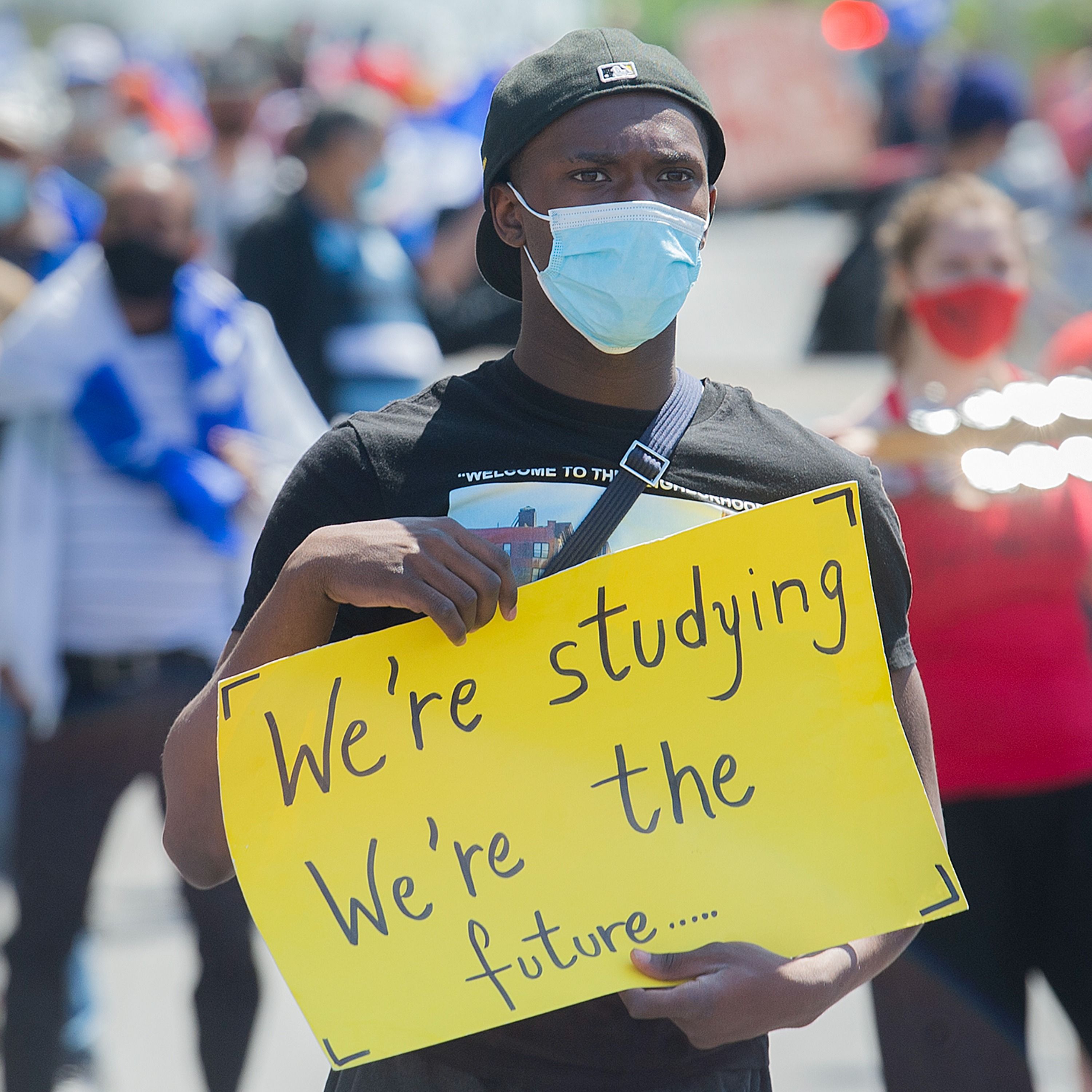
Across the globe, we're witnessing a rise in far-right movements. Just a few weeks ago, the far-right AfD party in Germany secured second place. This marks the first time a far-right party has gained this level of power in the country since the Second World War. Germany is not alone in this trend: Italy, Hungary, Finland, Slovakia, Czech Republic and Croatia are now led by far-right governments.It may come as no surprise that many of these new leaders are increasingly hostile toward universities.In India, under Prime Minister Modi, universities have the lowest academic freedom since the 1940s. In Brazil, former president Jair Bolsonaro claimed that public universities transform students into leftists, gays, drug addicts and perverts.Meanwhile in the United States, Vice President JD Vance has called universities the enemy for allegedly teaching that America is "an evil, racist nation.” President Donald Trump even signed an executive order demanding higher education institutions dismantle their DEI (diversity, equity, inclusion) programs. He’s also pulled federal funding from universities that allow "illegal protests”. The U.S. president has [also demanded that Columbia University's Middle Eastern, South Asian and African Studies Departments be independently reviewed.But, despite this hostility, universities — and students — have historically been springboards for change. It was student protests 25 years ago that helped lead to the downfall of apartheid in South Africa. More recently, in Bangladesh, student protests helped topple the country’s authoritarian leader. This past year, students across the world have raised public awareness of genocide in Gaza.Meanwhile, here in Canada, universities are facing financial pressure because of reductions in international student permits. This drop in revenue has caused alarming budget constraints at universities, revealing a deep reliance on international students as a revenue source.This has led to existential questions about our universities. With today’s world in crisis, what should the role of the university be? And why are our public universities so underfunded? And how can they continue to serve their communities?To help tackle these questions, we sat down with two education professors at the University of British Columbia to discuss the function of the university in a democracy — especially in times of crisis.In this, our final episode of Don't Call Me Resilient, we speak with Annette Henry — a Professor in the Department of Language and Literacy Education and cross-appointed to the Institute for Race, Gender, Sexuality and Social Justice. Her work examines race, class, language, gender and culture in education for Black students and educators in Canada.We also speak with Michelle Stack, an associate professor in the Department of Educational Studies whose work looks at educational policy, university rankings and equity and education.At a time when critical conversations in higher education are under attack worldwide, can Canadian universities rise to the challenge and be a force for good?Thank you for spending your time with us.You can find links and more resources related to this episode here. This episode was coproduced by Ateqah Khaki (DCMR associate producer), Marsa Sittheeamorn (student journalist) and Jennifer Moroz (consulting producer). Our sound engineer was Alain Derbez. Josh Mattson provided onsite sound assistance. Thank you to the Journalism Innovation Lab and its crew and the Social Science Research Council of Canada for their generous support.
Embed this episode
What this episode covers
It’s hard not to categorize our present global moment as a crisis. And just when we think things can't get worse — they do. At a time when critical conversations in higher education are under attack worldwide, can Canadian universities rise to the challenge and be a force for good?
Ready to play
The world is in crisis – what role should our universities be playing?
No transcript for this episode yet
Similar Episodes
No similar episodes found.
Similar Podcasts
No similar podcasts found.