
EPISODE · Jun 23, 2025 · 21 MIN
Theology & Fiqh Look At Trump’s Leadership
from SWISSCAST with Suhaib Webb · host SWISS Inc.
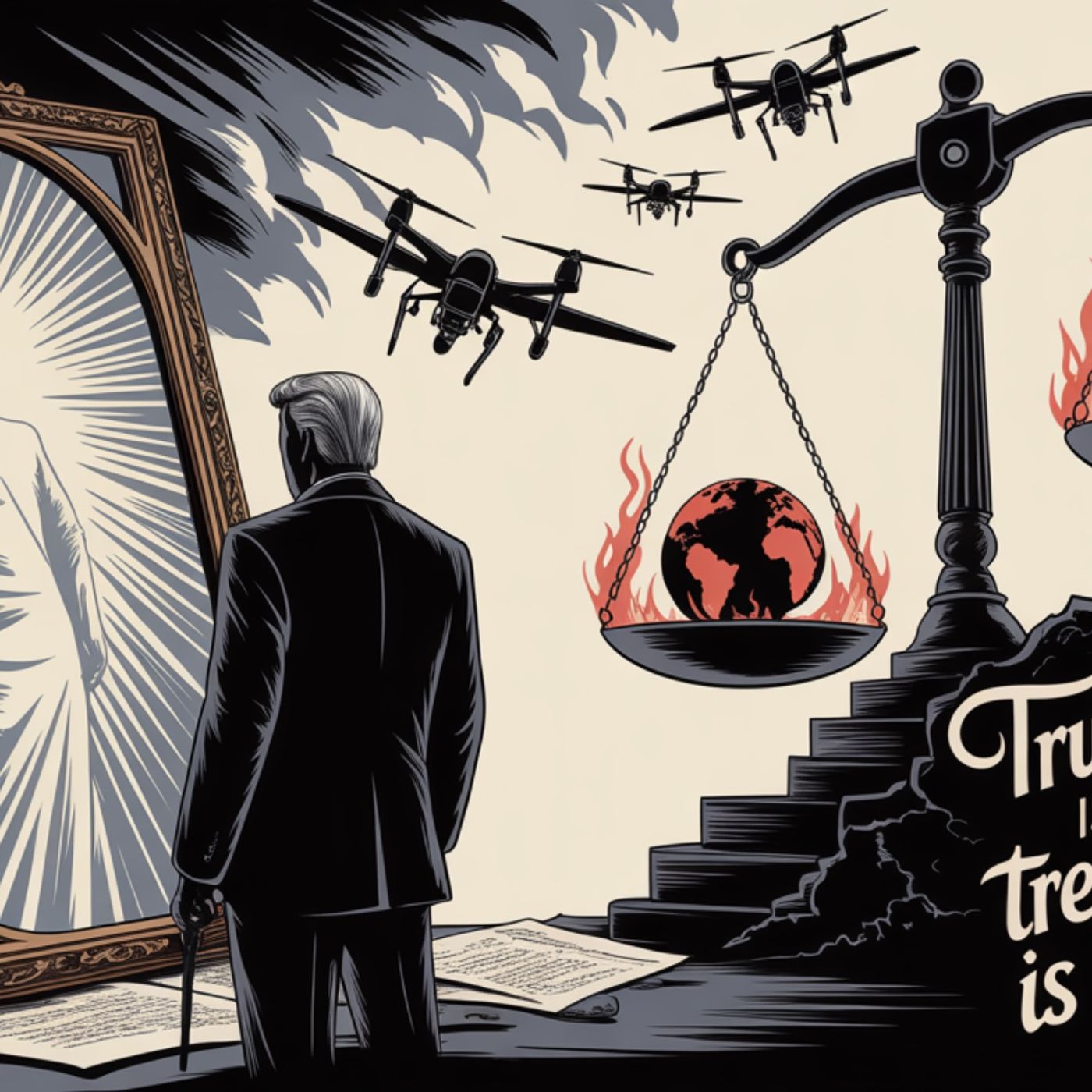
Donald Trump’s withdrawal from the Iran nuclear deal (JCPOA), his use of negotiations as a stalling tactic while enabling Israeli strikes, and his public lies — such as claiming he would “wait two weeks” before deciding on a military response, only to covertly authorize action — raise not merely political or strategic concerns, but deep moral and theological questions about the very nature of leadership. This concern is amplified by the fact that his base includes many devout Christians who find his bravado motivational and empowering. In this piece, I examine the theological implications of his dishonesty through the lens of ʿilm al-kalām (Islamic theology), and his deceit in negotiations with Iran through the lens of classical Islamic law—particularly in the Mālikī tradition.Prophetic Integrity An InspirationProphethood has always held a central place in Islamic theological reflection. Prophets are not followed because of coercion or wealth, but because of their balanced teaching, ethical clarity, and the miracles that support their truth. Their leadership inspires. Of all their qualities, moral integrity—ṣidq (truthfulness)—was considered so foundational that classical theologians listed it among the essential beliefs every Muslim must hold about a prophet. This quality was not merely ethical; it was epistemological. The Prophet’s truthfulness is the guarantee of the truth of revelation. As Fakhr al-Dīn al-Rāzī writes:“If the source of information is corrupt, then what follows is invalid.” (al-Maṭālib al-ʿĀliyah)Prophetic honesty, then, is not merely a virtue—it is a reflection of the ontological harmony between the Prophet and the Divine Will. His truth mirrors the covenant between him and God. And it was that truth that inspired, and it so clear, that it was logical. Al-Taftāzānī explains in Sharḥ al-ʿAqā’id:“If it were possible for a prophet to lie, even once, then belief in revelation would collapse — hence ṣidq is rationally and textually obligatory.”Treaties & DeceitMuslim political theorists extended this principle—though to a lesser degree—to rulers and heads of state. A leader devoid of truthfulness is epistemically unfit: fundamentally unreliable as a source of knowledge, judgment, or legitimate authority. His mirror becomes blurred, reflecting not strength or courage, but weak faith and a severed connection to divine responsibility. As Imām Abū Manṣūr al-Māturīdī taught, divine obligation (taklīf) assumes that those in power speak truthfully. When a ruler severs the bond between language and reality, he collapses the moral framework that makes obedience meaningful. The Muʿtazilī scholar ʿAbd al-Jabbār similarly argued that obedience to a dishonest leader is tantamount to obedience to falsehood—an ethical contradiction and theological impossibility. Shāh Waliyyullāh al-Dihlawī captures this brilliantly in Ḥujjatullāh al-Bāligha:“The Prophet’s amānah was not just personal but institutional, and imāms who come after must reflect it in justice, restraint, mercy, and dedication to the sharīʿah.”Shari’ah & SidqThis is not merely a theological matter. Classical Islamic law, especially within the Mālikī school, explicitly condemns ghadr (treachery)—even in war, and especially in the context of treaties. Al-Dardīr writes in al-Sharḥ al-Kabīr:“Treachery is not permitted — even with disbelievers.” — 2/196And more directly:“Fulfilling the treaty is obligatory. If the Imām fears treachery from the enemy, he may not break the treaty until he openly nullifies it [on equal terms].” — 2/196Breaking a treaty under the pretense of diplomacy, using negotiations to buy time for military aggression, or lying to the public while secretly escalating conflict—these are all classified as prohibited treachery in Islamic law. From this perspective, Trump’s conduct is not only a breach of political integrity, but a moral betrayal and legal transgression. In Islam, truth is not optional in leadership. Without it, both revelation and governance lose their claim to legitimacy. Sad, his most passionate supporters claim to do so in name of faith and integrity.As we move forward in an increasingly unstable world, being known as a nation whose leaders lie will only further erode the trust required to heal a fractured global order. Trumping others is not the way of the Prophets. It is the opposite.imam Suhaib Webb,
Embed this episode
What this episode covers
Donald Trump’s withdrawal from the Iran nuclear deal (JCPOA), his use of negotiations as a stalling tactic while enabling Israeli strikes, and his public lies — such as claiming he would “wait two weeks” before deciding on a military response, only to covertly authorize action — raise not merely political or strategic concerns, but deep moral and theological questions about the very nature of leadership. This concern is amplified by the fact that his base includes many devout Christians who find his bravado motivational and empowering. In this piece, I examine the theological implications of his dishonesty through the lens of ʿilm al-kalām (Islamic theology), and his deceit in negotiations with Iran through the lens of classical Islamic law—particularly in the Mālikī tradition.
NOW PLAYING
Theology & Fiqh Look At Trump’s Leadership
No transcript for this episode yet
Similar Episodes
No similar episodes found.
Similar Podcasts
No similar podcasts found.