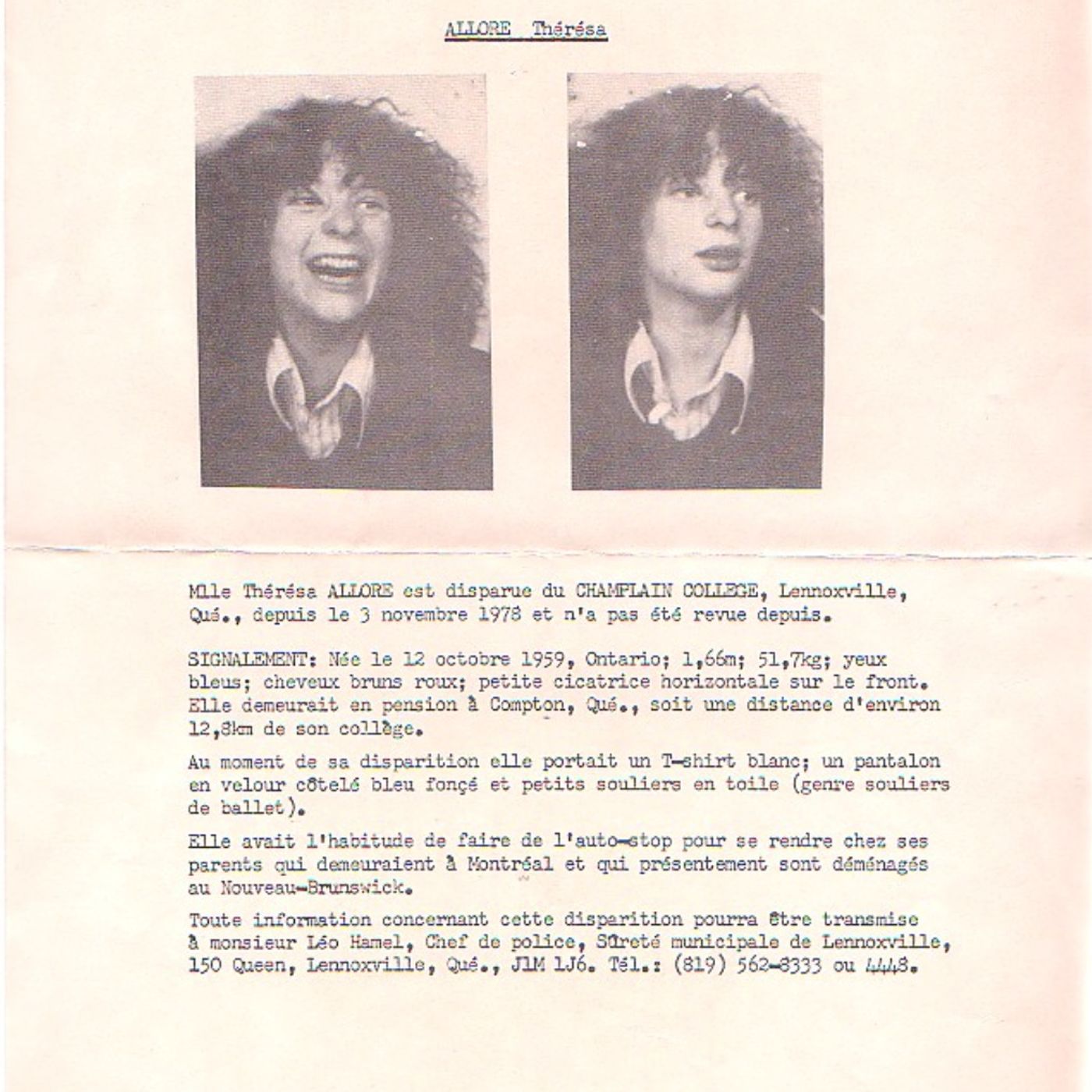
One Christmas, though it might have been for a birthday. My sister Theresa asked for Rolling Stones record as a gift. My parents grew up in the age of crooners, like Tagli or Mel Torme. They tolerated acts like the Beatles.
They had little patience for the bad boy antics of the stones, but she begged them for a stone's record. So reluctantly, my parents bought her a copy that holiday of their most recent release, Goats Head Soup. We lived in a very small house in the Montreal suburbs. We were always running into each other.
And my bedroom was directly adjacent to Theresa's. And I will never forget my mother's instant outrage at Mick Jagger's tinny voice, pressing the limits of an RCA, portable stereo unit, singing star, star repeatedly, relentlessly, over and over to the shocking outrage of every suburban parent in the absolute delight of every 70s teenager. There was some kind of exchange like you get that filth out of this house right now and Theresa, goading into de Fiance. What, what, it's just a song.
Back in the laugh at it today, it was high drama in the mid 1970s for a young boy. I recently asked my mother if she recalled this event in Mother's and her 80s now. So she didn't, but she did say, I never cared for Mick Jagger and I never liked the Rolling Stones. This is Who Killed Theresa.
I got there, she yelled, she yelled, the nearest truck, where's the where's the down? I would like you to stop thinking of the deaths of Louise Kennera, a men on debate and Theresa Lord as connected cases. I'll say that again. I would like you to stop thinking of these three cases as connected, even though I'm the one who's probably been the most vocal about championing this theory.
The basis of that argument with something that was suggested by criminologist Kim Rosmo when he recommended, based on geographic proximity of the crimes, at Quebec police, look at the cases together. It was supported by another criminologist who stated that it is statistically improbable that a serial killer did not commit three similar murders in the space of 19 months in the Eastern townships. These are just theories, hypotheses. Today the Septated Quebec recognize Kim Rosmo as the godfather of geographic profiling, as it was put to me.
And many of their investigators are trained and certified in geographic profiling techniques. In the early 2000s, I asked the investigative police force on all three of these cases, the Septated Quebec, to consider this theory. We didn't say that it was confirmed. They're the experts, so we asked them to look into it.
And they did. Over the years, at least two criminal profilers looked at all three cases. In the SQs words, you made us do our homework. I will also say that there was a time when it was expedient to connect the cases.
Three is better than one. It attracts more media interests. You get more people's attention. Perhaps people will talk about it and come forward with information.
The problem with this approach is the same problem with the quote, the drug overdose theory held by the original Sarté de Quebec investigator, Arroc Goodreaux, about my sister, Theresa's death. When people hear too much about a theory, they may shut down. They hear drug overdose and they think, well, my piece of information must be irrelevant because the police are saying drugs. Over emphasizing a theory of a serial killer can have exactly the same effect.
People with legitimate information may no longer come forward, thinking, well, I knew this guy or this thing happened. It was kind of weird, but they are now saying, it's a serial killer, so I must be wrong. And I will add that in my experience, overall, involving the media is not a very effective tool for engagement and soliciting a response from people. It's a very static, passive approach.
People tend to simply receive it and then move on with things. That's a terrible thing, and now I'm going to change the channel. You don't engage with the information. So more and more, I'm finding soliciting the media, sucking up to the massing them to do stories, has proven to be pretty much useless.
That's why we're having this conversation over several types of platforms, frankly, a podcast on YouTube, on social media, in various channels. We are having this conversation. Over emphasis of any single theory can be damaging. It's one of the reasons that police are always cautious in committing to theories how they choose their words may sound at times like pussy footing, that they may be wishy-washy.
But what they're actually doing is protecting the integrity of an investigation. I would also like you to stop thinking of a dead sure-brooke offender named Luke Gregoir as the number one suspect in my sister's murder. That too is just a theory. To keep repeating that idea can have the same effect as mentioned just before.
People with credible information may think there's no longer a need to come forward. They shut down and they say nothing. And I say this because since the publication of the book wishy were here, a better suspect or suspects have come to light a suspect that both myself and the Septaege-Kabek agree is very credible and worth pursuing. The suspect was developed independently by myself.
Any SQ, I was doing some work. They were doing some work. And when we came together and compared notes, we found that we had both been chasing the same suspect. It is somewhat remarkably similar to the profile of Luke Gregoir.
They lived and were involved in the criminal activity that took place along King and Wellington in Sherbrooke Quebec in the late 1970s, early 1980s. They had a long history of arrest services. And by this, I guess I say, ideas evolve. And so as I suggested in the post story, we did the folia.
I would like you to consider another theory. Not of a serial killer, but the idea that all sorts of people were getting away with some very bad things, including murder in the Sherbrooke area in the 1970s. And we will get to Manon-Toubaix and Louise Camara at another time, but very shortly. And for the moment, I would like to give an overview update of my sister's case.
Keep in mind that we said in folia that the Quebec police received a phone call from a witness describing something they observed in the fall of 1978. The person was driving in the area of Lennoxville Compton. They observed a vehicle with three individuals inside, chasing a young woman who was running down the road. So consider what I'm about to say, keeping that in mind.
And perhaps I'll drop one other idea in there. In the matter of what we talked about last time in the night of the long knives, consider this. If members of Wiker gangs, such as the Jitans, could be acquitted of murders that occurred on the main streets of Sherbrooke, in broad view of the public, what else could they have gotten away with? So these are just the facts.
I'm not going to engage in speculation. There's many other things that have been talked about. But I just want to give you a reset with the facts. Theresa had been a student at Champlain Regional College, a ségépth in Lennoxville, Quebec, just south of the city of Sherbrooke for about eight weeks when she disappeared on Friday, November 3, 1978.
At the time of her disappearance, her hair was long. It was frizzy. She had recently gotten a perm, so reddish-brown tight curls, as was the fashion at that time. She was wearing dark slacks, a t-shirt, and a long beige sweater, almost like a coat.
And it was warm that Friday in the townships. And this accounts for the clothing she chose to wear for school that day. Her classes were in Lennoxville, but the student dorm where she lived was in the village of Compton at Kingshall, approximately 10 kilometers south of the Champlain campus. About 200 students lived there.
From what we know, that Friday was a typical school day. She took a school bus in Lennoxville. She had classes that morning. She saw friends at lunchtime in the school dining area.
At lunch, she told friends that she intended to return to Compton that evening and do some homework. Around 6 p.m., a friend on one of the buses returned to Compton and saw a tree sustaining on campus. So she missed the six o'clock bus. The next bus would not arrive until about 11 p.m.
And that's the last sighting of Theresa Lour, around 6 p.m., Friday, November 3, 1978, in Lennoxville. She wasn't noticed missing until about the following midweek. She wasn't reported as missing until the following Friday, November 10. The first articles to hit the newspapers didn't appear until about 12 days later on Tuesday, November 14.
She was missing all that winter. Her body wasn't found until after the spring thought on Good Friday, April 13, 1979. Musgrat Trapper found Theresa in a small body of water on the edge of a cornfield, about 1 and 1 half kilometers between Compton and Compton Station, not very far from the school dorm. She's at the base of a valley that runs between these two villages.
And I've online, threeceller.com, T-H-E-R-E-S-A-A-L-O-R-E, point com. I've posted a lot of photos, including the original missing persons poster, with what she looked at the time. Some maps giving you the distances between King's Hall and Lennoxville, and between Compton, King's Hall, and Compton Station, a Latrebune article from April 14, 1979, with a really good photo of the area where she was found at the time. And it's somewhat important, because that area has changed a lot.
Well, not so much, but there's a lot of confusion of the little bridge over this body of water, whether it's just thrown off the bridge, blah, blah, blah. But that bridge looks very different today than it does then. It did then. It's like a concrete bridge with metal dowel rods.
Probably the most important thing is the condition of the road, and a lot of speculation over the years was the road gravel, and it was not. It was a paved road. And you can clearly see what you can see. I'm going to tell you what you can see.
I omitted the photo of my sister's body in the water, because enough is enough. If you want to find that photo, you can find that photo. I think in these photos, there's more telling things of the environment that I'm not going to talk about there for you to decide what's important about them or not. So when Theresa was found, she was in her underwear.
Clothing was never found. A garbage bag of clothing was found by the side of the road near where her body was found. It was women's clothing, but not Theresa's. Early in her missing persons investigation, two hunters came forward to say that they saw clothing in the woods near Menfer Magog on the morning of Saturday, November 4, 1978, dark pants and a t-shirt.
So the day after she went missing, curiously about 500 meters from the location of where Louise Cameron was found the previous year. But I want to state that police went to the site, the hunters described, and they never found the clothing. OK, got it. Theresa was lying face down in the water.
The coroner arrived at the scene and noted marks of strangulation on her neck. About a week after the body was recovered, Theresa's wallet was found. At the side of the road, about 16 kilometers away along a shamanic Donald. Shamanic Donald is a back entrance to the city of Sherbrooke and not far from Honexville.
The wallet contained her papers and identification. There was no money in the wallet. Because at the length of time, the body was in the water five and a half months, the autopsy results proved inconclusive. For some reason, the marks of strangulation observed by the Sherbrooke corner were not detected by the pathologists who conducted the autopsy in Montreal.
They were able to conduct a full psychological analysis and concluded there were no drugs in her system at the time of death. And the final coroner's verdict, submitted in 1983, made a determination of violent death of undetermined means. Real me this. What is the one piece of evidence that tells you, Theresa, was the victim of a crime?
So this question was put to me by the start to take a back recently, and I answered without hesitation, the wallet. The disposal of the wallet 16 kilometers away tells you that this wasn't suicide or drug overdose or accidental death. The single most damaging thing to the investigation was SQ Detective Rosh Gudrow going on national television, as he did in 2005, the W5 program, and stating, I'm still convinced of a drug overdose. More recently, SQ investigators have stated, rather politely, it was not cautious to have said that.
They elaborated that in criminal investigations, you follow the evidence, and they had never heard of a police investigator going against the evidence that determined no drugs in Theresa's system. And I'll go further. In 2003, the Septate Quebec had the toxicological evidence retested with modern techniques. And again, no drugs.
And this time, a new finding, no alcohol as well. Finally, I'll just give you a reminder that when Rosh Gudrow was asked how he accounted for the wallet being found 16 kilometers away from the victim, his response was that wild animals could have carried it there. We had some back and forth about this, about the no drugs. They said, yeah, but testing a body five and a half months later, who knows?
And my response was, they had no hesitation about being inconclusive about the mode of death, violent death of undetermined means. So if that were the case, then why not? If there was some matter of doubt about drugs, toxicologically, then why not stay that? Yeah, no.
It says no drugs. It doesn't say we can't tell if there's drugs. So I throw that idea down the shitter immediately. It's their professional response.
If the main investigative tool is the evidence, this is the evidence. And that's what we're going to use. The other interesting thing that is more recent is the no alcohol. So there's been speculation over the years about if she's the last seen in the Linux field, if she go to the lion pub and have a drink.
Well, she might have gone to the lion pub, but she certainly didn't have a drink. Did she go to Entre de restaurant in Compton, where she might have been on her way to Entre de, but she certainly didn't have a drink there. I'm going to keep this short and sweet because it's a lot of information. And I want it out there, and I want people to think about it.
The official position of the Sartiti Quebec, regarding Theresa's case, is in line with what they have posted on their cold case website. They considered her death a crime, it says. And it also states all the leads resulting from the investigation were and continue to be studied. And in a recent conversation with the Sartiti Quebec, they elaborated on this position.
And this is a summary of how I would characterize their thinking around this. So these are my words around the way it's been expressed by Tumi, by the Sartiti Quebec. Murder is the main hypothesis. Suicide is not.
Drugs is not. A victim of a crime is the hypothesis. Because of the wallet, sexual murder could also be a consideration. If strangulation is the mode of the murder, then is it hands or a ligature?
Was she strangled from the front or the back? There was a lot of discussion around that about the personal nature of front or back. From the front is more personal from the back. Take that stuff with a pound of salt, but yeah, sure.
And that all these things need to be considered. And so for now, what they say is if you're talking about odds in percentages, about 75% certain the truth was the victim of a crime. And there's a hold back of about 25% because we don't know. There could be other information that we just don't know.
And for myself, I would say that that's probably, for the first time, that my thinking is exactly aligned with the Sartiti Quebec. And now that you know all this information or have been reintroduced to this information, the circumstances of the case, the thoughts of the police, you know that there is this aspect, a good suspect, consider in this matter. You also know that the Quebec police received a phone call from a witness documenting something they observed in the fall of 1978, person driving in the area. They see three individuals move, possibly four, a group of individuals in a car chasing a young woman running down the road.
Don't become too attached to any of that information, hold back 25%, but bear it in mind. And finally, with all of this to consider, I would simply ask the public, and particularly the people from the Sherbrooke area, to cast their thoughts back to the autumn of 1978. And I would ask them, what do you remember? This is who killed Theresa.
If you have information that would help solve crime, you can contact the Sartiti Quebec at 1-800-659-4264 or by email at cic at sartiti.qc.c. You can just go to their website and get it done there. If you search on Sartiti Quebec and call the case, it'll get you where you're supposed to be. It's enough for today.
This has been Who Killed Theresa. I'm your host, John Allure. Have yourselves a great, great day.