
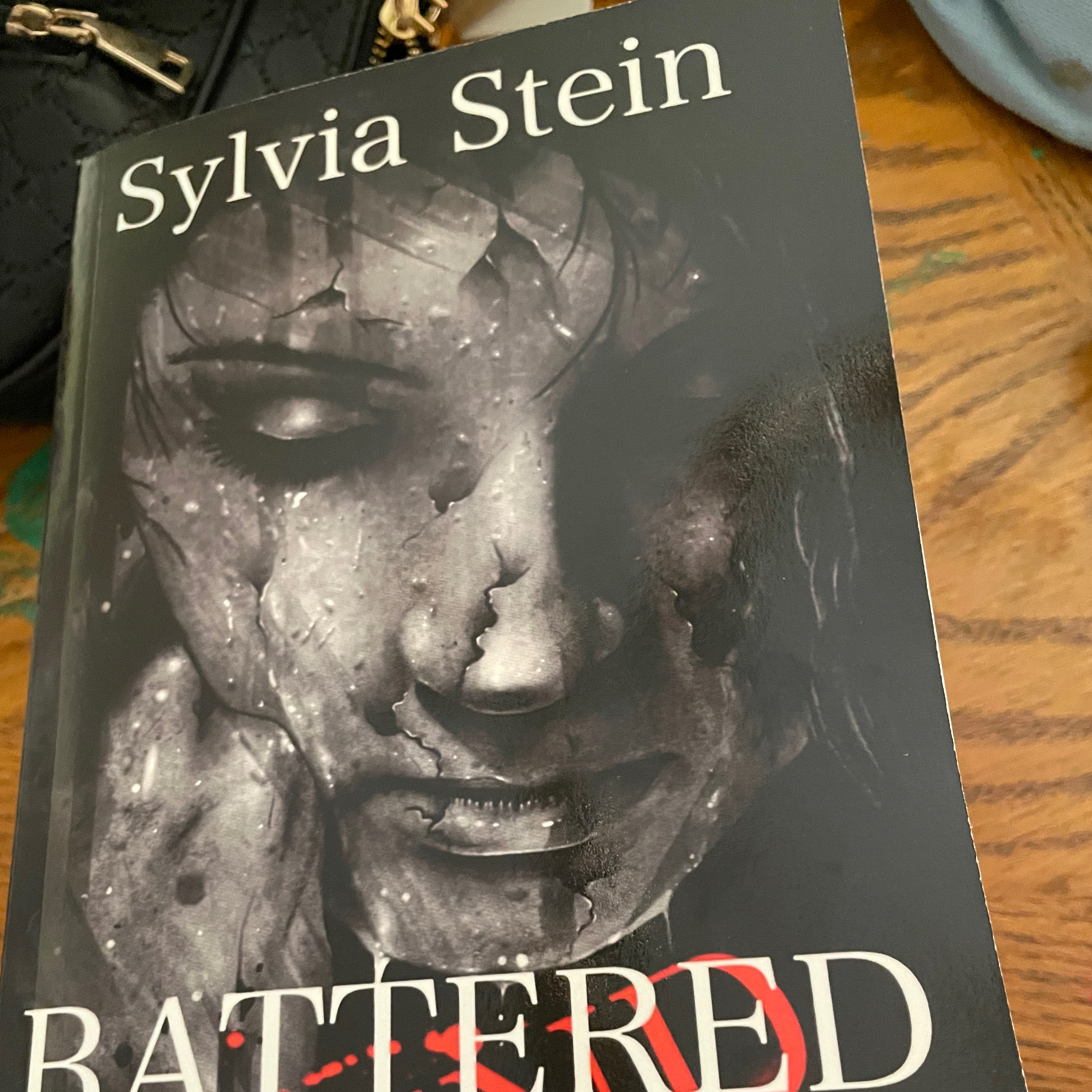
Welcome to the Daily Whistlestein Heroine Anchor. Well, happy happy Tuesday everyone. This is Sylvia from the Daily Whistlestein Heroine Anchor, and today I have a pleasure of introducing you with one of the amazing and talented authors and amazing friends from Stitch Mile Publications, James Matthew Byers. He is joining us today.
I'm going to have him introduce himself, and thank you. Thank you so much for being here today, James. You are very, very welcome, Miss Sylvia Stein. Yes, I am James Matthew Byers, also known to the world now as the Doc Barge.
You may have seen me on social media with my green robe, so I'm sure as Sylvia and I chat today, we can learn a little bit about the robes and about what's going on in my writing world. Yes, so excited. And just to sound that out here, give you a shout out. This is what we think.
Hold on. Big tears to you, James. We're joining us here on the Daily Whistlestein. I'm so happy to have you here.
It's been a while, so first and foremost, tell everyone about yourself, those that already know you and those new listeners that might be tuning in today. Awesome. Well, I am a poet, primarily. I consider myself a modern-day bard.
I tell stories and rhyme, I'm an artist. I do my own artwork for Stitch Mile. And I'm also their Poetry acquisitions editor. I work very closely with Larissa Bennett, who's over the department, who's my editor as well.
And it's phenomenal in everything she does. Of course, everyone at Stitch Mile is fantastic. Don L and Jeff and Lisa. It's just such a beautiful family to work with.
So I've been writing my whole life when I was in kindergarten. One of my favorite memories my mom has is that the teacher called her to check on me because I didn't want to go out and play a recess. Instead, I wanted to draw pictures and write stories as early as five years old. So writing and drawing have always just been intrinsic inside of me.
And I'm really thankful it took a long road to get where we are, but it's worth the wait. I'll be 44 in October. And I'm just now at the cusp of tasting a little success. But through patience and perseverance, you can achieve your dreams.
Yes, you can. And one person that can do it is you, James. You've been, like I said, shout out to everyone. It's Stitch Mile publications.
But I wanted to say one person that can do it as yourself because you have an amazing, amazing repertoire. You want to tell us more about that, James? Sure. OK, I have as far as things that I've got out right now and things that I've done, my debut at Stitch Mile is a rhyming version of Beowulf, the ancient Anglo-Saxon poem.
It's called Beowulf, the Midgard Epic. And it's written in a rhyming, I am a tetrameter. I stepped up to a form that was very sing song because of the oral tradition of that ancient poem. I have the pleasure of winning numerous awards and to the Alabama State Poetry Society.
And back in the fall, I was really excited. I won first place in the actual ASPS prize. And I came in first in the Andy Smith Memorial prize. And it was for a poem called The Questing Beasts for Camelot.
And I'm actually one of my projects that's a work in process right now is an R3 in legend based on the Welsh mythologies where it began, that's happening. I'm working on a leprechaun story, which I'm illustrating. And in Kevin Kennedy Projections, I've got several poems and his issues. So, you know, I'm in the Weird Book 35.
I have a poem called The Dinner Five and that magazine online. It's not really a fantasy quarterly. I have The Washer at the Forum, a poem published there. And then it grieves Angel, Charles Christian, as the host of that online magazine.
And it's fantastic. And I have the Phantom Queen, the Morgan. I have a poem called Conundrum of the Irish Sea about her at that season. So, you know, just lots and lots of things have happened.
It's the last time you and I talked to Sylvia. Back then I was working on entering some stuff for contest, but I have a poem story called The Secrets that we keep that came out in Stitch Smiles, Mostars vs. Zombies Volume One. So kind of bail wolf in them, MBZ, kind of kickstarted my career.
And only two years later, you know, I'm just having the time in my life with this. You know, it's true. Once you get your foot in the door, you get that respect. It doesn't mean that somebody who's not got their foot in the door has any less phenomenal of a poet or an author or an artist, but it is true.
You know, when you pay your dues and you get in there, it makes it a lot easier, you know, to get yourself recognized. And again, confidence and perseverance. You just don't give up. And I'm just thrilled to have the things out on the market that I have right now.
Yes, no, exactly. In confidence, you touched on quite a bit of things today. Like you started when we first did an interview, which was on my other podcast, now we're here on anchor. And to see it come full circle with, like you said, confidence for yourself and perseverance, which is very, very, it's a word that I love because it says a lot about you, about all the work you put in, all the effort that you've given.
If you have not checked out the what was it the, you mentioned a quite a bit of the poetry, but the epic poem that you did on the Beowope, you call it the Beowope the Epic, what was it again? Beowope the Midgard Epic. The Midgard Epic. And if you read Beowope back in school, and most of us did, but the way that James takes this book, you know, this book and does his own and the way he rhymes in there, that's like a work in itself.
Obviously, you're a great teacher because I read it, I loved it. And if you have not checked it out, you need to. But all these enumerous poems that you've written and you, they're coming out with, it's just, for me, it's like, wow, you never cease to amaze me, James, and what you do and what you put in the effort that you put into everything. But I wanted to ask on that, touching up on all of that, what, tell us about your books or your book, and in this case, books or poems that you come up with, what inspires those?
Like, how do you come up with those so you can share? Yes, absolutely. Well, you know, like the concept behind, in the very near future, I have my first poetry compilation coming out called Voyers and Vultures. And it's a combination of poetry, but it also has, the end is a story poem, which is called Voyers and Vultures, and it actually has some characters that I've had since I was around 15 years old and they're finally seen the light of day in a book.
And you'll notice there's a lot of cool things for promotion that I'm putting on social media. The character Bengala, he's a tiger guy in a green road, which is very similar to the one I wear as a dart bar, which I've got something really cool that's kind of, I'm gonna share it here since we're on, for the first time, I have a tiger mask and paws so that I can dress up like Bengala from Voyers and Vultures, and I'm gonna do readings as a character from my book, which I am so thrilled about that and all the stuff stitch my lets me do to promote. And the story is really, and it actually ties into the King Arthur story I mentioned. And so like inspiration for me comes from life.
Christy Goldman, when I went to California last week to a book signing up for her new book before the storm, I asked what her news was and she said, she collects experience and there's not a better way that you could have something inspired than the experiences of your life. And so when I was on the airplane flying home, I wrote some poetry about a baby being rocked and a little boy who turned around and kept putting his hand on my head. So experience, sometimes it's through people giving me prompts. They'll say, you know, I had someone tell me, why don't you write a point about a green shoe, not a pair of shoes, just a green shoe from that one, one little mention, I came up with this point called the green shoe and it started the leprechaun story I mentioned and I'm doing a series of art going along with it.
So, you know, it's gonna be fantastic, you know, so I look for any, you know, life's experiences, people who I interact with, if it's, and of course, one of my main inspirations, you know, is definitely old folklore and mythology. I go and research, you know, I have a master's in English and literature and I'm a huge fan of the classics, you know, all the old school Shakespeare, John Donne, you know, we invite you to the huge influence and the writers like J.R.R. Tolkien, C.S. Lewis, and of course, more modern writers like Christy Golden, who she just, I can't rave on her enough, Ed Greenwood, who does Forgotten Realms, you know, and Robert Frost, of course, Edgar Allen Poe.
So, you know, I draw experience from other creatives, modern contemporaries, you know, interacting with guys like Jeff Brown and Brianna Robertson, you know, and Laurie Lynch Fontaine is, you know, just all these different friends that I have that are writers, Ash Hartwell, you know, all the many people that we, you know, you know, they decor, I could go on and on, all these great people, the people I have at Alabama State Poetry Society, human beings are, to me, the greatest inspiring elements of life because they are life itself. And when you meet people, and there's always something about a person that is beautiful and is gorgeous and just brings something out in the nature. And of course, my personal absolute top inspiration is from my muse. I have a muse who inspires me and lights on my shoulder and whispers things in my ears and that inspiration, just as the poets of old, like Plato cited an actual poet who was the tenth muse and said that she was the greatest muse of all.
So I even recently wrote a poem called O to Sapho. And, you know, so I'm very strongly a believer in muses and those types of inspirations. So I say look around you and if you're walking down the street, don't ignore that daily line, you're going through the crack of the concrete because that moment and time could be an inspiration that you didn't know you needed to go in and finish that piece of art, to finish that last chapter, to get that first line of a poem started. Exactly, exactly, sorry about that.
I have, sorry I had to step up a bit, you might have heard me moving around. I have children in the house, I try not to have noise. Occasionally you'll hear that feedback. So I do.
I just kind of had to go quiet, but can you repeat that last part, because I heard about your muse, but that last section that you just said. Sure, sure, absolutely. I was saying, you know, one of the main things I can say is when you're walking down the street, if you see a dandelion going through the crack of the concrete, stop, lean down and give it a good glance over because, you know, that's nature and it's a miracle because through that hard concrete, here's a living thing that is popped up. That could be that moment of inspiration that as an artist you needed to go and do the final breaststroke on your masterpiece.
It could be what you needed to complete that chapter that you've been struggling a little bit of light from that dandelion could be the beginnings of your most beautiful piece of poetry ever. Don't rush through life. Life is too precious. There's a singer named Brian Kennedy.
I mean, he's been Belfast, Ireland, and he has a song called, get on with your short life, your sweet precious time. And it's so true, life is too short to not take time to recognize the beauty of what's around you. Exactly, like stop and smell the roses, right? Yes.
Because people, that's one thing I've tried to work on lately. Stop and take your time, don't be in a rush because then you'll miss all the beauty of it. Absolutely. Exactly, and I love what you, about the dandelion, I love that metaphor that you use, would that be correct?
Because you're, we're both, I have a master's myself but you seem to know more about stuff, I don't want to see the wrong thing, but I think you use that, that would be a more of a metaphor analogy, correct? Yes, you're correct, absolutely. I just want to make sure, because I'm like, I have an English very precise professor here with me today, so I don't want to get that wrong. But I was going to say, what can you share about your character's scenes?
I know you talked about your writing, of course you can share more about that, but where do your characters come from? Like, can you maybe name a few of your characters that you love writing for? Oh my gosh, yes, oh, this is just one question. You know, and honestly, most of my characters, although typically they are of the fantastical sort, and you know, some do definitely come, you know, from mythology and stuff, but the ones that are my own, 99% of the time, it's not that I just, you know, came up with this random, you know, character, they're based on people in my real life.
Sometimes, you know, and I'm notorious for infusing myself into characters, just because, you know, who better to write about than yourself, and I'm not saying that from an egotistical point of view, I'm saying that from a humanist point of view. As a human being, you know yourself, of course, better, you know, than you know, you do anyone else. And I love to kind of take the good and the bad of me, you know, I can make myself a villain, I can make myself a neutral character, I can make myself a hero, or I'll show different emotions through that way. But like, in Voyers and Vultures, for example, you know, the character being gala, then I'm dressing up as, a lot of his attributes are kind of loosely based on kind of me and the combination of another friend.
And then, Bultures, she's based on a good friend of mine. And then, in the Leprechaun story, Goldie McTabern and Maureen O'Connor, the two main protagonists, are based on real people. There's a dwarf named Adilish, who's in the Arthurian legend, and although he's from Welsh mythology, he's also based on someone I know. And likewise, you know, I like to bring in, and my best friends have got him, Matthew Leachman, and he is in every story I write as well as a different character.
Sometimes, it's almost like a game I play, let my friends read my stuff, because they'll be the first ones, typically who were my beta readers, can you find yourself in the story? It's like, where's Waldo? And they're like, where am I in this one? Where am I in this one?
You know, so it's really fun to aim to kind of play, you know, and sometimes, you know, I do, you know, be kind of anonymous, what I call the anonymous character. I love bird watching, I love going out in nature, I know all the indigenous species, whether it's fungus, plant, or animal, you know, insect, and the state I live in. I also am a people watcher. And I love to kind of, you know, one thing that's always been funny, and I've done this since I was in middle school, just because I've been writing literally my whole life, you know, love to what I call the shadow in the wall effect, you see this person, and you see their shadow, and you build up in little clay constructions in your mind, all these details about who or what he or she is, what are they like, are they hurting inside, are they happy?
Are they an all-star jock, or are they a nerd, or are they an academic phenomenon, you know, and kind of taking a person, and without knowing that person, like I said, they become a blank slate that you can kind of model ideas about. And so those are kind of like brainstorming moments for me, sitting at a bus stop or on a bus or on a train or on a plane like I did coming back from California, you know, in a public place. So characters for me represent real time people that are in my life, really members, close friends, you know, they represent the unknown. And then sometimes again, I just, you know, get up in the morning and I think, oh man, if I make this monster guy with these cool tusks coming out in the snout and I do the name Grobar, you know, he might make a really cool villain in a story, I'll do a little sketch, kind of draw him out, take, put down some notes, but, you know, as far as outlining this concern, you know, I've never been a formalist when it comes to that structural medium.
I'm formalist when it comes to poetry. So, you know, I do on longer projects, you know, do notes to dictate timelines and chronologies and things like that, but, you know, I'm not wanting to just sit down and write out verbatim, what's happening in the story. I've always just kind of let my stories lead me where they want me to be led. Exactly, and that's the way I was gonna do say next in that, do you have a writing process?
So, you're mostly, you're writing processes and you're poetry, not necessarily your prose, correct? Correct, you know, I, another good author friend of mine who's fantastic, her name is Denita K. Paul. In 2009, she convinced me to rewrite the story I had since I was 15 in prose and I did, and you know, I've gone back into it since then so many times and had so many revisions and I still haven't, I call it my, it's my trunk novel is what I call it.
That's, you know, that one novel that I've kind of had off and on my whole life that has never been published, but, you know, as much as I love it, I'm actually, after I finished those projects, I mentioned, you know, I've got Voyage of Vultures and I've got, it's called Beyond the, it's She's the Shadow's Art to Beyond the Blade and then I've got the Leprechaun Tales and then I'm gonna take the story that I've had all these years since I was 15 and, you know, even with Beowulf, the thing I've done with Stitch Smollet, I love that Lisa's let me do, all these characters interconnect in some capacity. You'll find them crossing over very much like how Disney Cinematic Universe with the Marvel Universe, how they're standing on movies, but they're all a story and then they all come together in the Avengers movies and I've always been a fan of sheer universes because Star Wars is that way, Star Trek is that way. And so my stories all have a connective tissue and you'll find in Voyage of Vultures, even the poetry connects to certain characters, you know, so, you know, just the way that kind of works out. So definitely, it was a lot more difficult for me to try to write a prose novel than the rhyming because for some reason, I think in rhyme and when I tell stories and it goes back to like being a bard, you know, or a show from the old days, a scholar from the Norse times that would tell me, well, you know, it's more about the rhythm.
And I just, I think I like the challenge because it is an extreme challenge to have your synod structure grammatically sound to not force rhymes, to not break lines and to keep everything grammatically solid, but tell a story in rhyme. So I guess it's also that challenge, you know, and I'm much more, in the last year, I've kind of branched out and I've been practicing, I've been writing a few short stories here and there and I've, you know, I've dabbled into free verse with poetry and I've found that, you know, I was really excited the first time I ever wrote a free verse poem and I entered it in the contest for Alabama State Poetry Society, actually the writer's anonymous mid-winner, I came in second place and I was thrilled to death because I was thinking, oh well, I've never done one of these, it's not going to do anything. So I've learned to have confidence, yet again, in all mediums of poetry, you know, but definitely I'm much more of a verse man than a prose man. Oh, verse man and then a prose man, that's a great way of looking at it.
Now that, now that you touched up a little bit on the, because you have a kind of another character that you portray online, the dark bar, right? Is this, is it, did I say that correctly? You did, the dark bar. And now can you hear about that?
Yes, you know, so, you know, brain storming back, this came about November of the previous year, November of 2017, you know, just trying to come up with something that would be fun. I've done a lot of research on Edgar Allan Poe. He's definitely one of my favorites of all time. You know, Poe used to go around and kind of, and not necessarily costume, but in darker clothing, with candles and props, and he would do poetry readings.
It was very theatrical, and it was almost like going to a music concert. So I thought, you know, my style of writing, although I've branched out and I do, you know, I'm not really genre trapped, you would say. I'm not just dark horror fantasy sci-fi, you know, I do all manners of poetry. Drewett has always been a symbol of nature, and they were the ones who told stories of the Celtic realm.
And of course, you had the Shopes and the Scalds and Nordic times. So I thought, you know, if I called myself the dark bar, dress up in this robe, I've got a mask that I can wear at times, it would just be something different and something unique. And I've had such a grandiose response to it. You know, so it's really, you know, it's one of my marketing tools, I guess you could say, I wanted to do something to bring back poetry in a way that I've got these venues coming up this summer where I'll be dressed and wearing the robe and doing poetry readings as, you know, I kind of alter my voice and I'm like, is that James Matthew Biles, the dog mall?
You know, and there's a Twitter, there's a group called at Read Me, Speak Me. And every week, they pick a different poet. I have one of my poems coming up in three weeks from now. And all these different poets read your poem, they either recorded or they do a video.
I've started working with them and then, you know, every week I do it with my robe on. So that's, you know, gets me out there on the media as well. And of course, you know, I did a lot of promo shots. My brother, Josh, works with a bit smiling, does a lot of videoing for me.
And he's my personal photographer. And it was just a fun way to kind of bring theater back to the poetry. And there's a lot of slam poetry, you know, that people go and they read and they have contests. But I'm even taking it to another level where it's theatrical.
In fact, first week in August, we're a bit smiling, we're going to Scares to Care in Virginia and we're all going to wear costumes. And so, and by then, both of you will be out and I'm going to bring them to the gala mask. So part of it will be me as a dark bird, part of it will be walking around as a tiger, you know? Because hey, who did you see out there doing that kind of stuff?
You know, I'm really excited that I was kind of bringing it first, you know? Exactly, it's like theater is, it's kind of like when you see people that do Broadway and theater is very theatrical. It's good to bring that theatrics to poetry because it's something like you said, you're more of a verse man than a prose man, right? Yes.
And what I love also is that you do so many videos. I can't tell you how many times I love watching you a reap at Grahlin Poe and do all these different from Casa Byers. I remember you doing this. I love watching you do those because it brings back the days of, like you said, at Grahlin Poe, the Shakespeare, you know, back, William Shakespeare, all those things that, you know, the literary part of why we write, you know, you bring it to light in your poetry and your prose and that's a different type of angle.
In my, like you said, marketing tools, like the dark bar is a marketing tool and you want to bring back more fun to poetry and exciting stuff. And for me, it's also a great way to just get connect with other readers, correct? Yes, absolutely. Exactly.
It's just wonderful. If you guys haven't seen those, do you have like a website or something where they can check out your videos? James? Absolutely, you know, on Facebook, I have my page, James Matthew Byers, The Dark Barred and all of the videos are all uploaded there.
And if you follow me on Twitter, which is at Matt Byers 40, there you'll see the new stuff where I'm actually reading in the road, you know, I had some health issues last toward the end of the summer, had to stop the live readings, you know, I was having so much fun, but that's part of what gave me the idea to do the road and to get the mask. If you remember, Sylvia, I would use the filters and sometimes I had, like, through my hair, I was dressed like a fox. And now, you know, it's actually me in, you know, my costume, which is, I love it so much. You know, and actually, when I was in California, I met with Ashley Deosis, who was a very prolific and well-known Gothic weird poet and her boyfriend Kay Opperman as well.
And I'm talking about potentially going back and staying with them and we might possibly try to do like a poetry festival. And you know, he's called the Puckkin King. I'm like a comic comic book, but a poetry. You could do that.
Yes. And he's the Puckkin King. He dresses up. Ashley's the sorcerer.
She dresses up. I like this idea of bringing costume readings and making it something that becomes mainstream to the extent that, because for a lot of people, poetry is a dusty notion that sits on a shelf and in the writing world, you know, it's so funny. Poets were at one time. And if you, you know, I also teach history, eighth grade, and it's ancient world history.
So aside from the English and reading, well, in all cultures and civilizations, the poet was almost as renowned as the king or the ruler themselves. And now it's kind of reversed. You know, people don't look at poets in the same respect. And I just think it'll be beautiful if we could all, as a catalyst, do this medium of performing arts, visual arts, bring back that depth and meaning to what a poet is because poetry is typically, it's the voice of each generation.
It's the voice of the people. It's the voice of the world. And, you know, that's the one unifier that all cultures and all civilizations have poetry. And that's an important thing to bring to the front of everything, especially in the times and days that we live in.
Poetry unites, and we need to be united. And I would love nothing more than to have poetry become something that is as popular as going to see a movie in the cinema or going to a concert and hearing your favorite band play. Exactly, exactly. It's kind of like, you know, a poetry is kind of like what they say about Broadway.
You know, for some people, you know, not to compare it, but, you know, they used to say Broadway wasn't relevant. And then like years ago, and now there's so many things coming out of Broadway, people make movies that were a movie, like Waitress was a movie. They bring it, now they made it into a musical. Who would have ever thought that?
You know what I mean? Like all these, don't wouldn't you agree that those are the things that should be relevant? Just like poetry, you know, it's, there's different things like Angels in America is another play that's going on now in Broadway. That was a movie, that was based on a, it wasn't a book or a, and then they made it into a movie.
And it's a long one, but they did that. I mean, people need to basically look at more of the, these, all of these things like poetry, it's something that you need to embrace because like you said, there is a historical side that you bring a light to. And like you said, it was more respected back in the day. You're just trying to bring it back to where everybody wants to share that story.
Absolutely. You know, and that's the whole premise. Not to mention, you know, I have, one of my slogans is bridging the gap between poetry and reality. And that kind of coincides with what we've just been talking about to bring the poetry back into the reality we inhabit.
But you know, another thing that, you know, I've gone to and been a part of several wonderful workshops. You know, I no longer, and I haven't really ever, I've always, I've just, the kind of character I have in my heart that I'm a generous nature. I believe in supporting my author friends and my poet friends and my artist friends. And if you go on my Twitter page, you'll see where I, you know, I retweet everybody and I try to shout out things that are, I do that on Facebook as well.
You know, and you know, I believe in networking. I think that the more you, 90 we are as artists, the more we serve each other. And instead of being a cutthroat out for yourself, kind of thing, because you know, look, I don't know every human is different, you know, but you go to some people's Twitter page and they don't have anything but their work on that page, you know, and you might be retweeting them 100 times a day. You know, and look, I'm not, I'm also, I'm not out there to say, if I retweet you, then I expect you to retweet, that's not who I am either.
If I support you, I support you. But I really love the thought of everyone working together and helping one another because just like I was saying about inspiration, we can all find elements and one another's work to inspire each other from. And I think that if we support one another, we get a lot farther than if we try to divide one another. Yes, yes, and I used to be really good about retweeting, I need to get better with it.
But I like to also retweet or share a page or do podcasts, which is the reason I got into podcasting to kind of show other people what you, what their other authors and poets and artists that want to share and speaks and share some of their story and see and for others listeners to get to know them as well. Yes. Because that's important. Like you said, it is a cutthroat, but we should try to embrace it.
There's enough, there's a lot of us and we need to push each other forward. Like you said, with a lot of confidence and preservation. Absolutely. But what are you currently working on?
Well, I have, as they say, several irons in the fire. I'm working on wrapping up my book, Sheath and Shadow, Arthur Beyond the Blade, the King Arthur. And once you meet about this, a lot of people don't realize that the King Arthur stories were actually first Welsh stories. They were Welsh myths and came from the lore from the country Wales.
And Sir Thomas, let's see if I can remember his name now. The Morte Arthur, Sir Thomas Malloy, any kind of romanticizing like Merlin's original name was measured in Wish Switches, Powdas and Wales. And of course, there are these great stories that I want to tell from the original perspective. And of course, it's all of mine.
So my King Arthur is unique in that there are a few elements that I'm adding in from my own story perspective because some of the tales were very, very short. So I'm lengthening them out. But one thing about oral tradition and I'm kind of combining that with the written tradition, stories change as they were told through the years because obviously they weren't written at the time. So people added an embellish, so I'm kind of taking some liberties with those things.
But I'm working on, I have about two more stories and that book is finished. And once the one that's coming out soon called Boyers and Vultures is out, the next release will be the Arthur Tales. And then after that, I'm at the same time, I'm about six stories into the, it's currently untitled, but it's about the leprechauns, Goldie McTavern and Mario Connor. And one of my favorite little things on Twitter if you ever have noticed, there's a thing called Classy Right and you write your poem out and I do a lot of little doodles.
And I have these two fine donkeys. Well, the donkeys are actually part of the leprechaun tale. Their names are He and Hall. And they're small enough that the leprechauns can ride on their back.
So those are the leprechauns way of flying in my story. So they're kind of already out there getting some exposure as well. And then in the middle of the actual books that I'm doing for Stitch Smile, I'm also working on poetry. For me, Sylvia Poetry is as natural as breathing.
I like, you might go on my Twitter feed and within four hours, I've added 15 poems, whether they're haikus, tonkas, free verse, writing format poems. But that's not caring on the side and I never threw my Microsoft Word. I mean, I write so many poems. It's just like my favorite thing to do.
And I've been really getting back into my artwork a lot lately. So I've got those two book projects, the Arthur and the leprechauns for Stitch Smile. I'm also writing profusely, many, many poems. Of course, it won't be too long and they'll start kind of gearing us up for the fall.
For October the 19th and 20th is the next Alabama State Poetry Convention. And so when about end of July, August we'll get to the list of poems that we can enter for contest. So I'm currently, I have a poetry compilation that's in an Alabama State Poetry, a chapter poetry book is called Die in the Muse Tonight. And it's by New Dawn and Limited as a publishing company in Alabama.
And so I'll find out if I've got the award or not in August and it's great if you win a prize and then they publish you. And so it'll be really cool. We'll see what happens with that. And then of course, just I've been working on building.
I'm a part though. Yes, and I've been working on building several poetry compilations. In the meantime, I have so many poems. I'm trying to go through them, read, because poetry, although it's standalone, sometimes you write in almost a poetic narrative where you don't realize it, but you get on a theme, for example.
And eight to 20 poems have a similar theme or a very similar verbiage. And so I'm going through now and I'm kind of grouping things to make potential poetry anthologies because there are lots of colleges and universities that contest for chapter books and other enterprises to do. So you can see I'm definitely busy with my writing. Yeah, you definitely are.
Definitely are. It's like, wow, like I said, you have an amazing repertoire of things that you're working on. So you're a busy guy, James. Yes.
Which is good. It's always good to be busy, you know? Absolutely. But care of your health, because I know you mentioned you were dealing with health issues and I meant, I hope that you take care of you, because you got to drink first.
Absolutely. Always. I recently found that I had sarcoidosis, which is an immune deficiency disease. And for those of you that have seen my post on Facebook or Twitter about having numerous pneumonias, it's a lifelong, uncurable disease, but I'm very optimistic and positive.
And I'm not going to let it deter me. It's only going to propel me in my writing. Yes, always, always. But like I said, you're always in my thoughts.
And you know, I always pray also. So thoughts and prayers. And I know that you'll overcome it because it's positivity. And it's good to take care of you.
And I know you will. And like I said, you know, you're just an amazing writer and we want to keep you for a very long time. Oh, thank you so much, Sylvia. Always, always.
But I was going to also say, what advice, like if you could give any advice, I know a lot of writers don't really like this question or I've heard they don't. What advice would you have for other writers or people that want to start writing? The biggest advice that I can give any writer or any artist or any creative is don't give up. You know, hone your craft, study others, but not to the point where you become so obsessive.
You know, sometimes it's a great thing to read a bunch of books from your favorite author when you're needing inspiration. But the flip side is you have to be cautious that you don't start what I say stealing their voice. And, you know, I've done that in the past. You get so into a character, you start writing this character, you think it's so great, then you realize, oh wait, I just wrote so-and-so's character but with my own name.
So I say study the great, practice your craft, know your poetry. If you're a poet and I've told this to many a poet, if you're going to write and you don't like structure or format, stick to free verse. Because if you write formal poetry, whether it's a tonka, a haiku, a sonnet, a villain nail, a terza rima, an ode, you have to follow the rules. And this is something I learned the hard way.
I used to think writing rhyming poetry just meant the ends where it's had to rhyme. You've got to keep the syllable count, right? If it starts with an I am it foot, you've got to keep the I am it. If it starts with a trophy, you've got to keep the trophy.
You've got to follow the rules. And, you know, I see a lot of open mistakes sometimes and I'm not a, I don't go in and bash people. I like to live people up. But again, I'm willing to help anyone who has questions about it.
So look, if you're a poet and you need any help, if you're lost and confused about what something is, find me on social media and I'll be more than happy to take time to answer your questions. But mainly silly, I say believe in yourself. I was 41 years old when I finally got my publication to do a Stitch Smile and had been writing since I was 12 years old in sixth grade and even before that as a young child. So it's been a vision and a dream my whole life.
But it wasn't an overnight thing by any means. I had to submit from 1997 until 2016. I had over 256 rejections before I finally had the break that Stitch Smile all for me, that Lisa Vasquez gave me through Beowulf and then publishing a secret set we keep. You know, don't look at a rejection as failure.
Look at it as a stepping stool to lift you up to the next shelf. Pull that book down and start again. Don't give up. That's the best advice I can give.
Never give up, exactly. And that's what I was going to say that I love the advice you just gave because you're so full of positivity. I love positive people. And for you to share that about your rejections, never look at rejection as something bad.
It can actually be, and I know a lot of people may say what, but there's a lot of famous authors that have said this before too, or not say famous, but big authors or the ones that have their names out there for a long time, that's what I meant to say. They say, I was rejected all this time. And look at you, you had all these rejections. I think you're a phenomenal author.
I've always thought that from the first day, Stish Mount Publications, Lisa Vasquez, shout out to her and her staff and everyone there. You guys are a unique voice of authors. You guys lift each other up. I can name you, James Matthew Byers.
I can name up. I think you have Jeff Brown. Yes. You have Rihanna Robertson, right?
Yes. Rihanna Robertson, you have a MF wall, right? Yes, Maggie, MF wall, yes, she is fabulous. And among others, I don't know, there is a band and I think she's an editor.
She also works. She does, she's an amazing poet. She is an editor and she does the poetry edits. But she is a phenomenal poet.
Oh gosh, she's one of my absolute favorites. I love her poetry. But that's the thing that you and Jeff have said the same things about, you know, you can't expect to be there overnight. You have to do it because you have a passion.
You have to believe in yourself. Wouldn't you agree as far as writing is concerned? Absolutely. Look, you know, I've always had this notion and I tell people it's 10% talent and 90% confidence because you can have more talent than anyone on the planet.
But if you lack confidence, if you believe in yourself, you can't expect anyone else to believe in yourself. So you have to start with you and it's not a self-tripped out ego thing. It's a self-belief, a self-worth thing. And if you believe that what you're doing has some benefit to the human race, that's having confidence in what you've created.
Not so much as confidence in you as posting you to a, you know, I'm not promoting ego maniacs at all. This is all about self-confidence in your craft and your skills. But you take a little talent, that's a huge amount of confidence and you can do anything you put your mind to. Exactly, exactly.
And James, if I don't put you on the spot, I wanted to say, can you share, I want to share your websites and that's awesome advice. I hope everyone isn't through this podcast. But I was going to say, can you share your poetry or some excerpt of yours? If I give, I'm going to play some music to give you some time to look for it, just so you can read something for us.
Would that be all? Absolutely, I've already got my poetry up. So we'll do some, I've got a group of haikus that I'll be glad to read. Okay, so let me just play like a little interlude for you if you don't mind.
Sure. Just to kind of give you an intro there. Let me do the orchestra since you're going to read poetry. So here it is, I hope you like it.
And I'll, and then you can get started after the song. Okay. Now we're going to have James read us some of his haikus. Go ahead, James.
Sure. These are five haikus that I wrote recently. And, you know, haiku is a traditional Japanese poem with three lines, five, seven, five syllables. Now, some of these are non-traditional and then a Japanese haiku is about nature, but these are fun.
And I thought they would make a great addition to the podcast, haiku number one. Marshmallow monkeys, seen as the puffy white clouds, hang from blue sky trees, haiku number two. The weight of our love moves mountains into oceans and we are one wave. Haiku number three, leave the world slowly as we fade from earthly vines, becoming like the wind.
Haiku number four, make me your blanket as you pull me to your chin where I keep you warm. And last but not least, haiku number five, planting a garden, we are the fresh soil and seed growing in our souls. Beautiful. And I'm going to give you a share here.
Those were beautiful, James. They were amazing haikus. Thank you for sharing that with us today. And I've had nothing but pleasure of having you here.
It's been awesome that you came to the show that it's always amazing to have you. You're a talented, awesome friend, writer, everything, poet. And one of the things I took out of your interview, because this is something Jeff told me to focus on when I was listening. You are an author that brought up a lot of positivity, but one of the things I'll take away from this interview is that you are someone that has said that you have to have confidence and perseverance if you're going to get anywhere with your writing, correct?
That is definitely correct. Yeah, because Jeff always says, take the things that you most, and I have to do that with other authors because I hadn't done it before. When you listen to the interview, you kind of share the thoughts, kind of do a little small, and try to work on that with the interviews from now on, because I think it's important that listeners, when they're listening to the interview, they take a look at what the podcast has to offer. And I think this is amazing what you've done today, what you share, and I hope to have you on for more interviews, because you're awesome.
And you're also a great teacher, and I can't wait to share more about that in the coming months, but I don't want you to go away without sharing all your links and websites so everyone who wants to connect with you can. Awesome. That map fires for you. That's at symbol capital M-A-T-T-B-Y-R-S-4-0.
That's my Twitter handle. And of course, that's mainly where I am, or you can find me on Facebook at James Matthew Buyers. You'll see me in the green road with my beard and my highlighted eyes. Or if you want to like my author page, it's at Facebook.
James Matthew Buyers, come up the dark bar. So those are the main ways to find me, and I look forward to each and every one of you. You reach out to me, and I'll reach back. I have a hashtag at Twitter called TAP, T-A-P, and it stands for Twitter Alliance and Poets.
But it also means all creators, because again, I want to bring this all together. Amen, and that's a good place you touch stuff on, bringing everyone together, because we can all work together. And James, it's been a pleasure having you on the show. I hope you enjoyed the interview.
Absolutely. Like I said, thank you first, we're taking the time to be here on The Daily with Stylstein. And for all those tuning in, I hope you'll check out the interview. And like I said, we wish you nothing but success, and you're always welcome to the show.
Thank you. I will be glad to come as many times as you have me. All right, many time. And now, like I said, thank you so much, James.
And now, I will leave you with a bowser, lounger, long, here on The Daily with Stylstein. Happy Tuesday. And you all have a wonderful, wonderful day. It's been a pleasure.
Thank you, James. Thank you. And this has been The Daily with Stylstein here on Anchor, with the amazing and talented author, James Matthew Myers. Thank you, and join us again on The Daily on Anchor.
This was The Daily with Stylstein on Anchor. Join us again.