
EPISODE · Mar 1, 2026 · 20 MIN
They Killed Khamenei. It Won't Matter.
from Tatsu’s Newsletter Podcast · host Tatsu Ikeda
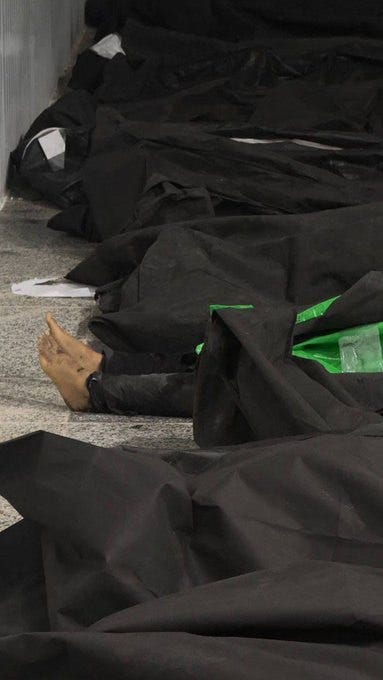
February 28, 2026"Inflicting enough pain to subdue the resistance of a determined adversary is normally beyond the capacity of conventional forces."Robert A. Pape, Bombing to Win: Air Power and Coercion in War (1996)Bloomberg: $35/month. Financial Times: $42/month. The Economist: $17/month. Original analysis by Tatsu with 30+ footnotes: $8/month.This post is public. Share it with anyone who should see this.Eight months ago, I published an article titled "Can Iran Be Overthrown?" after the June 2025 Israeli strikes on Iran.[1] The conclusion was unambiguous: military pressure from the United States, Israel, or any other external power will not succeed in toppling the Iranian government. Airpower does not produce regime change. External aggression triggers rally-around-the-flag effects that strengthen the regime it aims to destroy. Civilian casualties delegitimize the authentic opposition movements that represent the only realistic path to democratic transition.My scorecard from that article was 8 for 8. Every prediction I made was borne out by subsequent events. Iran used economic asymmetry to its advantage. Israeli and American strikes failed to achieve strategic objectives. Iran demonstrated superior operational planning. Cost-exchange ratios massively favored Iran. The nuclear program survived. Leadership was degraded, but subordinates were ready.On February 28, 2026, the United States and Israel launched the largest combined military operation since the 2003 invasion of Iraq. Operation Epic Fury, as the Pentagon called it, delivered approximately 900 strikes in the first twelve hours. Israel's Operation Roaring Lion deployed 200 warplanes against more than 500 targets, the largest Israeli Air Force operation in history.[2] They hit Tehran, Isfahan, Qom, Karaj, and Kermanshah. They killed the Supreme Leader. They killed his defense minister, the commander of the IRGC Ground Forces, the secretary of the National Security Council, and reportedly members of Khamenei's own family.[3]Then Iran fired back. Operation True Promise 4 launched over 1,200 missiles at eight countries.[4] Iranian missiles struck US bases in Qatar, Kuwait, the UAE, and the Fifth Fleet headquarters in Bahrain. They hit Dubai International Airport. They hit Tel Aviv, with NBC's live broadcast catching a missile impact after air defense failed to intercept it. Jordan, Saudi Arabia, and Kuwait reported incoming fire. The AN/FPS-132 early warning radar at Al Udeid Air Base in Qatar, a $1.1 billion installation, was destroyed.[5]Within hours, the IRGC announced the closure of the Strait of Hormuz.[6]$8/month for original, footnoted geopolitical analysis. Bloomberg charges $35.Let me update the scorecard.The ScorecardMy predictions from June 2025, measured against Operation Epic Fury:Iran would use economic asymmetries to their advantage. Confirmed again. The Hormuz closure, even if temporary, creates more economic damage to the United States and its allies than the entire air campaign costs Iran. A single $1.1 billion radar installation destroyed in Qatar costs more than Iran's entire missile barrage. The cost-exchange ratio remains catastrophic for the attackers.Israeli or American strikes would fail to achieve strategic objectives. Confirmed. The stated objective was regime change. Trump called on the Iranian people to "take over your government" and said this might be their "only chance for generations."[7] Instead of a popular uprising, the IRGC formed an emergency Defense Council within hours and assumed total control of governance.[8] The regime was not overthrown. It was militarized.Iran would demonstrate superior operational planning. Confirmed, and then some. In June 2025, Iran retaliated against Israel alone. In February 2026, Iran struck eight countries simultaneously with 1,200 missiles. This is not the response of a degraded military. This is the response of a military that spent eight months preparing for exactly this scenario.Cost-exchange ratios would massively favor Iran. Confirmed. THAAD interceptors cost approximately $11 million each. SM-3 interceptors cost $10 to $25 million each. Iranian ballistic missiles cost roughly $100,000 to $500,000 each. At current firing rates, the US will burn through its forward-deployed THAAD inventory in two to three weeks and its SM-3 inventory in four to five weeks.[9] Each interceptor fired to stop a $200,000 missile costs fifty times what the missile itself costs. Iran can produce 100 missiles per month. The US produces approximately 48 THAAD interceptors per year.System | Unit Cost | Annual Production | Endurance at | | | War Tempo ------------------+-----------------+-------------------+---------------- Iranian Ballistic | $100K-$500K | ~1,200 units | Months Missile | | | (stockpiled) US THAAD | $11 million | ~48 units | 9-11 days Interceptor | | | US SM-3 | $10-$25 million | ~12 units | 14-20 days Interceptor | | |Iran would retaliate in ways that impose maximum cost on the US and Israel. Confirmed. Dubai Airport is damaged. US bases across the Gulf are under fire. Tel Aviv took multiple missile impacts. Insurance companies cancelled shipping policies for the Strait of Hormuz on a Saturday, before Monday's markets even opened.[10] The economic damage from the Hormuz closure alone will exceed the military cost of the entire operation within days.Fordow would survive. Confirmed. The June 2025 strikes failed to penetrate Fordow, which is buried deep inside a mountain near Qom. There is no indication Epic Fury succeeded where the June strikes failed. The enriched uranium is still in there.[11]Leadership degraded but subordinates ready. Confirmed in the most dramatic way possible. They killed the Supreme Leader of the Islamic Republic. Within hours, the IRGC formed a military junta, assumed governance authority, and launched 1,200 missiles at eight countries. The subordinates were not only ready. They were pre-positioned.Trump and Netanyahu's claims, measured against reality:Iran's nuclear capability is destroyed. False. Iran just fired 1,200 missiles at eight countries. Whatever was destroyed at Natanz, the missile production infrastructure and delivery capability remain intact.Regime change. False. The regime was not overthrown. It was replaced by a military council that is more authoritarian, more militarized, and more capable of domestic repression than the clerical system it replaced."Peace in the Middle East." False. Eight countries are under missile fire. Dubai Airport is hit. The Strait of Hormuz is closed. Global oil markets are about to experience the worst shock since the 1973 embargo.The Iranian people will rise up. Not yet, and almost certainly not because of this. Trump told the Iranian people to "take over your government."[7] With what organization? Against which army? The IRGC controls the streets, the telecommunications network, the construction industry, and the energy sector. There is no organized opposition force inside Iran capable of challenging a militarized junta that just transitioned into existential defense mode.You decide who is closer to reality.Two Leaders, Two Agendas, Zero Exit StrategyThe stated objectives of Operation Epic Fury are: destroy Iran's missile production, annihilate the Iranian Navy, eliminate the nuclear program, and liberate the Iranian people. These are the objectives Trump articulated from Mar-a-Lago and Netanyahu repeated from Jerusalem. They sound coherent. They are not.Start with Trump. His stated goal is regime change through popular uprising. "Take over your government." "This might be your only chance for generations."[7] But Trump explicitly declined to claim responsibility for killing Khamenei. He left that to Netanyahu while issuing an "ultimatum to the IRGC to surrender."[30] This is not the behavior of a president committed to regime change. This is the behavior of a president who wants the strategic benefit of decapitation without the diplomatic liability of assassination.The unstated Trump objective is simpler: narrative replacement. Twenty-eight days before Operation Epic Fury, the Warsh nomination triggered a $15 trillion market wipeout that was becoming the defining story of his presidency. The war erased it. Senator Fetterman endorsed the strikes. Senator McCormick endorsed the strikes.[26] The bipartisan "wartime president" frame replaced the bipartisan "market crash" frame overnight. Whether this was calculated or coincidental, the political effect is identical. Analysis of the strategic context explicitly identifies the parallel: domestic economic distress triggering foreign policy spectacle mirrors the 1980 silver crisis pattern, where a financial disaster at home was buried under a crisis abroad.[31]There is also no exit strategy. No occupation plan, no governance framework, no reconstruction budget. Not even the pretense of nation-building that preceded Iraq in 2003. Trump's stated objective is that the Iranian people will spontaneously organize a democratic revolution while under bombardment by the country that overthrew their democratically elected government in 1953. This is not a plan. It is a wish.Now Netanyahu. His stated goal is "pre-emptive self-defense," a phrase his Defense Minister Israel Katz used explicitly.[32] The real objective is the Octopus Doctrine: sever the head in Tehran and the tentacles (Hezbollah, Hamas, the Houthis) wither and die. Netanyahu does not care about Iranian democracy. He never has. He would accept a Libyan-style failed state, a Syrian-style civil war, or a North Korean-style military dictatorship, as long as the missile transfers to his borders stop.My analysis captured the divergence precisely: "The Trump administration appears more concerned with the 'freedom' of the Iranian people and the political optics of the intervention. Israel, conversely, is focused on the immediate physical security of its borders and may be more willing to accept a period of total Iranian state collapse or civil war if it means the immediate cessation of missile transfers to proxies."[31]This means the two architects of Operation Epic Fury want different outcomes from the same bombs. Trump wants a photogenic liberation. Netanyahu wants a security perimeter. Both need a coherent post-war Iran to claim success, and neither has articulated what that looks like, because neither has a plan for one.The vacuum is the product.Airpower Still Doesn't Win WarsOn the morning of February 28, while American and Israeli bombs were still falling on Tehran, Robert Pape, professor of political science at the University of Chicago and founding director of the Chicago Project on Security and Threats, was asked about the operation on Boston radio. His response:"Airpower alone has never produced positive regime change. I don't mean rarely. I mean never."[12]I cited Pape's research in my June article. His conclusion has not changed because the physics of regime change have not changed. You can crater every government building in Tehran. You can kill every general whose name you know. You can destroy every nuclear facility you can reach. And the IRGC still controls the streets, the checkpoints, the prisons, and the payroll of every security officer in the country.Alexander Downes' comprehensive study of 120 foreign-imposed regime changes found that these operations "seldom achieve their intended goals" and often produce opposite effects, including increased likelihood of civil war and reduced prospects for democratization.[13] The 2003 Iraq invasion removed Saddam Hussein and produced twenty years of instability, the rise of ISIS, and the expansion of Iranian influence. The 2011 Libya intervention removed Gaddafi and produced a failed state with competing militias. Twenty years in Afghanistan replaced the Taliban with the Taliban.Operation Epic Fury is not different from these precedents. It is the same thesis tested at higher stakes and with a more spectacular opening act.And then there is the school.Eighty-five girls were killed when a strike hit an elementary school in Minab, in southern Iran.[14] Iranian state media will broadcast the images of those children for the next forty days during the official mourning period for Khamenei. Every one of those images is a recruitment poster for the IRGC. Every dead child is an argument for nationalist solidarity against the foreign aggressor, not against the domestic regime.This is what I wrote in June: "Current Israeli strikes have killed at least 400 Iranian civilians while potentially strengthening the authoritarian regime through predictable rally-around-the-flag effects." Eight months later, the number is higher and the dynamic is identical. Civilian casualties do not weaken authoritarian governments. They give those governments a moral argument for continued repression disguised as national defense.The Soleimani QuestionThere is a genuinely uncertain dimension to this crisis, and I want to be honest about it rather than pretend my thesis covers every scenario.When the US killed IRGC commander Qasem Soleimani in January 2020, Iran held massive mourning rallies. Three days later, the IRGC accidentally shot down Ukraine International Airlines Flight 752 and then lied about it. When the truth emerged, public fury pivoted from anti-American nationalism to anti-regime rage within 72 hours. The mourning rallies became anti-government protests.The question for 2026: does the death of Khamenei follow the Iran-Iraq War template (external aggression unites population, regime consolidates) or the Soleimani template (initial rally collapses when the regime's incompetence is exposed)?Several factors favor the Soleimani Reversal in 2026. Sixty percent of Iran's population is under 35 and has no living memory of the 1979 revolution.[15] The "Woman, Life, Freedom" movement created what the Center for Human Rights in Iran describes as "irreversible social resistance" among younger Iranians, with millions of women refusing to wear the mandatory hijab in open civil disobedience that the regime has been unable to suppress.[16] GAMAAN polls consistently show 80% of Iranians oppose the current system.[17] Starlink satellite terminals and sophisticated VPNs have broken the state's information monopoly, making a full internet blackout far less effective than it was in 2019 or 2022.[18]But several factors favor the Iran-Iraq War template. The 85 dead schoolgirls are a genuine national trauma, not a regime coverup. The strikes hit 24 provinces, making this feel like a nationwide assault rather than a targeted operation. Trump's "take over your government" message is received in Iran through the prism of the 1953 CIA coup against Mosaddegh, which remains the foundational trauma of Iranian foreign policy. And the IRGC's domestic security apparatus, the Basij network that operates at the neighborhood level, remains largely intact even if the central command was hit.My assessment: the rally-around-the-flag effect will dominate the first 30 days. The mourning period will be used to lock down the country. The IRGC will frame everything as sacred defense. After that, the economic reality takes over. And the economic reality is catastrophic.The Hormuz TrapThe IRGC announced the closure of the Strait of Hormuz on the same day the strikes began.[6] This is simultaneously Iran's most powerful weapon and its most self-destructive act.Twenty percent of global oil consumption flows through Hormuz daily. That is 20 million barrels. The strait is 21 miles wide at its narrowest point.[19] Iran spent four decades preparing to deny it: shore-based anti-ship cruise missiles, an estimated 5,000 to 6,000 naval mines, Kilo-class submarines, and fast attack craft designed for swarm tactics. Even if the US destroys every IRGC Navy surface vessel (which is an explicit objective of Epic Fury), mines are the real problem. Iran can seed Hormuz with mines faster than the US can sweep them. After the 1991 Gulf War, coalition minesweeping in a much smaller area took months.But here is the trap: Iran's own oil exports go through Hormuz. China is Iran's only remaining significant oil customer. With the strait closed, Iran's oil revenue drops to zero. The IRGC is not just a military. It is an economic conglomerate that controls telecommunications, construction, and energy. Its members are paid. The Basij are paid. The police are paid. The entire apparatus of domestic repression runs on money that flows through the same strait Iran just closed.[20]If the IRGC cannot pay its security forces, the "wall of fear" that has held back the Iranian public for decades will crumble. Not because of American bombs. Because of Iranian economic self-strangulation.This is the paradox that neither Trump nor the Iranian leadership seems to grasp. The one mechanism that could actually produce regime collapse is not airpower. It is the Hormuz closure cutting off the revenue that pays the men with guns. The regime is choking itself.The markets understood this before either government did. War risk insurers submitted cancellation notices for shipping policies on Saturday, before Monday trading even opened. The Financial Times reported that prices for coverage would rise 50% or more in the coming days.[10] Some ship owners are already diverting away from the strait entirely.This means the strait is functionally closed regardless of the physical military situation. No commercial tanker transits without insurance. The insurance market just declared Hormuz a war zone. On Monday morning, oil futures will price in the worst supply disruption since the 1973 Arab oil embargo.The Warsh ConvergenceNow layer the war on top of what was already happening.On January 31, 2026, twenty-eight days before Operation Epic Fury, the nomination of Kevin Warsh as Federal Reserve Chair triggered a $15 trillion liquidation cascade in precious metals and cryptocurrency markets.[21] Gold crashed 11% to $4,745 in a single day. Silver dropped 36%, the worst single-day decline since the 1980 Hunt Brothers collapse. Bitcoin fell from $93,000 to below $68,000. The Fear and Greed Index hit 10, "Extreme Fear."I wrote about this convergence in detail.[22] The Warsh nomination was designed to restore dollar confidence by signaling a return to orthodox monetary policy. It succeeded in destroying the "debasement trade" (gold, silver, Bitcoin) but it also destroyed confidence in every alternative store of value at the exact moment people most needed one.Twenty-eight days later, Operation Epic Fury launched. Now consider what Monday's markets face:Oil was at approximately $75 per barrel before the strikes. It is already up 8%. With Hormuz closed or contested, projections range from $130 to $150 per barrel.[23] If the closure persists beyond two weeks, $150 is conservative. India imports 50% of its oil through Hormuz and has no short-term alternative supply route.[24] China is heavily exposed. Both economies get hammered.Gold, which crashed in the Warsh liquidation, surged to $5,494, a new all-time high, on the war premium.[25] The "debasement trade" that Warsh killed is being resurrected by bombs. But the whiplash is destructive: investors who sold at $4,745 on January 31 are watching gold at $5,494 on February 28. The volatility itself destroys confidence.Bitcoin crashed again, from approximately $84,000 to $64,000, proving once more that it is a risk asset, not a safe haven.[25] The cryptocurrency that was supposed to be uncorrelated with geopolitics dumped 24% on a shooting war.The Federal Reserve is trapped. Oil price spikes drive inflation, which means the Fed cannot cut rates to stabilize markets. But economic damage from the war and the Hormuz disruption demands accommodation. The Fed has no good options. Neither does the ECB, the Bank of Japan, or the Reserve Bank of India.The domestic political context is inescapable. Trump launched the largest military operation of his presidency 28 days after the worst market crash of his presidency. The Warsh story is gone. The "noble mission" replaces financial catastrophe in the news cycle. Whether this was conscious calculation or coincidence, the effect is the same: the war provides narrative cover for the economic damage the Warsh nomination caused.Senator Fetterman endorsed the strikes. So did Senator McCormick.[26] Bipartisan support for a war of choice is the oldest playbook in American politics. It works until the casualties come home and the gas prices don't come down.The THAAD ClockThere is a material constraint that no one in the White House is discussing publicly.Kelly Griego, Senior Fellow at the Stimson Centre and professor at Georgetown University's Center for Security Studies, published the math on February 28.[9] The numbers are straightforward.Total US THAAD inventory after June 2025: approximately 384 to 434 interceptors. At generous forward deployment (50% of inventory), with June-tempo firing rates of 8 to 12 per day, in-theater endurance is 2.5 to 3.5 weeks. At double the June tempo (20 per day, which is plausible given Iran's 1,200-missile barrage), forward-deployed THAAD lasts 9 to 11 days.SM-3 inventory: approximately 414 after June. At 50% forward deployment and June-tempo firing (6 to 7 per day), endurance is 4 to 5 weeks. At double tempo (15 per day), approximately 2 weeks.Each THAAD interceptor costs approximately $11 million. Production rate: roughly 48 per year. You cannot surge production of a missile that requires precision manufacturing of infrared seekers and ceramic heat shields. When the inventory runs out, it runs out.Trump promised the bombing would continue "all week" or "for as long as necessary."[7] Iran has the missile inventory to keep firing for months. The US has the interceptor inventory to keep defending for weeks. This is the asymmetry I described in June, and it has only gotten worse. Iran produces 100 missiles per month. The US produces 48 THAAD interceptors per year.The question is not whether the air campaign can continue. The question is whether the air defense can.The Opposition ProblemTrump's appeal to the Iranian people to "take over your government" contains zero operational content. Who, specifically, should take over? With what organizational structure? Against which security force?The Iranian opposition remains what it was when I analyzed it in June: a mosaic of conflicting ideologies that cannot agree on what comes after the Islamic Republic, much less coordinate a revolution while under bombardment.[27]The monarchists around Crown Prince Reza Pahlavi have 32 to 40% support in polls but are perceived as "opportunistic" and "disconnected" by activists inside the country. The MEK has organizational capacity and Washington lobbyists but is despised inside Iran for siding with Iraq during the 1980s war. The secular republicans are the ideological heart of the opposition but have no unified leadership and no military capability. The Kurdish and Baloch movements want regional autonomy, which the Persian majority fears as secessionism. Five Kurdish armed groups have formed a brittle alliance to exploit the chaos, but their ambitions are regional, not national.[28]There is currently no organized force inside Iran capable of filling a post-regime vacuum. If the Islamic Republic collapsed tomorrow, the most likely immediate outcome is a fragmented military dictatorship where IRGC regional commanders seize local control, each backed by their own economic fiefdoms. This is the Libya scenario, not the democratic transition.And that is precisely what is already happening. The Defense Council is not a democratic institution. It is a military junta composed entirely of security and intelligence officials with no clerical or diplomatic representation.[8] The "regime change" produced by Operation Epic Fury is the replacement of a theocratic autocracy with a military autocracy. If the clerical line of succession is broken (Mojtaba Khamenei's status is unclear, with some intelligence reports suggesting he fled to Russia), the IRGC is the only organized force left.[29]Trump did not produce a democratic revolution. He produced a military coup dressed in the language of national defense.What Comes Next30 days: The Defense Council uses the 40-day mourning period to justify total lockdown. The Basij enforce curfews. State media broadcasts the Minab school footage on loop. Public sentiment oscillates between grief, fear, and rage, with the rage directed primarily at the foreign attackers. The Strait of Hormuz remains contested. Oil prices stabilize between $110 and $130 per barrel. US forward-deployed THAAD interceptors begin to deplete. Monday's markets are the worst opening since COVID.90 days: The economic breaking point. If the Hormuz closure persists and oil revenue remains near zero, the IRGC cannot sustain salary payments to its security forces. This is when the Bazaari merchant class, the historical kingmakers in Iranian politics, either initiates a general strike or negotiates directly with IRGC factions for a managed transition. The real fracture will not come from American bombs. It will come from the men with guns realizing they are not getting paid. Public sentiment transitions from fear to "desperate rage," directed at both the foreign attackers and the domestic rulers who got them into this.180 days: Two scenarios. In the hardening scenario, the IRGC receives external support (Chinese credit lines, Russian weapons) and consolidates into a North Korean-style military state: impoverished, isolated, nuclear-capable, and hostile. In the fragmentation scenario, competing IRGC factions control different regions, ethnic minorities seize autonomy in the periphery, and Iran becomes a multi-sided civil war resembling Syria or Libya. Neither scenario produces democracy. Neither scenario produces the "Peace in the Middle East" Trump promised.The success scenario, a popular uprising producing a democratic transition, requires four conditions that do not currently exist: a unified opposition, a fracturing of the security forces, an economic crisis severe enough to make the IRGC's rank-and-file abandon the regime, and the absence of a foreign enemy to rally against. Operation Epic Fury delivered the economic crisis (through the Hormuz closure) while simultaneously providing the foreign enemy that prevents the uprising.The operation's fundamental contradiction: it created the economic conditions for regime collapse while simultaneously providing the nationalist narrative that prevents it.The LessonThis is the most expensive lesson in the history of American foreign policy, and it is the same lesson the United States has refused to learn since 1953.You cannot bomb a country into democracy. You cannot kill your way to regime change. You cannot destroy an authoritarian system from the outside because the destruction itself becomes the justification for the system's continued existence. Every dead schoolgirl in Minab is evidence that the mullahs were right about one thing: the Americans and the Israelis are not here to liberate you. They are here to destroy you.Eighty percent of Iranians oppose the current system. That number represented the most promising conditions for democratic transition in the Islamic Republic's 47-year history. Operation Epic Fury did not accelerate that transition. It set it back by a generation.The bombs will stop eventually. The THAAD interceptors will run out. The oil price shock will stabilize. The Strait of Hormuz will reopen. And the IRGC, or whatever military structure replaces it, will still control the streets of Tehran. Because that is what always happens. That is what happened in Iraq, in Afghanistan, in Libya. That is what Pape's research shows across every case study in the modern era. That is what my June article predicted. And that is what Operation Epic Fury, the largest and most expensive air campaign since 2003, will confirm at the cost of billions of dollars, thousands of lives, and the last best chance for Iranian democracy.I told you so. I wish I hadn't been right.This analysis was written on March 1, 2026, approximately 24 hours after the commencement of Operation Epic Fury. Events are developing rapidly and specific details may change. The structural analysis will not.Independent analysis. $8/month.Notes[1] "Can Iran Be Overthrown?" Tatsu Ikeda, Tatsu's Newsletter, June 24, 2025. Original analysis predicting that military pressure would fail to produce regime change in Iran, with an 8/8 prediction scorecard.[2] "US, Israel Attack Iran; Trump Vows 'Massive, Ongoing' Air Campaign." Air & Space Forces Magazine, February 28, 2026. Reports approximately 900 US strikes in the first 12 hours and 200 IAF warplanes deployed against 500+ targets in the largest combined US-Israeli military operation in history.[3] "Operation Epic Fury: How Trump-led US strikes in Tehran killed Iran's Supreme Leader Khamenei, family." Times of India, February 28, 2026. Reports confirmed kills include Ayatollah Ali Khamenei, Defense Minister Aziz Nasirzadeh, IRGC Ground Forces Commander Mohammad Pakpour, and National Security Council Secretary Ali Shamkhani.[4] "U.S. and Israel Strike Iran, Triggering Gulf-Wide Missile Retaliation From Tehran." Homeland Security Today, February 28, 2026. Reports Iranian retaliatory strikes (Operation True Promise 4) targeting US bases in Qatar (Al Udeid), Kuwait (Al Salem), UAE (Al Dhafra), and Fifth Fleet headquarters in Bahrain, as well as Israeli territory.[5] The AN/FPS-132 early warning radar at Al Udeid Air Base, Qatar, is a ground-based component of the US Ballistic Missile Early Warning System. Replacement cost estimated at $1.1 billion based on comparable installations. OSINT sources confirmed the radar's destruction within hours of the Iranian retaliatory strikes.[6] "IRGC 'effectively closed' key shipping lane Strait of Hormuz, choking oil routes." Washington Examiner, February 28, 2026. The IRGC announced Hormuz closure concurrent with Operation True Promise 4. Prediction markets priced closure probability at 90%.[7] "U.S. and Israel strike Iran in operation 'Epic Fury.' Trump calls for regime overthrow." KERA News, February 28, 2026. Trump's Mar-a-Lago video address called on the Iranian people to "take over your government" and said this might be their "only chance for generations."[8] The emergency Defense Council was formed within hours of Khamenei's death. The body is composed entirely of military and intelligence officials with no clerical, diplomatic, or civilian representation, effectively transitioning Iran from a clerical theocracy to a military junta. The designated successor, Mojtaba Khamenei, has not been confirmed alive or dead.[9] Kelly Griego, Senior Fellow at the Stimson Centre and Professor at Georgetown University's Center for Security Studies, published THAAD and SM-3 depletion analysis on February 28, 2026. Total US THAAD inventory post-June 2025: ~384-434 interceptors. At 50% forward deployment and June-tempo firing rates (8-12/day), in-theater endurance is 2.5-3.5 weeks. At double tempo (20/day), 9-11 days. SM-3 inventory ~414, endurance 4-5 weeks at June tempo, ~2 weeks at double tempo.[10] War risk insurers submitted cancellation notices on Saturday, February 28, before Monday trading, for policies covering ships transiting the Gulf and Strait of Hormuz. Cargo war risk insurers prepared to cancel on Monday. Prices expected to rise 50%+. Reported by the Financial Times, cited by OSINT channels. Some ship owners already diverting away from Hormuz.[11] Fordow enrichment facility is built inside a mountain near Qom and was designed specifically to survive aerial bombardment. The June 2025 strikes failed to penetrate the facility. There is no public confirmation that Operation Epic Fury succeeded where the June campaign failed. The CSIS analysis references "remnants" of the nuclear program, suggesting some facilities were damaged but not all were destroyed.[12] Robert Pape, Professor of Political Science at the University of Chicago, specializing in security affairs, and founding director of the Chicago Project on Security and Threats (CPOST). Statement made on Boston radio on February 28, 2026: "Airpower alone has never produced positive regime change. I don't mean rarely. I mean never." Consistent with his published research on the limits of coercive airpower.[13] Alexander Downes, Catastrophic Success: Why Foreign-Imposed Regime Change Goes Wrong (Cornell University Press, 2021). Comprehensive study of 120 foreign-imposed regime changes finding that these operations "seldom achieve their intended goals" and often increase the likelihood of civil war and reduce prospects for democratization.[14] "Iran Says US-Israeli Attack Hit Elementary School, Killing 85+ Girls." ZeroHedge, February 28, 2026, citing Iranian Health Ministry figures. The strike hit a girls' school in Minab, in southern Iran.[15] Iran's median age is 32 years. Approximately 60% of the population was born after the 1979 revolution and has no living memory of the founding of the Islamic Republic. This demographic profile creates a fundamental disconnect between the revolutionary ideology of the state and the lived experience of the majority.[16] "A Quiet Revolution Continues in Iran Two Years After the Woman Life Freedom Uprising." Center for Human Rights in Iran, September 2024. Documents how the movement successfully normalized civil disobedience against compulsory veiling laws and created "irreversible social resistance" among younger Iranians.[17] "Opinion Survey Reveals Overwhelming Majority Rejecting Iran's Government." Iran International, February 2023, citing GAMAAN surveys. Eighty percent of Iranians oppose the current system, representing unprecedented conditions for domestic political change.[18] The proliferation of Starlink satellite internet terminals and multi-layered VPN technology has fundamentally altered the information environment in Iran compared to 2019 or 2022. State internet blackouts are far less effective when a significant portion of the population can access satellite internet directly.[19] The Strait of Hormuz is 21 miles wide at its narrowest point and handles 20 million barrels of oil per day, approximately 20% of global oil consumption. The strait has never been fully closed in modern history. Iran maintains shore-based anti-ship cruise missiles, an estimated 5,000-6,000 naval mines, Kilo-class submarines, and fast attack craft specifically designed for area denial.[20] The IRGC controls significant portions of Iran's economy including telecommunications (via subsidiaries), construction (Khatam al-Anbiya), and energy sectors. The Basij paramilitary network and domestic police forces are paid from state revenue that depends substantially on oil exports transiting the Strait of Hormuz.[21] The nomination of Kevin Warsh as Federal Reserve Chair on January 31, 2026, triggered a $15 trillion liquidation cascade. Gold fell 11% to $4,745 (with a total decline of 21.5% from peak). Silver crashed 36% in a single day, the worst since the 1980 Hunt Brothers collapse. Bitcoin fell from ~$93,000 to below $68,000. JPMorgan closed $10 billion in silver short positions at the bottom.[22] "The Warsh Bitcoin Paradox." Tatsu Ikeda, Tatsu's Newsletter, January 30, 2026. Analysis of the Warsh nomination's impact on precious metals, cryptocurrency, and the "debasement trade."[23] "US-Israel strikes on Iran: How will India be hit by Strait of Hormuz closure?" Times of India, February 28, 2026. Projects oil prices of $130-$150/bbl under full Hormuz closure. A partial or intermittent closure projects $90-$100/bbl.[24] India imports approximately 50% of its crude oil through the Strait of Hormuz. China is similarly exposed. Both economies face severe supply disruptions with no short-term alternative routing for the volume currently transiting the strait.[25] Market data from February 28, 2026. Gold surged to $5,494, a new all-time high, on war premium. Bitcoin crashed from approximately $84,000 to $64,000 before partial recovery to $66,000+. Oil rose 8% in initial trading.[26] "Pa., N.J., Del. Democrats decry U.S. attack on Iran: 'Americans do not want war'." WHYY, February 28, 2026. Reports bipartisan endorsements including Senators John Fetterman and Dave McCormick, alongside Democratic opposition.[27] The Iranian opposition remains fragmented among monarchists (Reza Pahlavi, 32-40% support), MEK/NCRI (organized but domestically unpopular), secular republicans (ideological heart but no unified leadership), and ethnic movements (Kurdish Komala, Baloch Jaish al-Adl). No single faction has the organizational capacity to fill a post-regime vacuum.[28] Five major Iranian Kurdish armed groups have formed a brittle alliance in the aftermath of Operation Epic Fury, seeking to exploit the chaos to carve out an autonomous zone in northwestern Iran. Their ambitions are regional, not national, and are feared by the Persian majority as secessionism.[29] "'Operation Epic Fury' Eclipses Diplomacy." The Soufan Center IntelBrief, February 28, 2026. Analysis of the post-Khamenei succession crisis and the transition to military governance under the Defense Council.[30] In his Mar-a-Lago video address, Trump issued an ultimatum to the IRGC to surrender while explicitly declining to claim responsibility for the decapitation strikes that killed Khamenei and senior military leadership. Netanyahu's address from Jerusalem claimed direct responsibility for the leadership strikes under Operation Roaring Lion. The divergence in messaging suggests a deliberate US strategy to maintain diplomatic deniability regarding targeted assassinations while reaping the strategic benefits.[31] Strategic analysis drawing on CSIS assessment of Operation Epic Fury, the Warsh Crash domestic political context, and historical parallels to the 1980 silver crisis. The convergence of domestic financial crisis and foreign military action follows a well-documented pattern in American foreign policy where economic distress creates political incentives for dramatic geopolitical action.[32] "Israel launched 'pre-emptive attack' against Iran to remove threats, says Defense Minister Israel Katz." Times of Israel, February 28, 2026. Katz framed Operation Roaring Lion as pre-emptive self-defense focused on Iranian nuclear breakout potential and the ongoing ballistic missile threat. This is a public episode. If you'd like to discuss this with other subscribers or get access to bonus episodes, visit tatsuikeda.substack.com/subscribe
Embed this episode
Ready to play
They Killed Khamenei. It Won't Matter.
No transcript for this episode yet
Similar Episodes
No similar episodes found.
Similar Podcasts
No similar podcasts found.