
EPISODE · Mar 18, 2026 · 1H 38M
"They were living their grief out on stage": The 5-man band, FM radio, and music that never stops giving
from Long Live the ABB: Conversation from the Crossroads of Southern music, history, and culture with historian Bob Beatty · host Long Live the ABB
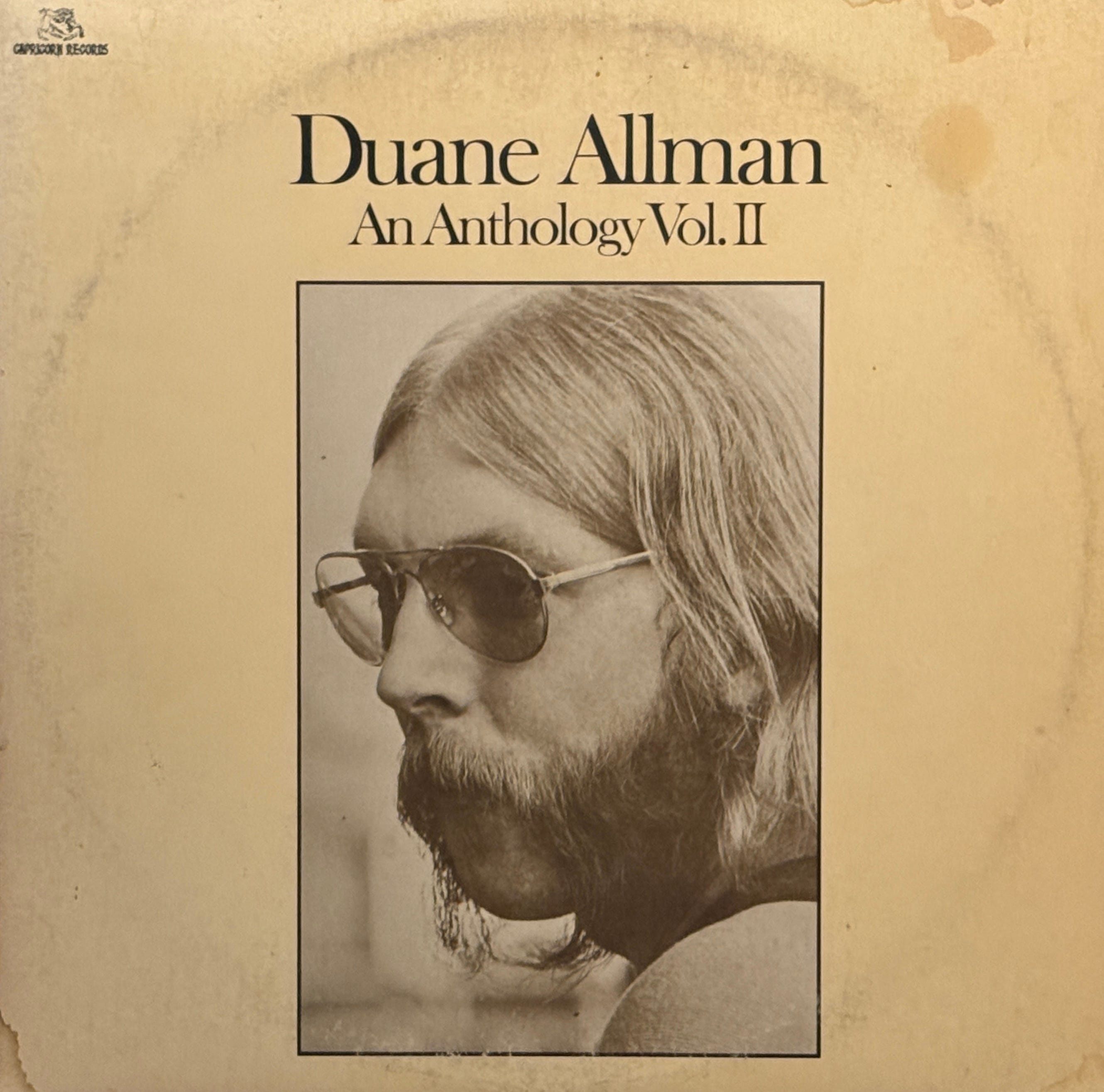
Episode OverviewTY Yoken produced Duane Allman Anthology Volume II. He got the job through sheer effort: an FM DJ and Duane fanatic who fed a steady diet of Duane tracks to the folks at Capricorn Records. His efforts made the case there was a second record’s worth of Duane Allman anthology material. When Phil Walden eventually called offering the opportunity to write the liner notes, TY said yes. Instead, he ended up producing the entire set.We’ve been friends since Jeff Kollath hosted an event with me and King Curtis biographer Timothy Hoover to launch Play All Night! at Crosstown Concourse in Memphis.From there, the conversation moves into freeform FM radio, the bootleg archive that preserved what broadcast stations captured, and what it meant to watch the 5-man band grieve in public.Our CrossroadsTy and I both came to this music the same way—obsessively, through record store cutout bins, FM radio, and the conviction that following Duane’s name on the back of an album would always lead somewhere worth going. He did it with a turntable and a 50,000-watt radio station. I did it with a Ph.D. dissertation and a book. The methodology is identical: find the name, pull the thread, don’t stop until you’ve heard everything.The ConversationWe started with Duane Allman Anthology Volume II itself—what TY heard when he put it on fresh this morning, what surprised him, what still holds up. “Dimples” comes out of the box hard, mixed from a second or third generation bootleg tape of Ludlow Garage April 1970 he brought to Macon himself. Johnny Sandlin and Ovie Sparks cleaned it up. Nobody knew what they had. That’s the whole story of this record in miniature.TY built the track list the way he built radio sets—by knowing the canon better than the people who owned it. Capricorn didn’t know where half of them came from. The record opens with “Happily Married Man,” a Muscle Shoals session track TY heard for the first time on full blast in the Capricorn studio—and knew immediately it had to lead. Johnny Sandlin pushed for “Leave My Blues at Home,” recorded on Ovation guitars. Phil Walden and Frank Fenter added Aretha Franklin after they were unable to work a deal with Clive Davis for a Laura Nyro track. What ended up on the record—”It Ain’t Fair,” with King Curtis, Duane, and Aretha—is one of the greatest studio tracks Duane ever cut.TY’s knowledge of Duane’s catalog brought to mind a puzzle I finally put together in 2025, this piece that ran September 29, 1970 in the Macon TelegraphDuane did not attend, neither did Clapton. They had planned to, but Clapton was distraught, and Duane stayed behind in Miami. That day they recorded an acoustic version of “Mean Old World” with Luther’s dad Jim Dickinson producing. The funeral trip wasn’t real, but the press release does appear to be. Freeform FM radio is another topic we cover. TY helped take over WOUR in Utica on June 1, 1973—50,000 watts, blank canvas. They broke Charlie Daniels out of there. They had Meatloaf live. Tom Petty. They played Duane Allman from tapes nobody else had, which was common in the FM freeform era. Listeners recorded those broadcasts and traded them. That’s how we have Syria Mosque 1971, Ludlow Garage 1970, and the like. TY himself seeded the archive with the 4/7/72 Manley Field House show https://www.longlivetheabb.com/p/manley-fieldhouse-1972.We closed on grief, joy, and why this music still matters. TY watched the Allman Brothers play Manley Field House in April 1972—two months after Eat a Peach dropped, five months after Duane died. The 5-man band lived out their grief on stage in real time. Twenty years later, I received a cassette of the show and played it as loud as it would go, feeling every bit of that emotion coming through the speakers. A gift from my friend TY, 25 years before we ever met. Support the conversation with a membership.🍄Play All Night! Duane Allman & the Journey to Fillmore East🍄ResourcesPlay All Night: Duane Allman and the Journey to Fillmore East, Bob Beatty—https://www.amazon.com/dp/0813069505* Duane Allman: An Anthology (Capricorn Records, 1972)* Duane Allman: An Anthology Vol. II (Capricorn Records, 1974)* Skydog: The Duane Allman Retrospective (Rounder, 2013)New Mexico museums/historic sites* Taylor-Mesilla Historic Site https://nmhistoricsites.org/taylor-mesilla* Tinkertown Museum, Sandia Park, New Mexico—https://tinkertown.com This is a public episode. If you'd like to discuss this with other subscribers or get access to bonus episodes, visit www.longlivetheabb.com/subscribe
Embed this episode
Ready to play
"They were living their grief out on stage": The 5-man band, FM radio, and music that never stops giving
No transcript for this episode yet
Similar Episodes
No similar episodes found.
Similar Podcasts
No similar podcasts found.