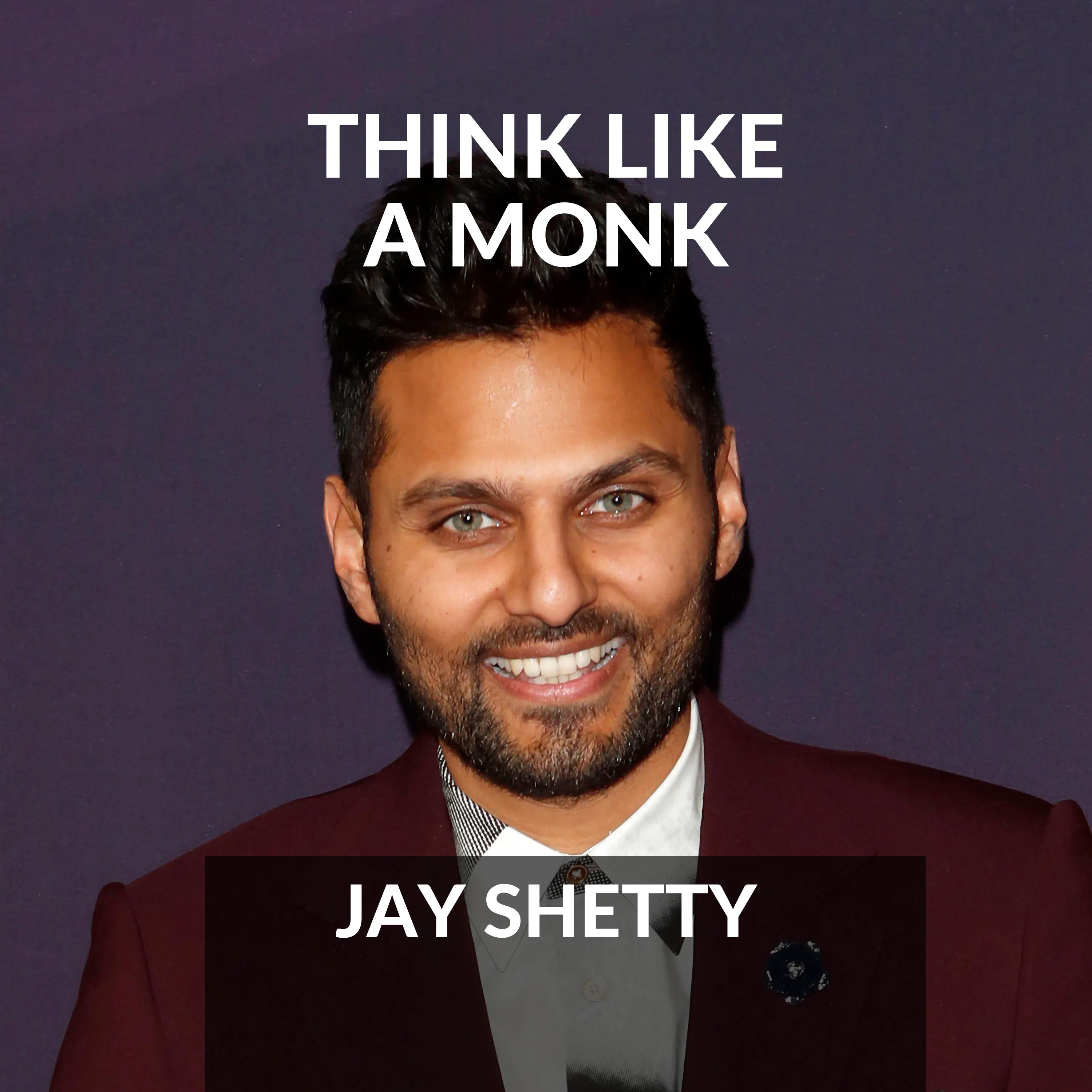
Think Like A Monk by Jay Shetty - Book Summary | Free Audiobook episode artwork

EPISODE · Jan 12, 2022 · 22 MIN

Think Like A Monk by Jay Shetty - Book Summary | Free Audiobook

from Best Book Summaries 📚 by StoryShots · host StoryShots

Show notes / PDF & Infographic / Free Audiobook / What if the secret to success isn’t hustle—but stillness? In Think Like a Monk, Jay Shetty shares timeless monk wisdom to help you find clarity, calm, and purpose in today’s chaotic world. Read on your terms. Get the PDF, infographic, full ad-free audiobook and animated version of this summary and 1 million more books on the StoryShots app: https://www.getstoryshots.com Help us grow to create more amazing content for you! ⭐️⭐️⭐️⭐️⭐️ Don't forget to subscribe, rate and review the StoryShots podcast now.  What should our next book be? Suggest and vote it up on our app. -- Jay Shetty's book 'Think Like a Monk' offers a transformative approach to personal development by applying ancient monastic wisdom to modern life. Drawing from his personal experience of spending three years as a monk, Shetty introduces key concepts like identity, values, and personal growth. He encourages readers to 'clean their mirror' of identity by understanding their true self, distinguishing between higher and lower values, and learning to detach from external expectations. The book provides practical strategies for addressing negativity and fear through techniques like the 3S Model (Sights, Sense, Sounds) and the Spot, Stop, and Swap method. Shetty emphasizes the importance of intentional living, morning routines, and creating mental space through meditation, gratitude, and mindful practices. He suggests people should be deliberate about their values, passions, and intentions, moving beyond reactive living to a more purposeful existence. A significant portion of the book focuses on relationships and personal development. Shetty introduces concepts like Mudita (taking joy in others' success) and provides guidance on improving interpersonal connections through presence, attention, and intimacy. He also recommends tools like the Harvard Emotional Vocabulary to help individuals better understand and communicate their emotions, ultimately promoting a more compassionate and self-aware approach to life. Think Like a Monk Quotes: "When you learn a little, you feel you know a lot. But when you learn a lot, you realize you know very little." - Jay Shetty "Detachment is not that you own nothing, but that nothing owns you." - Jay Shetty "If I only find joy in my own successes, I am limiting my joy. But if I can take pleasure in the successes of my friends and family 10, 20, 50 people, I get to experience 50 times the happiness and joy." - Jay Shetty "Location has energy and time has memory. If you do the same thing day after day in the same location, you will find your days considerably easier." - Jay Shetty Key ideas: Jay Shetty defines 'thinking like a monk' as adopting practices that help overcome negative thoughts, access inner stillness, and create true purpose in life The core of monk-like thinking involves distinguishing between higher values (gratitude, compassion, service) and lower values (greed, anger, envy) that impact personal happiness and mental well-being Personal growth requires deliberately managing your mind by being intentional about what you consume - carefully selecting the media, music, and content you expose yourself to Developing a meaningful morning routine and practicing short daily habits like meditation, gratitude, and exercise can significantly improve mental clarity and energy Fear and attachment are interconnected; true detachment means not being controlled by external objects or expectations while still appreciating them Relationships improve when you focus on presence, attention, and intimacy rather than just physical proximity The 'Quadrant of Potential' suggests aligning daily activities with both skill and passion to achieve meaningful personal and professional development Mudita, or taking unselfish joy in others' successes, can exponentially increase personal happiness by expanding the sources of joy beyond personal achievements Learn more about your ad choices. Visit megaphone.fm/adchoices

Show notes / PDF & Infographic / Free Audiobook / What if the secret to success isn’t hustle—but stillness? In Think Like a Monk, Jay Shetty shares timeless monk wisdom to help you find clarity, calm, and purpose in today’s chaotic world. Read on your terms. Get the PDF, infographic, full ad-free audiobook and animated version of this summary and 1 million more books on the StoryShots app: https://www.getstoryshots.com Help us grow to create more amazing content for you! ⭐️⭐️⭐️⭐️⭐️ Don't forget to subscribe, rate and review the StoryShots podcast now.  What should our next book be? Suggest and vote it up on our app. -- Jay Shetty's book 'Think Like a Monk' offers a transformative approach to personal development by applying ancient monastic wisdom to modern life. Drawing from his personal experience of spending three years as a monk, Shetty introduces key concepts like identity, values, and personal growth. He encourages readers to 'clean their mirror' of identity by understanding their true self, distinguishing between higher and lower values, and learning to detach from external expectations. The book provides practical strategies for addressing negativity and fear through techniques like the 3S Model (Sights, Sense, Sounds) and the Spot, Stop, and Swap method. Shetty emphasizes the importance of intentional living, morning routines, and creating mental space through meditation, gratitude, and mindful practices. He suggests people should be deliberate about their values, passions, and intentions, moving beyond reactive living to a more purposeful existence. A significant portion of the book focuses on relationships and personal development. Shetty introduces concepts like Mudita (taking joy in others' success) and provides guidance on improving interpersonal connections through presence, attention, and intimacy. He also recommends tools like the Harvard Emotional Vocabulary to help individuals better understand and communicate their emotions, ultimately promoting a more compassionate and self-aware approach to life. Think Like a Monk Quotes: "When you learn a little, you feel you know a lot. But when you learn a lot, you realize you know very little." - Jay Shetty "Detachment is not that you own nothing, but that nothing owns you." - Jay Shetty "If I only find joy in my own successes, I am limiting my joy. But if I can take pleasure in the successes of my friends and family 10, 20, 50 people, I get to experience 50 times the happiness and joy." - Jay Shetty "Location has energy and time has memory. If you do the same thing day after day in the same location, you will find your days considerably easier." - Jay Shetty Key ideas: Jay Shetty defines 'thinking like a monk' as adopting practices that help overcome negative thoughts, access inner stillness, and create true purpose in life The core of monk-like thinking involves distinguishing between higher values (gratitude, compassion, service) and lower values (greed, anger, envy) that impact personal happiness and mental well-being Personal growth requires deliberately managing your mind by being intentional about what you consume - carefully selecting the media, music, and content you expose yourself to Developing a meaningful morning routine and practicing short daily habits like meditation, gratitude, and exercise can significantly improve mental clarity and energy Fear and attachment are interconnected; true detachment means not being controlled by external objects or expectations while still appreciating them Relationships improve when you focus on presence, attention, and intimacy rather than just physical proximity The 'Quadrant of Potential' suggests aligning daily activities with both skill and passion to achieve meaningful personal and professional development Mudita, or taking unselfish joy in others' successes, can exponentially increase personal happiness by expanding the sources of joy beyond personal achievements Learn more about your ad choices. Visit megaphone.fm/adchoices

NOW PLAYING

Think Like A Monk by Jay Shetty - Book Summary | Free Audiobook

0:00 22:23

No transcript for this episode yet

We transcribe on demand. Request one and we'll notify you when it's ready — usually under 10 minutes.

MG Show MG Show The MG Show, hosted by Jeffrey Pedersen and Shannon Townsend, is a leading alternative media platform dedicated to uncovering the truth behind today’s most pressing political issues. Launched in 2019, the show has grown exponentially, offering unfiltered insights, comprehensive research, and real-time analysis. With a commitment to independent journalism and factual integrity, the MG Show empowers its audience with knowledge and encourages active participation in the political discourse. That Hoarder: Overcome Compulsive Hoarding That Hoarder Hoarding disorder is stigmatised and people who hoard feel vast amounts of shame. This podcast began life as an audio diary, an anonymous outlet for somebody with this weird condition. That Hoarder speaks about her experiences living with compulsive hoarding, she interviews therapists, academics, researchers, children of hoarders, professional organisers and influencers, and she shares insight and tips for others with the problem. Listened to by people who hoard as well as those who love them and those who work with them, Overcome Compulsive Hoarding with That Hoarder aims to shatter the stigma, share the truth and speak openly and honestly to improve lives. Flottengeflüster ALD Automotive Österreich | LeasePlan Beim Flottengeflüster powered by ALD Automotive | LeasePlan präsentieren Jörg Janik und Peter Gutenbrunner alle zwei Wochen spannende Informationen rund um das Thema nachhaltige Mobilität. Beide beschäftigen sich schon lange mit der Thematik und bringen umfangreiches Fachwissen mit. Sollten sie aber doch einmal nicht weiter wissen, werden unsere Expert*innen hinzugezogen, die ihnen gerne mit Rat und Tat zur Seite stehen. The Small Business Startup School – Business Notes | Financial Literacy | Retail Psychology – For Professionals & Entrepreneurs The Small Business Startup School Inc. Starting or buying a small business? While personal circumstances may vary, business patterns remain timeless. On The Small Business Startup School, we explore strategies, insights, and practical solutions to help entrepreneurs confidently navigate their journey.Hosted by Ola Williams—a retail entrepreneur, fintech founder, and financial coach with over two decades of experience—this podcast marries financial awareness and retail psychology with optimism to deliver actionable takeaways.Join us to learn, grow, and connect as we uncover the keys to business success.Let’s continue to learn together and be encouraged to keep on connecting!

Frequently Asked Questions

How long is this episode of Best Book Summaries 📚 by StoryShots?

This episode is 22 minutes long.

When was this Best Book Summaries 📚 by StoryShots episode published?

This episode was published on January 12, 2022.

What is this episode about?

Show notes / PDF & Infographic / Free Audiobook / What if the secret to success isn’t hustle—but stillness? In Think Like a Monk, Jay Shetty shares timeless monk wisdom to help you find clarity, calm, and purpose in today’s chaotic world. Read on...

Can I download this Best Book Summaries 📚 by StoryShots episode?

Yes, you can download this episode by clicking the download button on the episode player, or subscribe to the podcast in your preferred podcast app for automatic downloads.
URL copied to clipboard!