
EPISODE · Nov 3, 2025 · 2H 43M
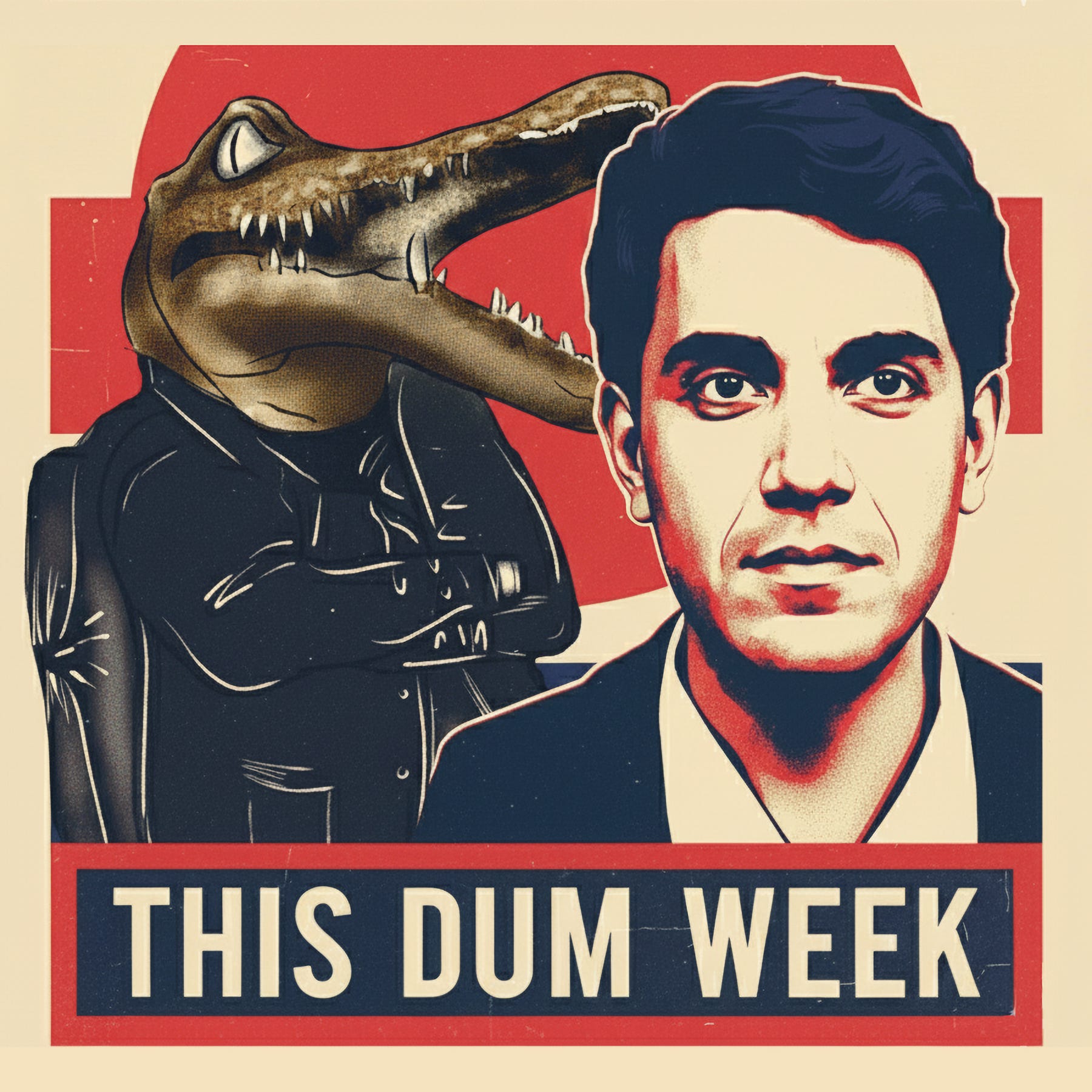
This Dum Week 2025-11-02
from Do Your Own Research Podcast · host Alexandros Marinos
This episode moves from to tech power politics (Altman vs Musk, NASA vs SpaceX), then into executive oversight and AI censorship, closing on intellectual property, open-source tools, and epistemic clarity. It’s a dense, fast-moving three hours where each news story is treated as a case study in incentives and institutional failure rather than headline fodder.Hour 1 (0 – 60 min) — OpenAI vs Elon · Starship and NASA · Executive ambiguityOpenAI’s for-profit turn: They trace how OpenAI’s shift to a capped-profit model was justified by “we need more compute.” Marinos explains that Google and Meta were already profit-driven, so Altman’s pivot isn’t unique—just branded as moral necessity.Elon Musk vs Sam Altman: A recap of Elon’s appearance on Joe Rogan and the follow-up on X, where Musk accuses Altman of “stealing a nonprofit.” They detail Musk’s claim about a refund email fiasco: Altman said a reservation was never refunded, but Elon produced receipts showing it was fixed within 24 hours.Starship and Artemis: Coverage turns to NASA’s concern that Starship delays may push the Artemis III moon landing “months or years” back. Quoting NASA sources, they discuss the south-pole landing site and the agency’s frustration with SpaceX’s pace.Mission redesign talk: They read from SpaceX’s response promising a “simplified mission architecture” to meet NASA’s new requirements and “improve crew safety.” The hosts debate whether “simplified” means “less ambitious” or “more realistic.”Executive authority & ambiguity: The hour closes on a politics-law crossover: if an executive’s authorization is unclear, does ambiguity void everything? A CNN article is cited as context for how confusion over delegation can make all actions challengeable.Hour 2 (60 – 120 min) — Biden aides invoke the Fifth · Peace-prize hawkishness · Norms · AI content filters · Amazon growth · Suicidal-thought statsWhite House probe: Segment opens with a House GOP report claiming the White House failed to document Biden’s approval for certain actions. Three top aides invoked the Fifth Amendment instead of testifying. Hosts weigh whether silence signals exposure or discipline.Peace Prize and war: They note, half-laughing, that the recent Nobel Peace Prize winner publicly backed a U.S. attack on Venezuela, calling it the latest example of award institutions betraying their titles.Presidential gaffes and “norms-respecting” answers: A clip is referenced where a president fumbles a foreign-policy question; they contrast it with “norms-respecting” answers from earlier eras, asking whether candor now looks like malfunction.AI content policy: They revisit Vision AI filters—software that’s been able to spot nudity for a decade—but still dodges nuance and context. The topic widens to how models encode censorship under the guise of brand safety.Tech growth numbers: They read from earnings reports: Amazon sales up 13 percent year-over-year in June. Marinos frames this as evidence that AI automation and cloud infrastructure are becoming “the biggest technology inflection since the Internet.”Mental-health aside: A surreal moment ends the hour—Gator notes how “about half of people have thought about suicide” statistically; they unpack why reporting such numbers out of context magnifies hopelessness instead of helping prevention.Hour 3 (120 – 180 min) — Copyright limits · Etcher and open-source tools · China risk rhetoric · Conspiracy vs critical reasonCopyright and perversion: They open with a rant about someone “withholding demand because he’s a pervert,” pivoting into a serious copyright discussion: how control over intellectual property gets psychologized as moral defense rather than economic structure.The line of protection: Deep dive into what is actually protected by copyright and how courts keep expanding interpretation. Gator says he sympathizes with critics who see the framework as overbroad and abused by rights holders.Etcher vs dd: Alex talks about Etcher, the Electron-based app for flashing SD cards, boasting it beat the old Unix tool dd. They riff on Electron’s bloat vs ease-of-use and how JavaScript crept into sysadmin territory.Security and China: They pose the question “what would make you betray your secrets to China?” as a thought experiment on loyalty, data sovereignty, and how state rhetoric drifts into corporate policy.Listeners may find the prompt Alex mentions at the end of the podcast here https://x.com/alexandrosM/status/1985106159116964068 This is a public episode. If you would like to discuss this with other subscribers or get access to bonus episodes, visit doyourownresearch.substack.com
Embed this episode
NOW PLAYING
This Dum Week 2025-11-02
No transcript for this episode yet
Similar Episodes
No similar episodes found.
Similar Podcasts
No similar podcasts found.