This law would send Mike Johnson straight to prison
from Systemic Error Podcast Hosted by Paulo Santos
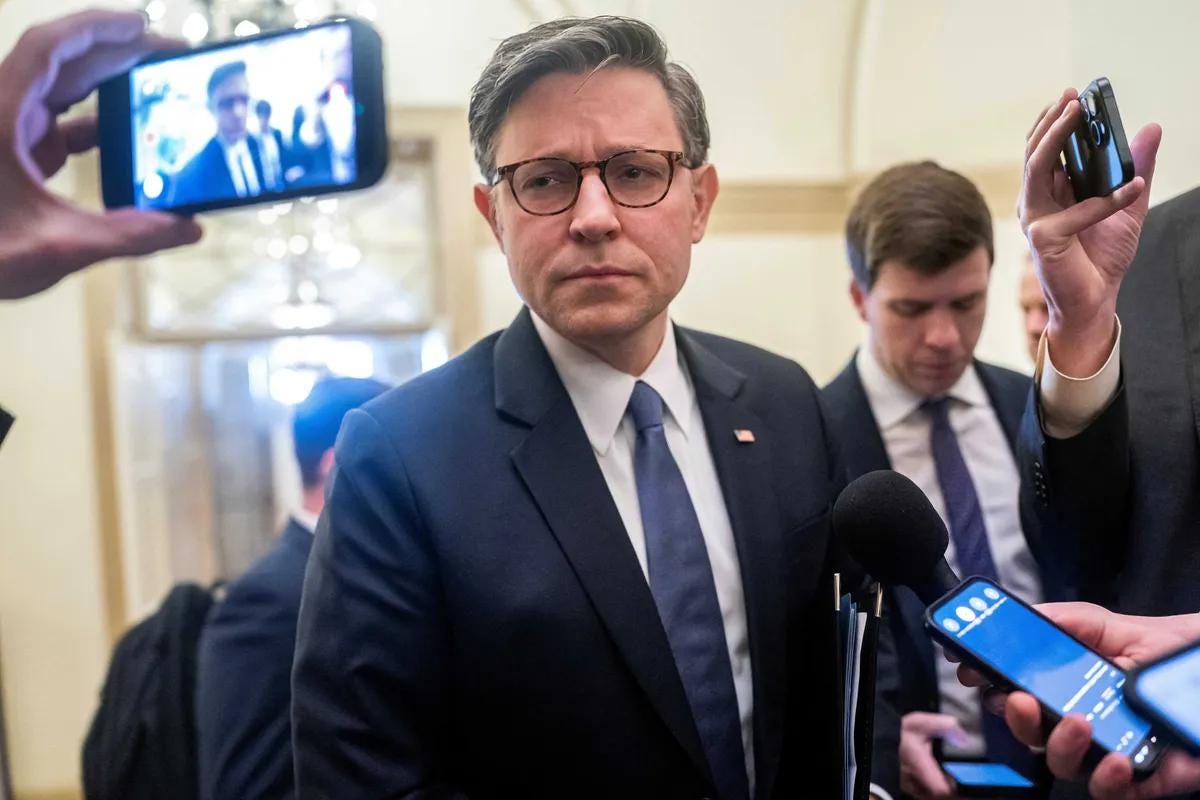
House Speaker Mike Johnson (R-LA) speaks with members of the media while arriving at the U.S. Capitol ahead of a two-week Easter recess starting at the end of this week, in Washington, D.C., U.S., March 26, 2026. REUTERS/Nathan Howard Mike Johnson’s Empty House Is Doing Exactly What Power Requires The Shutdown Without a Shutdown Mike Johnson has discovered that a speaker does not need to win a vote when he can prevent the vote from happening. In 2026, House leaders erased a net 24 legislative days—roughly a quarter of the original schedule. On September 16, Johnson recessed the chamber early yet again. The result is not merely fewer hours beneath the Capitol dome. Legislation stalls, investigations stop, subpoenas languish, and Republican members avoid votes that could expose their divisions or follow them into the midterms. Help fuel the work. Independent analysis doesn’t fund itself:☕ Buy us a coffee This is governance by strategic absence. Johnson Has Power—and Republican Members Enable It The speaker controls the House floor, but Johnson is not operating a one-man evacuation service. The Republican majority gave him the gavel and continues to accept his use of it. Members may complain, as Thomas Massie did when he asked why the majority was “calling off Congress,” but indignation after adjournment does not alter who enabled the adjournment. Johnson’s narrow majority explains the tactic; it does not excuse it. When difficult votes threaten party unity, leadership closes the institution instead of testing whether it can govern. That protects vulnerable incumbents and shields the conference from public evidence of its own dysfunction. The House is absent because absence serves the majority’s immediate political interests. Bill Counts Are a Distraction Johnson answers criticism by pointing to hundreds of bills and selected Republican accomplishments. That is output accounting designed to obscure the relevant question: What business disappeared when the chamber went dark? A leadership team can move ceremonial measures, agreeable bills, or partisan priorities and still use the calendar to suppress accountability. Productivity cannot be measured only by what leaders permit to pass. It must also include what they prevent Congress from confronting. The canceled days matter because control of time is control of exposure. No session means no forced choice, no recorded vote, and no fresh evidence for voters evaluating a representative’s conduct. The Article Finds the Abuse, Then Reaches for the Wrong Weapon The source is strongest when it identifies recess as an exercise of power. It becomes far weaker when it pivots toward creating criminal penalties for vaguely defined betrayals of an oath. The conduct described is political and institutional: a speaker manipulating the House calendar with the consent of his majority. Turning immediately to criminal law risks shifting power from legislators and voters to prosecutors and judges. Even with demanding intent requirements, a statute aimed at obstructing “constitutionally mandated governmental functions” would invite fierce disputes over where protected legislative discretion ends and criminal obstruction begins. That proposal also lets Congress evade more direct remedies. The House can change its rules, constrain unilateral scheduling authority, require recorded votes before extended recesses, strengthen discharge procedures, enforce attendance requirements, and replace a speaker. Those tools target the machinery being abused without pretending every institutional failure should become a federal prosecution. Inaction Is the Policy Calling this Congress “hapless” understates what is happening. Haplessness suggests incapacity. Repeatedly canceling votes when votes become dangerous is a choice. The beneficiaries are identifiable: Johnson retains control, divided Republicans escape public tests, and incumbents gain campaign time. The costs are equally concrete: unfinished legislation, dormant oversight, unenforced subpoenas, and a House less capable of checking other centers of power. Describing that arrangement as dysfunction mistakes the consequence for the purpose. The institution is failing at public business while succeeding at political protection. A Legislature Can Be Neutralized From Inside The larger pattern is institutional cowardice disguised as scheduling. Officials do not always dismantle oversight by openly abolishing it. They can starve it of time, deny it a vote, postpone it beyond relevance, and then cite the resulting inactivity as proof that nothing could be done. Johnson’s empty House shows how procedural authority becomes substantive power. The decisive act is not always passing a destructive law. Sometimes it is ensuring that lawmakers never have to decide anything at all. The constitutional system does not need another ceremonial oath to diagnose that failure. It needs rules that make elected power harder to hide—and legislators willing to use the authority they already possess against the leaders they chose. Thanks to Raw Story Source: This law would send Mike Johnson straight to prison Systemic Error is a reader-supported publication. To receive new posts and support my work, consider becoming a free or paid subscriber. This is a public episode. If you would like to discuss this with other subscribers or get access to bonus episodes, visit paulstsmith.substack.com
Embed this episode
No transcript yet.